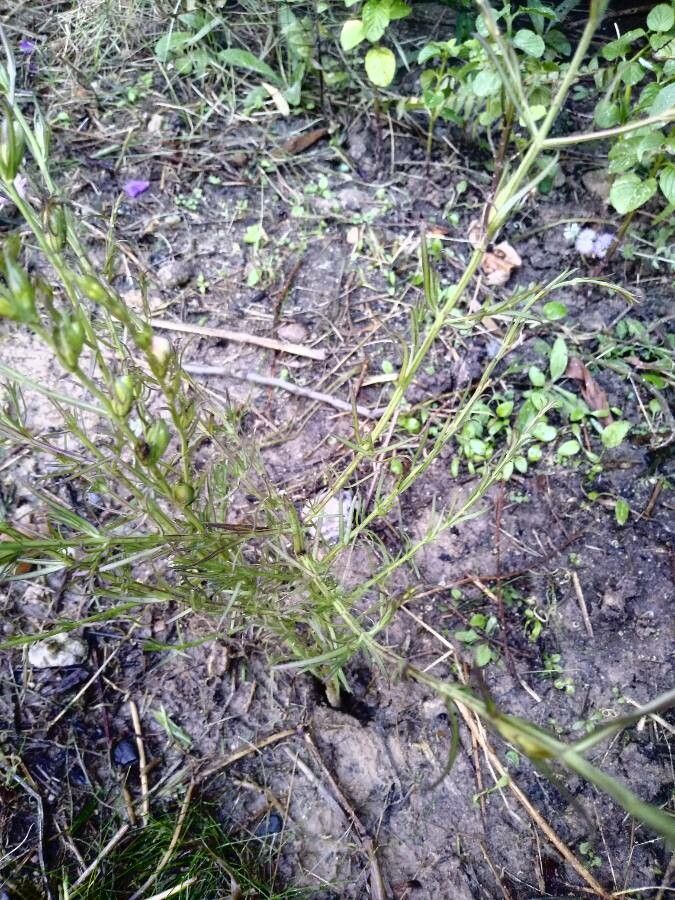
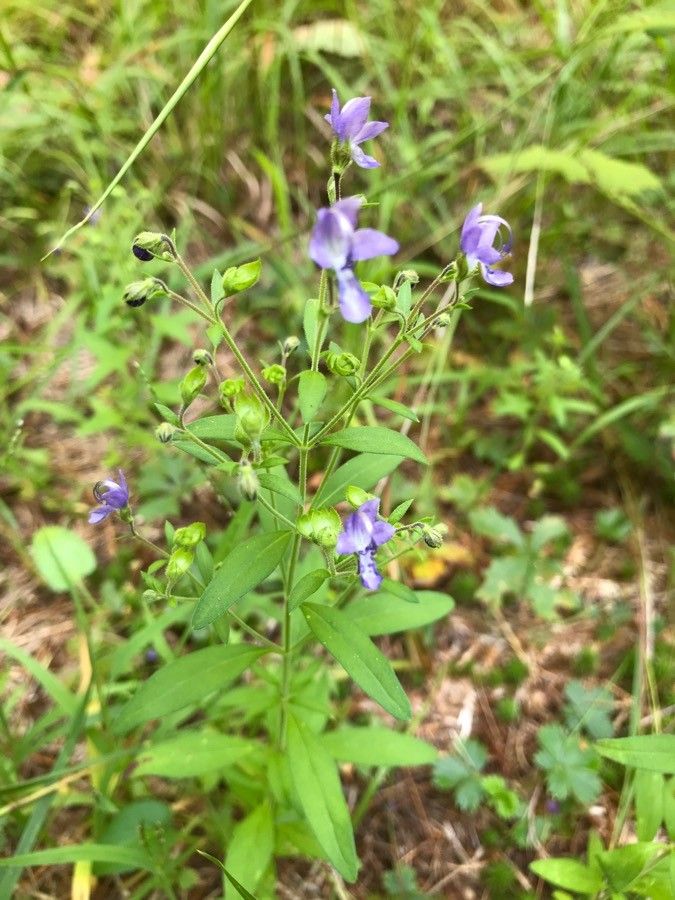
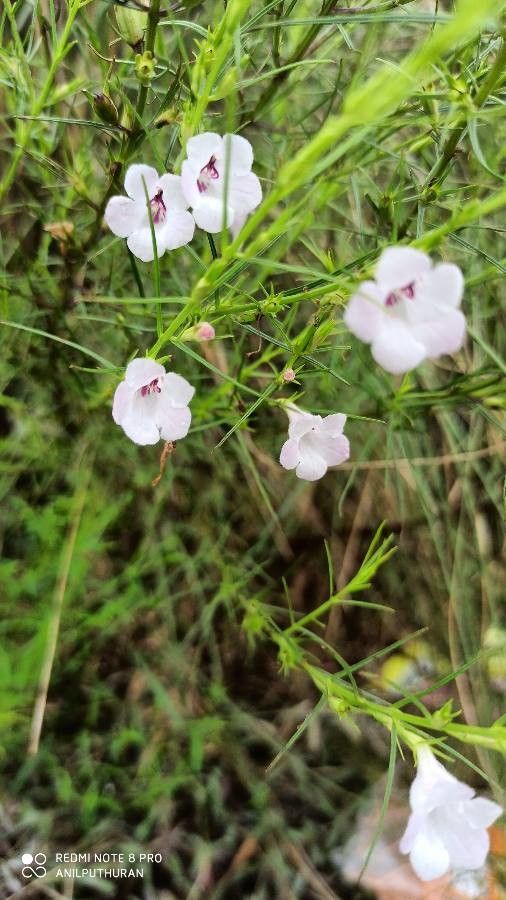
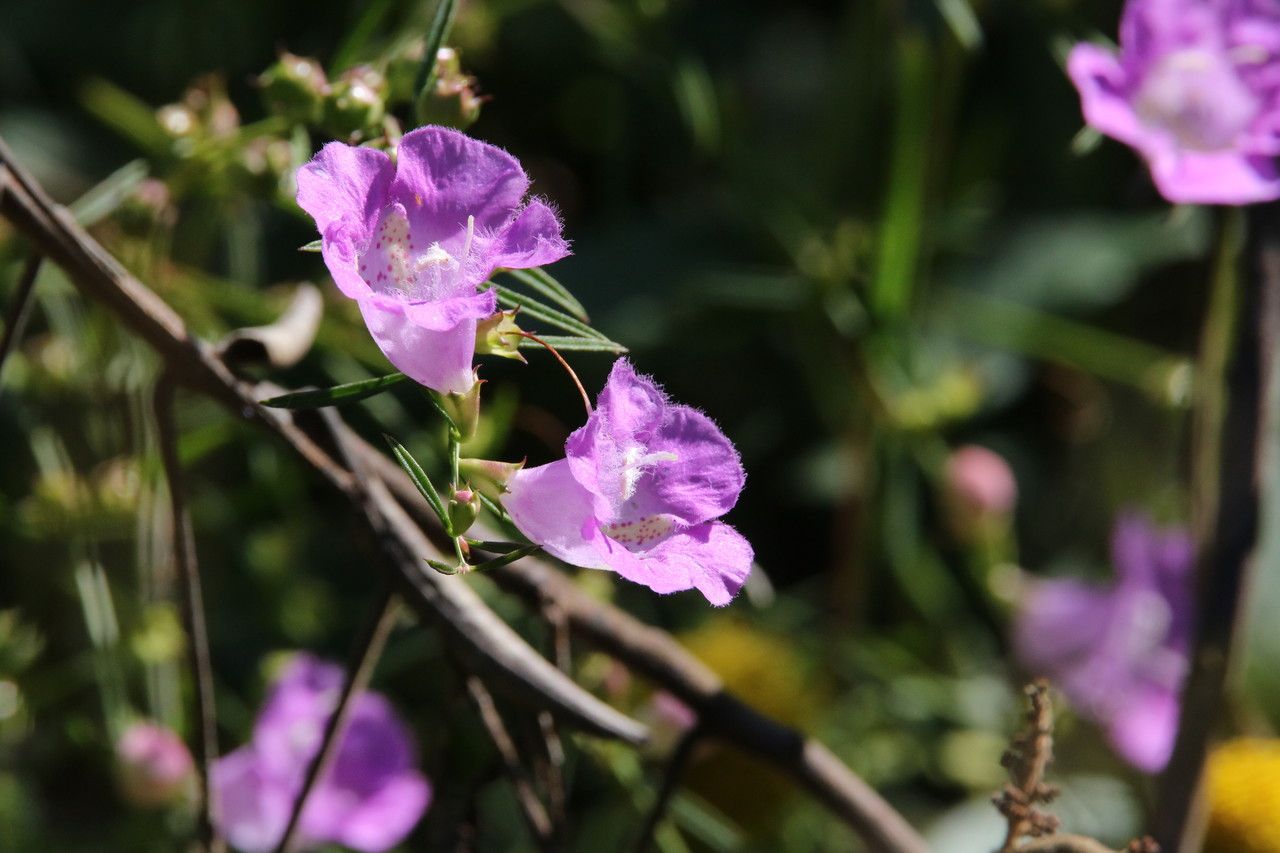
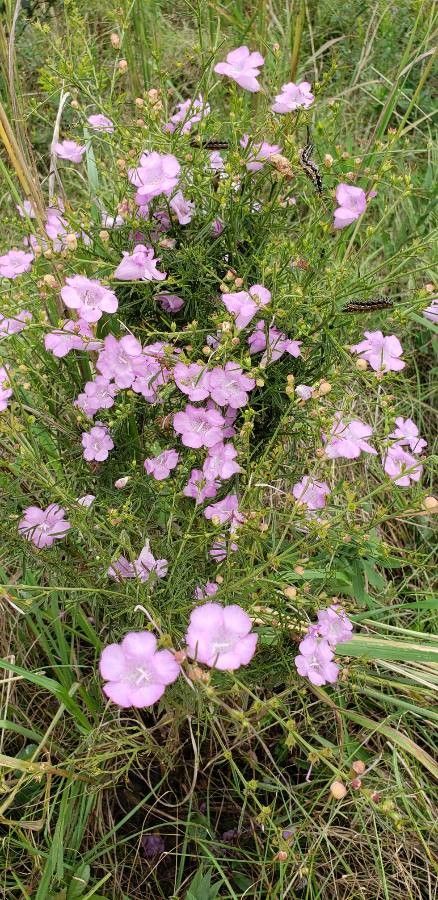
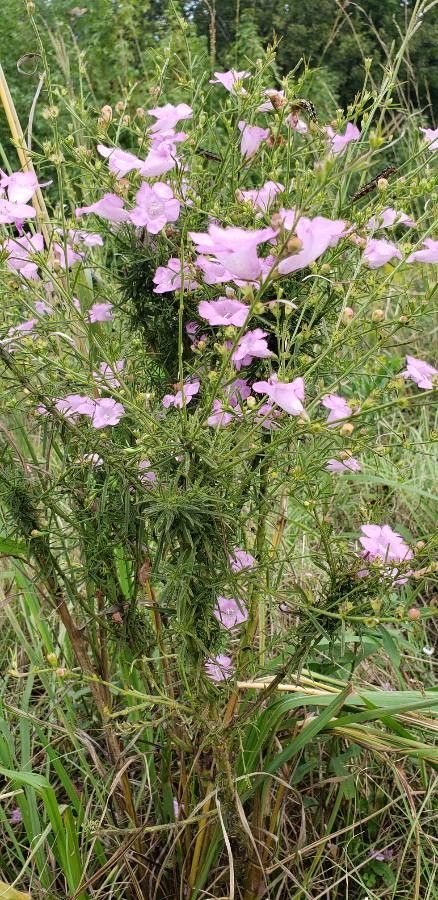
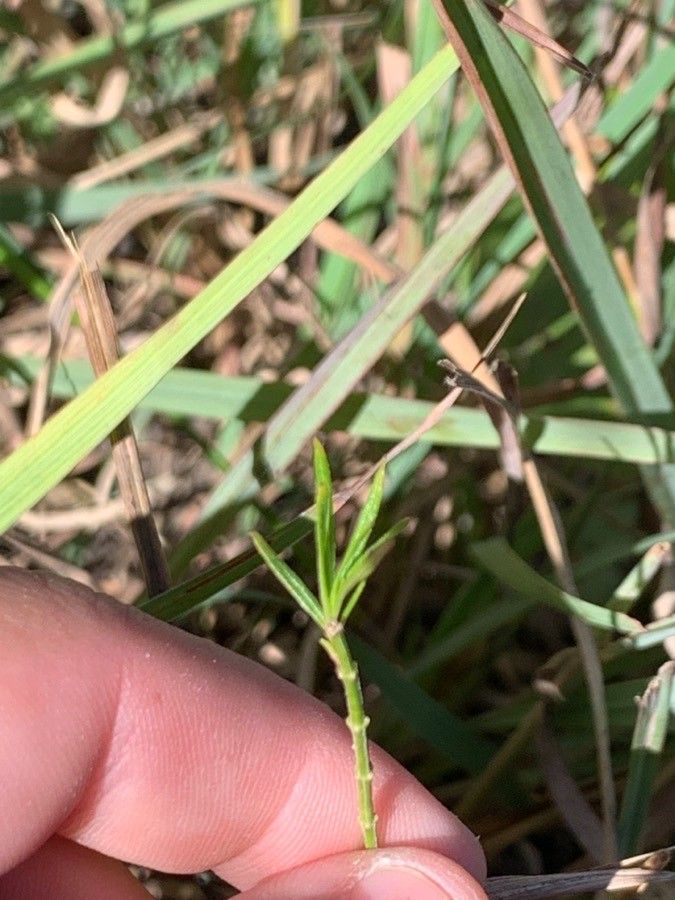
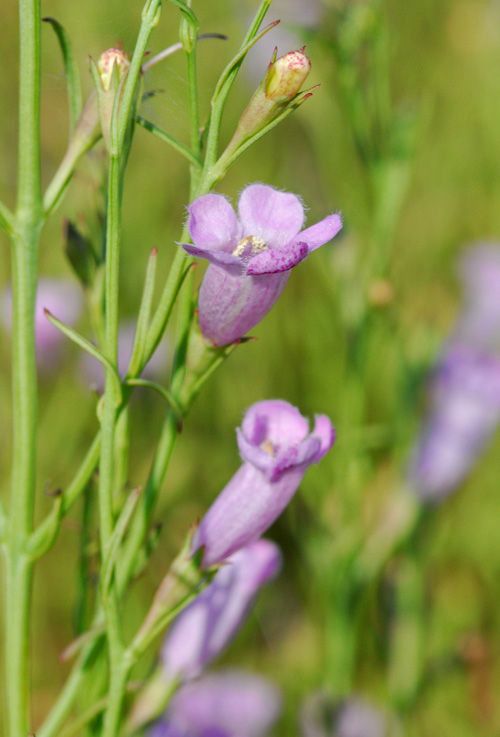
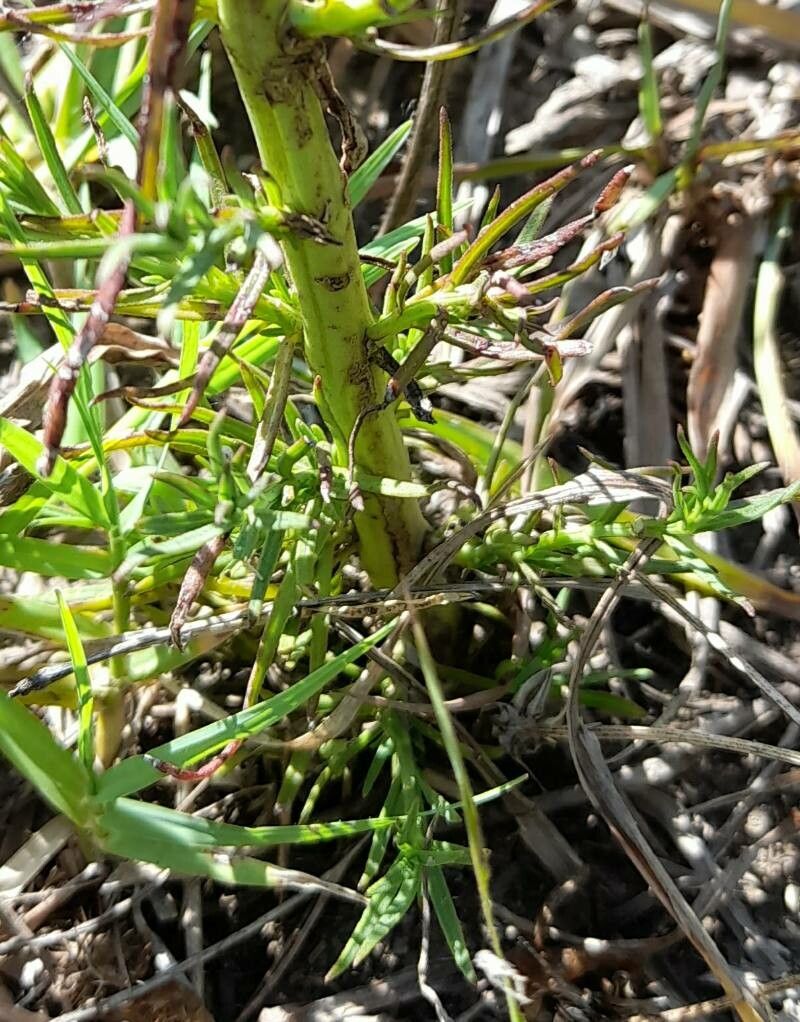
Agalinis purpurea, commonly known as purple false foxglove, is a herbaceous perennial plant that belongs to the Orobanchaceae family. Native to North America, it thrives in various habitats, including meadows, prairies, and open woods. This plant can grow up to 2 feet tall and features slender stems with lance-shaped leaves arranged oppositely.
The flowers of Agalinis purpurea are tubular, with five purple-pink lobes. They bloom from July to September and attract pollinators such as bees and butterflies. The plant produces small capsules containing numerous tiny seeds.
Native Americans have traditionally used Agalinis purpurea for medicinal purposes to treat ailments such as fever, coughs, colds, headaches, and stomachaches.
The species is considered threatened or endangered in some states due to habitat loss caused by human activities such as agriculture and urbanization. To combat this, conservation efforts are underway, focusing on protecting its natural habitats and developing cultivation programs to preserve its genetic diversity for future generations.
Purple false foxglove is fairly disease-resistant and generally not prone to many illnesses. That said, it can be affected by pests and diseases present in its environment. These problems are typically mild. As for care, the plant requires moderate maintenance. It should be pruned regularly to keep a neat appearance and encourage healthy growth. Fertilizing can also help stimulate flowering. Purple false foxglove is well suited to anyone with an outdoor area, like a garden or patio, and does not demand extensive plant-care experience. It may need extra attention if grown indoors.
How to keep Agalinis Purpurea.
Light
Purple false foxglove prefers spots that receive ample sunlight each day, though it can tolerate a moderate amount of sun as well. Native to areas with strong sun exposure, it does best in those conditions. Too much or too little sun can hinder its growth and flowering.
Water
Purple false foxglove thrives in moist conditions and requires consistently hydrated, evenly moist soil. To maintain the necessary moisture, be sure to water it weekly. This is especially important during its active growing season, as its growth and flowering depend on having enough water.
Temperature
Purple false foxglove does well in its native temperate habitats where temperatures range from 68 to 95 °F (20 to 35 ℃). It prefers warmer conditions but can adjust to cooler ones. Seasonal adjustments may be necessary during extreme temperatures.
Fertilizer
When Purple false foxglove has opened most of its blooms to full size, resume fertilizing. At the peak of bloom production, apply fertilizer once every three to four weeks, as weather permits. Then, when Purple false foxglove begins producing fewer new blooms, stop fertilizing; there’s no need to feed the plant when it can no longer produce additional blooms.
Pruning
The purple false foxglove is known for its delicate purple flowers and slender stems. To keep it healthy and vibrant, prune it from early to late spring to remove any dead stems and encourage blooming. Thinning the plant helps improve air circulation, reduces the risk of disease, and maintains a compact shape, all of which ensure a beautiful display throughout the growing season.
Botanical profile.
- Plant Type
- Herb
- Life Cycle
- Annual, Perennial
- Genus
- Agalinis
- Family
- Orobanchaceae
- Hardiness Zone
- 2-10
- Mature Height
- 30 cm to 61 cm
- Mature Spread
- 30 cm to 61 cm
- Leaf Color
- Green, Purple, Lavender
- Leaf Type
- Semi-evergreen
- Flower Color
- Purple
- Flower Size
- 2.54 cm
- Bloom Time
- Late summer, Early fall, Mid fall
- Planting Time
- Spring
- Harvest Time
- Mid fall, Late fall
- Native Area
- Cuba
Other names.
Reader questions.
How should I water my Purple false foxglove?
To water Purple false foxglove, you have a few options. You can use a garden hose with a spray nozzle, a watering can, or any common watering tool. This plant is not too particular about the type of water it receives, so rainwater, tap water, or filtered water will all work. However, it's best to avoid watering this plant from above because it can harm the leaves and flowers and may cause disease. A drip irrigation system is a great choice for watering, as it applies water evenly and directly to the soil. If you have a container-grown Purple false foxglove, you can use a cup, watering can, or tap water to water it directly at the soil.
What are the sunlight requirements for Purple False Foxglove?
Purple False Foxglove thrives in full sun, requiring above 6 hours of sunlight daily, but it can also manage in partial sun, with about 3-6 hours of sunlight. Observing how sunlight moves through your garden and selecting spots that offer a good mix of light and shade are crucial for the plant's health. It is vital to ensure that the plant gets adequate daily sun exposure, as both over and underexposure to sunlight can affect its growth and flowering.
What is the optimal temperature range for Purple false foxglove?
Purple false foxglove, also known as Agalinis purpurea, thrives best within a temperature range of 68 to 95°F (20 to 35°C). This plant prefers warmer weather but is able to adapt to slightly cooler conditions. Adjustments may need to be made if temperatures become extremely cold or excessively high to ensure the plant continues to thrive in its native temperate environments.
What do I do if I give my Purple false foxglove too much or too little water?
If you notice that your Purple false foxglove lacks moisture, the remedy is simple: water it more regularly. Overwatering, on the other hand, can lead to serious problems if not caught early. It can cause the plant to contract diseases that can result in its decline and death. To prevent this, choose a suitable growing location with plenty of sunlight to help dry the soil and good drainage to prevent water from pooling and causing waterlogged soil. If your potted Purple false foxglove is overwatered, you may need to transfer it to a new pot. This could be due to poor soil drainage or a lack of sufficient drainage holes in the previous container. When repotting, make sure to use loose soil and a pot that drains efficiently.
How does artificial lighting benefit indoor plants, and what are the guidelines for using it?
Indoor plants need ample lighting for optimal growth, especially when natural sunlight is scarce, like in winter or less sunny spaces. Artificial lights are beneficial, encouraging faster and healthier plant development. LED lights are recommended due to their customizability for specific plant needs. For full sun plants, 30-50W/sq ft is ideal; partial sun plants need 20-30W/sq ft, and full shade plants require 10-20W/sq ft. The light source should be 12-36 inches above the plant to mimic natural sunlight, and most plants benefit from 8-12 hours of light per day.
How does Purple false foxglove handle cold temperatures?
Purple false foxglove has strong cold resistance and doesn't normally require special frost protection measures during winter. However, in conditions where temperatures are expected to plunge below -40°C, it is important to safeguard the plant by covering it with soil or straw. To further protect the plant, it's recommended to water it abundantly before the first freeze of autumn. This ensures the soil is moist when it freezes, helping to prevent drought and water scarcity for the plant during the colder months.
How frequently should I water my Purple false foxglove?
Purple false foxglove requires regular watering throughout the growing season. In spring, water this plant once a week. As the season progresses and it gets warmer, you may need to increase watering to two or three times a week. However, be careful not to exceed this rate as it can be harmful to the plant. Regardless of watering frequency, make sure the soil remains moist but not wet. When it comes to potted Purple false foxglove, the watering needs are slightly different. Potted soil tends to dry out faster, so watering should be increased to a few times per week compared to just once per week for an in-ground plant.
What are the symptoms of light deficiency in Purple False Foxglove when grown indoors?
Indoor Purple False Foxglove may show symptoms of light deficiency, including smaller new leaves, leggy or sparse growth, faster leaf drop, halted or no new growth, paler leaves indicating a lack of chlorophyll, chlorosis (yellowing leaves), sunscald, leaf curling, wilting from excessive transpiration, and leaf scorching. These symptoms suggest the plant is not receiving adequate sunlight, leading to poor health and development.
What should be done if Purple false foxglove experiences temperatures below -40°C?
If temperatures fall below -40°C, Purple false foxglove may not display immediate signs of damage during winter, but there might be a noticeable decrease in sprouting or even no sprouting in the following spring. In such a case, it is advised to remove any parts of the plant that have failed to sprout come spring, to help the plant recover and potentially foster new growth.
How much water does my Purple false foxglove plant need?
Determining how much water to give your Purple false foxglove can be approached in a few different ways. Some gardeners prefer to gauge the soil's moisture levels by feeling it, and then water until the top six inches of soil feel moist. Alternatively, you can follow a general guideline of providing around two gallons of water per week to your Purple false foxglove, adjusting as needed based on the temperature and rate of soil drying. However, this approach may lead to overwatering if your plant actually requires less water. When growing your Purple false foxglove in a container, a different method is necessary. You should water the soil until all dry layers become moist, and you can gauge this by sticking your finger into the soil to feel for moisture. Another indication is when you see a slight trickle of excess water flowing out of the pot's drainage holes.
What solutions can be applied for Purple False Foxglove experiencing light deficiencies indoors and outdoors?
For indoor plants suffering from light deficiencies, progressively moving them to sunnier spots or using artificial light, such as grow lights for at least 8 hours daily, can help. Outdoor plants should be gradually relocated to sunnier areas to prevent sunburn. Where sunlight obstruction is an issue, pruning obstructive foliage or transplanting smaller plants during their dormant period to sunnier locations with good drainage is advisable. Note that damage from insufficient light may be irreversible, but new growth should be healthy once conditions improve.
How should Purple false foxglove be cared for during high temperatures?
During summer, to ensure the health of Purple false foxglove, it's important to keep the plant's environment below 35°C. Exposure to temperatures over 41°C can lead to the leaves becoming lighter in color, curling, and becoming prone to sunburn; in severe cases, the plant may wilt and become dry. To mitigate these risks, trim away any sunburned and dried-up parts of the plant, move the plant to a location that offers shade during the midday and afternoon sun, or use a shade cloth to provide adequate shade. Additionally, watering the plant in the morning and evening can help keep the soil appropriately moist.