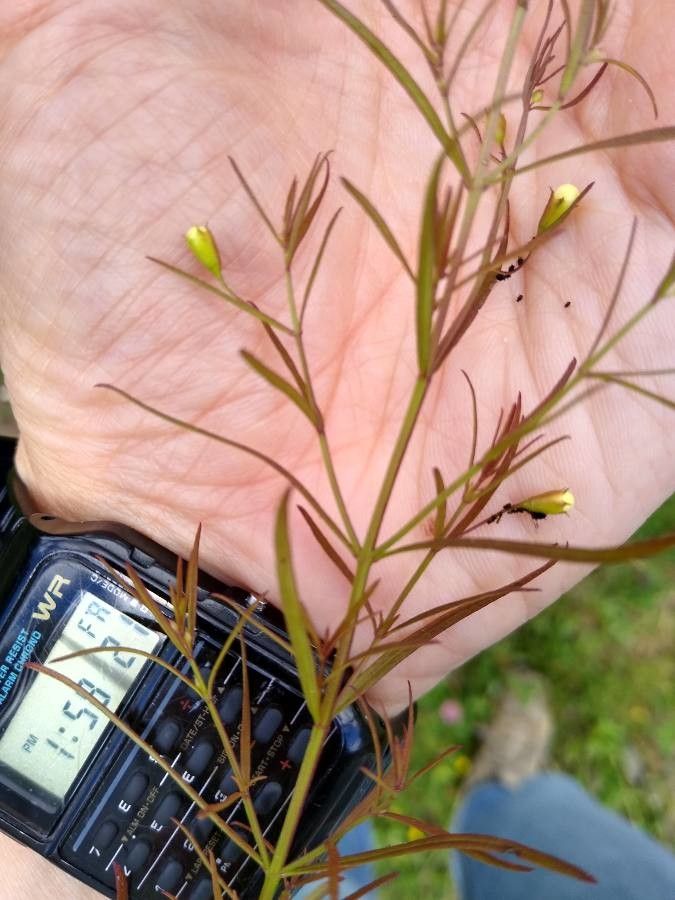
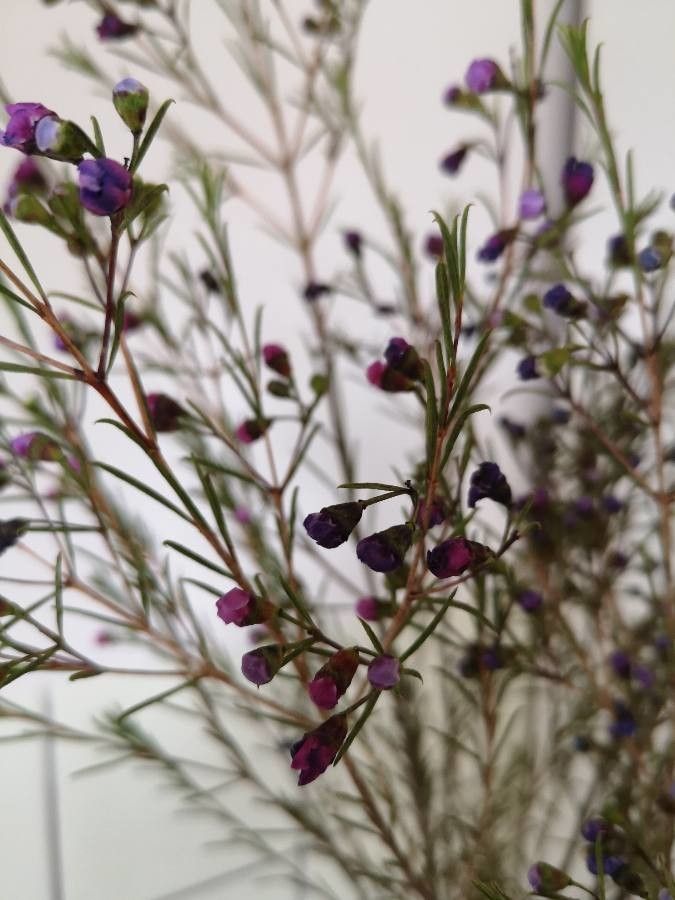
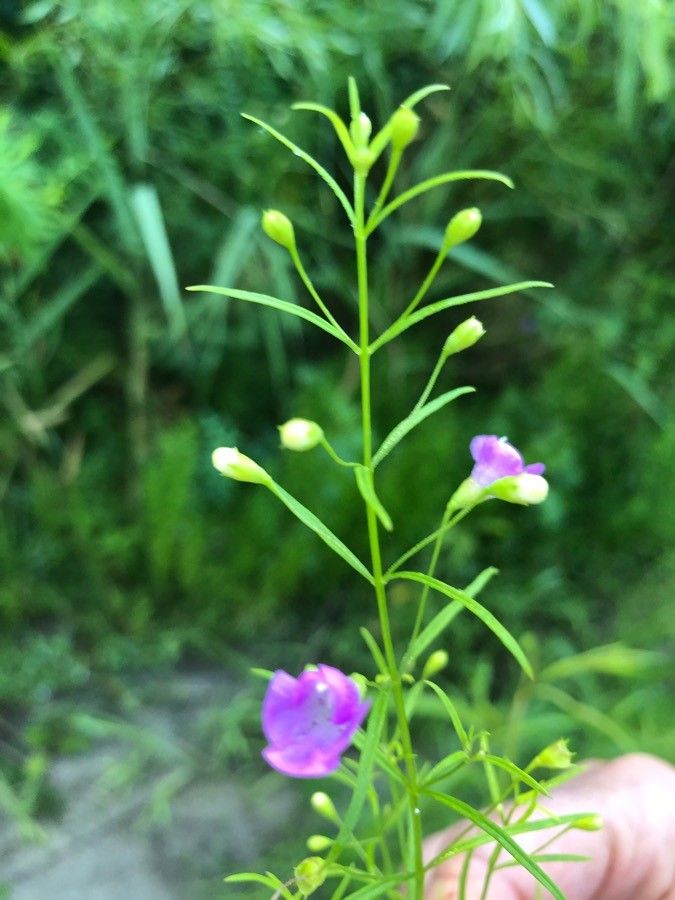
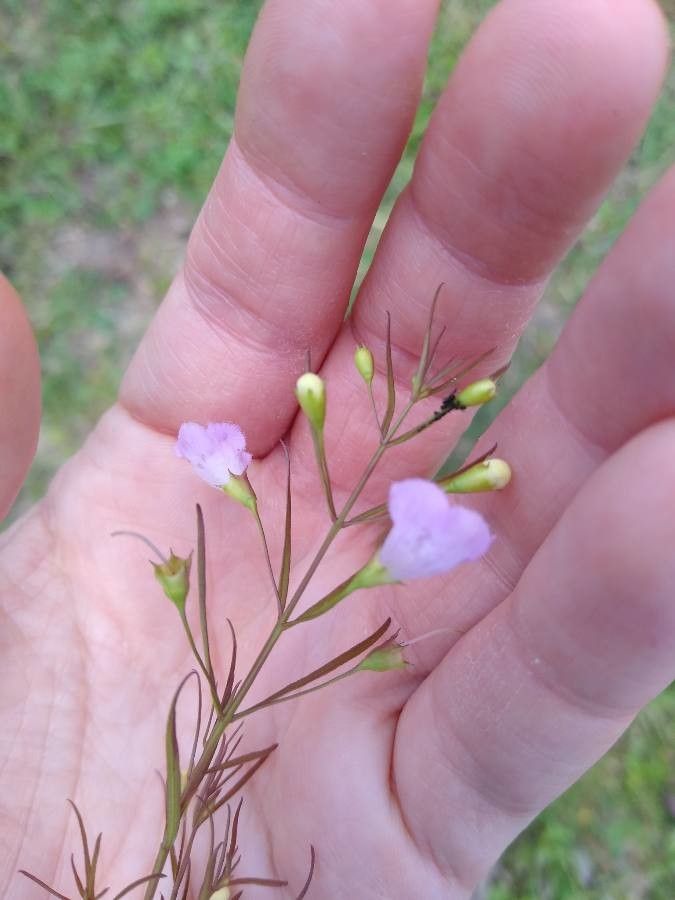
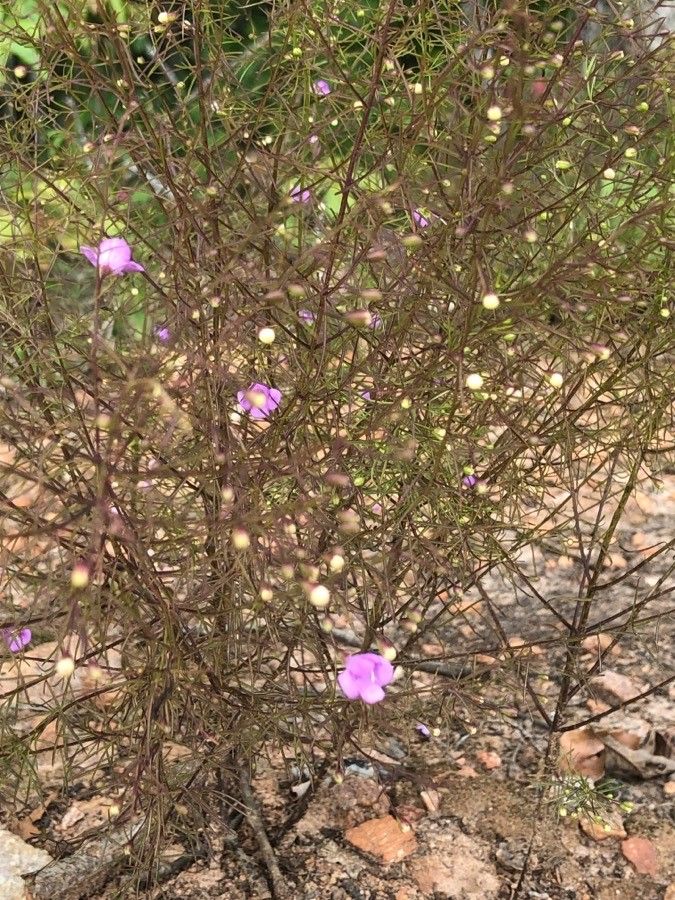
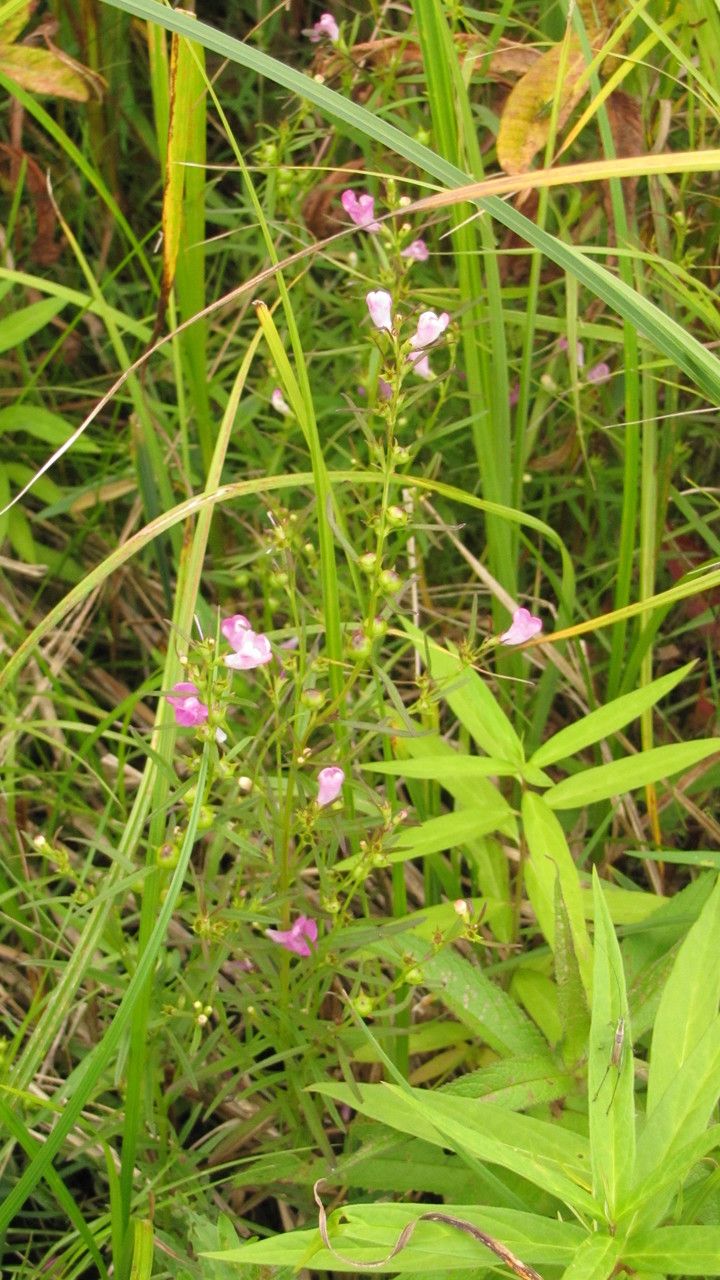
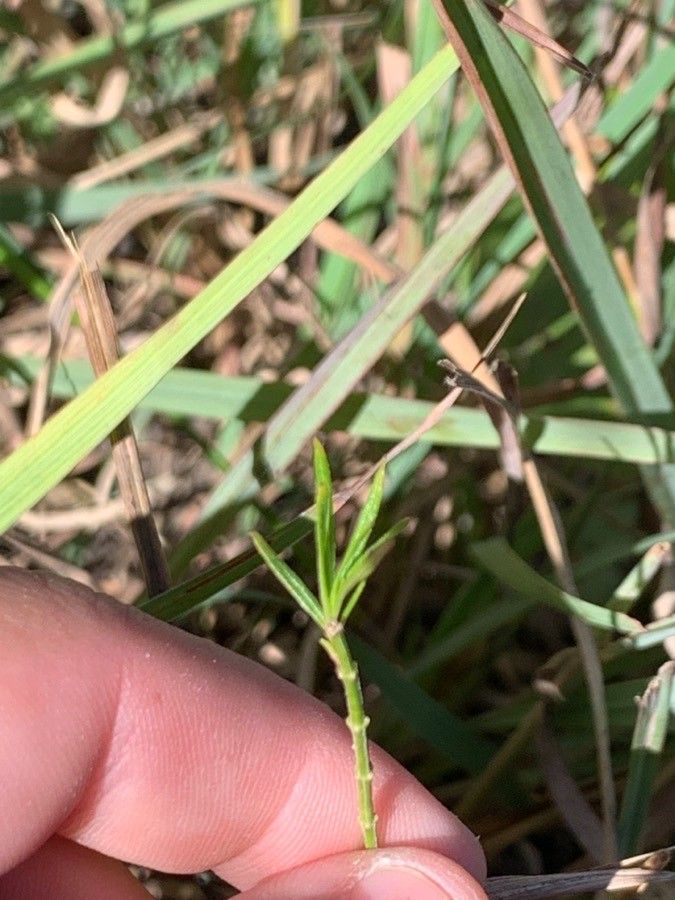
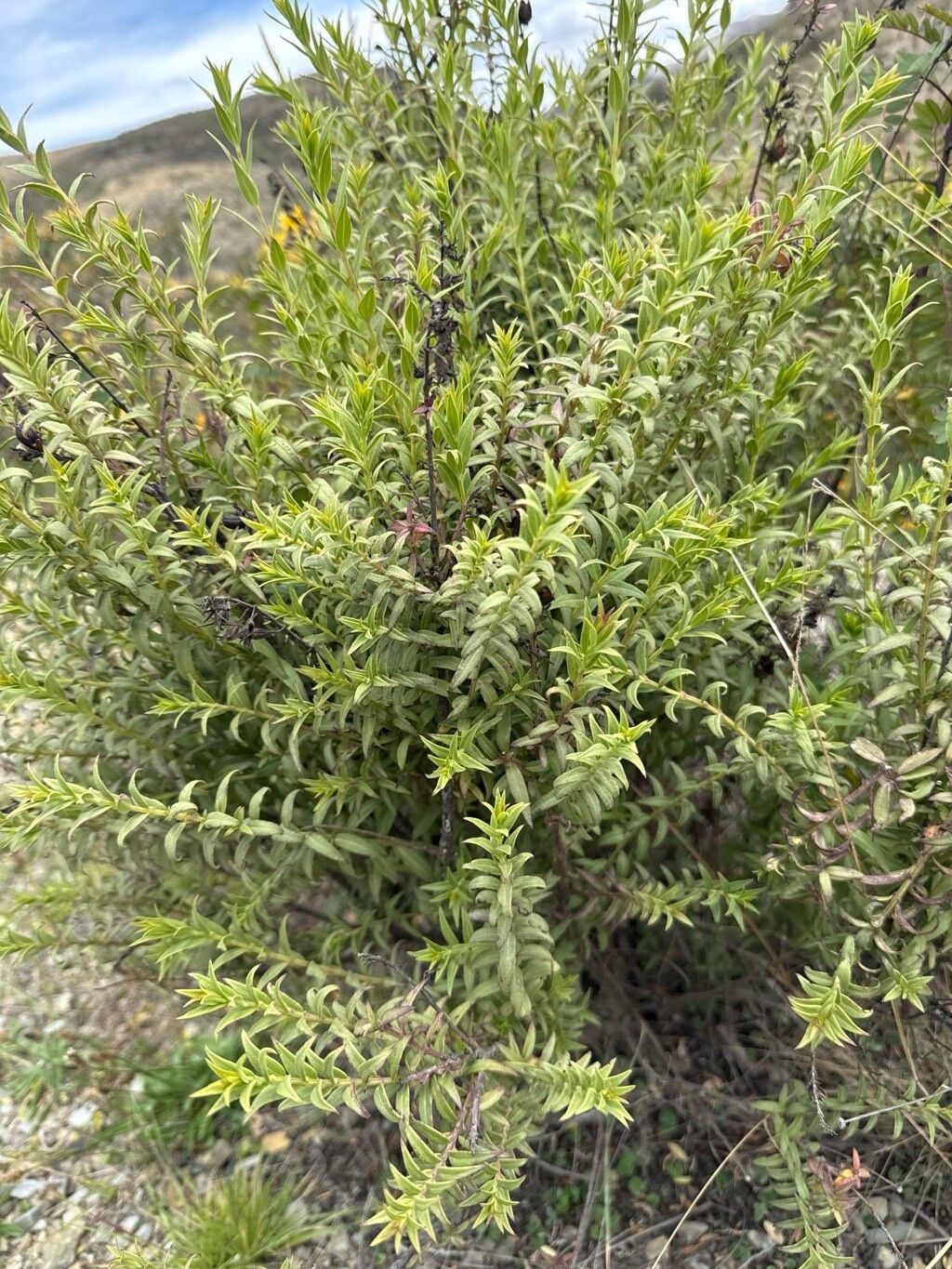
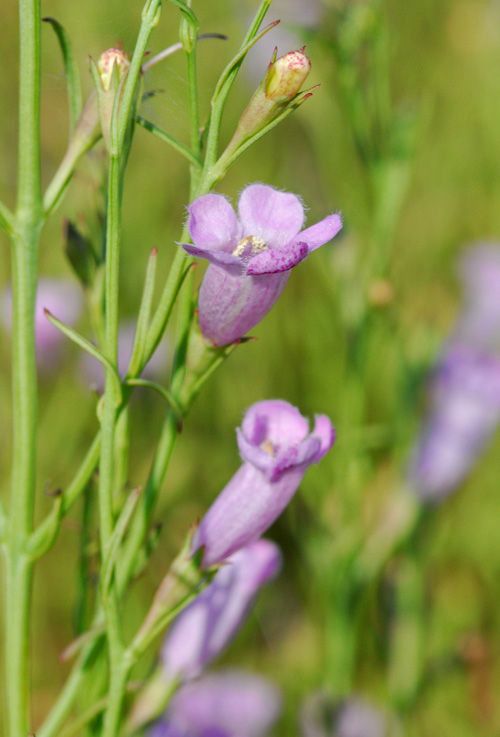
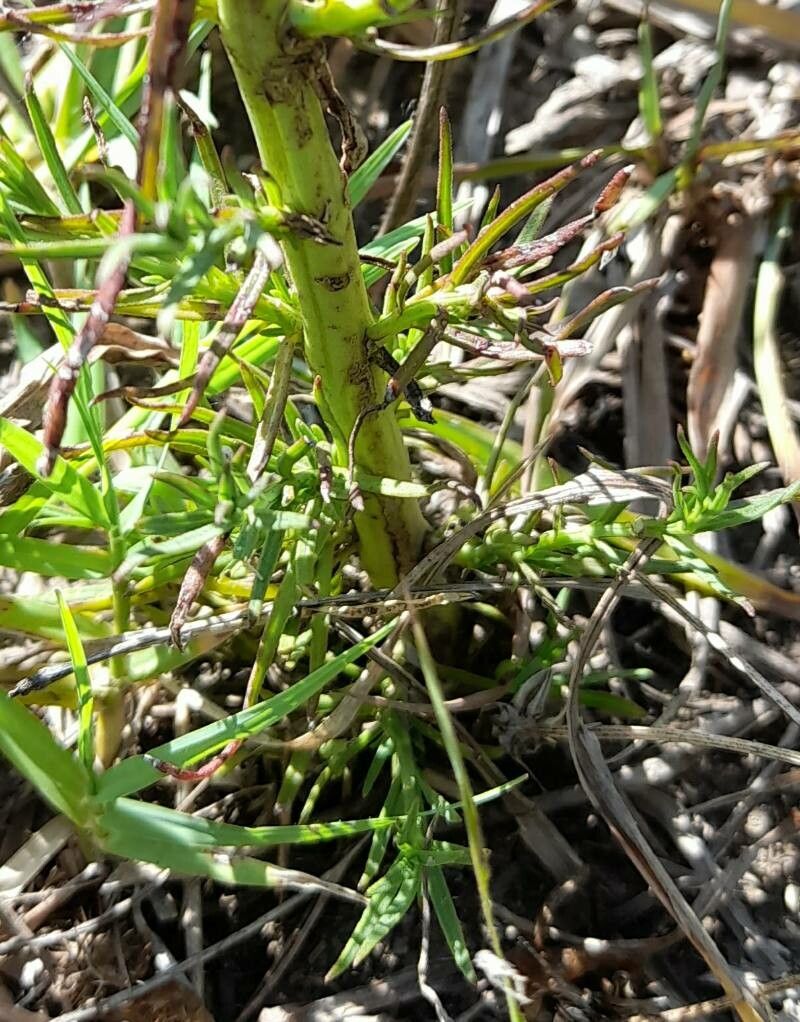
Agalinis tenuifolia, known by the common names common gerardia, slender false foxglove or common false foxglove, is an annual forb native to the eastern and southwestern United States, and Canada, which produces purple flowers in late summer or early fall.
Slender false foxglove has strong resistance to disease and is generally unlikely to suffer from illnesses. Still, it can be affected by pests and diseases present in its environment. Such infections tend to be mild. Regarding care, this plant needs a moderate amount of attention. It should be pruned regularly to preserve a neat appearance and encourage healthy growth. Feeding the plant can also help increase flowering. Slender false foxglove is appropriate for anyone with outdoor areas like a garden or patio and does not demand extensive gardening experience. It may need extra care when kept indoors.
How to keep Agalinis Tenuifolia.
Light
The slender false foxglove does best with plenty of sunlight, which greatly supports its healthy growth and development. However, it can adjust to conditions where it does not receive full sun all day. Too much or too little sunlight can harm the plant's overall well-being.
Water
The slender false foxglove is well-suited to the varying moisture levels commonly found in grasslands. It thrives with weekly watering, while allowing the soil to dry out slightly in between. This herbaceous plant's growth is in harmony with seasonal rainfall, making the most of available water for its survival and reproduction.
Temperature
Slender false foxglove comes from areas with mild temperatures, as it favors 68 to 95°F (20 to 35°C). If you cultivate it, you may need to alter extreme seasonal conditions due to its temperate origins.
Fertilizer
When Slender false foxglove has opened most of its flowers to full size, resume fertilizing. At the peak of bloom production, apply fertilizer every three to four weeks, weather permitting. Then, once the plant begins producing fewer new blooms, stop fertilizing—there's no need to feed it when it can no longer produce more flowers.
Pruning
The slender false foxglove is a native wildflower known for its tubular flowers and delicate foliage. To encourage healthy growth, improve air circulation, and maintain its shape, prune the plant between early and late spring. During pruning, remove any dead or damaged stems. Be sure to use clean, sharp tools for the best results and to minimize the risk of infection.
Botanical profile.
- Plant Type
- Herb
- Life Cycle
- Annual, Perennial
- Genus
- Agalinis
- Family
- Orobanchaceae
- Hardiness Zone
- 7-10
- Mature Height
- 30 cm to 91 cm
- Mature Spread
- 15 cm to 30 cm
- Leaf Color
- Green, Red, Purple, Lavender
- Leaf Type
- Semi-evergreen
- Flower Color
- Pink
- Flower Size
- 2.54 cm
- Bloom Time
- Mid summer, Late summer, Early fall
- Planting Time
- Spring
- Harvest Time
- Early fall, Mid fall
Other names.
Reader questions.
How can I water my Slender false foxglove effectively?
To water Slender false foxglove, you have several options like using a garden hose with a spray nozzle, a watering can, or basically any common watering tool. This plant doesn't have specific preferences for water sources, as it can survive on rainwater, tap water, or filtered water. However, it's generally advised not to water the plant from above as it can harm the leaves and flowers and potentially cause diseases. A drip irrigation system is often the best choice for watering Slender false foxglove, as it provides an even and direct supply of water to the soil. For container-grown Slender false foxglove, you can follow a similar watering approach but with different tools like a cup, watering can, or tap water directly applied to the soil.
What are the sunlight requirements for Slender false foxglove?
Slender false foxglove requires full sun, which is defined as above 6 hours of sunlight per day, to thrive optimally. It can also tolerate partial sun, about 3-6 hours of sunlight a day. Exposure to the right amount of sunlight contributes significantly to its healthy growth and development. When planning your garden, it's vital to observe how sunlight moves across the space, choosing locations that offer a balance of light and shade to ensure your plants' happiness and well-being.
What is the ideal temperature range for growing Slender False Foxglove?
Slender False Foxglove, or Agalinis tenuifolia, is ideally suited to environments with moderate temperatures, thriving best in the range of 68 to 95°F (20 to 35°C). Given its preference for temperate conditions, adjustments may be necessary to accommodate seasonal extremes.
What should I do if I give my Slender false foxglove too much or too little water?
The solution for underwatering Slender false foxglove is clear - increase watering frequency when you notice it lacks moisture. However, overwatering can be a more serious issue, potentially leading to diseases and the plant's decline or death. To prevent this, it is important to choose an appropriate growing location with ample sunlight for soil drying and good drainage to prevent waterlogging. If your potted Slender false foxglove is overwatered, consider repotting it in a new pot with loose soil and efficient drainage.
Can Slender false foxglove adapt to lower light conditions and how can artificial lighting support its growth?
Yes, Slender false foxglove can adapt to environments with less sunlight, though excessive or insufficient light may affect the plant's health. For indoor plants or those in less sunny spaces, artificial lighting serves as an excellent solution to mimic natural sunlight, promoting faster and healthier growth. LED lights are recommended due to their ability to provide specific light wavelengths needed by plants. Depending on the plant's sunlight needs, the wattage per square foot varies: full sun plants require 30-50W/sq ft, partial sun plants 20-30W/sq ft, and full shade plants 10-20W/sq ft. The light source should be placed 12-36 inches above the plant and be on for 8-12 hours per day to imitate natural daylight hours.
Does Slender False Foxglove require frost protection in winter?
Slender False Foxglove possesses strong cold resistance and usually does not require special frost protection measures. However, in conditions where temperatures are expected to drop below -15°C, it is important to protect the plant using soil or straw coverage. Additionally, watering the plant abundantly before the first freeze to keep the soil moist can help prevent drought and water scarcity during winter and early spring.
How often should I water my Slender false foxglove? How frequently should I water my Slender false foxglove plant?
Slender false foxglove requires regular watering throughout the growing season. In spring, water this plant once a week. As the season progresses and it gets warmer, you may need to water two to three times a week. However, be careful not to exceed this rate as it can harm the plant. Regardless of watering frequency, make sure the soil remains moist but not wet. Watering a potted Slender false foxglove is different. Potted soil tends to dry out faster, so you'll need to water it more frequently, typically a few times a week compared to once a week for a plant in the ground.
What are the symptoms of inadequate light exposure in Slender false foxglove?
When Slender false foxglove doesn't receive enough light, several symptoms might appear. These include smaller new leaves, leggy or sparse growth, quicker leaf drop, halted or no new growth, and lighter-colored new leaves. Excessive light exposure can cause chlorosis, sunscald, leaf curling, wilting, and leaf scorching. These symptoms reflect the plant's struggle to adapt to its lighting conditions, signaling the need for adjustments in its care.
What are the symptoms of Slender False Foxglove being exposed to too low temperatures?
When exposed to temperatures below its tolerance, Slender False Foxglove may not show noticeable changes during winter, but there could be a decrease in sprouting or no sprouting at all in spring if temperatures fall below -15°C. It is cold-tolerant and does well above 0°C, but it thrives best when the temperature remains above 20°C.
How much water does my Slender false foxglove require?
Determining the appropriate amount of water for your Slender false foxglove can be done through various methods. One approach involves checking the soil's moisture by feeling it, and watering until the top six inches feel moist. Another option is using a specific measurement, such as about two gallons per week, taking into account factors like heat and soil dryness. However, strictly following these guidelines may lead to overwatering in certain cases. When growing the plant in a container, a different approach is needed. It is recommended to water until all dry layers of soil are moist, which can be assessed by inserting a finger into the soil. Another indication is observing a slight drainage of excess water through the pot's holes.
How can I improve light conditions for my Slender false foxglove?
Improving light conditions for your Slender false foxglove can be approached differently depending on where your plant is located. For indoor plants, gradually moving them to sunnier spots or using artificial lighting, like desk lamps or professional grow lights for at least 8 hours a day, can help. Outdoors, choosing locations with better sunlight and gradually adapting your plants to the new light intensity is crucial. To reduce obstructions, especially outdoors, pruning or transplanting to an area with better sunlight exposure and drainage might be necessary. It's essential to make changes gradually to avoid shock and allow the plant to adapt. Note that damaged parts from insufficient sunlight might not recover, but new growth should be healthy following these adjustments.
How should Slender False Foxglove be cared for if it doesn't sprout due to cold temperatures?
If Slender False Foxglove fails to sprout due to exposure to cold temperatures, removing the parts that have not sprouted as spring arrives is recommended. This helps in managing the plant's health and promotes new growth.