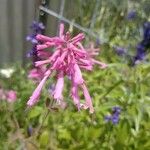
Agastache cana
Mosquito plant · Double Bubble Mint · Grayish-white Giant Hyssop · Hoary Balm of Gilead · Texas Hummingbird Mint
Description
Source: wikipedia (CC BY-SA)Agastache cana, more commonly known as the mosquito plant, Texas hummingbird mint, and double bubble mint, is a hardy perennial belonging to the genus Agastache. The genus name Agastache is derived from the Greek word meaning "a lot of", and stachy, meaning "spike", which refers to the flower's 12 terminal spikes that decorate the plant. These spikes remain through the growing season from early summer to late fall. The Mosquito Plant is native to New Mexico and western Texas, where it grows in mountainous areas at altitudes of 6,000 feet.
🌳 The mosquito plant is frequently praised for its mosquito-repelling qualities, which come from the essential oils in its foliage. That trait has made the mosquito plant a preferred choice for gardeners who want to reduce unwanted insect visitors naturally. Beyond its repellent function, the mosquito plant can be used in aromatherapy and as a flavorful addition to cooking, due to its minty aroma. Additionally, its ornamental appeal — bright flowers and a pleasant scent — makes the mosquito plant an attractive option for landscaping, enhancing human surroundings.
Care Guide
💧 Water
☀️ Light Full sun
The Mosquito Plant flourishes in surroundings that receive plenty of sunlight, reflecting its original habitat which had unhindered exposure to day-to-day solar light. A lack of sufficient sunlight may stifle its development, while on the contrary, an excess doesn't affect it adversely.
🌡️ Temperature 20–35°C
The Mosquito Plant is capable of adjusting to an extensive range of temperature conditions, but its spread may be inhibited by varying balances of water and thermal conditions. It flourishes optimally in hot climates provided there is sufficient rainfall or irrigation during the summer. Extended periods of overcast and wet weather, along with long-lasting high temperatures, can heighten the chances of the Mosquito Plant succumbing. Over the winter, effectively safeguarding against cold can enhance the plant's odds of survival.
💨 Humidity
🪴 Soil 6-7
🌱 Fertilizer
The prime period to nourish a Mosquito Plant is during early spring, as it transitions out of dormancy and into an active growth phase. Fertilizing delivers essential nutrients that encourage robust growth. Despite the Mosquito Plant's modest requirement for fertilizer, providing it once a year can improve its longevity and support the production of superior, longer-enduring blooms.
🪴 Pot & Repot
✂️ Pruning
🌿 Propagating
🐛 Diseases & pets
☠️ Toxicity
Characteristics
- Plant Type
- Herb, Shrub
- Life Cycle
- Perennial
- Genus
- Agastache
- Family
- Lamiaceae
- Hardiness Zone
- 9
- Mature Height
- 91 cm
- Mature Spread
- 61 cm
- Leaf Color
- Green, Gray
- Leaf Type
- Deciduous
- Flower Color
- Pink, Lavender
- Flower Size
- 1.02 cm to 2.03 cm
- Bloom Time
- Early summer, Mid summer
- Planting Time
- Spring
- Harvest Time
- Mid summer, Late summer
- Native Area
- Mexico