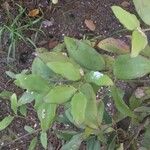
Agathis robusta
Dundathu-pine · North Queensland kauri · North Queensland kauri-pine · Queensland Kauri · Queensland kauri-pine
Description
Source: leafsnapAgathis robusta, commonly known as the Queensland kauri or smooth-barked kauri, is a large evergreen tree native to Australia. Belonging to the Araucariaceae family, it can grow up to 50 meters tall with a trunk diameter of up to 2 meters. The tree features a straight trunk with smooth bark and symmetrical branches that form an umbrella-like canopy. The leaves of Agathis robusta are dark green, glossy, and needle-like. They are arranged in whorls of four around the stem and can grow up to 7 centimeters long. The male cones are cylindrical, while the female cones are round or oval-shaped. Agathis robusta is a valuable timber tree due to its straight trunk and high-quality wood, which is resistant to decay. It has been used for construction purposes such as flooring, furniture making, and boat building, among other uses. The tree prefers well-drained soils in full sun or partial shade but can tolerate some drought once established. It thrives best in warm temperate climates with high rainfall but can also endure frosty conditions. In addition to its economic importance as a timber tree, Agathis robusta plays a crucial ecological role by providing habitat for various wildlife species, such as birds and insects, which feed on its leaves or use it for nesting sites. Overall, Agathis robusta is an impressive plant species known for its towering height, beautiful foliage, and valuable wood, making it highly sought after by many industries.
Care Guide
💧 Water Every 7 days
Smooth-barked kauri, native to the humid regions of Australia and New Guinea, thrives with regular watering every one to two weeks. This evergreen plant prefers outdoor settings and needs sufficient soil moisture to keep its foliage healthy all year round.
How should I water my Smooth-barked kauri tree?
Your Smooth-barked kauri doesn't require any specific watering method. You can use common tools like watering cans, hoses, or even cups to water it. Just make sure to apply the water directly to the soil and moisten all areas evenly. Using filtered water is recommended to avoid harmful particles, and using water at or slightly above room temperature is better than cold or hot water, which can shock the plant. However, in general, the Smooth-barked kauri responds well to any type of water.
What do I do if I give too much or too little water to my Smooth-barked kauri?
Outdoor plants, especially newly planted ones or seedlings, are prone to not getting enough water. It's important to consistently water them for a few months while they are small or newly planted. Once the roots are established, Smooth-barked kauri trees can mostly rely on rain. If you have a Smooth-barked kauri planted in a pot, be mindful not to overwater. If you accidentally overwater, take immediate action to rectify the situation. Stop watering the plant right away to minimize the impact of overwatering. Then, remove the kauri tree from its pot to inspect the roots. If there is no root rot, you can return the plant to its container. However, if you find signs of root rot, trim the affected roots and consider applying a fungicide to prevent further damage. Finally, repot the Smooth-barked kauri in well-draining soil. On the other hand, if you underwater your Smooth-barked kauri, simply water it more frequently. Underwatering is usually an easy problem to fix. When the plant lacks sufficient water, its leaves may droop, dry out, and fall off. But after a proper watering, the leaves will quickly regain their fullness. Remember to adjust your watering frequency promptly when you notice underwatering.
How many times should I give water to my Smooth-barked kauri?
To help your outdoor plants grow well, they usually rely on rainfall. However, if your area doesn't get much rain, you'll need to water them yourself. In the spring and fall, watering every 2 weeks should be enough. But in the summer, plants need more frequent waterings. During the slower growth period in winter, you can water less or even none at all. If your Smooth-barked kauri is young or newly planted, it needs more frequent watering to establish itself and grow stronger. For potted plants, you have two ways to determine when to water. You can set a regular schedule, like once a week or every other week, but this may not always be enough. Another approach is to check the soil moisture and water when the top two to four inches have dried out.
How much water does my Smooth-barked kauri tree need?
When watering your Smooth-barked kauri, you may be surprised to learn that it doesn't always require a large amount of water. If only a few inches of soil have dried since the last watering, giving it about five to ten ounces of water will support healthy growth. You can determine the amount of water needed based on the moisture in the soil. Keep track of how many inches of soil have dried out between waterings. To ensure the Smooth-barked kauri receives adequate moisture, water enough to moisten all the dry soil layers since the last watering. If more than half of the soil is dry, consider giving more water until excess water drains out of the pot's drainage holes. If the Smooth-barked kauri is planted in a rainy area outdoors, it may not require additional watering. When it is young or establishing, provide 1-2 inches of rain per week. As it grows, it can rely solely on rainwater unless there is a stretch of hot weather without any rainfall for 2-3 weeks. In such cases, give the Smooth-barked kauri a thorough watering to prevent stress.
How can I know if I'm giving enough water to my Smooth-barked kauri tree?
The Smooth-barked kauri is often overwatered, which can be easily spotted by checking for yellowing leaves and leaf shedding. Overwatering can also lead to shriveling of the plant structure and root rot. On the other hand, an underwatered Smooth-barked kauri will start wilting and may have brown or brittle leaves. If you notice any signs of overwatering or underwatering, it's important to take action to revive your Smooth-barked kauri's health.
☀️ Light Full sun
The smooth-barked kauri does best with maximum sun exposure, which encourages its healthy growth. Its natural habitat receives a lot of sunlight, but it can also tolerate places with fewer sunshine hours. Either too much or too little sunlight can hinder its growth and encourage disease.
What are the sunlight requirements for Smooth-barked kauri?
Smooth-barked kauri requires maximum sun exposure for healthy growth, thriving in environments with substantial solar exposure. It needs full sun, defined as above 6 hours of sunlight, but can also adapt to partial sun, about 3-6 hours of sunlight. Both excess or lack of sunlight could hinder its growth and encourage diseases. It's crucial to watch how sunlight moves through your garden and select spots that offer a balance of light and shade for your plants' wellbeing.
How does artificial lighting support plant growth?
Indoor plants, including Smooth-barked kauri, demand adequate lighting for optimal growth, especially when natural sunlight is insufficient, like in winter or less sunny spaces. Artificial lighting, such as LED lights, provides a vital solution by delivering the specific wavelengths of light needed for plants. Full sun plants require 30-50W/sq ft of artificial light, partial sun plants need 20-30W/sq ft, and full shade plants should have 10-20W/sq ft. The light source should be placed 12-36 inches above the plant to mimic natural sunlight, and most plants benefit from 8-12 hours of light per day.
What are the symptoms of light deficiency in Smooth-barked kauri?
When Smooth-barked kauri is cultivated indoors under insufficient lighting, especially during winter, it displays clear symptoms of light deficiency. These include smaller new leaves, leggy or sparse growth, faster leaf drop, delayed or halted growth, and lighter-colored or yellow (chlorosis) new leaves. Leaves might also curl or twist (leaf curling), wilt, or show signs of sunscald and leaf scorching due to too much light. These symptoms indicate a need for better light management to support the plant's health.
How can you mitigate symptoms of light deficiency for indoor and outdoor Smooth-barked kauri plants?
To mitigate symptoms of light deficiency for indoor Smooth-barked kauri plants, gradually move them to sunnier locations, ensuring at least 6 hours of direct sunlight daily. Use south-facing windows and keep curtains open. If the plant is large or not easily movable, consider using artificial light, keeping a desk or ceiling lamp on for at least 8 hours daily, or investing in professional plant grow lights. For outdoor plants, similarly, move them gradually to sunnier spots to avoid sunburn. Prune trees that may be blocking sunlight or consider transplanting smaller plants during their dormant period to locations with better sunlight and drainage. Note that parts of the plant affected by insufficient light may not recover, but new growth should be healthy.
🌡️ Temperature 20–37.8°C
Smooth-barked kauri is native to environments where temperatures range from 68 to 100°F (20 to 38°C). It grows best in these warm conditions. Climate adjustments may be needed to maintain this warmth across varying seasons.
What is the ideal temperature range for Smooth-barked kauri?
The Smooth-barked kauri, or Agathis robusta, is a plant that thrives in warm conditions, with an ideal temperature range between 68 to 100°F (20 to 38°C). It is highly sensitive to cold temperatures, which can cause damage. To maintain optimal growth, it's recommended to keep the plant above 20°C, especially during winter, ensuring temperatures stay above 5°C to avoid detrimental effects. In areas with cooler autumns, it's advisable to move the plant indoors near a bright window, while avoiding direct heat sources to ensure a steady warm environment.
How should I care for my Smooth-barked kauri in low temperatures?
To protect the Smooth-barked kauri in low temperatures, particularly during winter when the temperature is essential to be kept above 5°C, it's pivotal to relocate the plant indoors to a warmer setting. Preferably, place it near a south-facing window to ensure it receives ample sunlight. If the plant has suffered from frost damage, indicated by lightening of leaves which may later turn brown or black, accompanied by wilting or drooping, trim off the damaged parts immediately. Avoid placing the plant near heaters or air conditioning vents to prevent the air from becoming excessively dry, which can further harm the plant.
What should I do if my Smooth-barked kauri experiences high temperatures?
During the summer, it's crucial to monitor the Smooth-barked kauri closely to prevent heat stress, as temperatures above 38°C can be harmful and over 43°C can lead to lighter leaf colors and sunburn. To mitigate high temperature stress, trim away any sunburned or dried-up foliage to encourage new growth. Relocate the plant to a shaded area, especially during the midday and afternoon sun peaks, to protect it from direct sunlight. Additionally, watering the plant in the morning and evening will help keep the soil moist and cool, aiding in maintaining the plant's health during hot conditions.
💨 Humidity
🪴 Soil 5-6
🌱 Fertilizer
Smooth-barked kauri has specific nutrient needs and does not require heavy fertilization. Spring is the best time to apply fertilizer for optimal growth. Supplying nutrients improves its health, increases resistance to pests and diseases, and helps maintain its long lifespan.
🪴 Pot & Repot 2-3 years
When repotting Smooth-barked kauri, select a pot 1–2 inches (2.5–5.1 cm) larger with ample drainage. Use a well-draining potting mix. Repot in spring or fall, ensuring the root ball is slightly lower than the rim of the flower pot. Water thoroughly after repotting and place it in a warm spot with indirect sunlight.
✂️ Pruning
The smooth-barked kauri is characterized by its tall stature and smooth, grey bark. To enhance its shape, remove weak branches, and promote healthy growth, it is best to prune this tree between early and late winter. Thinning out dense areas also helps to improve air circulation. Be sure to use clean cuts and the appropriate tools: pruning shears for small branches and a saw for larger ones.
🌿 Propagating
🐛 Diseases & pets
☠️ Toxicity
Characteristics
- Plant Type
- Tree
- Life Cycle
- Perennial
- Genus
- Agathis
- Family
- Araucariaceae
- Hardiness Zone
- 10-11
- Mature Height
- 29.87 m to 49.99 m
- Mature Spread
- 4.57 m to 9.14 m
- Leaf Color
- Green
- Leaf Type
- Evergreen
- Flower Color
- White, Pink, Cream, Purple
- Flower Size
- 0.76 cm to 1.02 cm
- Bloom Time
- Early spring, Mid spring
- Planting Time
- Spring
- Harvest Time
- Late summer, Early fall, Mid fall