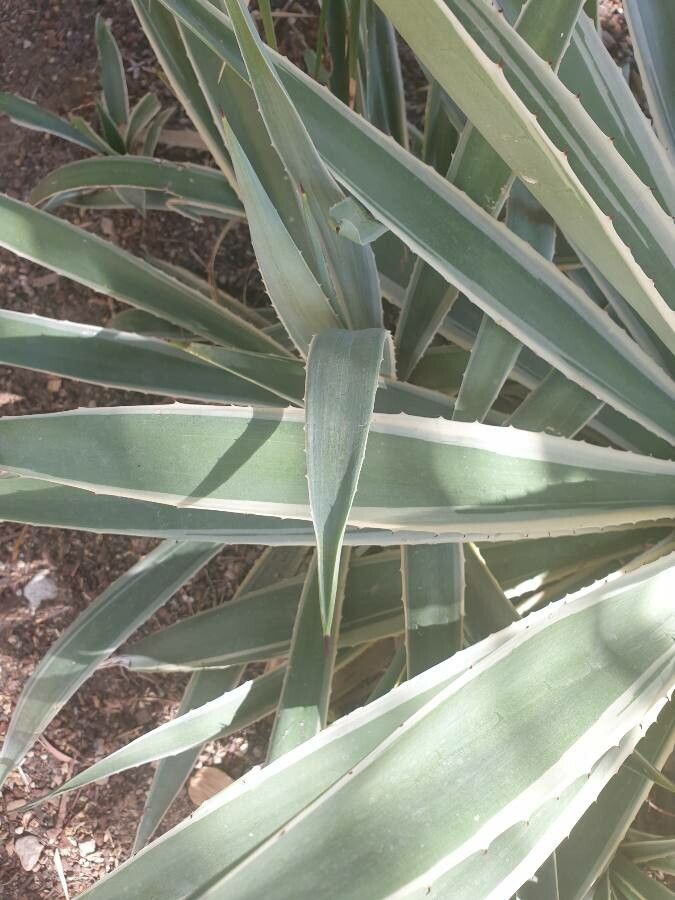
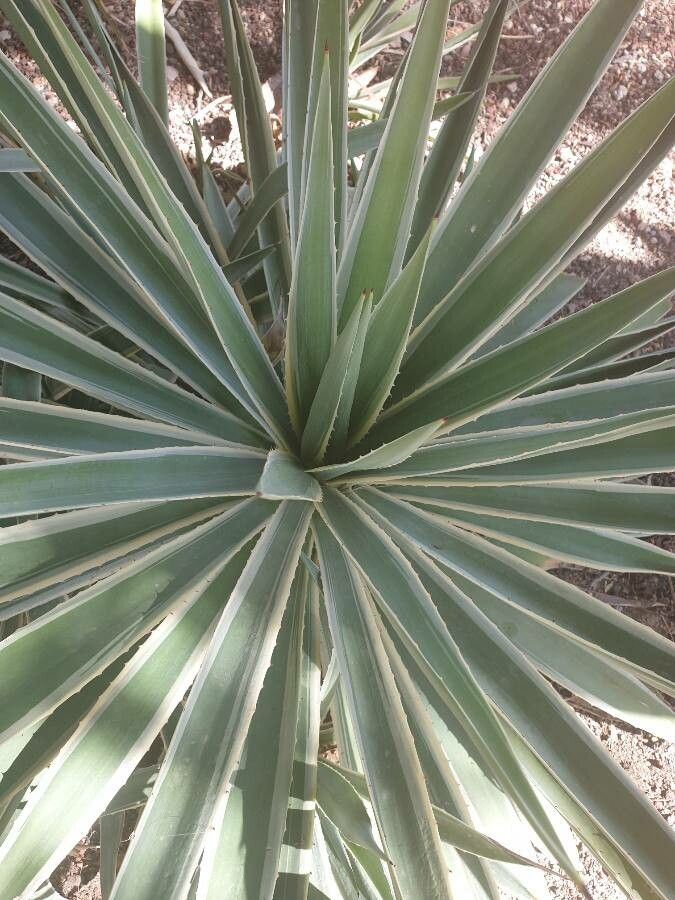
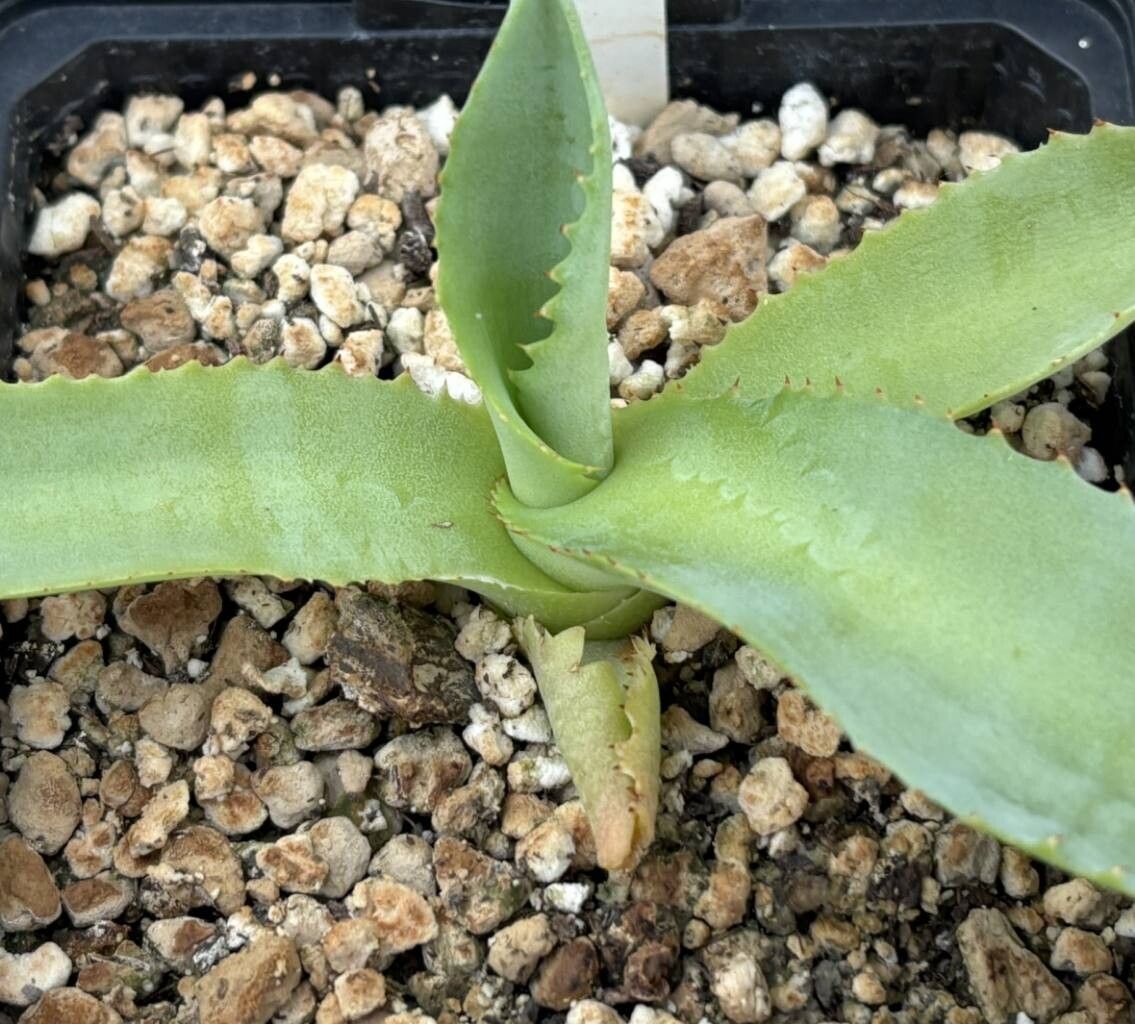
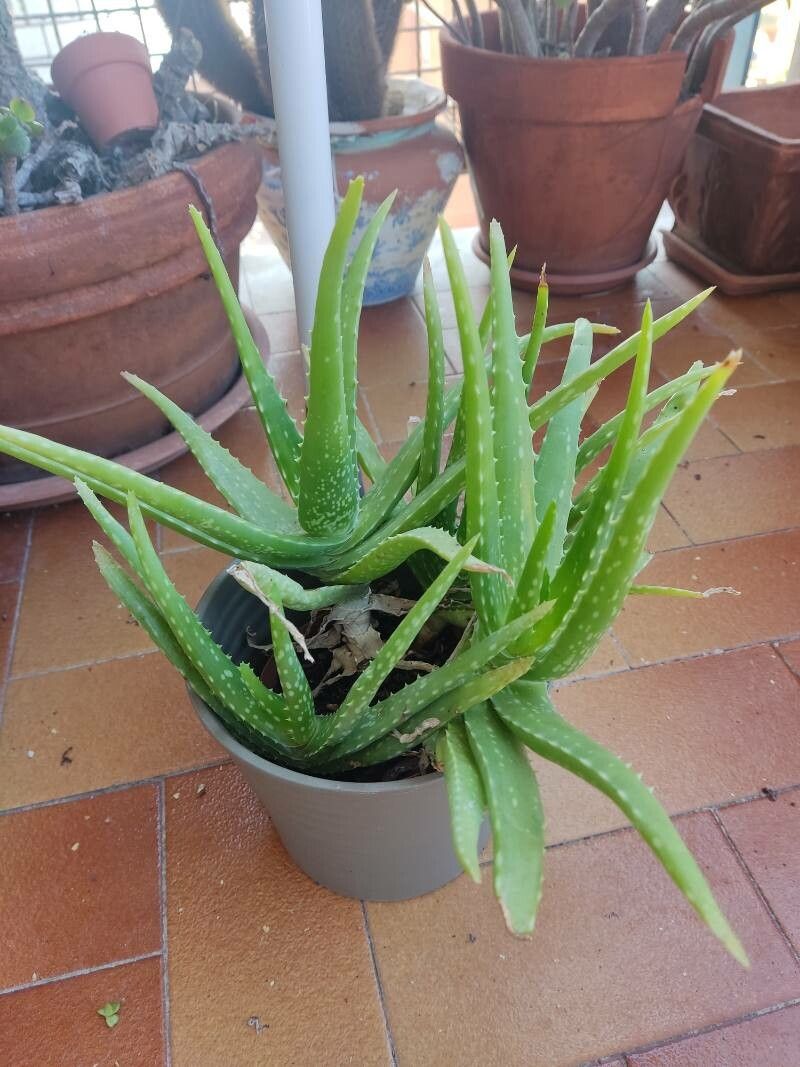
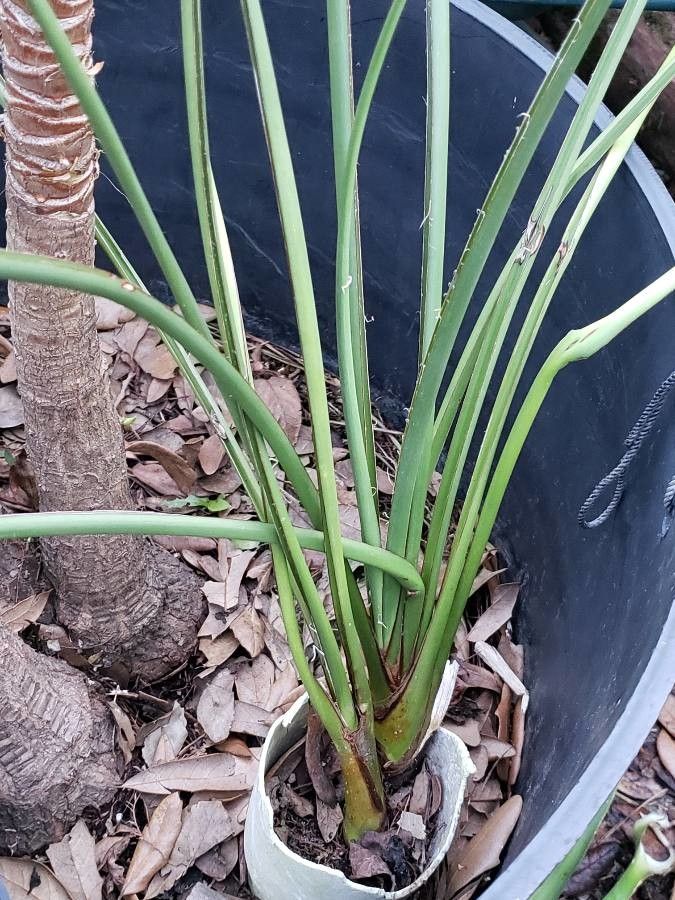
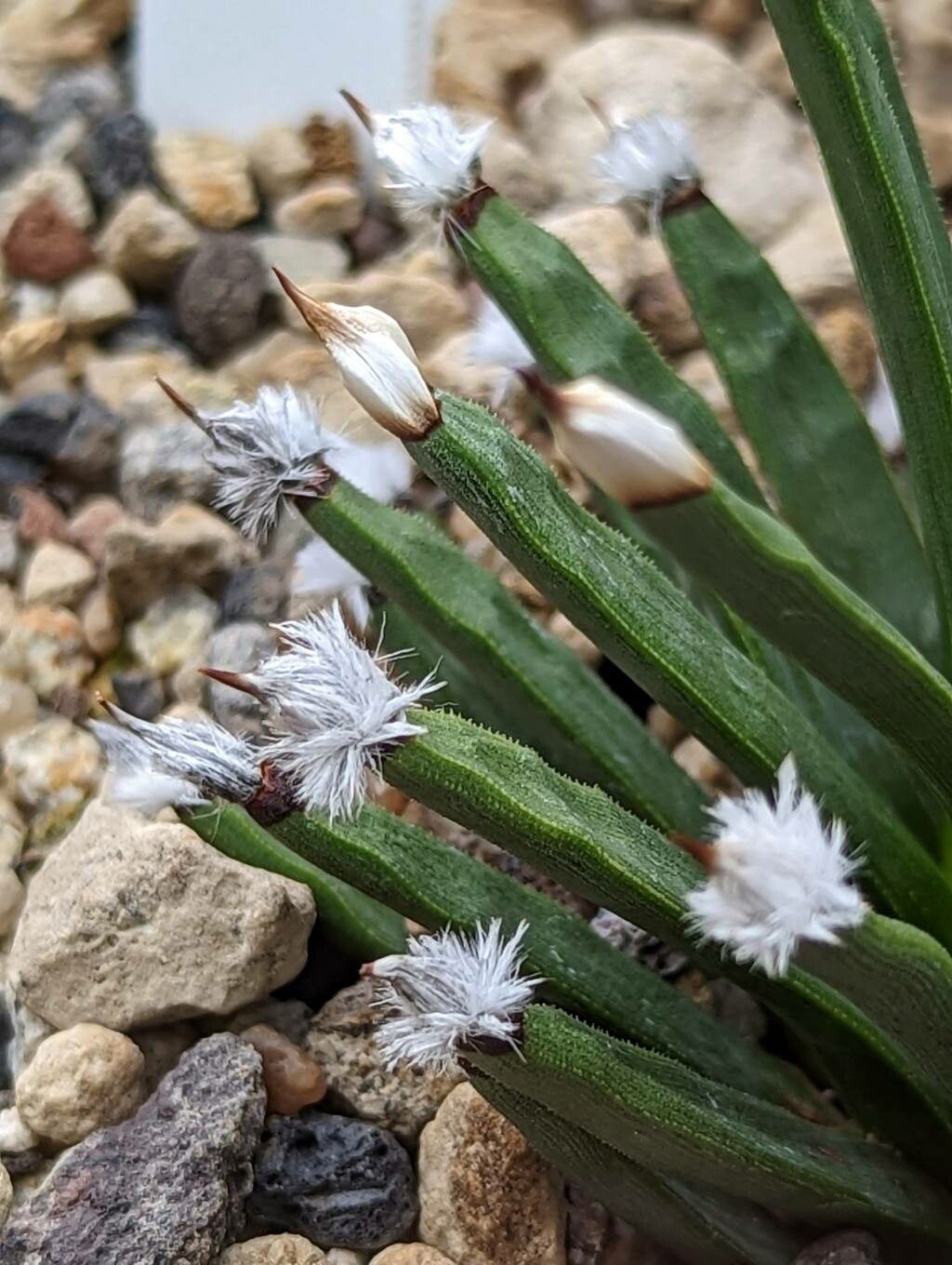
Agave angustifolia (Caribbean agave) is a type of agave plant which is native to Mexico and Central America. It is used to make mezcal and also as an ornamental plant, the cultivar 'Marginata' that white margins on the leaves is a popular variety cultivated in botanical gardens and backyards. It is very closely related to blue agave Agave tequilana, but is used to make the distilled alcoholic beverage mezcal instead of tequila and is the predominant agave species grown in the State of Oaxaca.The World Checklist of Selected Plant Families regards Agave angustifolia as an accepted name. Other sources maintain them as distinct species with non-overlapping native distributions (García-Mendoza and Fernando Chiang 2003). A. angustifolia has narrow, stiffly erect leaves with moderately-spaced spines, producing capsules, not bulbiferous; whereas A. vivipara is described as having shorter, recurved leaves with short-spaced spines and bulbiferous. A. vivipara is likely similar to A. karatto. The A. vivipara of Miller (1768) and Smith et al. (2008) seem different, of a much smaller habit and narrower leaves, from the A. vivipara of Trelease (1913) and García-Mendoza and Fernando Chiang (2003), of a much larger habit.
The Variegated Caribbean Agave has moderate resistance to disease but is more vulnerable to high humidity and excess watering. It becomes especially prone to illness if it is kept in low light and overwatered. Regarding care, the Variegated Caribbean Agave tolerates drought and can go for extended periods without watering. It requires little fertilizer and only occasional pruning. Because of these traits, it is appropriate for gardeners of any experience level, particularly for people who prefer to spend less time on plant care or who may be away from home for extended periods. It is a suitable option for those who do not want to invest a lot of time in maintenance yet still want an easy-to-care-for plant.
How to keep Agave Angustifolia.
Light
Originating from dry areas, the Variegated Caribbean Agave prospers in full sun; its native habitat features intense sunlight and little shade. It can also tolerate partial sun, giving it some flexibility in how it grows.
Water
The Variegated Caribbean Agave is well-suited for dry, arid conditions due to its excellent drought tolerance. It requires minimal additional watering, ideally just once a week, and thrives in well-draining soil to prevent root rot. Its leaves store moisture, enabling the plant to withstand periods of low rainfall.
Temperature
Variegated Caribbean Agave performs best in warm conditions and needs elevated temperatures during the growing season to support growth and metabolism. It prefers abundant sunlight, suitable moisture levels, and good ventilation. It can be damaged by very low temperatures and by overwatering. Balancing conditions is important, and extremely high heat or excessively dry conditions should also be avoided.
Fertilizer
For Variegated Caribbean Agave, apply light amounts of fertilizer once or twice a year during the active growing season. Do not fertilize in winter or summer, when the plant is dormant. Use less fertilizer for plants that have been repotted, and wait a couple of months after repotting before you begin feeding. Fertilizing helps maintain healthy growth and promotes blooming.
Pruning
The Variegated Caribbean Agave, known for its unique rosette shape and striped leaves, benefits greatly from early spring pruning. Removing dead foliage and flower stalks after blooming promotes new growth, deters pests, and keeps the plant vigorous. Always wear gloves to protect yourself from the sharp edges. Regular pruning is essential for maintaining an attractive and healthy plant.
Botanical profile.
- Plant Type
- Herb, Shrub
- Life Cycle
- Perennial
- Genus
- Agave
- Family
- Asparagaceae
- Hardiness Zone
- 9-11
- Mature Height
- 0.91 m to 1.22 m
- Mature Spread
- 0.91 m to 1.22 m
- Leaf Color
- Green, Blue, Gray
- Leaf Type
- Evergreen
- Flower Color
- Green, Yellow
- Flower Size
- 5.08 cm to 6.35 cm
- Bloom Time
- Early summer, Mid summer
- Planting Time
- Spring, Summer, Autumn, Winter
- Harvest Time
- Late summer, Early fall, Mid fall
Other names.
Reader questions.
How should I water my Variegated Caribbean Agave plant?
To water the Variegated Caribbean Agave properly, use filtered water at room temperature. Tap water may contain harmful particles, so filtered water is best. The water should be at room temperature or slightly warmer because the plant is adapted to warm environments and cold water can be shocking. Avoid overhead watering as it can cause foliage problems. Instead, thoroughly soak the soil with filtered room temperature water. This helps moisten the roots and allows them to spread and collect nutrients effectively.
Why is it necessary to add fertilizer to my Variegated Caribbean Agave?
Plants, including the Variegated Caribbean Agave, need soil nutrients for growth. However, it's not always guaranteed that the soil will have all the necessary nutrients. That's where fertilization and soil amendments come in. These treatments ensure that plants not only get the basic nutrients they need, but also the specific ones that are necessary for their growth. For the Variegated Caribbean Agave, fertilizer is particularly important. It helps the roots and stems develop healthily throughout the growing season. Fertilization also enhances the appearance of the plant by creating fantastic leaves, which are its main decorative feature.
How much sunlight does Variegated Caribbean Agave need to grow?
To ensure the healthy growth and well-being of your Variegated Caribbean Agave, it is important to provide it with ample direct sunlight. If you plan to grow the plant outdoors, find a spot that receives full sunlight for at least six to eight hours per day. If you are growing it indoors, place it near a south-facing window or another area that gets plenty of sunlight. However, it is crucial to protect the plant from extreme temperatures and intense sunlight. Avoid exposing it to direct sunlight when the temperature exceeds 35°C (95℉) or during hot summer afternoons, as this can cause damage to the leaves. To prevent sunburn or wilting, you can use sheer curtains or blinds to filter the sunlight or move the plant to a shadier location.
What temperature is best for Variegated Caribbean Agave?
To help your tropical plants thrive, it's best to maintain a temperature range of 75℉ to 90℉ (25-32℃). While different species can tolerate temperatures outside this range, sticking within a few degrees of these limits will ensure optimal growth. However, there are extreme temperature limits to be aware of. Anything below 50℉ (10℃) or above 95℉ (35℃) can hinder growth and cause issues with the leaves and stems. Low temperatures are particularly damaging, as even a light frost can lead to the death of your tropical plants. In fact, cellular death can occur rapidly, with some species dying within 12 to 24 hours.
What should I do if I give too much or too little water to my Variegated Caribbean Agave?
Overwatering is a more common issue than underwatering for the health of your Variegated Caribbean Agave. When this plant receives too much water, the stems and leaves may wilt and turn yellow, and it can develop root rot, mold, and mildew, which can be deadly. While underwatering is less likely, it can still happen and result in brittle, brown leaves. It's important to notice signs of overwatering early, as some diseases, like root rot, may not be fixable if you wait too long. If you see early signs, reduce watering immediately and check the soil drainage. If the soil drains poorly, replace it with a loose, well-draining potting mix. If signs of underwatering are present, simply water more regularly until the symptoms subside.
When should I put fertilizer on my Variegated Caribbean Agave plant?
The Variegated Caribbean Agave requires the most fertilizer when it is actively growing, which occurs during the spring, summer, and early fall. During this time, it is recommended to fertilize the plant every two to four weeks. As winter approaches, you can gradually reduce the amount of fertilizer given until you stop completely in anticipation of the plant's reduced growth during the winter months.
What happens if Variegated Caribbean Agave doesn't get enough sunlight?
Insufficient sunlight can cause your Variegated Caribbean Agave to have difficulties growing and becoming weak and leggy. The leaves may turn yellow as a sign that the plant lacks enough sunlight for chlorophyll production. In some severe instances, the plant could perish.
Does the Variegated Caribbean Agave need varying temperatures at different stages of growth?
Variegated Caribbean Agave does not need temperature changes to transition between different growth phases. However, it is important to maintain consistency in temperature to ensure healthy growth. Fluctuations in temperature can slow down the plant's growth regardless of its current phase. Therefore, it is recommended to keep the agave in a controlled environment. The optimal temperature range for the plant is between 75℉ and 90℉ (25-32℃), and it is especially important to avoid going below the lower limit. While temperatures above 90℉ (32℃) are not ideal, the tropical nature of the plant allows it to tolerate higher temperatures fairly well. On the other hand, temperatures below 50℉ (10℃), and particularly below 40℉ (5℃), will start to cause direct damage to this heat-loving species.
How often do I need to water my Variegated Caribbean Agave?
If your Variegated Caribbean Agave plant is in a pot, the most precise way to determine if it needs water is by checking the soil. Simply put your finger into the soil and if the top two to three inches are dry, it's time to water. For those growing the Variegated Caribbean Agave outdoors in the ground, a similar method can be used to test the soil. Again, if the top few inches of soil have dried out, it's time to water. During spring and early fall, watering once a week is typically sufficient. However, during extremely hot weather, you may need to increase the frequency to twice or more per week. It's worth noting that mature, well-established Variegated Caribbean Agave plants have an impressive ability to withstand drought.
When is it not a good idea to add fertilizer to my Variegated Caribbean Agave plant?
You should regularly feed your Variegated Caribbean Agave throughout most of the year, except for winter when it goes into a dormant phase. However, be cautious not to over-fertilize or use incorrect fertilizer that may cause issues. During winter, avoid feeding the plant as it is unnecessary and can lead to fertilizer burn.
What will happen if Variegated Caribbean Agave gets too much sunlight?
Variegated Caribbean Agave requires full sunlight but should not be exposed to excessive direct sunlight. If the plant is exposed to intense sunlight for too long, it may begin to exhibit signs of sunburn, such as brown or scorched leaves. To prevent this, keep a close eye on the plant and relocate it to a shadier area if needed.
Do Variegated Caribbean Agave plants require different temperatures in different seasons?
The Variegated Caribbean Agave is a plant that doesn't require different temperatures for different seasons. The key to properly caring for this plant is to maintain the optimal temperature range. This is why it is recommended to keep the plant indoors, as it allows for better control of the temperature regardless of the external climate. In addition to temperature, light is also important for tropical species like the Variegated Caribbean Agave. These plants prefer a partial side level of sun exposure. This means that any light they receive should be dappled or filtered, and bright but indirect light is the best option when growing them indoors. Exposing the plant to too much direct sunlight can have a negative impact on its leaves and reduce its growth potential.