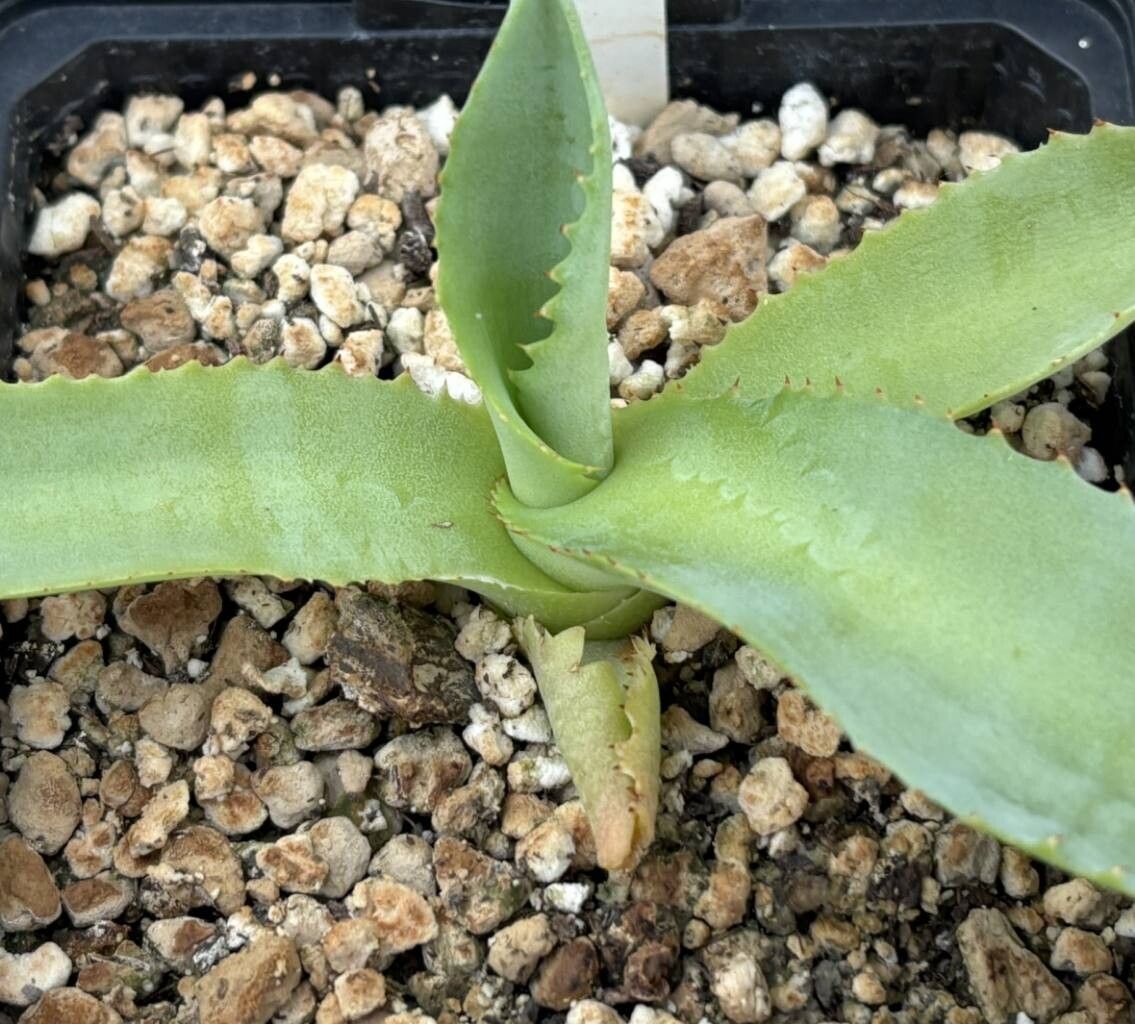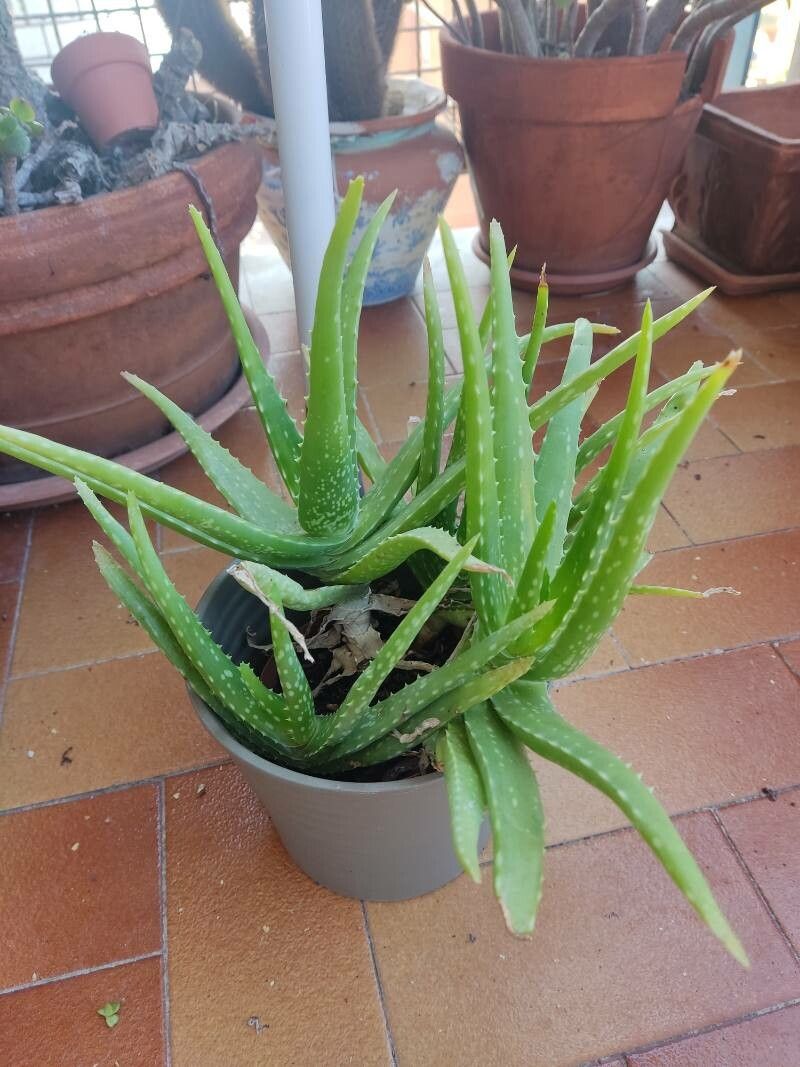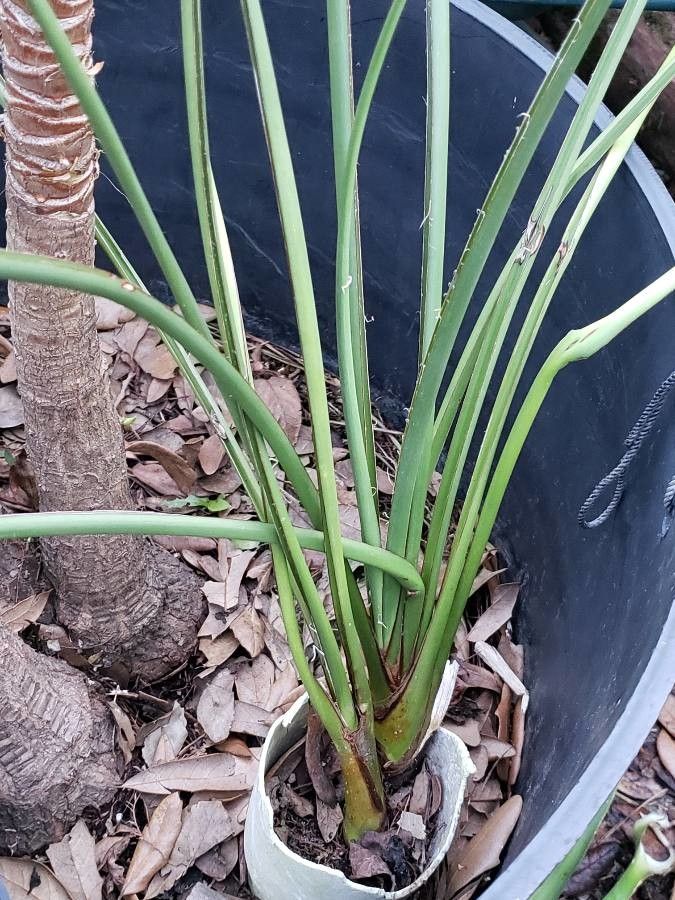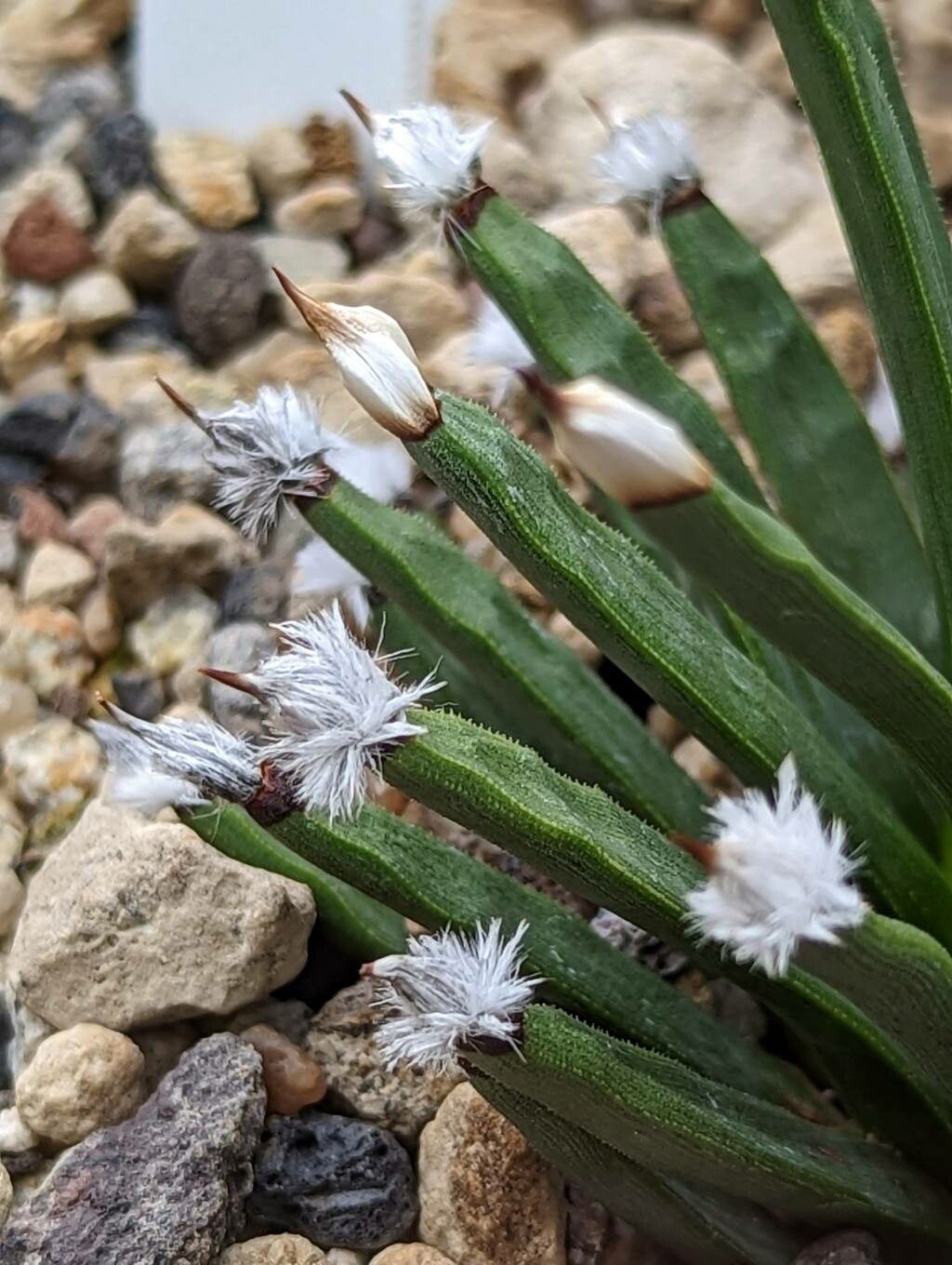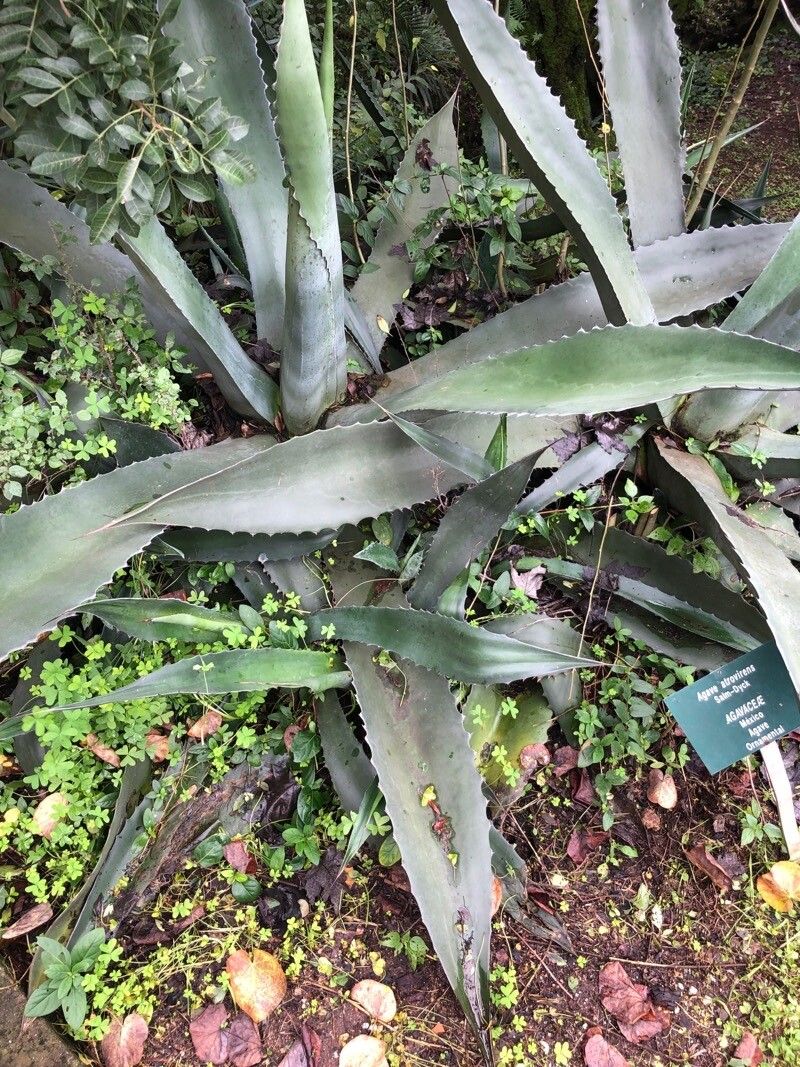
Agave atrovirens, called maguey verde grande is a species of Agave native to Oaxaca, Puebla and Veracruz states in Mexico. It is one of the largest of all the Agaves, approached in size only by Agave missionum, and occasionally reaching a weight of 2 t. Each succulent leaf can be up to 4.5 m (15 ft) long and weigh 45 kg (99 lb) apiece. In the nominate variety A. a. var. atrovirens these leaves can also be up to 40 cm (16 in) wide. As in other Agaves the leaves form a rosette, from the center of which, after many years, a panicle of flowers emerges on a long scape or peduncle which at first looks like a vast stalk of asparagus, but later grows to more than 12 m (39 ft) height, develops side branches near the top and numerous flowers which open red and gradually turn yellow. Each rosette flowers and fruits once, then dies. According to Fayaz this is one of the species which makes offsets or "pups". It grows naturally only between 1,800–3,400 m (5,900–11,200 ft) where cloud cover is more frequent.
Maguey has moderate disease resistance but is relatively sensitive to humidity and excess watering. It also becomes more prone to disease if it receives insufficient light and is overwatered. Regarding care, Maguey is drought-tolerant and can endure long periods without water. It requires little fertilizer and only occasional pruning. These traits make it suitable for people of all levels of experience, especially those who prefer to spend less time on plant care and who may sometimes be away from home for extended periods. It is a good option for those who do not want to invest a lot of time in caring for their plants yet still want an easy-to-maintain species.
How to keep Agave Atrovirens.
Light
Native to arid areas, Maguey prospers in full sun, its native habitat marked by intense sunlight and very little shade. It also tolerates partial sun, giving it some flexibility in its growth.
Water
Maguey thrives in dry environments. During the fall and winter, water the plant less frequently and completely stop watering when temperatures drop to 10°C (50°F). In the summer, slightly increase the amount of water you provide. Watch for signs of dehydration, such as leaves becoming soft. In the spring, resume watering once temperatures rise above 20°C (68°F).
Temperature
Maguey grows best in warm conditions and needs higher temperatures during the growing season to aid its growth and metabolism. It favors abundant sunlight, proper moisture, and good air circulation. However, it can be damaged by very low temperatures and by overwatering. Likewise, it’s important to avoid both excessively high heat and overly dry conditions.
Fertilizer
For Maguey, light applications of fertilizer once or twice a year during the active growing season are adequate. Do not fertilize in winter or summer when the plant is dormant. Cut back on fertilizer for repotted plants and wait a couple of months after repotting before resuming feeding. Fertilizing promotes healthy growth and encourages blooms.
Pruning
Maguey is a hardy succulent characterized by its large, spiky leaves. To maintain its health and appearance, it is best to prune the plant in early spring. Use sharp, sterilized tools to carefully remove any dead or damaged parts. It is advisable to wear gloves while pruning to protect yourself from the plant’s sharp spines. Regular pruning not only helps to control pests and prevent overcrowding but also encourages healthier growth and development.
Botanical profile.
- Plant Type
- Succulent
- Life Cycle
- Perennial
- Genus
- Agave
- Family
- Asparagaceae
- Hardiness Zone
- 9-11
- Mature Height
- 1.52 m to 2.13 m
- Mature Spread
- 2.13 m to 3.05 m
- Leaf Color
- Dark Green
- Leaf Type
- Evergreen
- Flower Color
- Yellow
- Flower Size
- 5.08 cm to 6.35 cm
- Bloom Time
- Early summer, Mid summer
- Planting Time
- Summer, Autumn
- Harvest Time
- Late summer, Early fall, Mid fall
- Native Area
- Mexico