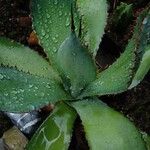
Agave bovicornuta
Cow's Horn Agave · Cow horn agave
Description
Source: wikipedia (CC BY-SA)Agave bovicornuta Gentry, is a plant in the genus Agave, native to mountainous regions in the Mexican states of Chihuahua, Sonora and Sinaloa. The common name Cowhorn Agave and the specific epithet refer to the prominent red spines along the edges of the leaves. Other common names include "lechguilla verde"
Care Guide
💧 Water
The cow horn agave flourishes in dry conditions. Water the plant only when the soil is slightly moist. If the leaves start to soften, it may be a sign of dehydration, indicating the need for more water. During the summer growth period, increase the frequency of watering. As fall approaches, reduce watering, and stop entirely if temperatures drop to 10°C (50°F) or below in winter. Begin watering again in spring when temperatures exceed 20°C (68°F).
☀️ Light Full sun
Originating from dry areas, the Cow horn agave flourishes in abundant sunlight, a trait ingrained from its native habitat marked by intense sun exposure and limited shade. It can also endure partial sun, demonstrating some flexibility in its development.
🌡️ Temperature 15–37.8°C
The cow horn agave flourishes in hot climates, needing higher temperatures throughout its growth period to enhance growth and metabolic processes. It prefers plenty of sunshine, the right amount of moisture, and ample air circulation. However, it is vulnerable to harm from overly cold temperatures and too much water. Moreover, it is crucial to maintain a balance and steer clear of extremely high temperatures and overly parched conditions.
💨 Humidity
🪴 Soil 0-0
🌱 Fertilizer
For Cow horn agave, a few light applications of fertilizer annually, specifically 1-2 times during the growth phase, are adequate. Refrain from fertilizing in the winter and summer seasons when the plant is inactive. Lower the quantity of fertilizer for plants that have been repotted and allow a few months to pass post-repotting before you start fertilizing again. Fertilization helps promote robust growth and facilitates flowering.
🪴 Pot & Repot
✂️ Pruning
The Cow Horn Agave is distinguished by its broad, light-green leaves with toothed edges. To maintain its health and appearance, it's beneficial to prune the plant each year in early spring. During pruning, remove any dead or damaged leaves to encourage healthy growth. Always use sterilized tools to prevent infections and improve airflow, which helps reduce the risk of disease. Additionally, wear gloves for your protection while handling the plant.
🌿 Propagating
🐛 Diseases & pets
☠️ Toxicity
Characteristics
- Plant Type
- Succulent
- Life Cycle
- Perennial
- Genus
- Agave
- Family
- Asparagaceae
- Hardiness Zone
- 8-11
- Mature Height
- 0.61 m to 1.22 m
- Mature Spread
- 0.91 m to 1.52 m
- Leaf Color
- Green, White, Red, Brown
- Leaf Type
- Evergreen
- Flower Color
- Yellow
- Flower Size
- 5.08 cm to 7.62 cm
- Bloom Time
- Early summer, Mid summer
- Planting Time
- Spring, Summer, Autumn
- Harvest Time
- Late summer, Early fall, Mid fall
- Native Area
- Mexico