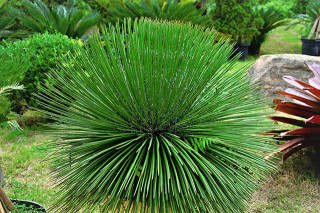
Agave geminiflora
Description
Source: leafsnapThis plant features a highly symmetrical and compact rosette composed of narrow, sharply pointed, spine-free leaves. When it matures, a single, majestic flower stem can reach up to 12 feet tall, adorned with clusters of tiny yellow flowers. This evergreen species makes an impressive addition to small xeric gardens, rock gardens, or container plantings.
Care Guide
💧 Water Every 1 week
Agave geminiflora is well-suited to arid regions due to its ability to efficiently store water and tolerate prolonged droughts. It thrives in dry conditions with minimal moisture and only needs to be watered once every three weeks. This outdoor plant performs best in climates where rainfall is infrequent but intense, maximizing its water absorption during the growing season.
☀️ Light Full sun
Native to dry areas, Twin-flowered Agave performs best in full sun, as its natural habitat has strong sunlight and very little shade. It will also tolerate partial sun, providing some flexibility in its growth.
🌡️ Temperature 20–37.8°C
Twin-flowered Agave is naturally suited to climates with temperatures from 68 to 100 °F (20 to 38 ℃). It prefers warmth and performs best toward the higher end of that range. In cooler seasons, keep temperatures above 20 ℃ (68 °F) for optimal growth.
💨 Humidity dry (<40%)
This plant prefers dry conditions, so don't mist it. However, watering it less often can also thrive in higher humidity.
🪴 Soil 6-7
🌱 Fertilizer
For Twin-flowered Agave, light applications of fertilizer once or twice a year during the growing season are sufficient. Do not fertilize in winter or in summer while the plant is dormant. Use less fertilizer for plants that have been repotted and wait a couple of months after repotting before applying any fertilizer. Feeding helps maintain healthy growth and encourages blooming.
🪴 Pot & Repot Every 2 years
Agave geminiflora is a bushy, non-climbing plant that should be repotted every two years during the spring. When repotting, select a pot that is 2 to 3 inches wider than the current one to accommodate its dense, fibrous roots. After repotting, place the plant in bright, indirect light and provide minimal water. This approach reduces stress and promotes the plant's health.
✂️ Pruning
As new leaves grow on the agave geminiflora, the older, lower leaves tend to yellow and dry out. Remove these leaves promptly to maintain the plant's appearance. Additionally, trim any infected leaves to prevent pests and diseases from spreading to healthier foliage.
🌿 Propagating
🐛 Diseases & pets
☠️ Toxicity
Characteristics
- Plant Type
- Succulent
- Life Cycle
- Perennial
- Genus
- Agave
- Family
- Asparagaceae
- Hardiness Zone
- 9-11
- Mature Height
- 61 cm to 91 cm
- Mature Spread
- 1.52 m
- Leaf Color
- Dark Green
- Leaf Type
- Evergreen
- Flower Color
- Yellow, Green
- Flower Size
- 4.06 cm to 5.08 cm
- Bloom Time
- Summer
- Planting Time
- Summer, Autumn
- Harvest Time
- Fall
- Native Area
- Mexico