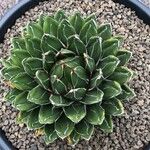
Agave havardiana
Havard agave · Havard's century plant
Description
Source: leafsnapAgave havardiana, commonly known as Havard's century plant, is a succulent species native to the Chihuahuan Desert in North America. This slow-growing perennial can grow up to 5 feet tall and 6 feet wide. Its thick, fleshy leaves, adorned with sharp spines along the edges, display a bluish-green hue. The plant produces towering flower stalks that can reach heights of up to 20 feet, with yellow-green flowers blossoming at the top. Agave havardiana thrives in drought conditions and prefers well-drained soil with full sun exposure, though it can also tolerate partial shade. Its unique appearance and low maintenance requirements make it a popular choice for ornamental landscaping. Additionally, indigenous people have utilized the plant for its medicinal properties, using its sap or juice extracted from the leaves or roots to treat various ailments such as wounds, fever, coughs, and digestive issues due to its anti-inflammatory properties.
Care Guide
💧 Water Every 14 days
Harvard's century plant flourishes in arid environments due to its strong drought tolerance, needing minimal watering just once every three weeks. As an evergreen, it keeps its leaves year-round, which helps it conserve water even in extreme conditions.
☀️ Light Full sun
Havard's century plant, native to arid regions, performs best in full sun; its natural habitat features intense sunlight and very little shade. It can also tolerate partial sun, providing some flexibility in its growth.
How much sunlight does the Havard's century plant require?
The Havard's century plant, or Agave havardiana, thrives best in conditions where it can receive ample sunlight. Specifically, it needs full sun, which is defined as above 6 hours of direct sunlight per day, to flourish. However, it can also tolerate partial sun, meaning it can still grow well with about 3-6 hours of sunlight. It's important to observe the patterns of sunlight in your garden to find the ideal location that offers the right balance of light and shade, ensuring the plant's health and growth.
🌡️ Temperature 5–35°C
Although Havard's century plant can tolerate some heat, it mainly thrives and grows in cooler seasons and goes dormant in summer. In hot summer weather, provide shade to prevent scorching from strong sunlight. Watering should be reduced or stopped during the hottest period to avoid root rot. The plant shows vigorous growth in winter and spring, and as long as temperatures do not fall too low, it will continue to grow steadily.
What is Havard's Century Plant?
Havard's Century Plant, scientifically known as Agave havardiana, is a species of agave known for its significant characteristics. Unfortunately, the provided data doesn't include information about its essentials or symptoms, which leaves us without details on its specific traits or related concerns. Typically, agave plants are recognized for their rosette formation, long life span, and eventual towering bloom before dying. For more comprehensive details on Havard's Century Plant, including care, growth habits, and uses, additional research would be necessary.
💨 Humidity
🪴 Soil 0-0
🌱 Fertilizer
For Havard's century plant, small amounts of fertilizer applied one to two times a year during the growing season are adequate. Avoid fertilizing in winter and summer when the plant is dormant. Reduce feeding for repotted plants and wait a couple of months after repotting before applying fertilizer. Fertilizing helps support healthy growth and encourages blooms.
🪴 Pot & Repot
✂️ Pruning
The Havard's century plant benefits from pruning in early spring. Begin by removing any damaged leaves to prevent pest infestations and encourage healthy growth. Be careful not to over-prune, as this can stress the plant. After the plant blooms, trim the flower stalks to improve its appearance and manage seed production. Additionally, regularly clear away any debris to maintain the plant's health and ensure it remains strong and vibrant.
🌿 Propagating
🐛 Diseases & pets
☠️ Toxicity
Characteristics
- Plant Type
- Succulent
- Life Cycle
- Perennial
- Genus
- Agave
- Family
- Asparagaceae
- Hardiness Zone
- 5-10
- Mature Height
- 30 cm to 91 cm
- Mature Spread
- 0.91 m to 1.22 m
- Leaf Color
- Blue, Green, Gray, Silver
- Leaf Type
- Evergreen
- Flower Color
- Yellow
- Flower Size
- 5.08 cm to 6.35 cm
- Bloom Time
- Early summer, Mid summer
- Planting Time
- Spring, Summer, Autumn
- Harvest Time
- Late summer, Early fall, Mid fall
- Native Area
- Mexico