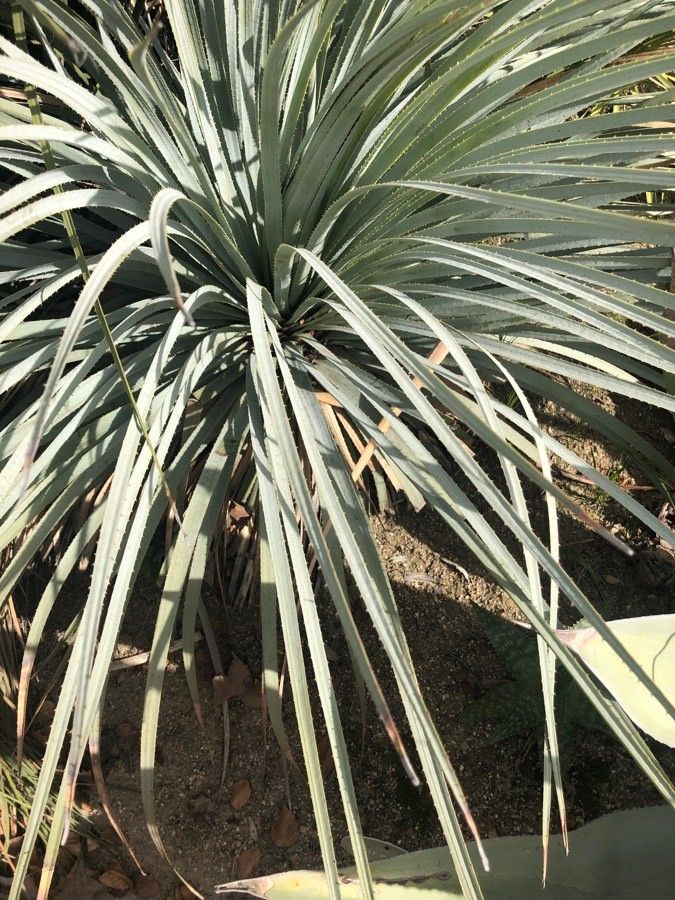
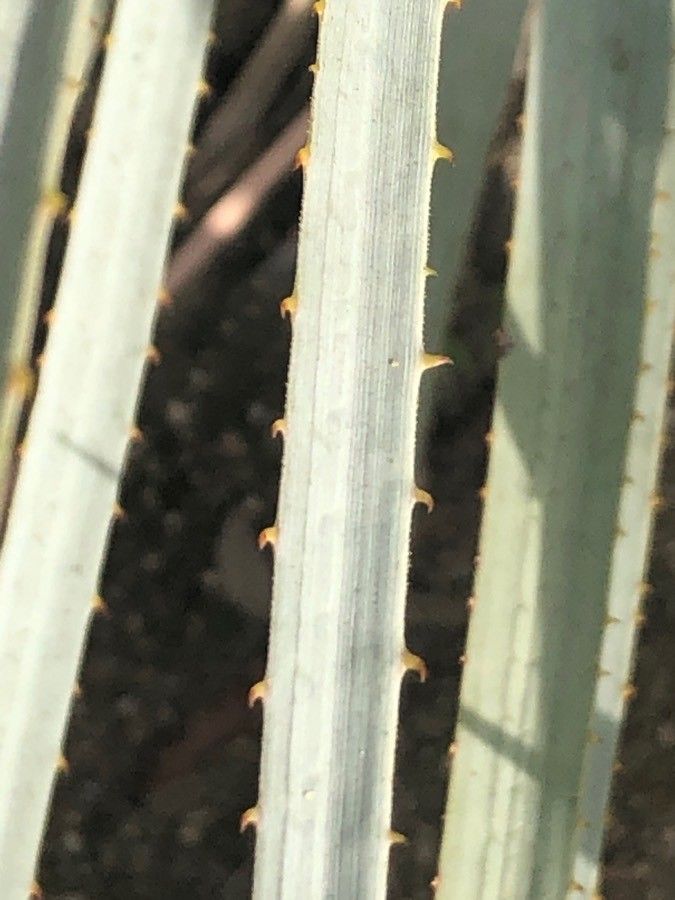
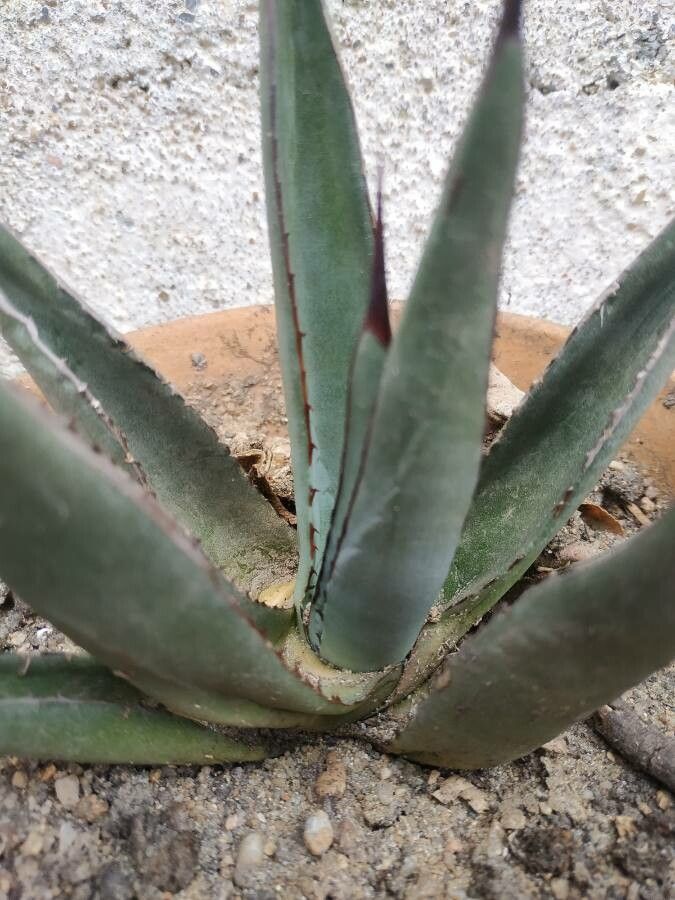
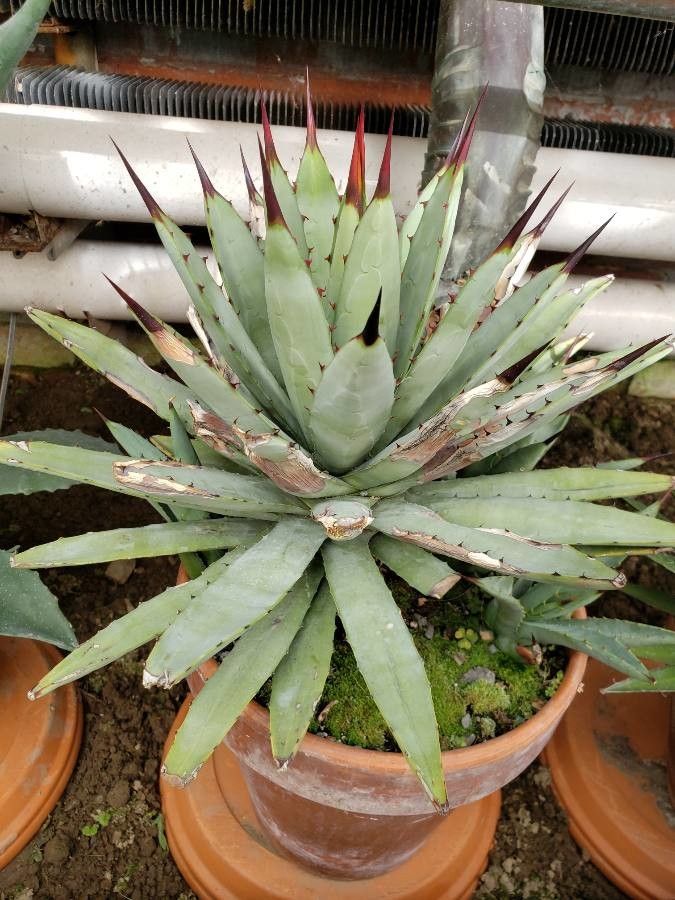
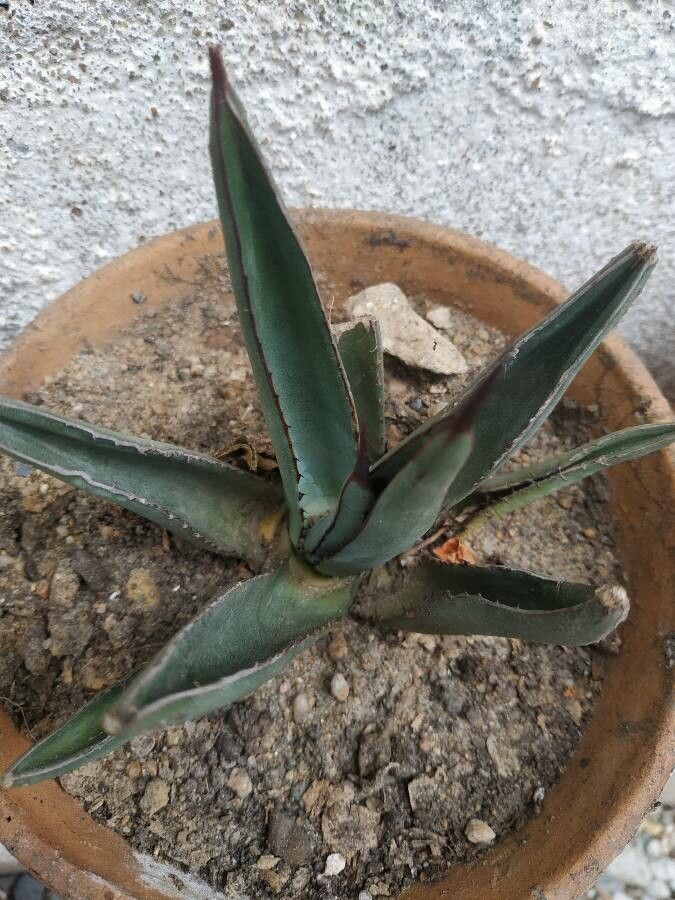
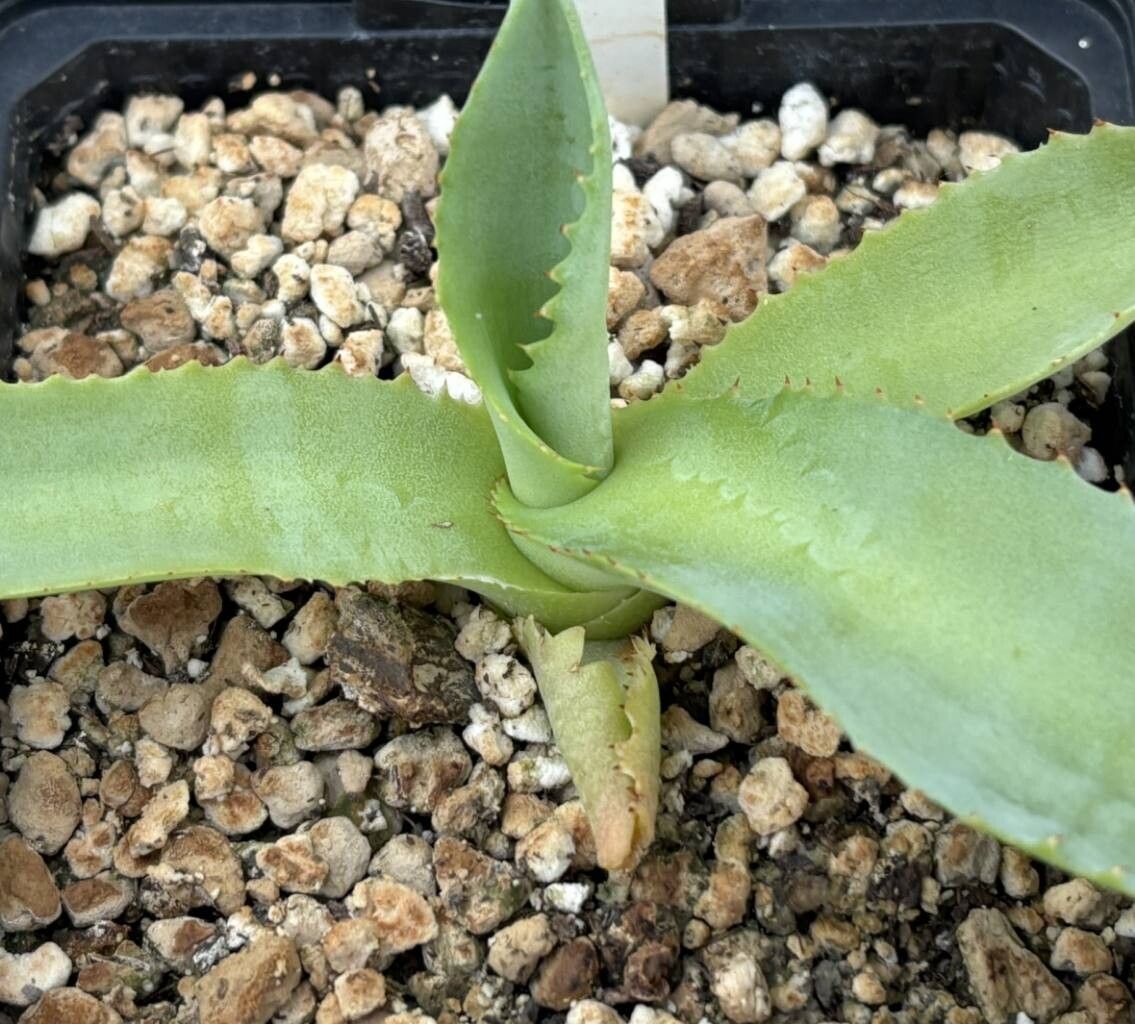
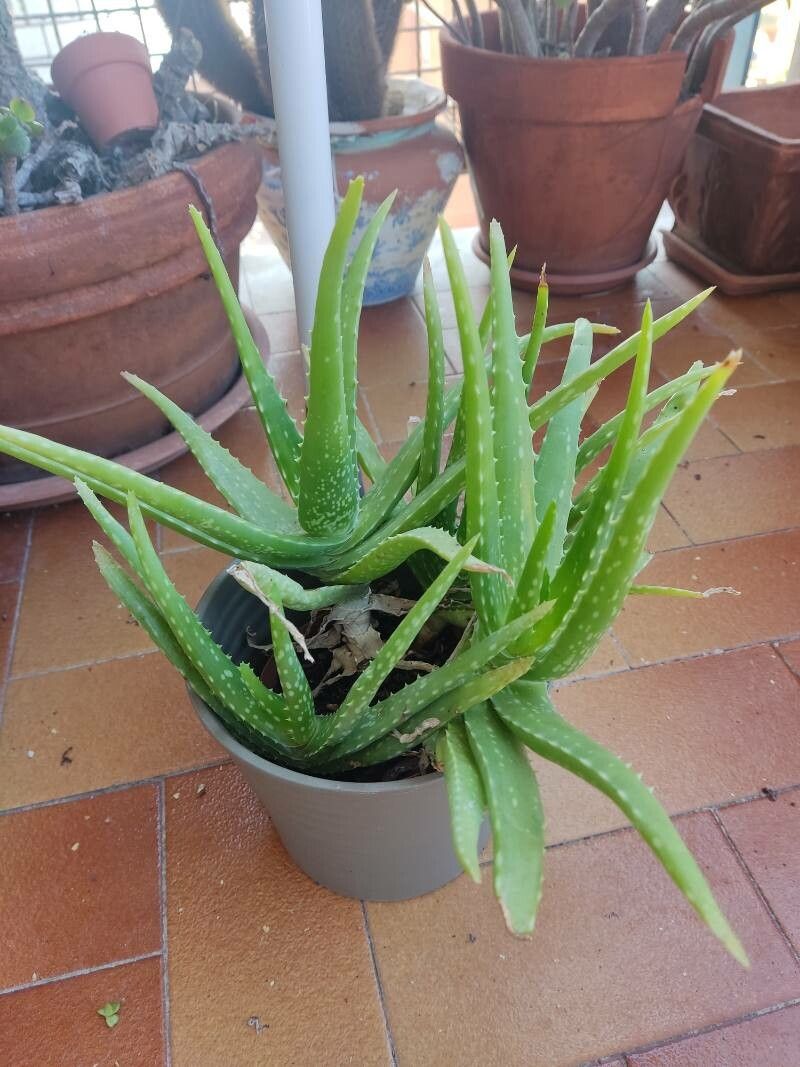
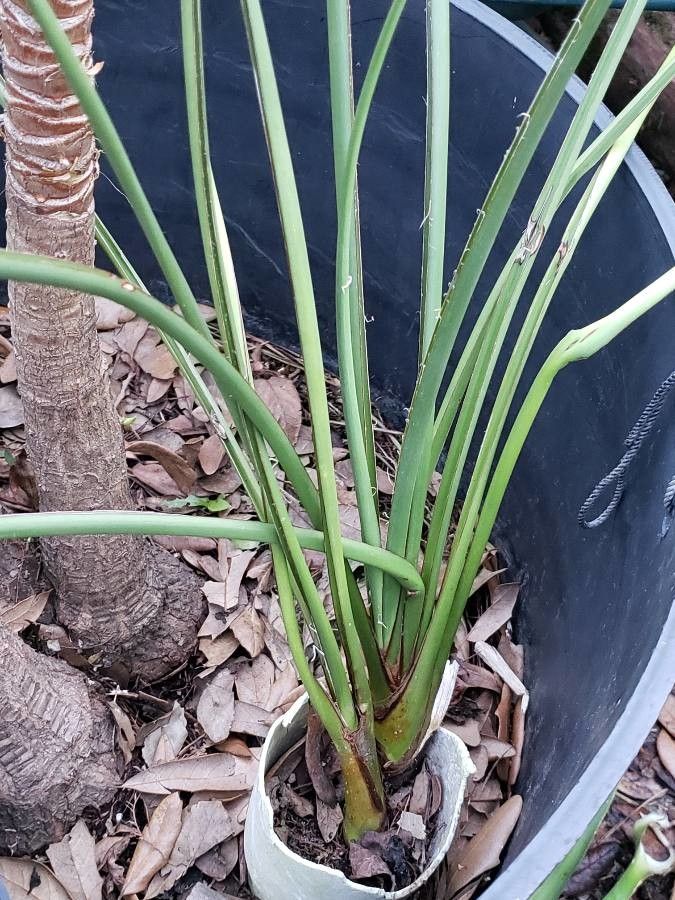
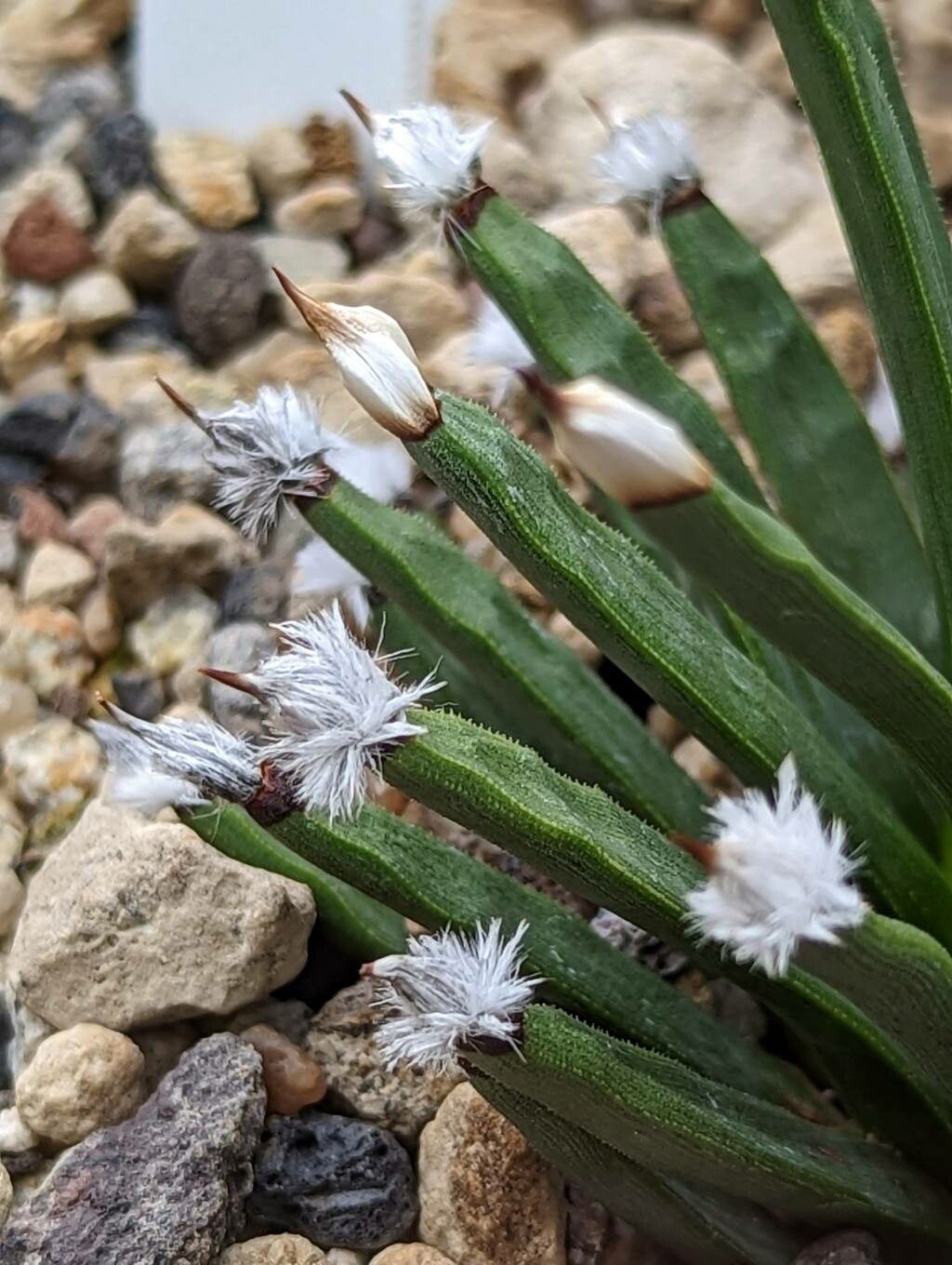
Agave palmeri is a succulent species belonging to the Agavaceae family. It is native to the southwestern United States and northern Mexico, thriving in arid and semi-arid regions. The plant forms a rosette of thick, fleshy leaves that are gray-green in color and can grow up to 1 meter long. The edges of the leaves are lined with sharp spines, which can be dangerous if not handled carefully.
Agave palmeri produces a tall flowering stalk that can reach heights of up to 6 meters. This stalk bears clusters of yellow-green flowers, which bloom from late spring through early summer. After flowering, the plant dies back but leaves behind offsets, or "pups," around its base, which will grow into new plants.
This species plays an important role in the ecosystem, providing food for pollinators such as bees and hummingbirds during its blooming period. Additionally, indigenous peoples have historically used Agave palmeri for various purposes, including food, medicine, fiber production, and religious ceremonies.
In cultivation, Agave palmeri requires well-draining soil with low moisture content and full sun exposure for optimal growth. It is drought-tolerant but may need occasional watering during prolonged dry spells or extreme heat conditions.
Overall, Agave palmeri is an attractive succulent with unique features, making it an interesting addition to any garden or landscape design project. It also provides ecological benefits by supporting pollinators.
Palmer's century plant has moderate disease resistance and is more sensitive to humidity and overwatering. It also becomes more prone to disease if it lacks light and is overwatered. Regarding care, Palmer's century plant is drought-tolerant and can withstand extended periods without watering. It needs little fertilizer and only occasional pruning. This makes it suitable for people of all experience levels, especially those who prefer to spend less time on plant care and who may sometimes be away from home for long periods. It is a good option for people who do not want to invest much time in caring for their plants but still want an easy-to-maintain plant.
How to keep Agave Palmeri.
Light
Palmer's century plant thrives when placed where sunlight floods the area for most of the day, which supports healthy growth. Its native habitat is predominantly sunlit. Too much sun does not damage the plant, but insufficient sunlight can limit its growth.
Water
Palmer's century plant is well-suited to arid desert environments. It requires minimal moisture and does well with a watering schedule of just once every three weeks. Generally grown outdoors, this evergreen plant has thick, succulent leaves that effectively conserve water, even in extreme heat.
Temperature
Palmer's century plant originates from regions with temperate climates. It prefers temperatures between 59 and 95°F (15 and 35 ℃). In different seasons, altering the plant's environment to reproduce these temperatures can improve its growth.
Fertilizer
Palmer's century plant requires only light fertilizer applications once or twice a year during the growing season. Do not fertilize in winter or summer while the plant is dormant. Cut back on fertilizer for repotted plants and wait a couple of months after repotting before feeding. Fertilizing helps maintain healthy growth and encourages flowering.
Pruning
Palmer's century plant is characterized by a rosette of pointed leaves and tall flower stalks. It requires minimal pruning, which should focus on removing dead or damaged leaves in early spring. This helps promote growth and flowering while reducing the risk of frost damage. Using the proper pruning techniques can also improve airflow and minimize pest problems.
Pot & Repot
To encourage healthy growth, repot Palmer's century plant every 2-3 years in the spring. Choose a wide, sturdy pot to accommodate its rosette shape. After repotting, place the plant in bright light and water sparingly to avoid root rot. With proper care, Palmer's century plant will become an impressive addition to any space.
Botanical profile.
- Plant Type
- Herb
- Life Cycle
- Perennial
- Genus
- Agave
- Family
- Asparagaceae
- Hardiness Zone
- 7-10
- Mature Height
- 1.22 m
- Mature Spread
- 1.22 m
- Leaf Color
- Green, Blue
- Leaf Type
- Evergreen
- Flower Color
- Yellow
- Flower Size
- 11.43 cm
- Bloom Time
- Early summer, Mid summer
- Planting Time
- Spring, Summer, Autumn
- Harvest Time
- Late summer, Early fall, Mid fall
- Native Area
- Mexico
Other names.
Reader questions.
How should I water my Palmer's century plant?
To properly water the Palmer's century plant, it is recommended to use filtered water at room temperature. Tap water may have harmful particles, so it's best to avoid it. Considering the warm environment the plant comes from, using cold water can be a shock to its system. To prevent foliage complications, it's advised to avoid overhead watering. Instead, apply filtered room temperature water directly to the soil until it is completely soaked. This promotes the health of the plant by ensuring the roots are moist and able to collect necessary nutrients as they spread through the soil.
Why should I put fertilizer on my Palmer's century plant?
The main structure of the Palmer's century plant is made up of its leaves, and fertilization is crucial for maintaining the appearance and function of these leaves. Proper fertilization ensures that the leaves have consistent color and a healthy texture. Additionally, fertilization benefits the plant below the soil's surface by promoting root growth and maintaining existing roots. This not only keeps the plant healthy in the present, but also enhances its ability to absorb nutrients from the soil in the future.
What kind of sunlight does Palmer's century plant require?
Palmer's century plant requires full sun every day, with a minimum of six hours of sunlight to maintain the health of its leaves, roots, and blooms. While most perennials also require six hours of sunlight daily, plants like the Orange Daylily or Giant Coreopsis can survive with as little as three hours of sunlight. However, these flowering perennials will not thrive as well as they would in sunnier conditions.
What temperature is best for Palmer's century plant?
The best temperature for Palmer's century plant depends on the time of year. There are two primary seasons to consider: the growing season and the dormancy season. During the growing season, when the plant begins to sprout, the ideal temperature range should be between 65-80℉ (18-27℃). If the temperature drops below 15℉ (-10℃), the plant may suffer, leading to browning and wilting of the leaves. However, a brief cold snap can be tolerated with some assistance. On the other hand, during the warmer parts of the year, it is important to protect Palmer's century plant from excessively high temperatures. The temperature range should not exceed 95-105℉ (35-40℃) as anything above that can negatively impact the foliage and blooms. High temperatures can cause wilting, drooping, and even sunburn on the leaves, which may be challenging for the plant to recover from. Fortunately, there are various simple solutions to address this issue.
What should I do if I give my Palmer's century plant too much water or too little water?
Overwatering and underwatering can both harm your Palmer's century plant, but overwatering is more common. If the plant gets too much water, its stems and leaves may wilt and turn yellow. Overwatering for a long time can also cause diseases like root rot, mold, and mildew, which can be fatal. Underwatering is less likely because this plant can tolerate drought. However, it can still happen, and you'll notice the leaves becoming brittle and brown. It's important to notice signs of overwatering early. Some diseases, like root rot, can't be fixed if you wait too long. If you see early signs of overwatering, reduce your watering immediately. Check the soil quality. If it doesn't drain well, replace it with a loose, well-draining potting mix. If your plant is not getting enough water, simply increase the watering until the signs go away.
What is the best time to fertilize my Palmer's century plant?
If you want to grow your Palmer's century plant outdoors, it will start sending out new growth in early spring. This is when you should begin fertilizing it for the year. Typically, one application of fertilizer is enough for the plant to do well. However, if you want to maximize its growth, you can fertilize it multiple times throughout the spring and early summer. In this case, you can feed it about once every month to a month and a half.
Can the sun harm Palmer's century plant? How can I shield Palmer's century plant from sun and heat damage?
In warm climates, some Perennial Flowering Plants may struggle with excessive heat and suffer from sun damage. They can wilt, dry out, or even experience growth problems if they are consistently exposed to the intense afternoon sun. However, not all plants require protection from the light afternoon sun. For those that are harmed by intense afternoon exposure, it is recommended to provide them with some shade in warmer climates. Gardeners can achieve this by planting these plants in areas that do not receive direct heat during the afternoon, such as under trees or behind bushes.
The first year or seedling Palmer's century plant needs specific temperatures in order to grow properly.
If this is the first year that your Palmer's century plant is outside as a new plant, it may need some extra care during the coldest months. Frost can cause severe damage to a first-year plant and prevent it from growing back healthy in the spring. To prevent this, you need to keep the plant at a temperature of 40℉(5℃) or above until it becomes established. This can be done by either bringing the plant indoors for a couple of months or using mulch or fabric barriers to protect it from frost. During the first year or two, it is best to plant the Palmer's century plant in a shadier spot. Smaller and weaker plants have a harder time regulating their own temperature in the heat. These plants should receive no more than five hours of direct sunlight per day, especially if the temperature rises above 80℉(27℃). To control the summer heat, use shadecloth and provide frequent watering or misting.
How frequently should I water my Palmer's century plant?
If your Palmer's century plant is in a pot, the most precise way to determine if it needs water is by checking the soil. Simply stick your finger into the soil and if the top two to three inches are dry, then it's time to water. If you have your Palmer's century plant planted outdoors in the ground, you can use a similar method to test the soil. Again, check the top few inches of soil and if it's dry, it's time to water. Generally, during the spring and early fall, watering once a week is usually sufficient. However, during extremely hot weather, you may need to increase the frequency to twice or even more per week. It's worth noting that mature and well-established Palmer's century plants have a remarkable ability to tolerate drought.
When should I not add fertilizer to my Palmer's century plant?
During late fall and winter, your Palmer's century plant goes into a dormant phase and stops producing new growth. Therefore, it is not recommended to fertilize your plant during this time. In spring and summer, if you choose to fertilize, gradually reduce the amount of fertilizer as summer approaches because the plant's growth rate also slows down. It is important to note that it is never a good idea to fertilize your Palmer's century plant during exceptionally hot weather or when the soil is overly dry. Doing so can put stress on the plant and cause it to die prematurely.
Should I make sure Palmer's century plant doesn't get too much sun?
Certain perennial plants require ample sunlight to reach their maximum bloom. However, in warmer climates, some of these plants actually benefit from less sun. For instance, individuals residing in hotter regions might find it beneficial to shade their flowering perennials during the intense afternoon sun, especially during summer months. Although many perennial flowering plants prefer partial shade in the hottest climates, there are exceptions. Take the Giant Coreopsis, for example, as it is not bothered by excessive sun exposure. These plants can flourish even when placed in the full sun during scorching weather.
How can I keep Palmer's century plant safe from very hot or very cold weather?
If cold temperatures below 15℉(-10℃) happen while the Palmer's century plant is growing, there are a couple of things you can do to protect it from frost or cold damage. If the plant is in a container, you can bring it inside where it can still get bright, indirect light until the temperatures go back above the lower threshold. If the plant is in the ground, you can use mulch or horticultural fabric to create a barrier around it that will protect it from frost and cold wind. On the other hand, if the temperatures are hotter than 80℉(27℃) in the shade during the day, you need to be careful not to expose the plant to more than six hours of sunlight per day, preferably in the morning. To reduce direct sunlight during the hottest parts of the day, you can put up shade cloth or fine plastic mesh. Additionally, installing a misting system can help lower ground temperatures by releasing cooling mist around the base of the plant during the day.