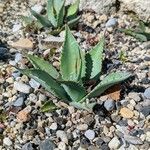
Agave parryi
Parry's agave · Parry's Century-plant · Mescal · Mescal agave
Description
Source: leafsnapAgave parryi, known as Parry's agave or mescal agave, is a flowering plant in the family Asparagaceae, subfamily Agavoideae. It is a slow-growing succulent perennial native to Arizona, New Mexico, and northern Mexico. The leaves are grey green and have a spine at the tip. One of the distinguishing features is that the point on the tip, which is typically dark tan, brown, or black, is darker than the leaf. Indentations of previous leaves show on the back of each leaf. The Huachuca variety grows in a rosette pattern as large as 2½ feet in diameter. Because of its compact size, plus its low water use and low maintenance, Huachuca agave is considered a good landscaping plant for desert residential landscaping. It requires full sun. It is hardy to roughly −5 °F (−21 °C), though there are reports of specimens surviving temperatures at −20 °F (−29 °C). Parry's agave is evergreen. Aged agave produce a twelve-foot stalk with bright yellow blooms. They then die after blooming, as all leaf and root resources are put into the stalk, flowers, and seeds. It can be propagated by either offset or seed. This plant has gained the Royal Horticultural Society’s Award of Garden Merit.
Care Guide
💧 Water
Parry's Agave thrives in arid environments by storing water in its succulent leaves, which allows it to require minimal watering—about once every three weeks. It prefers well-draining soil and can tolerate dry spells. Typically grown outdoors, this plant has a robust growth cycle well-suited to its desert habitat.
What should I do if I give too much or too little water to my Parry's Agave?
Parry's Agave is a resilient succulent that can withstand long periods without water. However, if you go too long without watering it (about a month or more), you may notice some signs of underwatering. These signs include shriveled, dry, and flat leaves that may have turned brown or crispy. The soil will also be completely dry. To remedy this, give your Parry's Agave plenty of water by submerging the pot in water for about 5-10 minutes until you feel moisture on the surface of the soil. You can remove any dried out leaves to make room for new growth. On the other hand, overwatering can be dangerous and potentially fatal to your Parry's Agave. Too much moisture can lead to root rot, which prevents the roots from absorbing nutrients and water. Symptoms of overwatering include yellow, swollen, and translucent leaves that may burst open. If left untreated, leaves may turn brown or black and fall off easily. It's important to check the soil to confirm if overwatering is the issue. Saving an overwatered plant can be challenging, but it's possible if caught early. Start by removing the plant from its pot and checking the roots and soil. If root rot is present, the roots will be dark brown or black, soft, mushy, or slimy. If most of the roots are affected, it may be difficult to save the plant. In this case, remove healthy leaves to propagate a new Parry's Agave. However, if only a portion of the roots are affected, there is a chance to save the plant. Trim away unhealthy roots and dip the remaining healthy roots in a fungicide before repotting in fresh, well-draining soil. With proper care, the plant should recover and produce new growth in the next growing season.
How frequently should I give water to my Parry's Agave?
Determining how often to water Parry's Agave is not set in stone. The most effective way to do this is by checking the soil and only watering it when it's completely dry. You can use either your finger or a moisture meter to check the soil below the surface. If you have planted it in a deep pot, you can use a stick or chopstick to do this. If it still feels slightly damp, it's best to wait a few more days and check again. In general, most people will need to water Parry's Agave approximately every two weeks during the summer and once a month in the winter. However, there are various factors that can alter the watering frequency. The section below provides some considerations that can assist in determining how often you should water the plant.
What do I need to think about when watering my Parry's Agave?
To properly water your Parry's Agave, you need to consider several environmental factors such as container size, soil type, temperature, and humidity. The size of the container and the type of soil used will determine how often and how much water to give the plant. It is important to use a container with drainage holes to prevent water build-up. A small container will hold less moisture and require more frequent watering, while a larger pot will retain moisture for longer periods. Avoid using an oversized pot, as this can lead to overwatering. When repotting, choose a container that is only one size larger than the current one, and opt for a shallow container since Parry's Agave has shallow roots. The watering frequency also depends on the season. During the winter, when growth slows down and evaporation rates are lower, water the plant less frequently. In contrast, the active growing seasons of spring and autumn require more frequent watering. The climate of your location also plays a role. In humid areas with frequent rainfall, you will need to water less often compared to dry, arid climates. Keep in mind that even within the same geographic location, conditions can vary depending on the season and indoor heating or air conditioning use. If you have planted your Parry's Agave in the ground, it should not need additional watering once it has established a root system. However, during prolonged periods of drought, occasional watering may be necessary. For areas where Parry's Agave can only be grown in containers, you can move the plant outside during suitable spring and summer temperatures and bring it back indoors as temperatures drop. Keep in mind that potted Parry's Agave kept outside will generally require more watering due to increased sun exposure, even when placed on a shaded porch.
How should I water Parry's Agave?
The best way to water Parry's Agave is to thoroughly soak it and then let it dry out before watering again. This plant can tolerate some drought, so it's okay to let it get quite dry before watering. It's better to give it too little water than too much. When you water, make sure to evenly soak the soil throughout the entire pot. Instead of pouring water in one spot, try to water around the rim of the planter to ensure all sides of the plant get wet. The amount of water needed depends on the size of your container and how much water your soil absorbs. Give your Parry's Agave enough water so it drains out of the drainage holes, and then leave the drained water in the saucer for 20-30 minutes to absorb into dry pockets of soil. After that, remove any excess water in the saucer to prevent waterlogging the soil. Bottom-watering is also a great method for the Parry's Agave, as it ensures the soil gets thoroughly moistened. This involves placing the pot in a saucer of water and letting the soil absorb moisture through the drainage holes. You'll know the soil has absorbed enough water when the top layer is moist. While bottom-watering takes more time than top-watering, it results in an even distribution of water. Parry's Agave is native to a dry habitat with little rain, but when it does rain, the soil becomes thoroughly moistened. You can mimic this by bottom-watering when the soil is completely dry. Deep soil bathing is better than frequent light watering for Parry's Agave.
☀️ Light Full sun
Parry's Agave does best in unobstructed sunlight, similar to its native habitat that offers abundant light. Both too much and too little light can likewise impede its growth. It should also be mentioned that each developmental stage can cope without solar exposure, providing a flexible growth strategy.
What are the sunlight requirements for Parry's Agave?
Parry's Agave needs abundant light to thrive, mimicking its natural habitat conditions. For a plant, receiving the correct amount of sunlight is essential. Full sun, which is more than 6 hours of sunlight a day, is ideal. However, it can also adapt to partial sun conditions, which means about 3-6 hours of sunlight. It's crucial to observe the movement of sunlight through your garden to find the perfect balance of light and shade, ensuring your plants are happy and healthy.
How should I care for my Parry's Agave indoors?
Caring for your Parry's Agave indoors involves ensuring it gets enough light. When natural sunlight is not sufficient, especially during winter or in less sunny areas, artificial lighting can be a great alternative. LED lights are recommended because they can be tailored to provide specific wavelengths needed for plant growth. Full sun plants require 30-50W/sq ft of artificial light, partial sun plants need 20-30W/sq ft, and full shade plants should get 10-20W/sq ft. The light source should be placed 12-36 inches above the plant to mimic natural sunlight conditions, and the plants should receive 8-12 hours of light per day.
What are the signs of insufficient light in Parry's Agave and how can it affect the plant?
Signs of insufficient light in Parry's Agave include leggy or sparse growth, lighter-colored new leaves, slower or no new growth, chlorosis, sunscald, leaf curling, wilting, and leaf scorching. These symptoms indicate a lack of adequate sunlight, which can result in a thin appearance, pale or irregularly colored leaves, halted growth, and reduced overall health. Conditions like chlorosis and sunscald show the plant's struggle with photosynthesis and water loss, while curling, wilting, and scorching indicate attempts to minimize damage from excessive sunlight.
What are the recommended solutions for addressing light-related issues in Parry's Agave?
To address light-related issues in Parry's Agave, consider gradually moving your plants to locations with better sunlight exposure. For indoor plants, moving them closer to a south-facing window or using artificial light sources like desk lamps or professional grow lights can help. Ensure they receive at least 6 hours of direct sunlight daily or keep artificial lights on for about 8 hours a day. For outdoor plants, find the best spot for sunlight and avoid sudden changes in light exposure to prevent sunburn. Additionally, reducing obstructions such as pruning trees or transplanting to sunnier locations can improve sunlight access. Remember that parts of the plant damaged by insufficient light may not recover, but new growth should be healthy with improved light conditions.
🌡️ Temperature 15–37.8°C
Parry's Agave, which thrives in arid parts of the southwestern United States and northern Mexico, fares well in temperatures from 59 to 100 ℉ (15 to 38 ℃). In winter it benefits from cooler conditions but can tolerate occasional frost. In summer, it's best to keep the plant out of direct sunlight.
What is Parry's Agave and where does it prefer to grow?
Parry's Agave (Agave parryi) is a plant that thrives in the dry regions of the southwestern United States and northern Mexico. This heat-loving plant enjoys temperatures ranging from 59 to 100°F (15 to 38°C). It adapts well to cooler temperatures in the winter and can withstand occasional frost. However, it prefers to avoid direct sunlight during the hot summer months. To support its growth, the plant enters a dormant state in winter and requires being moved indoors or protected when temperatures fall below -5°C.
How should Parry's Agave be cared for in different temperatures?
During the cool winter months, Parry's Agave prefers cooler temperatures but must be kept above -5°C to avoid damage. Its growth slows when temperatures drop below 15°C, warranting reduced or halted watering to prevent root rot, especially for outdoor plants. In contrast, during summer, when temperatures exceed 43°C, the plant may stop growing and become prone to sunburn and water loss. It is crucial to provide shade from the harsh afternoon sun, and if root rot occurs due to overwatering, watering must be stopped until new roots grow.
What should be done if Parry's Agave is affected by low or high temperatures?
For low temperature damage, where Parry's Agave may wilt or suffer from root rot when temperatures fall below -10°C, the affected frostbitten areas should be trimmed away. If the roots are rotten, they must be cut off, and the plant can then be propagated through cuttings. Relocating the plant to a warm indoor environment near a south-facing window ensures ample sunlight, supplemented by artificial lighting if necessary. Conversely, in high temperatures above 43°C leading to water loss or sunburn, removing damaged parts and protecting the plant from direct sunlight helps it recover. Halting watering until recovery from root rot is also advised.
💨 Humidity dry (<40%)
This plant prefers dry conditions, so don't mist it. However, watering it less often can also thrive in higher humidity.
🪴 Soil 6-7
🌱 Fertilizer
Parry's Agave only needs light fertilizer applied once or twice a year during the growing season. Do not fertilize in winter or in summer when the plant is dormant. After repotting, reduce the amount of fertilizer and wait a few months before feeding again. Fertilizing helps maintain healthy growth and encourages flowering.
Why do I have to put fertilizer on my Parry's Agave?
Fertilizing Parry's Agave during the growing season adds nutrients to the growing medium and supports healthy growth. Although this plant does store water and nutrients, applying plant food helps it thrive even more. Additionally, fertilizing can also encourage mature specimens to produce blooms.
When should I put fertilizer on my Parry's Agave plant?
Parry's Agave, like all plants, benefits from extra nutrients. However, it only requires a small amount of fertilizer during the growing season. It's best to fertilize it 1-2 times a year, specifically in the spring and autumn when it's actively growing. Avoid fertilizing it in the dormant winter and summer months. If you have recently repotted your Parry's Agave, be cautious with the amount of fertilizer you use. It's recommended to wait a couple of months after repotting before applying any fertilizer.
When is it not a good idea to put fertilizer on my Parry's Agave?
Parry's Agave, like most plants, has a dormancy period. During summer and winter, the plant stops growing, making it the ideal time to discontinue fertilizing. Additionally, it is recommended to avoid fertilizing for the first few months after repotting in the spring.
What kind of fertilizer does my Parry's Agave require?
When fertilizing Parry's Agave, it is recommended to use liquid plant food made for succulents and cacti. Dilute the fertilizer with water to half-strength to avoid it accumulating in the soil. Apply the fertilizer to the base of the plant and water it thoroughly, making sure any extra moisture drains away.
How should I fertilize my Parry's Agave plant?
When fertilizing Parry's Agave, liquid plant food is a simpler option, but you can also use granules. Just follow the instructions on the packaging and make sure to dilute liquid fertilizers to half-strength. Whether you choose granules or liquid plant food, always apply it to the soil. Remember to cover the granules with a thin layer of soil and water, no matter which type of plant food you are using.
🪴 Pot & Repot Every 2 years
When repotting Parry's Agave, choose a pot slightly larger than the current one that has good drainage. Use a gritty, well-draining cactus or succulent mix. Gently lift the plant from its old pot, brush off excess soil, and plant it at the same depth. Wait several days before watering so any root damage can heal. Repot in spring or fall and place it in a brightly lit spot.
✂️ Pruning
As Parry's Agave grows new leaves, the older lower leaves will turn yellow and dry out. Removing these old leaves promptly helps maintain the plant's appearance. Additionally, any infected leaves should be trimmed to prevent the spread of pests and diseases to healthy leaves.
🌿 Propagating
🐛 Diseases & pets
☠️ Toxicity
The agave leaves contain a sap that is harmful to people and pets. It can cause contact dermatitis, skin irritation, and a slight tingling sensation. Take care not to brush against or scratch yourself on the plant and always wear protective gloves when handling it.
Characteristics
- Plant Type
- Succulent, Herb
- Life Cycle
- Perennial
- Genus
- Agave
- Family
- Asparagaceae
- Hardiness Zone
- 8-12
- Mature Height
- 30 cm to 61 cm
- Mature Spread
- 61 cm to 91 cm
- Leaf Color
- Gray, Silver, Green, Blue
- Leaf Type
- Evergreen
- Flower Color
- Yellow, Green
- Flower Size
- 4.57 cm to 7.62 cm
- Bloom Time
- Early summer, Mid summer
- Planting Time
- Spring, Summer, Autumn
- Harvest Time
- Mid summer
- Native Area
- Mexico