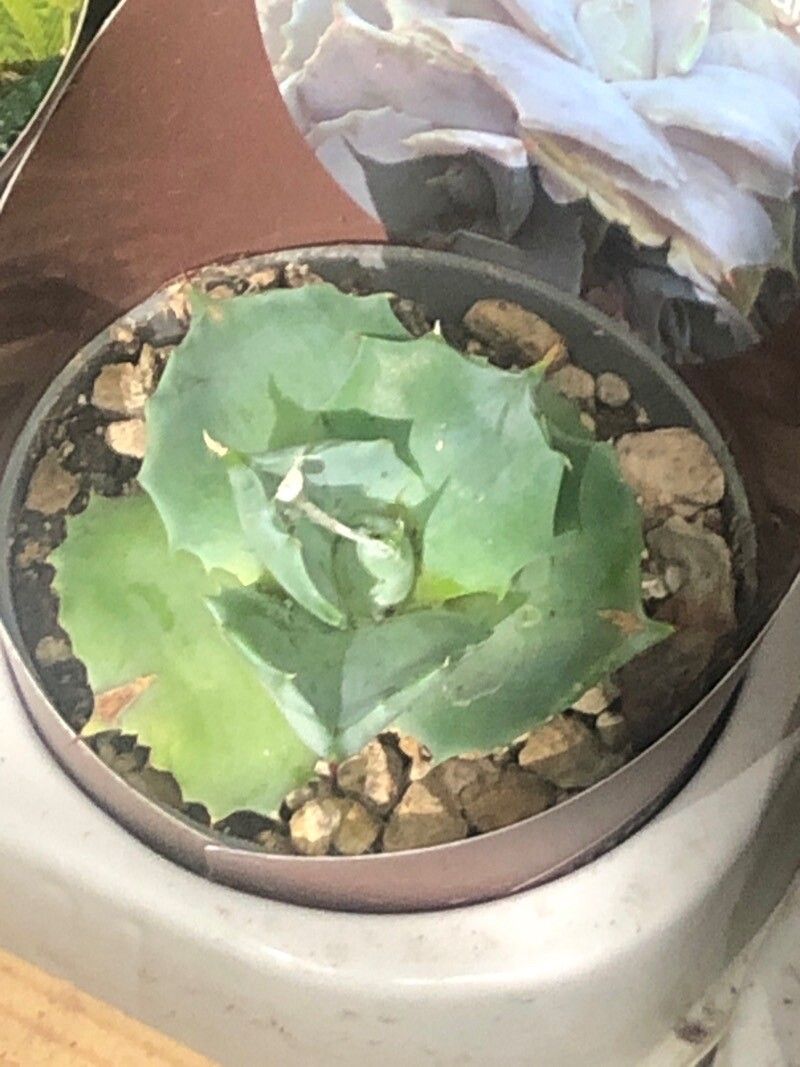
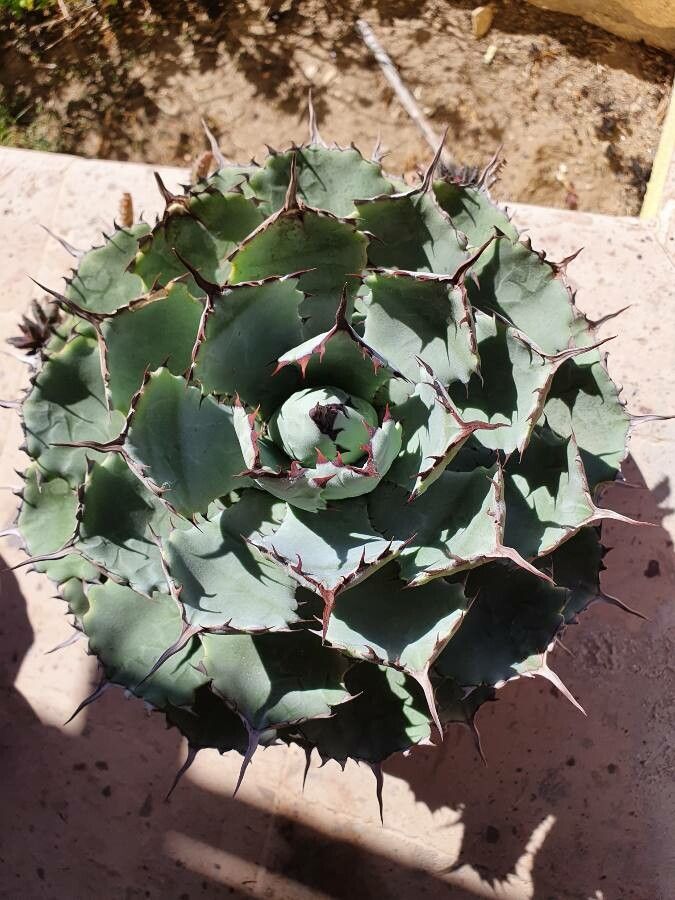
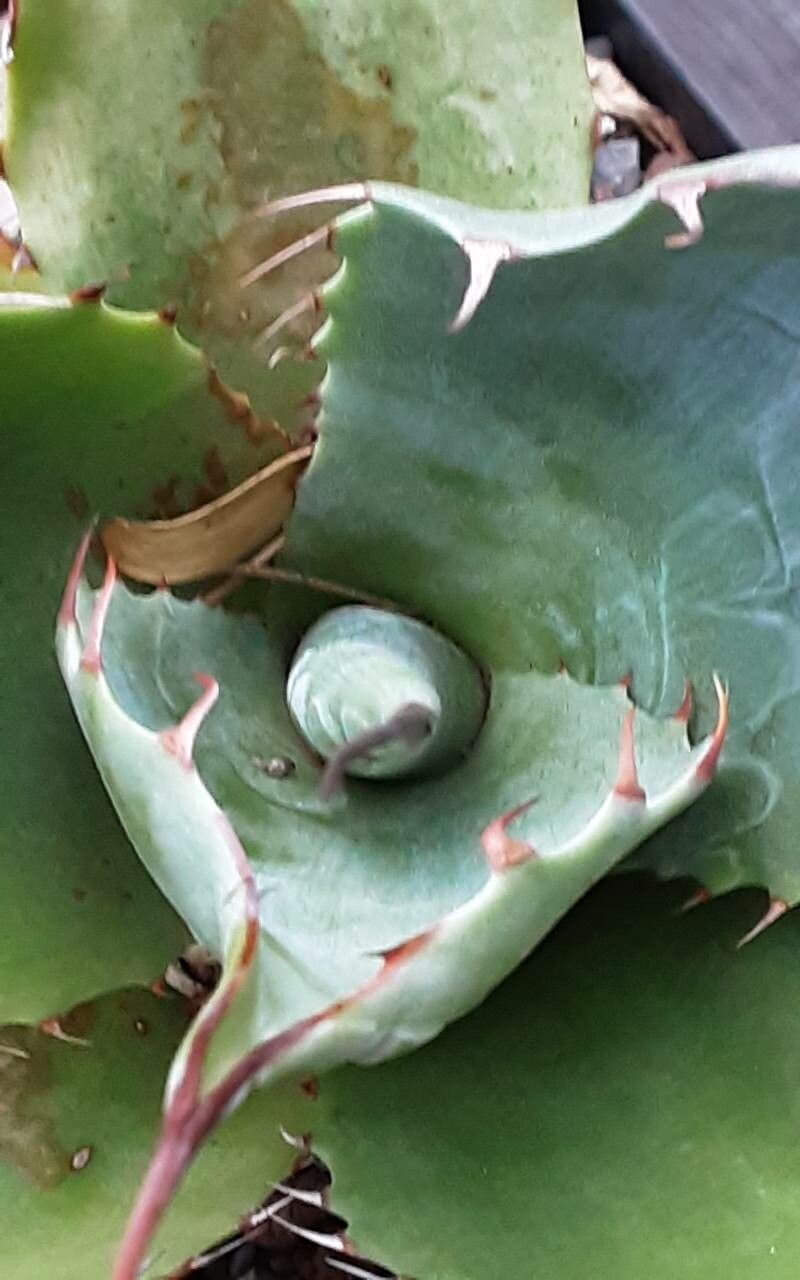
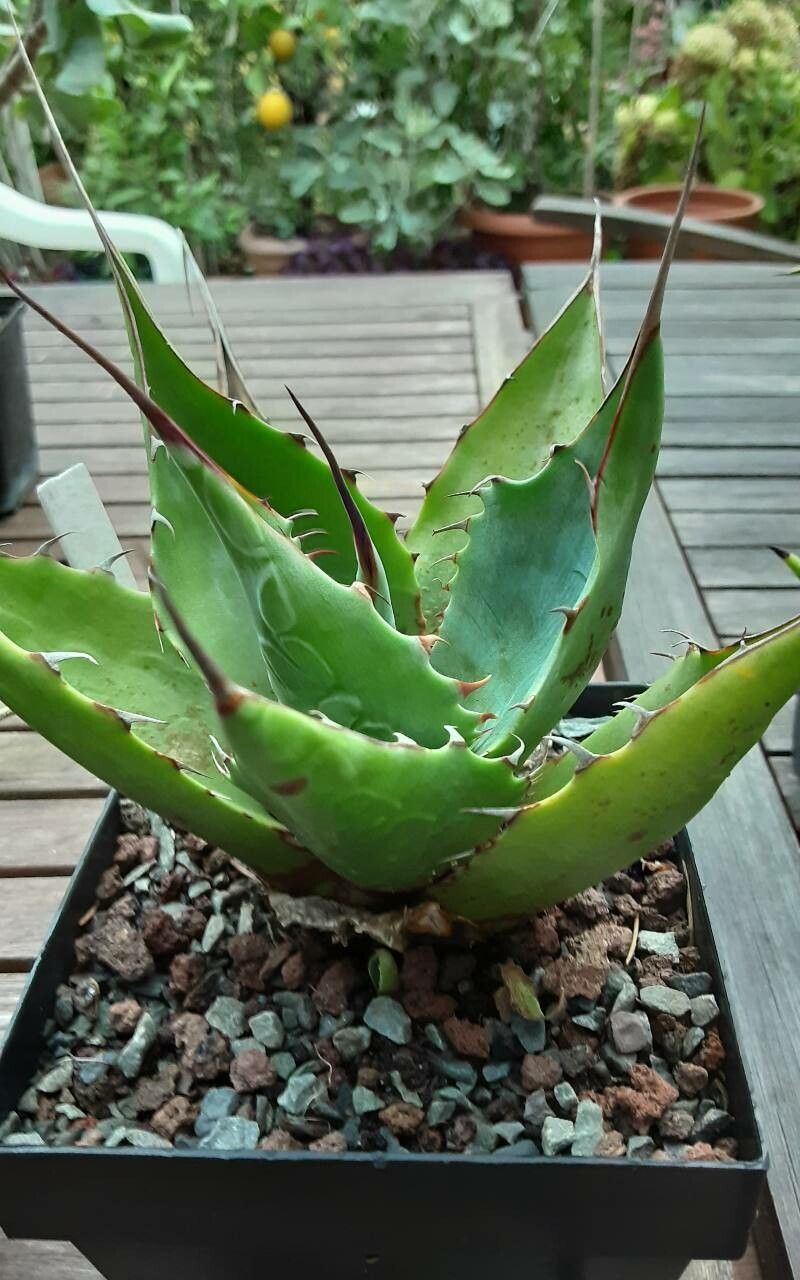
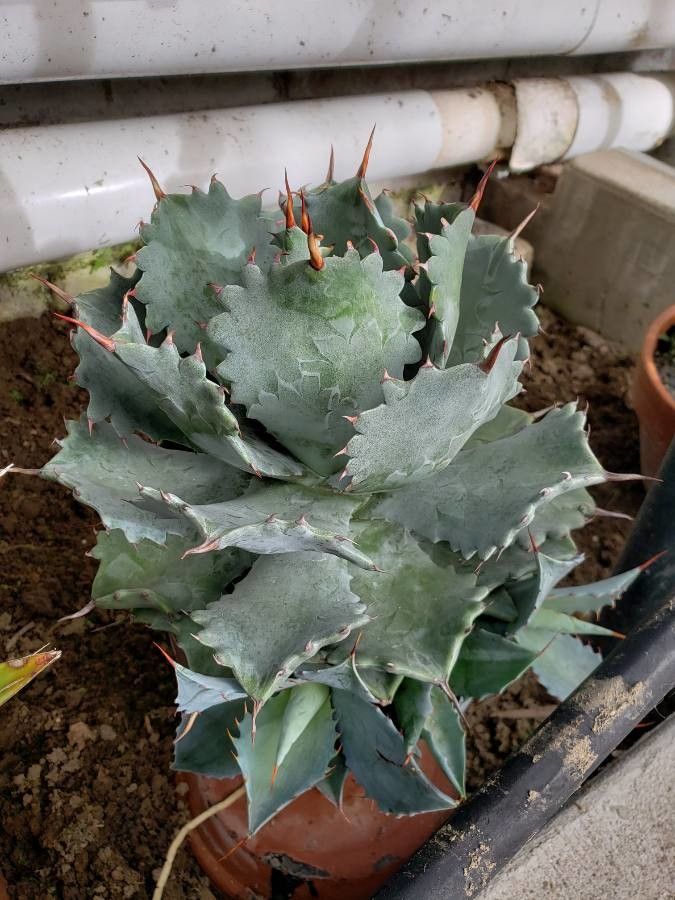
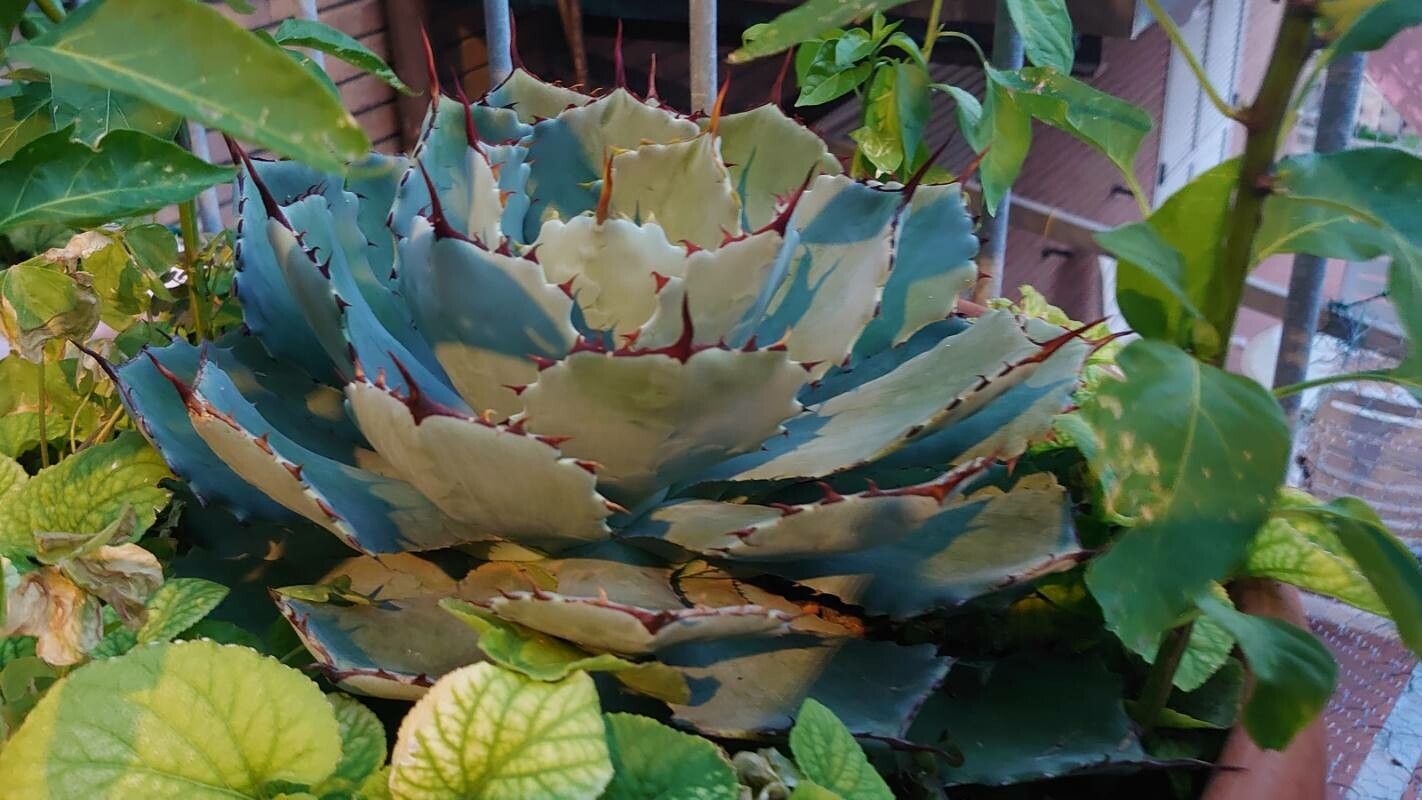
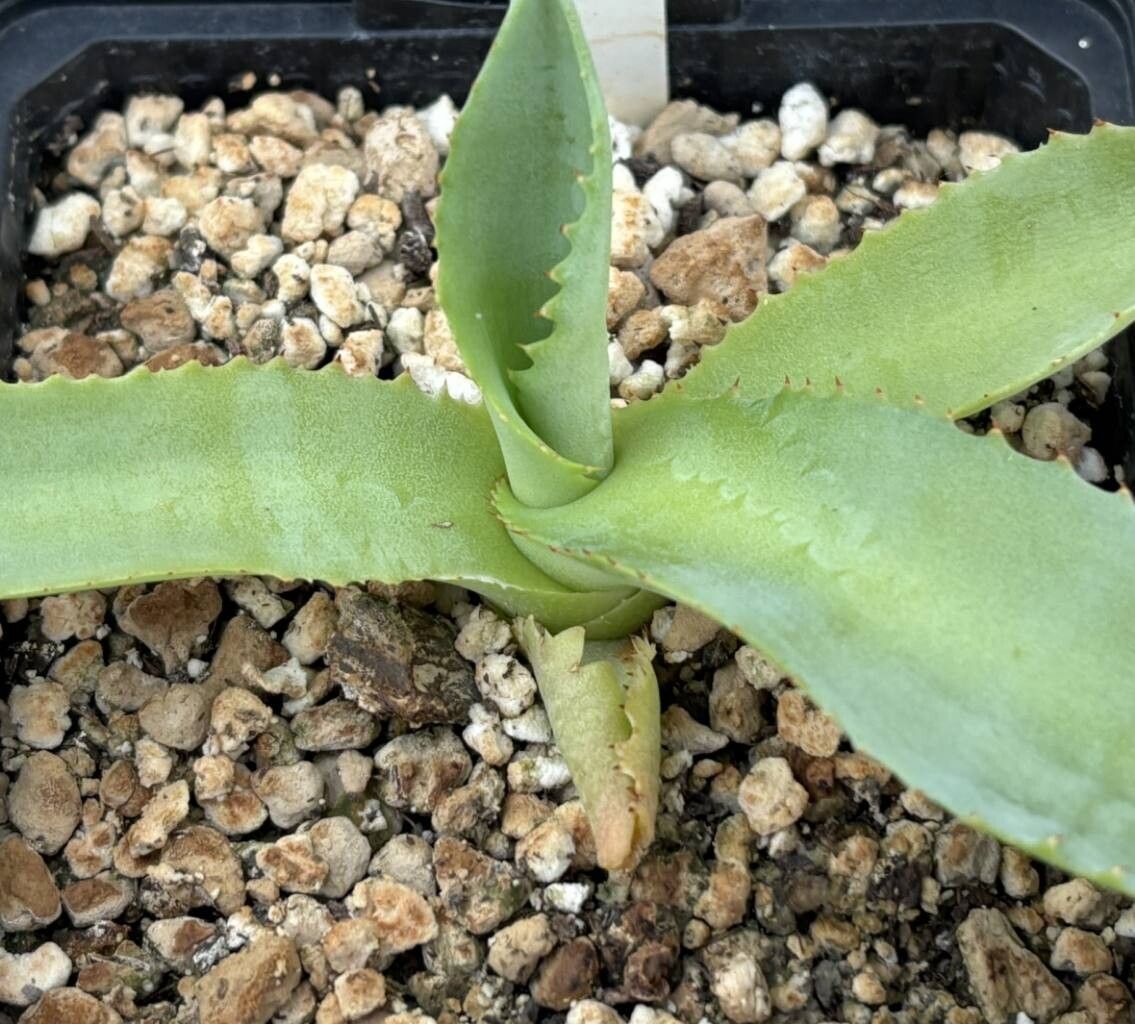
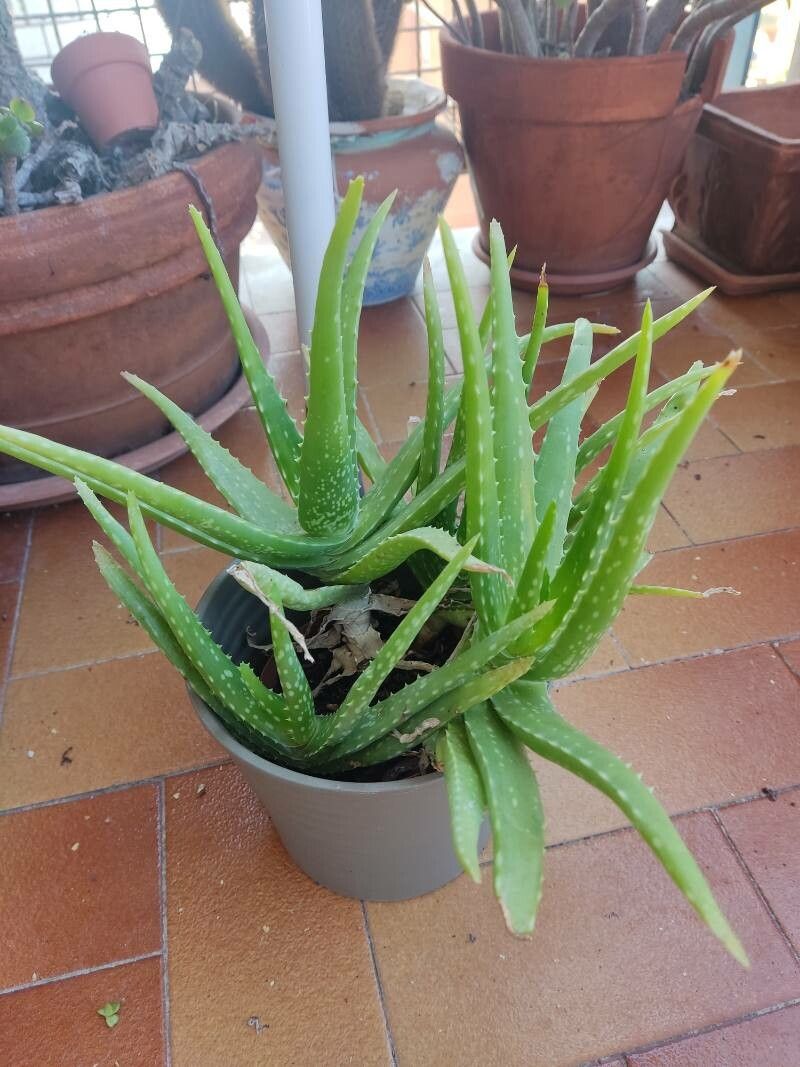
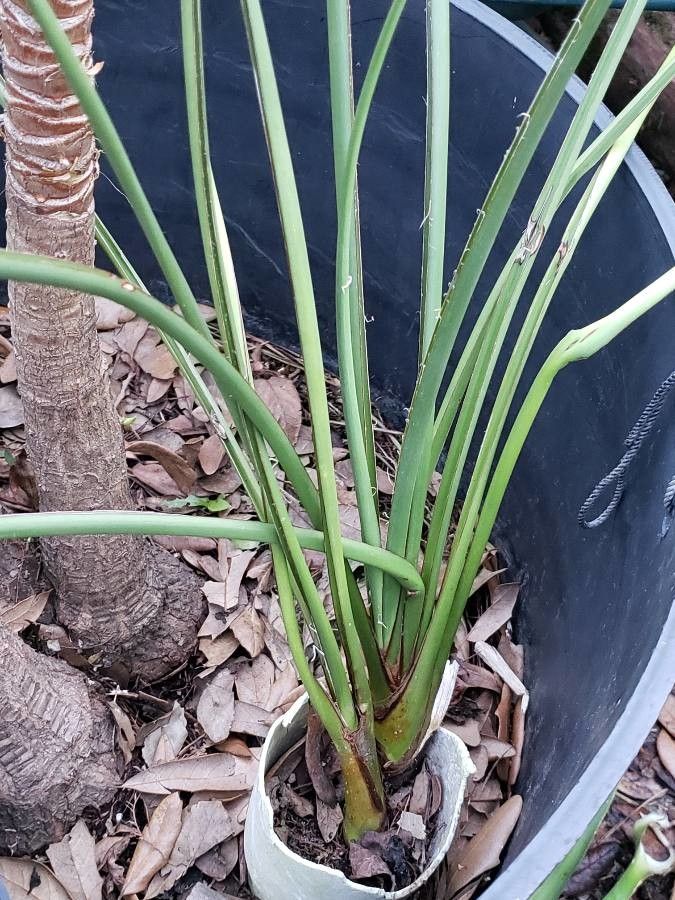
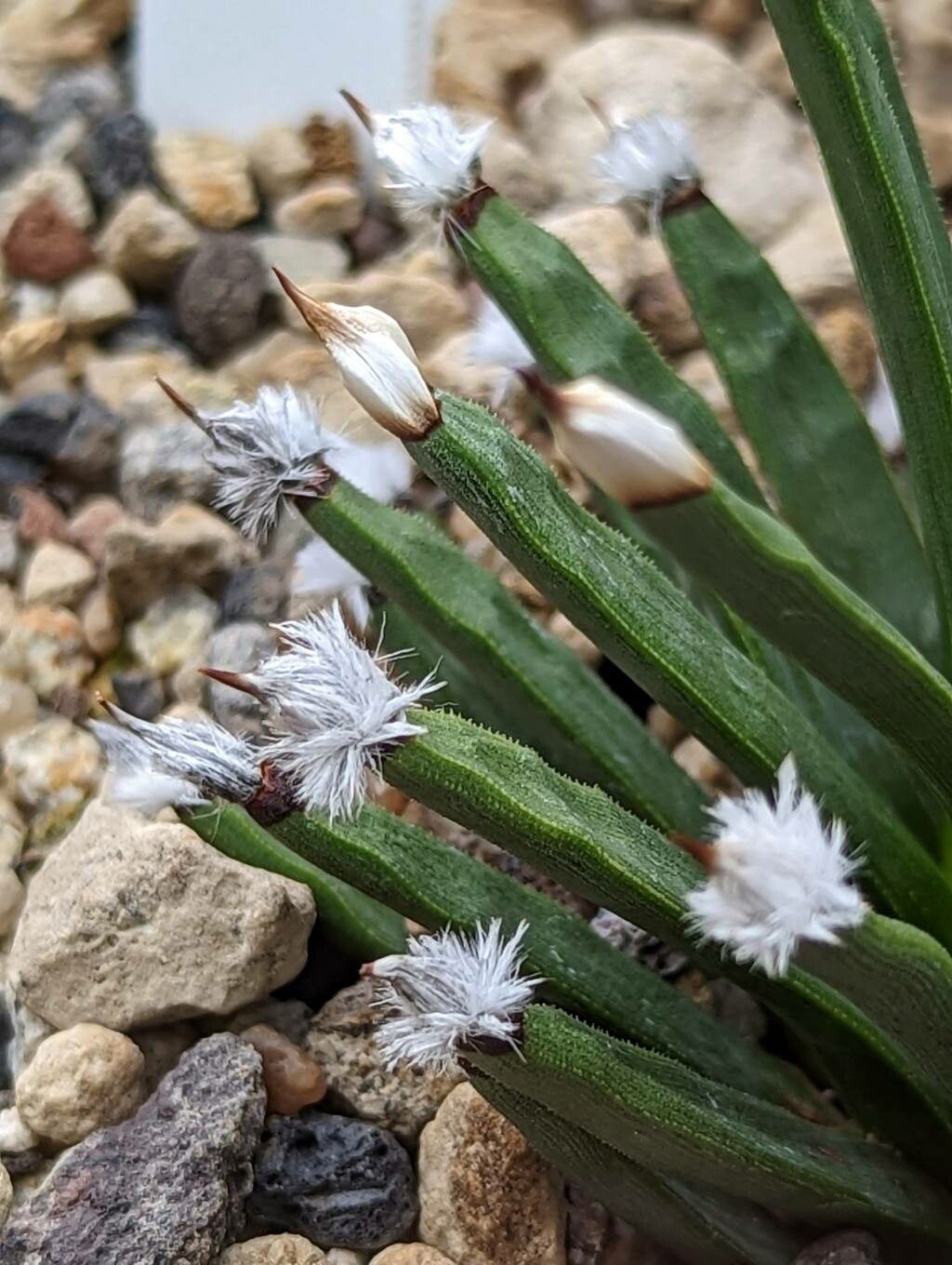
Agave potatorum, commonly known as the "Butterfly Agave," is a succulent plant native to Mexico. It is a small to medium-sized plant that typically grows up to 2-3 feet in height and width. The leaves of the Agave potatorum are thick and fleshy, with a blue-green coloration that sometimes features reddish-brown edges.
One of the most distinctive features of this plant is its flower stalk, which can reach up to 10 feet in height and produces clusters of yellow-green flowers. These flowers attract pollinators such as bees and hummingbirds.
Agave potatorum is commonly grown as an ornamental plant in gardens or containers due to its unique appearance. It prefers well-draining soil and full sun exposure but can also tolerate partial shade.
In addition, this species has cultural significance in Mexico, where it has been used for centuries for medicinal purposes, such as treating wounds and digestive issues. Its sap is also used in the production of tequila and mezcal.
Overall, Agave potatorum is an interesting and versatile succulent that adds beauty both indoors and outdoors, while also holding cultural significance in Mexican traditions.
Butterfly agave has moderate disease resistance but is more sensitive to humidity and overwatering. It also becomes more prone to disease if it is kept in low light and overwatered. Regarding care, Butterfly agave is drought-tolerant and can withstand long stretches without watering. It requires little fertilizer and only occasional pruning. This makes it appropriate for people at any experience level, particularly those who prefer spending less time on plant care and who may sometimes be away from home for extended periods. It’s a suitable option for anyone who doesn’t want to devote much time to plant upkeep yet still wants an easy-to-maintain plant.
How to keep Agave Potatorum.
Light
The butterfly agave needs constant exposure to the daystar to sustain healthy growth. Preferring the light conditions of its native open habitats, it requires wide sun exposure. Adequate light promotes vigorous growth, while shading can lead to poor health. Excessive light may scorch the leaves, whereas too little can cause sparse growth and faded foliage.
Water
The butterfly agave is well-suited to arid conditions, thriving with minimal water and demonstrating high drought tolerance. It stores water in its succulent leaves and typically requires watering only once every three weeks. Overwatering can be detrimental, so it's best to exercise caution. Grown as an evergreen, the butterfly agave is ideal for outdoor environments, where it stays hydrated even in challenging climates.
Temperature
Butterfly agave naturally grows in habitats with temperatures commonly ranging from 68 to 95 °F (20 to 35 ℃). It does best in warm conditions but can withstand cooler temperatures during winter. Modify care as needed to avoid chill damage.
Fertilizer
For Butterfly agave, apply light amounts of fertilizer once or twice a year during the growing season. Do not fertilize in winter or summer, when it is dormant. Cut back on feeding for plants that have been repotted and wait a couple of months after repotting before applying fertilizer. Fertilizing helps maintain healthy growth and encourages blooming.
Pruning
As the butterfly agave grows new leaves, its older leaves may turn yellow and dry out. Removing these leaves promptly improves the plant’s appearance. Additionally, trimming any infected leaves helps protect the health of the remaining foliage.
Pot & Repot
To support the moderate growth of a butterfly agave, repot it every two years in the spring. Use a slightly larger pot with good drainage to ensure healthy development. After repotting, water the plant sparingly and place it in bright, indirect light. This will help prevent shock and boost its vigor by mimicking its natural, drought-tolerant habitat.
Botanical profile.
- Plant Type
- Succulent
- Life Cycle
- Perennial
- Genus
- Agave
- Family
- Asparagaceae
- Hardiness Zone
- 9-10
- Mature Height
- 25 cm
- Mature Spread
- 40 cm
- Leaf Color
- Green, Silver
- Leaf Type
- Evergreen
- Flower Color
- Yellow
- Flower Size
- 3.05 cm to 5.08 cm
- Bloom Time
- Early spring, Mid spring
- Planting Time
- Spring, Autumn
- Harvest Time
- Late spring, Early summer
- Native Area
- Mexico
Other names.
Reader questions.
What should I do if I give too much or too little water to my Butterfly agave?
Butterfly agave and other succulents are able to go without water for extended periods of time, so it is uncommon for them to suffer from underwatering. However, if you forget to water your Butterfly agave for a month or more, you may notice signs of thirst or damage due to lack of watering. Underwatered plants will appear dull and wrinkled, and some may have completely dried up, turned brown, or fallen off. The soil will also be completely dry. To remedy this, give your Butterfly agave plenty of water, preferably by submerging the pot in water for 5-10 minutes. Once the soil feels moist on the surface, watering is complete. Overwatering is a danger to Butterfly agave and can potentially kill the plant if not addressed. Excessive moisture over time leads to root rot, which hinders the roots' ability to absorb nutrients and water from the soil. Root rot occurs when fungi and bacteria thrive in the wet conditions and feed on the roots. If you notice symptoms of overwatering such as yellow, swollen, and translucent organs, it is important to adjust the growing conditions, provide better air ventilation, and regulate water frequency. Overwatered plants may turn brown or black and easily fall off with a gentle touch. Check the soil to confirm overwatering as the cause of these symptoms. Saving an overwatered plant can be challenging, but catching the issue early is crucial. Root rot can ultimately kill the entire plant. To address overwatering, remove the plant from its pot and examine the roots and soil. Gently remove wet soil from around the roots and rinse them clean in room-temperature water. This helps eliminate any lurking fungus and allows you to assess the root health. If you find dark brown or black, soft, mushy, or slimy roots, it is likely that the plant has root rot. If most of the roots are affected, it may be best to propagate a new Butterfly agave from a healthy stem. However, if only some roots are affected, there is a chance the plant can be saved. Use a sterilized cutting tool to remove unhealthy-looking roots, leaving only firm and pale roots. Dip them in a fungicide to kill any remaining spores, then repot the Butterfly agave in fresh, well-draining soil. While this approach may not always work, in most cases the plant will recover and produce new growth in the next growing season.
Why should I use fertilizer on my Butterfly agave?
Fertilizing Butterfly agave improves the soil by adding nutrients. While this plant does store water and nutrients, applying plant food during the growing season helps promote strong and healthy growth. Furthermore, fertilizing can also help mature specimens of Butterfly agave produce beautiful blooms during the growing season.
What kind of sunlight does the Butterfly agave require?
Butterfly agave thrives under extensive sunlight, reminiscent of its natural habitat in open environments. This plant demands a significant amount of sunlight for healthy growth, with full sun conditions being above 6 hours of sunlight and partial sun about 3-6 hours. Insufficient light can lead to poor growth and faded foliage, while too much sunlight may cause leaf scorching. Artificial lighting can be a beneficial supplement to natural sunlight, especially for indoor plants or during less sunny periods. LED lights are preferred for their ability to provide specific light wavelengths needed by plants, with recommended intensities varying based on the plant’s sunlight needs.
What is the ideal temperature range for Butterfly agave?
Butterfly agave, or Agave potatorum, thrives in environments where temperatures typically range from 68 to 95 °F (20 to 35 °C). It is a heat-loving plant that adapts well to warm conditions. However, during the winter, it can adjust to cooler temperatures, though care should be adjusted to prevent chill damage. The plant enters a dormant state in winter, and if temperatures drop below 0°C, it is recommended to move the plant indoors for cultivation. A south-facing window is ideal for providing sufficient sunlight during this time, but supplemental lighting can be used if natural light is insufficient.
How often do I need to water my Butterfly agave plant?
To determine how often to water Butterfly agave, the best method is to check the soil and only water when it is completely dry. You can test the soil by sticking your finger or a moisture meter into the pot or using a stick/chopstick for deep pots. If the soil feels slightly moist, wait a few days and check again. Generally, most people will need to water Butterfly agave every two weeks in summer and once a month in winter. However, there are various factors that can affect the watering frequency. The section below provides helpful considerations for determining how often to water.
When should I fertilize my Butterfly agave plant?
Butterfly agave only requires a small amount of fertilizer during the growing season, about 1-2 times a year. It is recommended to fertilize in the spring and autumn, avoiding winter and summer when it is dormant. When repotting, be cautious and decrease the fertilizer amount. Additionally, it's best to wait a few months after repotting before applying any fertilizer.
What are the effects of insufficient light on Butterfly agave and how can this be addressed?
Insufficient light can cause various symptoms in Butterfly agave, such as smaller new leaves, leggy growth, faster leaf drop, slower or no new growth, lighter-colored new leaves, chlorosis, sunscald, leaf curling, wilting, and leaf scorching. To address these issues, gradually move the plant to a location with at least 6 hours of direct sunlight daily. Utilize south-facing windows for maximum exposure and consider the use of artificial light for additional support. For outdoor plants, a gradual transition to sunnier spots can avoid sunburn. Removing obstructions and possibly transplanting smaller plants to sunnier locations can also help improve light exposure. Note that while adjusting light conditions can promote new healthy growth, parts of the plant already affected by light deficiency may not recover.
How should I care for my Butterfly agave during low temperatures?
Butterfly agave requires special care during low temperatures to thrive. When outdoor temperatures drop below 0°C, it's crucial to move the plant indoors to protect it from chill damage. If the temperature falls below 20°C, its growth slows down, and watering should be reduced or stopped to prevent root rot. For outdoor plants, halt watering completely in low temperatures. In case of extremely low temperatures or mild frosts, protect your Butterfly agave with a temporary greenhouse or wrap it with plastic film or fabric for insulation. If the plant suffers from frostbite, trim off the affected areas, check for root rot, and consider propagation through cuttings if necessary. Moving the plant to a warmer, well-lit indoor environment is also crucial.
What important things should I think about when watering my Butterfly agave?
To properly water your Butterfly agave, there are a few environmental factors to consider. These include the size of the container, the type of soil, as well as the temperature and humidity. When choosing a container, make sure it has drainage holes to allow excess water to escape. The size of the container will determine how often you need to water. A smaller container holds less moisture, so it will require more frequent watering. On the other hand, a larger pot will retain moisture for longer periods, so it will need to be watered less often. Avoid using an oversized pot, as this can lead to overwatering. When repotting, only go up one size larger than the current container. A shallow container works best for Butterfly agave, as it has shallow root systems. The watering frequency will also depend on the season. In winter, when growth is slower and the plant requires less energy and water, you can water less frequently. The cooler winter air causes less evaporation, so the soil stays wet for longer compared to the summer months. The climate in your area is another important consideration. If you live in a humid location with ample rainfall, you will need to water the agave less frequently compared to a dry and arid climate. Keep in mind that even within the same geographic location, conditions may vary depending on the season and indoor heating or air conditioning. If your Butterfly agave is planted in the ground, it typically doesn't require additional water beyond what it receives from natural precipitation and dew. However, in prolonged dry periods, you may need to provide some supplemental watering. If you have the agave in a container, you can move it outside during the spring and summer months when temperatures are suitable. Just keep in mind that potted plants will require more water due to increased sun exposure, even if they are placed on a shaded porch.
When is the best time to not fertilize my Butterfly agave?
Butterfly agave, like other plants, goes through a dormancy period. During this period, it's best to avoid applying fertilizer. This happens in both the summer and winter when the plant stops growing. It's also a good idea to wait a few months after repotting in the spring before starting to fertilize again.
What are the symptoms and solutions for Butterfly agave in low temperatures?
In low temperatures, Butterfly agave can become weak, wilt, and is susceptible to root rot, especially when the temperature falls below -5°C. Mild frost damage may not show immediate symptoms, but the plant will gradually wither. To address frostbite, trim the damaged areas, inspect and remove any rotted roots, and possibly propagate the plant through cuttings. It's essential to reposition the plant to a warmer indoor area near a south-facing window for ample sunlight. Supplemental lighting can be used if natural light is not sufficient.
How should I water a Butterfly Agave plant?
To water Butterfly Agave effectively, soak the plant thoroughly and allow it to dry out before watering again. This plant can tolerate drought, so it's best to let it get quite dry before watering. It's always better to give this plant too little water than too much. When watering, ensure that the soil gets soaked throughout the entire pot. Instead of pouring water in one spot, try to water around the whole rim of the planter. This guarantees that all sides of the plant get wet. The amount of water needed depends on your container's size and the soil's absorption rate. Give the Butterfly Agave enough water that it drains from the drainage holes. Leave the drained water in the saucer for 20-30 minutes, allowing it to absorb into any dry pockets of soil. Afterward, discard any excess water to prevent waterlogging. Another effective watering method for Butterfly Agave is bottom-watering. Place the pot in a saucer of water and let the soil absorb moisture through the drainage holes. You'll know the soil has absorbed enough water when the top layer is moist. This technique takes more time, but it ensures an even distribution of water. Butterfly Agave's natural habitat is relatively dry with occasional heavy rain, completely moistening the soil. To mimic this situation, bottom-water your plant when the soil is completely dry. Deep soil bathing is better than frequent light watering for Butterfly Agave.