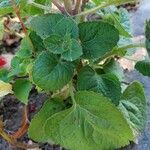
Ageratum houstonianum
گل ابری · Bluemink · Mexican ageratum · Ageratum · Flossflower
Description
Source: leafsnapAgeratum houstonianum, commonly known as flossflower, bluemink, blueweed, pussy foot or Mexican paintbrush, is a cool-season annual plant often grown as bedding in gardens.
🌳 The floss flower's fluffy blooms hide an unexpected ability: they can take up and store lead from the soil. Having a rare knack for hyperaccumulating this heavy metal, the floss flower is especially effective at it and grows quickly. That ability signals its potential in the green decontamination approach known as phytoremediation. This makes the floss flower not only attractive but also useful for eco-conscious cleanup efforts.
🎭 Courtesy
Care Guide
💧 Water Every 3 days
Flossflower, native to tropical areas, thrives in consistently moist conditions. It prefers to be watered regularly, ideally once a week, to simulate natural rainfall. As an outdoor ornamental plant, flossflower flourishes during the growing season when there is plenty of rain, which encourages vibrant blooms and robust growth.
How should I water my Flossflower?
To water Flossflower, you have several options for tools, such as a garden hose with a spray nozzle or a watering can. Flossflower is not too picky about the source of water, as it can thrive with rainwater, tap water, or filtered water. Avoid watering from overhead to prevent damage to the leaves and flowers, as well as the risk of disease. A drip irrigation system is often the most effective method for watering Flossflower, as it ensures even and direct application of water to the soil. If you have a container-grown Flossflower, you can use a cup, watering can, or even your tap to apply water directly to the soil.
What should I do if I give my Flossflower too much or too little water?
The solution for underwatering Flossflower is pretty straightforward. If you notice your plant isn't getting enough water, simply increase the frequency of watering. However, overwatering can be a more serious problem if not detected early. If your Flossflower gets overwatered, it can develop diseases that could cause it to decline and eventually die. To avoid this, it's important to choose a suitable location for growth. This means selecting a spot that gets enough sunlight to dry the soil and has good drainage to prevent water from pooling and causing waterlogged soil. If you have overwatered a potted Flossflower, you may need to transfer it to a different pot. The old container might not have had proper drainage or enough drainage holes. When repotting an overwatered Flossflower, be sure to use loose soil and a pot that drains efficiently.
How often do I need to water my Flossflower?
To keep your Flossflower healthy, make sure to water it regularly. In the spring, watering once a week is sufficient. However, as the weather gets warmer, you might need to water it two to three times a week. It's important not to overwater as this can harm the plant. Regardless of how often you water, make sure the soil remains moist but not soaked. When it comes to pot-grown Flossflower, you'll need to water more frequently. Potted soil tends to dry out faster than ground soil, so watering a few times a week is usually necessary.
How much water does my Flossflower plant need?
Determining the proper amount of water for your Flossflower can be approached in a few different ways. Some gardeners rely on their senses and check the soil moisture level by feeling it. This method suggests that you should water until the first six inches of soil feel moist. Another option is to use a specific measurement. Typically, Flossflowers need about two gallons of water per week, depending on factors like temperature and soil dryness. However, sticking strictly to this guideline may result in overwatering if your plant doesn't actually require that much. When growing Flossflowers in a container, a different approach is needed. In this case, you should water enough to moisten all the dry layers of soil. You can check for moisture by inserting your finger into the soil. Another indication is noticing a slight trickle of excess water escaping from the drainage holes in the pot.
How do I know if I'm giving enough water to my Flossflower?
Avoiding overwatering your Flossflower can be a bit challenging. These plants have deep roots that need watering weekly. However, Flossflower is highly prone to root rot, which causes browning. Underwatering is less of a concern as these plants can survive without frequent watering. Yet, if you go too long without watering, they may wilt and develop dry leaves.
☀️ Light Full sun
Floss flower grows best in places that receive plentiful sunlight all day. It can also tolerate locations with moderate sun exposure. Coming from habitats with strong solar exposure, its growth can be impeded if the sunlight is either too scarce or excessively intense.
What are the sunlight requirements for Flossflower?
Flossflower thrives in conditions where it can receive a generous amount of sunlight throughout the day. It is adaptable to full sun exposure, which means it requires more than 6 hours of sunlight daily, but it can also grow in partial sun with about 3-6 hours of sunlight. The plant’s health and happiness depend on finding the right balance of light and shade in your garden. Monitoring how sunlight moves through your space will help in achieving this balance.
What are some essential tips for growing Flossflower successfully?
For optimal growth, Flossflower requires abundant sunlight, reflecting its native habit of thriving in sun-rich environments. However, it can also tolerate moderate sun exposure. When sunlight is insufficient, especially during winter or in less sunny areas, artificial lighting becomes necessary. LED lights are recommended for their ability to be customized to meet the specific light wavelength needs of plants. For indoor Flossflowers, ensure they receive 30-50W/sq ft of artificial light for full sun plants, 20-30W/sq ft for partial sun plants, and 10-20W/sq ft for full shade plants. The light source should be placed 12-36 inches above the plants, mimicking natural sunlight for 8-12 hours per day.
What are the signs of inadequate light on Flossflower, and how can they be addressed?
Flossflower may show various symptoms if it doesn't receive enough light. These include smaller new leaves, leggy growth, premature leaf drop, slowed or halted growth, paler new leaves, chlorosis (yellowing leaves), sunscald, leaf curling, wilting, and leaf scorching. To combat these issues indoors, gradually expose plants to more sunlight or use artificial lighting, aiming for at least 6 hours of direct sunlight daily. Outdoors, slowly relocate plants to sunnier areas, avoiding sudden shifts to prevent sunburn. Reducing obstructions like overhanging branches can help increase sunlight exposure. Remember, damaged parts may not recover, but new growth will be healthy with adequate light.
🌡️ Temperature 15–37.8°C
Floss flower naturally occurs in habitats where temperatures vary between 68 and 100.4°F (20 to 38℃). It grows best in locations where the heat is maintained within that range. Seasonal temperature fluctuations should be carefully managed to meet its needs.
What is the ideal temperature range for Flossflower?
Flossflower, or Ageratum houstonianum, flourishes in environments where temperatures are kept between 68 to 100.4°F (20 to 38°C). It prefers being in areas where this warmth is maintained continuously, indicating that managing seasonal temperature shifts is crucial for its well-being. The plant has notable resilience against cold, making special frost protection measures generally unnecessary. However, in anticipation of temperatures dropping below its growth limit during winter, it's advisable to provide cold protection by using soil or straw coverings. It’s also recommended to water the plant generously before the first freeze of autumn to ensure the soil stays moist, aiding in preventing drought and water scarcity during the colder months.
How does Flossflower react to low temperatures, and what are the recommended solutions?
Flossflower exhibits a strong tolerance to cold conditions and optimally grows when temperatures are above its minimum suitable growth threshold. Through the winter, it is essential to keep the plant above its tolerable growing temperature minimum. Should temperatures fall below its growth limit, you might not observe immediate changes during the winter, but there could be a noticeable decrease in sprouting or possibly no sprouting at all come spring. The suggested solution for this is to remove any parts of the plant that have failed to sprout during spring, ensuring healthier growth in the following season.
What should be done if Flossflower is exposed to high temperatures?
During the hotter months, it is critical to ensure that Flossflower's environment does not exceed its maximum suitable growth temperature. Exposure to temperatures beyond its maximum tolerable limit can cause the plant's leaves to lighten in color, become more prone to curling, suffer from sunburn, and in extreme cases, the entire plant might wilt and dry out. To mitigate these issues, it's advised to trim away the sunburned and dried-up parts of the plant. Relocating the plant to a shaded area or employing a shade cloth can also protect it from the harsh midday and afternoon sun. Maintaining soil moisture through watering in the mornings and evenings is another effective measure to support its health during high temperature periods.
💨 Humidity high (>60%)
This plant needs special care because it loves high humidity levels of 60-80% or more. The best way to achieve this is by placing a humidifier near the plant. Daily misting is also essential! Make sure the room has good ventilation.
🪴 Soil 6-7
🌱 Fertilizer
When most of the Floss flower's blooms are fully open, resume fertilizing. During the period of peak bloom, feed it every three to four weeks, weather permitting. Then, once the Floss flower starts producing fewer new blooms, stop fertilizing; there is no need to feed the plant when it can no longer produce more blooms.
Why should I put fertilizer on my Flossflower?
Plants, including Flossflower, require nutrients to survive. This is something most gardeners know, regardless of their experience. Without proper nutrition, Flossflower will die shortly after it is pollinated for the first time. To ensure that Flossflower thrives throughout its blooming season and produces large, beautiful flowers, it is important to provide the right nutrients in the right amounts. Fertilizer plays a crucial role in helping Flossflower develop a strong and healthy root system. Given that Flossflower has a thin and delicate root system that is easily harmed, it greatly benefits from fertilization at planting. This helps it establish a solid root structure, which not only provides stability but also creates the perfect conditions for an impressive flowering display. When fertilization is timed correctly, it can significantly prolong Flossflower's blooming period.
When should I put fertilizer on my Flossflower plants?
Flossflower experiences rapid growth early in the growing season, after the last frost has passed. This is the best time to fertilize it, specifically at planting. You can apply fertilizer when you initially plant it in the ground or in planters. This will be the only time you need to fertilize it until later in the year when the blooms are abundant. Once the season is in full swing and Flossflower has bloomed most of its flowers at their full size, it's time to resume fertilizing. This should be done every three to four weeks, depending on the weather, around the period when the blooms are at their peak. However, once Flossflower starts producing fewer new blooms, there is no need to continue fertilizing, as the plant cannot produce any more blooms.
When is the best time to not fertilize my Flossflower?
Regular fertilizing is important for Flossflower, but it can be applied at the wrong time. In some cases, it is necessary to hold back on fertilizing. These situations are typically related to the climate, but they can also include other controllable factors. When there are issues with the plant, soil, or climate, it is best to wait until everything has stabilized and the plant has recovered. For instance, if there are extreme or unexpected changes in the weather, such as a sudden cold snap during the summer, it is advisable to wait until the temperature warms up before fertilizing. Similarly, if the soil becomes too dry or compacted to absorb anything, applying fertilizer would only send it straight to the roots, which is not beneficial for Flossflower. It is also not recommended to apply fertilizer when temperatures are soaring into the 90-degree Fahrenheit range during the hottest parts of the day. This is because high temperatures can cause the fertilizer to break down too quickly. Additionally, it is important to address any pest or disease issues before reapplying fertilizer.
What kind of fertilizer does my Flossflower require?
Most types of Flossflower require a balanced nutrient ratio from fertilizer, specifically one designed for high-yield blooming plants. It is recommended to use a fertilizer with a higher phosphorus content, indicated by a higher P number in the NPK ratio (e.g. 10-30-10). Many fertilizer brands offer options suitable for blooming plants like Flossflower, making it easy to provide the necessary nutrients. If using a pre-mixed fertilizer, follow the package instructions to avoid over or under fertilizing, as both can negatively impact plant growth and cause wilting.
How do I give nutrients to my Flossflower?
Fertilizing instructions may vary depending on the type of fertilizer you have for your Flossflower. However, there are some general tips for applying most types of fertilizer. When you first plant your Flossflower, you should mix the recommended amount of fertilizer into the soil before planting and water it in. Subsequent fertilizing may be slightly different. For pellet fertilizers, simply mix the pellets into the top inch of soil around the outer edge of the plant. Make sure to water them in well initially and then water regularly afterwards. Other fertilizers can be mixed into a watering can and applied like regular watering. It's important to refer to the instructions on the fertilizer packaging for consistency, but if you prefer a regular schedule, aim for fertilizing every three to four weeks.
🪴 Pot & Repot
When repotting Floss flower, choose a pot that is 1–2 inches (2.5–5.1 cm) larger in diameter and that has good drainage. Use a well-draining potting mix and consider adding perlite for extra drainage. Repot in spring or early summer, then water thoroughly and place it in a shady spot at first.
✂️ Pruning
To keep flossflower's vibrant blooms looking their best, start pruning from early spring to late spring by trimming leggy growth and removing spent flowers. Regularly deadheading not only encourages bushiness but also promotes continuous flowering. Additionally, pruning improves air circulation, reduces the risk of disease, and enhances the plant's appearance, ensuring that flossflower stands out in any garden.
🌿 Propagating
🐛 Diseases & pets
☠️ Toxicity
Characteristics
- Plant Type
- Herb
- Life Cycle
- Annual, Perennial
- Genus
- Ageratum
- Family
- Asteraceae
- Hardiness Zone
- 7-12
- Mature Height
- 30 cm to 91 cm
- Mature Spread
- 30 cm to 46 cm
- Leaf Color
- Green
- Leaf Type
- Deciduous
- Flower Color
- Lavender
- Flower Size
- 2.03 cm to 4.06 cm
- Bloom Time
- Late spring, Summer
- Planting Time
- Spring, Summer
- Harvest Time
- Summer, Early fall
- Native Area
- Belize, Honduras, Mexico, Guatemala, El Salvador, Nicaragua, Costa Rica, Panama