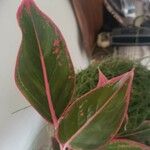
Aglaonema commutatum
گل آگلونما نخشید · Chinese evergreen · Silver queen aglaonema · Pink Lush · Pink Valentine
Description
Source: leafsnapAglaonema commutatum, commonly known as Chinese evergreen, is a popular houseplant native to Southeast Asia. Belonging to the Araceae family, it is celebrated for its striking foliage and easy care requirements. The plant features dark green leaves adorned with silver markings, giving it a distinctive appearance. In optimal conditions, Aglaonema commutatum can reach up to 3 feet in height and 2 feet in width. It thrives in bright, indirect light but can also tolerate low light environments. The plant prefers well-draining soil and should be watered when the top inch of soil feels dry. Chinese evergreens are renowned for their air-purifying properties, effectively removing toxins like benzene, formaldehyde, and trichloroethylene from the air. Additionally, they are low-maintenance plants that require minimal care, making them ideal for beginners or busy individuals. In summary, Aglaonema commutatum is an attractive houseplant with unique foliage patterns that can enhance any indoor space while also offering health benefits.
🌳 Chinese evergreen is commonly praised for its looks and easy care as a houseplant, but it is less known for its air-purifying abilities. NASA's Clean Air Study included the Chinese evergreen among plants that help clean indoor air by removing toxins such as benzene and formaldehyde. This means the Chinese evergreen is not only a decorative houseplant but also a practical helper in improving indoor air quality.
🎭 Luck, affluence, long life, family
Care Guide
💧 Water Every 7 days
Originating from tropical rainforests, the Chinese evergreen thrives in consistently moist conditions, though it shouldn't be waterlogged. Watering it once a week helps maintain its lush foliage. Commonly grown indoors, the Chinese evergreen prefers stable temperatures and indirect light. These factors influence its watering needs more than changes in the outdoor climate.
When Should I Water My Chinese Evergreen?
Timely watering is crucial for the health of Chinese Evergreen, contributing to both its vibrant appearance and growth. Look out for yellow leaves as a signal for the need to water, but be cautious of over-watering, which can manifest as yellowish-green leaves. Droopy leaves often mean the plant is thirsty and will perk up after watering. The dryness of the top 2 inches of soil is a reliable indicator for when to water. Additionally, shriveled or curling leaves and a lighter-than-usual pot suggest it's time to hydrate. Be mindful, as both under-watering and over-watering can harm your Chinese Evergreen, leading to issues like wilt, root rot, or stunted growth.
How Should I Water My Chinese Evergreen?
Chinese Evergreen prefers a humid environment and moist soil but is prone to root rot if over-watered. The best watering method is bottom-watering, allowing moisture to absorb up through the drainage holes to avoid over-saturation. Use a watering can with a long spout for controlled watering and a moisture meter to measure the soil's moisture level, ensuring the plant's roots receive just the right amount of water. Water at the base, avoiding the foliage to prevent diseases, and use room-temperature water. After watering, ensure any excess water is drained away to prevent waterlogging.
How Much Water Does Chinese Evergreen Really Need?
The Chinese Evergreen, originating from humid tropical forests, requires consistently moist soil without being waterlogged. On average, a 6-inch pot requires about a cup of water weekly, though this varies with plant size and root depth. Observe the plant’s leaves for hydration cues; vibrant green indicates good health, while wilted or yellowing suggests over or underwatering. Ensure the soil's top 1-2 inches dry out between watering and balance moisture to avoid issues like root rot or dehydration, promoting a healthy plant.
What Kind of Water is Best for Chinese Evergreen?
Chinese Evergreen plants are moderately sensitive to water quality. Distilled water is ideal due to its lack of impurities. Rainwater is also a good option, as it is naturally free from chemicals. Filtered water can be suitable if it removes contaminants effectively, while tap water should be used cautiously due to potential chlorine and fluoride content. Let tap water sit for 24 hours before use to allow chlorine to evaporate. A moderate water temperature (68-72°F or 20-22°C) is preferred to avoid shocking the plant's roots.
How Do Chinese Evergreen's Watering Needs Change with the Seasons?
Seasonal changes adjust the watering needs of Chinese Evergreen. In spring, maintain slightly moist soil to support increased metabolic activity without causing root rot. During summer, consistent soil moisture is crucial, along with occasional misting in low humidity. In autumn, allow the topsoil to dry before watering, preparing the plant for winter with reduced watering needs. Water less frequently in winter, ensuring the soil nearly dries out between waterings to prevent root rot during the dormant period.
☀️ Light Full shade
The Chinese evergreen comes from places with limited sunlight, so it performs best in lower light. Giving it small amounts of sun can help, but it should not be exposed to harsh, intense rays. A lack of sun may slow growth, while too much can lead to leaf burn.
What are the sunlight requirements for a Chinese evergreen?
The Chinese evergreen thrives in environments with limited sunlight, making it ideal for lower light conditions. It benefits from small amounts of sun but should not be exposed to harsh, intense sunrays to avoid leaf burn. The plant generally needs less than 3 hours of sunlight (full shade) or about 3-6 hours of sunlight (partial sun) daily. It's important to watch how sunlight moves through your garden to choose spots that provide a balance of light and shade, ensuring the plant's happiness.
How can artificial lighting be used for Chinese evergreens indoors?
When natural sunlight is insufficient, particularly in less sunny spaces or during winter, artificial lighting provides a vital solution for Chinese evergreens. LED lights are popular for their customizability to provide specific wavelengths of light needed by plants. For indoor plants, the amount of artificial light recommended varies by sun requirement: 10-20W/sq ft for full shade plants, 20-30W/sq ft for partial sun plants, and 30-50W/sq ft for full sun plants. The light source should be placed 12-36 inches above the plant, mimicking natural sunlight. Most plants benefit from 8-12 hours of artificial light per day.
What symptoms indicate that a Chinese evergreen is getting too much or too little light?
Symptoms of incorrect lighting for a Chinese evergreen include leggy or sparse growth, indicating insufficient light that causes longer spaces between leaves or stems. Leaves may develop lighter colors or lose variegation, showing a lack of chlorophyll and essential nutrients. Conditions like chlorosis turn the leaves yellow due to excessive sunlight breaking down chlorophyll, while sunscald, leaf curling, wilting, and leaf scorching indicate damage from overexposure to sunlight. These symptoms highlight the plant's need for a balance in light exposure.
How can light exposure be optimized for Chinese evergreens?
To optimize light exposure for a Chinese evergreen, move the plant to a spot that ensures it receives enough filtered sunlight, including brief direct morning sun if indoors, ideally placing it 1-2 meters away from a window. Use artificial light if the plant is large or not easily movable, keeping a lamp on for at least 8 hours daily or investing in plant grow lights. Outdoors, gradually adjust the plant to sunnier locations weekly to prevent sunburn. Minimize obstructions by pruning or transplanting during dormant periods for smaller plants to ensure they receive ample sunlight and good drainage. Unfortunately, parts of the plant that have suffered from insufficient sunlight might not recover, but new growth should be healthy with increased light exposure.
🌡️ Temperature 20–37.8°C
The Chinese evergreen is native to tropical areas with high humidity and temperatures of 20 to 38 ℃ (68 to 100 ℉). It favors warm conditions and should be kept above 16 ℃ (60 ℉) at all times. In winter, it's best to maintain temperatures above 18 ℃ (64 ℉) and to avoid subjecting it to cold drafts or sudden temperature shifts.
What are the ideal growth conditions for Chinese Evergreen?
The Chinese Evergreen, or Aglaonema commutatum, thrives in tropical regions characterized by high humidity and temperatures ranging from 20 to 38°C (68 to 100°F). This heat-loving plant prefers to be kept in warm conditions, ideally above 16°C (60°F) at all times. During winter, it is beneficial to maintain the temperature above 18°C (64°F) and to protect the plant from cold drafts or sudden temperature fluctuations. For outdoor-grown Chinese evergreens, it's advisable to bring them indoors in autumn and place them near a bright window, but at a distance from heaters to avoid excessive dryness.
What should I do if my Chinese Evergreen is exposed to low temperatures?
Chinese Evergreen plants are sensitive to low temperatures and thrive best when temperatures remain above 16°C (60°F). Exposure to temperatures below 16°C (60°F) can result in the leaves lightening in color and, after frost damage, turning brown or black with possible wilting and drooping. If your plant suffers from frost damage, trim off the affected parts and move the plant to a warmer, indoor environment immediately. Placing it near a south-facing window ensures it receives ample sunlight. However, it's important to avoid placing it near heaters or air conditioning vents, as this can cause excessively dry air which is harmful to the plant.
How do I care for my Chinese Evergreen during high temperature conditions?
During the summer, it's important to keep the Chinese Evergreen below 38°C (100°F) to prevent the leaves from becoming lighter or the plant from getting sunburned. For plants experiencing symptoms of excessive heat exposure, such as sunburned or dried-up parts, you should trim these areas away. Then, relocate your plant to an area with shade, especially shielded from the midday and afternoon sun. It's also beneficial to water the plant in the morning and evening to maintain soil moisture, which helps the plant to cope with high temperatures.
💨 Humidity high (>60%)
This plant needs special care because it loves high humidity levels of 60-80% or more. The best way to achieve this is by placing a humidifier near the plant. Daily misting is also essential! Make sure the room has good ventilation.
🪴 Soil 5-6
🌱 Fertilizer
The Chinese evergreen needs the most fertilizer during its period of active growth, mainly in spring, summer, and early autumn. Fertilizing supplies essential nutrients the soil may lack, encouraging healthy root and stem development and supporting the attractive foliage that is a defining feature of this plant.
Why should I add fertilizer to my Chinese evergreen plant?
All plants, including the Chinese evergreen, need soil nutrients to grow. However, it's not always guaranteed that the soil will have all the necessary nutrients. Fertilization and soil amendments are important to ensure that your garden plants have both the basic nutrients they need and the specific nutrients they require. For the Chinese evergreen, fertilization is especially crucial for healthy root and stem development throughout the growing season. Additionally, fertilization will result in beautiful leaves, which are the main ornamental feature of this plant.
When should I put fertilizer on my Chinese evergreen?
During the active growth phase, which occurs in spring, summer, and early fall, a Chinese evergreen needs the most fertilizer. After winter, feed the plant about once every two to four weeks until fall. In fall, you can gradually reduce the fertilization rate until you stop completely in preparation for the less active growth during winter.
When is it not a good idea to fertilize my Chinese evergreen?
You should regularly feed your Chinese evergreen throughout most of the year, including spring, summer, and most of the fall. However, there are exceptions. If you notice your Chinese evergreen has received too much fertilizer or if you have fertilized it incorrectly, causing fertilizer burn or other problems, you need to fix it before resuming regular feeding. The only time you should not fertilize a Chinese evergreen is during winter. If you grow it indoors in a cold winter area, it will go into a dormant phase during this time. Feeding it during the dormant phase is unnecessary, unhelpful to its growth, and likely to cause fertilizer burn.
Which kind of fertilizer does my Chinese evergreen plant require?
Chinese evergreens require a specific fertilizer blend with low amounts of each nutrient, ideally in an N-P-K ratio of 3-1-2. However, a general-purpose fertilizer with an even nutrient blend can also be effective. Regardless of the fertilizer type, the volume of each nutrient should be at 10 or lower. Granular or liquid-based fertilizers can be used, but if using liquid fertilizer, it is recommended to dilute its strength by half. While granular fertilizer has few drawbacks, it is generally sensible to use liquid fertilizer, particularly when watering your Chinese evergreen.
How can I feed my Chinese evergreen to help it grow better?
To properly fertilize your Chinese evergreen, follow these guidelines. Most fertilizers come with application instructions, so be sure to follow them. When it comes to the timing, it's best to fertilize just before or while watering the soil. This prevents the fertilizer from harming the plant's roots. If you are using a slow-release granular fertilizer, simply sprinkle it on the soil and then immediately water the plant. On the other hand, if you have a liquid-based fertilizer, dilute it with water before applying it to the soil. Afterward, give the plant a bit more water. During the plant's active growth in spring and fall, it's crucial to dilute your fertilizer by at least half. This will ensure optimal growth and prevent damage.
🪴 Pot & Repot Once a year
Repot the Chinese evergreen in spring or summer once it's warm enough, choosing a slightly larger pot with good drainage. Water thoroughly after repotting, and place it where it will get bright, indirect light. Consider adding a moss pole to support the plant as it grows.
✂️ Pruning
Chinese evergreens thrive with minimal care, but regular pruning can enhance their growth and appearance. The best time to prune is from early to late spring, as doing so improves air circulation and helps reduce pests. To ensure effective cuts, use clean, sharp scissors, which will promote quick recovery and maintain the plant's health.
🌿 Propagating
🐛 Diseases & pets
☠️ Toxicity
Characteristics
- Plant Type
- Herb
- Life Cycle
- Perennial
- Genus
- Aglaonema
- Family
- Araceae
- Hardiness Zone
- 10-12
- Mature Height
- 30 cm to 91 cm
- Mature Spread
- 30 cm to 46 cm
- Leaf Color
- Green, Variegated, Gray, Red
- Leaf Type
- Evergreen
- Flower Color
- White, Green, Cream
- Flower Size
- 2.54 cm to 7.62 cm
- Bloom Time
- Mid spring, Late spring, Summer
- Planting Time
- Spring, Summer, Autumn, Winter
- Harvest Time
- Late summer, Fall, Early winter
- Native Area
- Indonesia, Philippines