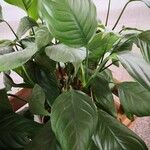
Aglaonema modestum
Chinese evergreen · Japanese-leaf
Description
Source: leafsnapAglaonema modestum, called Chinese evergreen, green-for-ten-thousand-years, and lily of China, is a species of flowering plant in the genus Aglaonema, native to Bangladesh, Thailand, Laos, Vietnam, and southeast and south-central China. In these areas, it is found in tropical swamps and rainforests.
💡 Aglaonema modestum is often featured in Chinese paper-cut art. During the Spring Festival, these paper-cuts are hung on doors and windows to symbolize good fortune and favorable weather for the coming year. Additionally, Aglaonema modestum is used in wedding halls to convey good wishes for the newlyweds.
🌳 The Chinese evergreen is a popular plant known for its low and wide growth pattern, as well as its deep green color. Its unique shape makes it an excellent choice for filling empty corners in gardens or landscapes, and it pairs well with large pieces of outdoor furniture. This plant is a great addition to Zen or tropical gardens and complements other plants like the Philodendron and Peace Lily, which share similar growth requirements.
🎭 Good fortune and good health
Care Guide
💧 Water Twice per week
Chinese evergreen thrives in humid tropical rainforests and prefers environments with high humidity and consistently moist soil, although it can tolerate a little drought. To care for this plant, water it twice a week but allow the topsoil to dry out slightly between waterings. As an indoor plant, Chinese evergreen benefits from regular misting to mimic its native humidity levels.
☀️ Light Full shade
The Chinese evergreen prefers locations sheltered from direct light and does best in low-light settings. It can tolerate partly lit conditions, but should not be exposed for long to strong sunlight. Native to forest understories, it is adapted to those environments. Too much light can scorch the leaves, while too little light causes slower growth.
What are the sunlight requirements for planting in sun exposure areas?
When considering planting in areas with sun exposure, it's important to understand the specific sunlight requirements. Plants categorized under 'Full shade' require less than 3 hours of direct sunlight per day, while those under 'Partial sun' can tolerate about 3-6 hours of sunlight. It's essential to observe how sunlight moves through your garden over the day and select spots that offer a balanced environment of light and shade, ensuring the plants thrive.
How should I care for Chinese evergreens in terms of light exposure?
Chinese evergreens, known botanically as Aglaonema modestum, prefer environments protected from direct sunlight, thriving in shaded or partially shaded areas. Originating from understory habitats in their natural environment, these plants are adapted to lower light conditions. Exposing them to excessive light can cause foliage scorching, whereas too little light leads to slower growth. If natural light is insufficient, especially during winter or in less sunny spaces, using artificial lighting can be beneficial. LED lights are recommended for their ability to mimic natural sunlight, offering specific wavelengths needed for plant growth. For optimal growth, full sun plants need 30-50W/sq ft, partial sun plants 20-30W/sq ft, and full shade plants 10-20W/sq ft of artificial light. The light source should be placed 12-36 inches above the plant for 8-12 hours per day to simulate natural daylight hours.
What symptoms indicate light problems in Chinese evergreens?
Chinese evergreens can exhibit several symptoms when they face issues with lighting, either due to too much or too little light. Symptoms of insufficient light include slower or halted new growth, leggy or sparse growth, and lighter-colored new leaves. These indicate the plant has entered survival mode, conserving energy and resources. On the other hand, symptoms of excess light exposure include chlorosis, where leaves lose their green color and turn yellow due to chlorophyll breakdown, sunscald characterized by pale or necrotic areas on the plant tissue, leaf curling as a defense mechanism against excessive light, wilting due to increased water loss, and leaf scorching, seen as brown, dry patches on leaves. These symptoms affect the plant's ability to photosynthesize and maintain overall health.
What solutions exist for addressing Chinese evergreen's light exposure problems?
For indoor Chinese evergreens facing light exposure problems, moving the plants to spots where they can receive ample filtered light, including brief periods of direct morning sunlight, is recommended. Ideally, place them 1-2 meters away from a window. If the plant is large or not easily movable, using artificial light, such as a desk or ceiling lamp for at least 8 hours daily or investing in professional grow lights, can provide the necessary light. For outdoor plants, gradually adapt them to sunnier spots by moving them weekly to locations with slightly more sun exposure, avoiding sudden changes to prevent sunburn. Reducing obstructions like pruning obstructive tree branches or transplanting smaller plants during their dormant period to sunnier locations with good drainage can improve light access. It's important to note that while affected parts of the plant may not recover, new growth post-adjustment will be healthier.
🌡️ Temperature 20–37.8°C
In its native growing environment, the chinese evergreen needs a temperature range of 20 to 38 ℃ (68 to 100 ℉). It prefers warm conditions but can tolerate cooler temperatures if needed. To accommodate seasonal changes, it is recommended to keep temperatures between 20 to 28 ℃ (68 to 82 ℉) in summer and above 16 ℃ (60 ℉) in winter.
What is the ideal temperature range for Chinese evergreen growth?
The ideal temperature range for Chinese evergreen (Aglaonema modestum) growth in its native environment spans from 20 to 38°C (68 to 100°F). These plants thrive in warm conditions but can withstand cooler temperatures when needed. Seasonally, it's advisable to maintain temperatures between 20 to 28°C (68 to 82°F) in summer and keep it above 16°C (60°F) during winter months. Chinese evergreens adore heat, and exposure to cold can be damaging. It's recommended to move plants grown outdoors inside near a bright window come autumn, though they should be kept away from direct heat sources. For optimal growth, ensuring temperatures stay above the plant's minimum suitable growth temperature during winter and avoiding exposure to temperatures at or below its tolerable minimum is crucial.
How does low temperature affect Chinese evergreen, and what are the remedies?
Chinese evergreen has a preference for warm temperatures and struggles with cold. Its well-being is assured when temperatures remain above its minimum suitable growth temperature. During winter, temperatures should not drop below its tolerable minimum. Exposure to temperatures below its growth limit can result in leaves lightening in color. Following frost damage, the affected leaves often turn brown or black, accompanied by wilting and drooping. To address frost damage, trim away damaged parts and relocate the plant to a warmer setting, ideally near a south-facing window to ensure it receives enough sunlight. It's also important to keep the plant away from heaters or air conditioning vents to prevent air from becoming excessively dry.
What should be done if a Chinese evergreen is exposed to high temperatures?
During summer, it's crucial to maintain the temperature of the Chinese evergreen below its maximum suitable growth temperature to prevent overheating. If temperatures exceed its tolerable maximum, the leaves may lighten and the plant becomes prone to sunburn. To mitigate sunburn damage, remove sunburned or dried parts of the plant. Relocate the plant to a shaded area, especially away from the harsh midday and afternoon sun, and ensure the soil remains moist by watering in the morning and evening.
💨 Humidity high (>60%)
This plant needs special care because it loves high humidity levels of 60-80% or more. The best way to achieve this is by placing a humidifier near the plant. Daily misting is also essential! Make sure the room has good ventilation.
🪴 Soil 6-7
🌱 Fertilizer Every 45 days
The Chinese evergreen needs the most fertilizer during its period of active growth, mainly in spring, summer, and early autumn. Fertilizing supplies essential nutrients the soil may lack, encouraging healthy root and stem development and supporting the attractive foliage that is a defining feature of this plant.
🪴 Pot & Repot Once a year
Repot the Chinese evergreen in spring or summer once it's warm enough, choosing a slightly larger pot with good drainage. Water thoroughly after repotting, and place it where it will get bright, indirect light. Consider adding a moss pole to support the plant as it grows.
✂️ Pruning
Chinese evergreen is an easy-to-care-for plant that benefits from pruning between early and late spring. To promote bushier growth, remove dead leaves and pinch back any leggy stems. Regular pruning not only enhances the plant's appearance but also improves air circulation and reduces the risk of pests. Consistent trimming ensures optimal health and vitality for your plant.
🌿 Propagating
🐛 Diseases & pets
☠️ Toxicity
Characteristics
- Plant Type
- Herb
- Life Cycle
- Perennial
- Genus
- Aglaonema
- Family
- Araceae
- Hardiness Zone
- 10-12
- Mature Height
- 40 cm to 61 cm
- Mature Spread
- 0.61 m to 1.22 m
- Leaf Color
- Green, Variegated
- Leaf Type
- Evergreen
- Flower Color
- White
- Flower Size
- 5.08 cm to 7.62 cm
- Bloom Time
- All year round
- Planting Time
- Spring, Autumn
- Harvest Time
- All year round
- Native Area
- Cambodia, Vietnam, Laos, Thailand, China