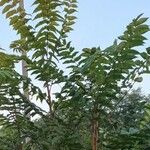
Ailanthus altissima
عرعر · درخت بهشت · Tree of heaven · Tree-from-hell-that-will-not-be-killed · Chinese sumac
Description
Source: leafsnapAilanthus altissima, commonly known as the Tree of Heaven, is a deciduous tree native to China and Taiwan. It has been introduced to many parts of the world and is often regarded as an invasive species. The tree can reach heights of up to 80 feet and have a trunk diameter of up to 6 feet. Its leaves are large, compound, and pinnate, containing 10-41 lance-shaped or ovate leaflets. The bark is smooth when young but becomes rough and fissured as the tree ages. The Tree of Heaven produces small, yellow-green flowers in late spring or early summer, which are followed by winged seeds that can be dispersed over long distances by the wind. It grows rapidly and can tolerate a wide range of soil types, though it prefers well-drained soils. Despite its classification as an invasive species, due to its ability to outcompete native vegetation for water, nutrients, light, and space, Ailanthus altissima has been used in traditional Chinese medicine for centuries. Additionally, it has some benefits, such as its ability to grow in poor soils, making it useful for erosion control on degraded sites or abandoned landfills where other plants might struggle due to nutrient-poor conditions. Overall, Ailanthus altissima remains an important plant both ecologically, as part of ecosystems, and culturally, as part of traditional Chinese medicine, despite its invasive status outside its native range.
💡 The tree of heaven, commonly known for its unpleasant-smelling leaves, is surprisingly eco-friendly. Despite its odor, it can thrive in challenging conditions, such as saline-alkali soil. Additionally, it serves as a pioneer species, playing a crucial role in windbreaking and sand stabilization.
🌳 The tree of heaven is known for its allelopathic effects, releasing chemicals into the environment that can suppress the growth of nearby plants. Because of this characteristic, tree of heaven can be used to deter certain insects, an application that may be employed in eco-friendly pest control. Additionally, its tolerance of pollution and rapid growth have made it a popular option in urban forestry for cities looking to green their landscapes efficiently.
🎭 Inner strength, exceptional adaptability
Care Guide
💧 Water Every 7 days
The tree of heaven is native to temperate regions and requires moderate moisture to thrive. It benefits from being watered every 1-2 weeks and adapts well to the natural fluctuations of outdoor seasonal rainfall. Being a deciduous plant, it conserves water by shedding its leaves during cooler or drier periods.
When should I water my Tree of Heaven?
Watering your Tree of Heaven is essential for its health and growth. The best time to water is when the leaves show signs of stress such as yellowing or curling, indicating the plant needs more hydration. Always check the top layer of soil; if it's dry, it's time to water. During hot and dry weather, increase the frequency of your checks to prevent dehydration. Be cautious of waterlogging and dehydration, as both can harm your plant. Responding timely to the signs of needed watering can prevent overwatering or underwatering.
How should I water my Tree of Heaven?
Water your Tree of Heaven using a watering can with a long spout to ensure water reaches the roots without harming the trunk. Alternatively, a soaker hose can provide slow, steady watering to the root zone. Employing a moisture meter will help you determine when watering is needed, aiming for moist soil around the root area, not the foliage. Avoid over-watering as Tree of Heaven is sensitive to waterlogging which can lead to root diseases. Always water when the top one-inch layer of soil feels dry.
How much water does Tree of Heaven really need?
The amount of water your Tree of Heaven requires varies based on several factors such as pot size and the plant's size. Generally, a mature tree of heaven in a medium-sized pot needs about 2 to 3 liters of water per watering session. Signs your tree of heaven is receiving the right amount of water include green, healthy leaves, and vibrant growth. Underwatering leads to wilting and yellowing, while overwatering can cause root rot and browning leaves. Balance is key, with proper drainage to avoid waterlogged soil.
What kind of water is best for Tree of Heaven?
Tree of Heaven prefers rainwater or well-filtered tap water; distilled water should be avoided due to the lack of beneficial minerals. The tree can tolerate moderate chlorine levels; letting tap water sit for 24-48 hours before use can help evaporate the chlorine. Be cautious with water containing high fluoride or sodium from water softeners, as these can harm the plant. Room temperature water is ideal, ensuring it's clean and free from heavy metals or pollutants.
How do Tree of Heaven's watering needs change with the seasons?
Seasons affect the Tree of Heaven's watering needs. In spring, water thoroughly to support new growth, ensuring well-drained soil. Summer demands more frequent watering to keep up with high temperatures and sunlight exposure. In autumn, reduce watering as the plant's growth slows with the cooler weather. Winter marks a period of minimal watering, focusing on preventing the soil from drying out completely without causing waterlogging. Adjust your watering routine to the changing temperatures and daylight lengths throughout the year.
☀️ Light Full sun
The tree of heaven is a hardy species that thrives with abundant sunlight yet can tolerate partially shaded conditions. Native to sunny habitats, it prospers through its various stages of growth. Both too little and too much sun can negatively affect the plant's health and vigor.
What are the sunlight requirements for the Tree of Heaven?
The Tree of Heaven requires full sun, which is above 6 hours of direct sunlight, to thrive optimally. However, it can also grow in partial sun, receiving about 3-6 hours of sunlight. It's crucial to observe how sunlight moves through your garden to select locations that offer a suitable balance of light and shade, ensuring the plants' well-being. Originating from environments rich in sunlight, the Tree of Heaven flourishes at various stages of growth in both sunny and slightly shaded conditions.
How does artificial lighting support indoor Tree of Heaven plants?
For indoor Tree of Heaven plants, adequate lighting is essential for optimal growth, especially when natural sunlight is insufficient, such as during winter or in less sunny spaces. Artificial lights, particularly LED lights that can provide specific wavelengths needed by plants, serve as a critical solution. Full sun plants require 30-50W/sq ft, partial sun plants need 20-30W/sq ft, and full shade plants need 10-20W/sq ft of artificial light. It's important to mimic natural sunlight by placing the light source 12-36 inches above the plant and ensuring it receives 8-12 hours of light per day.
What symptoms indicate a Tree of Heaven is receiving inadequate light?
Symptoms of inadequate light in a Tree of Heaven include smaller than usual new leaves, leggy or sparse growth, faster leaf drop, slowed or halted growth, and lighter-colored or yellowing leaves (chlorosis). Excessive sunlight can lead to sunscald, leaf curling, wilting, and leaf scorching. These symptoms collectively signal that the plant may not be receiving the optimal amount of sunlight for healthy growth, and adjustments should be considered to better meet its light requirements.
What solutions can aid a Tree of Heaven with inadequate sunlight?
To address inadequate sunlight for a Tree of Heaven, consider gradually moving indoor plants to sunnier spots, aiming for at least 6 hours of direct sunlight daily. Utilize south-facing windows and keep curtains open during daylight hours. If the plant is large or hard to move, augment with artificial lighting for at least 8 hours each day. For outdoor plants, gradually increase sun exposure each week to avoid shock and sunburn. If sunlight is blocked by physical obstructions, try pruning surrounding trees or moving smaller plants to sunnier locations, ensuring the new spot offers ample sunlight and good drainage. Remember, while parts of the plant affected by light insufficiency may not recover, new growth should be healthy with improved light conditions.
🌡️ Temperature 5–35°C
Native to temperate zones, the tree of heaven does best when temperatures are between 41 and 95 ℉ (5 to 35 ℃). In winter, protect it from temperatures below 23 ℉ (-5 ℃) by covering it with a blanket or burlap. In summer, keep the plant in a shaded spot to prevent excessive heat buildup.
What is the native temperature range for the Tree of Heaven?
The Tree of Heaven, or Ailanthus altissima, thrives best in temperate regions with a preferred temperature range of 41 to 95°F (5 to 35°C). It is essential to ensure the right conditions to maintain its health and growth.
How should the Tree of Heaven be protected during winter?
To protect the Tree of Heaven in winter, especially when temperatures drop below 23°F (-5°C), covering it with a blanket or burlap is recommended. Despite its strong cold resistance, in areas expecting temperatures to plummet below -30°C, it is crucial to wrap the trunk and branches with non-woven fabric or cloth. Additionally, watering the plant abundantly before the first freeze in autumn ensures the soil remains moist and helps prevent drought and water scarcity.
What are the symptoms and solutions for the Tree of Heaven in low temperatures?
The Tree of Heaven shows remarkable cold tolerance, best thriving above 5°C and requiring protection when temperatures fall below -25°C. At temperatures below -30°C, while no immediate changes may occur, the branches could become brittle and dry by spring, failing to produce new shoots. The solution involves pruning away any dead branches to encourage new growth in spring.
How does high temperature affect the Tree of Heaven and what are the solutions?
High temperatures, especially above 35°C, can adversely affect the Tree of Heaven, causing the leaves to lighten in color, and tips to dry and wither, making the plant more prone to sunburn. To mitigate these effects, trimming sunburned and dried parts, relocating the plant to a shaded area or using a shade cloth, and watering the plant in the morning and evening to maintain soil moisture are effective solutions.
💨 Humidity dry (<40%)
This plant prefers dry conditions, so don't mist it. However, watering it less often can also thrive in higher humidity.
🪴 Soil 6-7
🌱 Fertilizer
To encourage healthy growth, fertilize your Tree of heaven in early spring. Consistent fertilization improves overall health, producing strong growth, increased tolerance of difficult conditions, and enhanced resistance to diseases and pests. Follow a specific fertilizing routine for your Tree of heaven to maintain vibrant foliage with rich color and a full, lush appearance.
Why should I put fertilizer on my Tree of heaven?
If you own a Tree of heaven, fertilizing it regularly is important for its overall health. Providing the right nutrients will help it grow stronger and be better able to withstand difficult growing conditions, while also improving its ability to resist diseases and pests. The foliage of your Tree of heaven is one of its most appealing features, so it's important to take measures to keep it healthy. This includes following a specific fertilization schedule for your Tree of heaven. By doing so, you can expect the leaves to develop a vibrant color and a lush appearance.
When should I fertilize my Tree of heaven?
To ensure healthy growth, fertilize your Tree of heaven in late winter or early spring. This provides essential nutrients needed for growth once temperatures rise. In warmer regions, consider an extra fertilizer feeding in early fall. This boosts nutrient levels for the upcoming growing season and improves the tree's ability to withstand winter. Fertilizing earlier also helps new branches develop enough strength to withstand the cold.
When is it not a good time to add fertilizer to my Tree of heaven?
There are specific times of the year when you should avoid fertilizing your Tree of heaven. The first is in the early and mid-winter when the tree is dormant and doesn't require any feeding. Additionally, it is not a good idea to fertilize the plant in late spring and throughout the summer. This period usually has hotter and drier weather, which can harm the tree if it's given fertilizer. To prevent any problems, it's best to stick to a fertilization schedule that involves feeding only in early spring and early fall.
What kind of fertilizer does my Tree of heaven require?
The most important nutrient for a Tree of heaven is usually nitrogen, but phosphorus and potassium are still important. A balanced fertilizer like 10-10-10 can be effective because the tree needs all three nutrients. However, a ratio with more nitrogen, such as 10-6-4, often leads to better growth. You can use either granular or liquid fertilizer when fertilizing the tree.
How should I give nutrients to my Tree of heaven plant?
One way to fertilize your Tree of heaven is by using a granular fertilizer. Simply sprinkle the fertilizer on the soil at the appropriate time. The granular fertilizer will gradually release nutrients into the soil over time. It is generally a good idea to lightly water your Tree of heaven before applying the fertilizer. Another option is to use a liquid fertilizer, but this is less common. To do this, mix the fertilizer with water and pour it onto the soil around the base of your tree. Sometimes, it can be helpful to perform a soil test before fertilizing to determine if any pH adjustments are necessary.
🪴 Pot & Repot Every 12 months
✂️ Pruning
The tree of heaven is known for its rapid growth, which can sometimes make it invasive. To manage its size, it is important to prune the tree in early spring. Focus on removing dead branches and thinning out dense areas to improve air circulation. Be sure to dispose of the cuttings correctly to prevent the tree from spreading. Conduct annual inspections and perform timely pruning to ensure effective management of the tree.
🌿 Propagating
🐛 Diseases & pets
☠️ Toxicity
This species' bark, leaves, and flowers are harmful to people and livestock. Gardeners who cut this tree may get rashes, and the pollen may induce hay fever. The foliage's odor is extremely foul and may cause headaches, nausea, rhinitis, and conjunctivitis.
Characteristics
- Plant Type
- Tree
- Life Cycle
- Perennial
- Genus
- Ailanthus
- Family
- Simaroubaceae
- Hardiness Zone
- 4-9
- Mature Height
- 10.06 m to 27.13 m
- Mature Spread
- 14.94 m
- Leaf Color
- Green, Red
- Leaf Type
- Deciduous
- Flower Color
- Yellow
- Flower Size
- 2.54 cm
- Bloom Time
- Late spring, Early summer, Mid summer
- Planting Time
- Winter, Spring
- Harvest Time
- Mid summer, Late summer, Early fall
- Native Area
- Indonesia, Vietnam, India, China