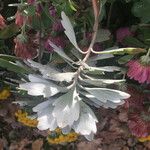
Ajania pacifica
Gold and silver chrysanthemum
Description
Source: leafsnapChrysanthemum pacificum, commonly called gold and silver chrysanthemum, is a flowering plant in the aster family. It is native to Japan, where it is endemic to the island of Honshū. Its natural habitat is along the Pacific coast, where it often grows on ocean cliffs.It is a showy plant, blooming in late fall and producing yellow heads of flowers. It was introduced into U.S. gardening catalogs in 1989, and has been in cultivation in Japan since an early date.
Care Guide
💧 Water
Gold and silver chrysanthemums thrive in coastal environments where they require moderate moisture. They prefer consistent watering, ideally once a week, but they can tolerate short dry spells. These outdoor plants flourish in garden borders and benefit from rainwater, especially during the rainy season when their hydration needs are naturally met.
How should I water my Gold and silver chrysanthemum?
When watering the Gold and silver chrysanthemum, it is important to use filtered water at room temperature. Tap water should be avoided because it can contain harmful particles. This type of chrysanthemum thrives in warm environments, so cold water may be a shock to its system. Instead of using overhead watering, simply apply the filtered room temperature water directly to the soil until it is fully soaked. This will benefit the plant by moistening the roots and allowing them to spread through the soil and absorb necessary nutrients.
What should I do if I give too much or too little water to my Gold and Silver Chrysanthemum?
Both overwatering and underwatering can harm the health of your Gold and silver chrysanthemum. However, overwatering is the more common problem. When this plant gets too much water, its stems and leaves may wilt and turn yellow. Overwatering for a long time can also lead to diseases like root rot, mold, and mildew, which can kill the plant. Underwatering is less common for this chrysanthemum because it can handle drought. However, it can still happen, and when it does, the leaves become brittle and brown. It's important to notice signs of overwatering early to prevent irreversible damage. If you see these signs, reduce your watering schedule immediately. You should also check the soil's drainage. If it's poor, replace it with well-draining potting mix. If you notice signs of underwatering, increase your watering frequency until the signs are gone.
How often do I need to water my Gold and silver chrysanthemum?
If your Gold and silver chrysanthemum is in a pot, the most accurate way to determine if it needs water is by putting your finger in the soil. If the top two to three inches of soil feel dry, it's time to water it. If you have planted your Gold and silver chrysanthemum outdoors in the ground, you can use a similar method to check the soil. Once the top few inches of soil have dried out, it's time to water it. Usually, during spring and early fall, watering once a week should suffice. However, in extremely hot weather, you may need to water it twice a week or more. Nonetheless, mature and well-established Gold and silver chrysanthemums have a commendable ability to withstand drought.
How much water does my Gold and silver chrysanthemum require?
To properly water your Gold and silver chrysanthemum, don't be afraid to give it a generous amount of water. Wait until the top two to three inches of soil are dry, then give the plant a thorough watering. Make sure to water enough so that the entire soil is soaked. You'll know you've added enough water when you see excess water flowing out of the drainage holes at the bottom of the pot. If you don't see any water draining, it means you haven't watered enough. Be careful not to let water accumulate inside the soil, as this can harm the plant. Also, if water isn't draining through the pot, it could mean that the soil doesn't drain well, which is bad for the plant's health. If the plant is outdoors, one inch of rain per week should be sufficient.
How do I water my Gold and silver chrysanthemum when it is growing?
The water needs of the Gold and silver chrysanthemum vary depending on its growth stages. When the plant is young or has recently been transplanted, it requires more water than usual. During these stages, the plant focuses on growing new roots, which need extra moisture for optimal performance. As the plant matures, it will require less water. Additionally, during the bloom period, when the flowers are developing, the plant may need more water due to increased moisture requirements.
☀️ Light Full sun
The gold and silver chrysanthemum originates from areas where sunlight is consistently present. However, it can also grow in locations that receive only intermittent sun. The plant thrives in full sun, though excessive exposure can cause issues such as scorched leaves. Conversely, when it lacks sufficient sunlight it tends to grow less vigorously and produces fewer flowers.
What are the sunlight requirements for Gold and silver chrysanthemum?
Gold and silver chrysanthemum requires full sun, meaning it should receive above 6 hours of sunlight daily, but it can also grow in partial sun with about 3-6 hours of sunlight. It's crucial to observe how sunlight moves through your garden to find spots that offer a good balance of light and shade, ensuring the plant's well-being. Whether in its natural habitat or cultivated settings, this plant thrives under prolonged sun exposure, yet it can adapt to intermittent sunshine. Excessive sunlight may cause issues like scorched leaves, while insufficient light can lead to weaker growth and fewer flowers.
How can artificial lighting be used for indoor Gold and silver chrysanthemum plants?
For indoor Gold and silver chrysanthemum plants where natural sunlight is insufficient, especially during winter or in less sunny spaces, artificial lighting is a beneficial alternative. It's advisable to use LED lights, as they can be tailored to provide specific wavelengths needed by the plants. Full sun plants require 30-50W/sq ft of artificial light, partial sun plants need 20-30W/sq ft, and full shade plants require 10-20W/sq ft. The artificial light source should be placed 12-36 inches above the plant, mimicking the natural sunlight's distance, and the duration should replicate natural daylight hours, usually 8-12 hours per day, to promote healthy growth.
What are the symptoms of light deficiency in Gold and silver chrysanthemum?
Symptoms of light deficiency in Gold and silver chrysanthemum include smaller new leaves, leggy or sparse growth due to longer spaces between leaves or stems, faster leaf drop as the plant tries to conserve resources, slower or halted growth indicating a survival mode due to poor light conditions, and lighter-colored or irregularly colored new leaves. Excessive sunlight exposure can lead to chlorosis (leaf yellowing), sunscald (damage from intense sun), leaf curling (to reduce exposure), wilting (from water loss), and leaf scorching (browned, dry edges on leaves). These symptoms reflect the plant's struggle with either too much or too little sunlight.
What solutions are available for addressing Gold and silver chrysanthemum's light exposure issues?
To ensure optimal growth for your Gold and silver chrysanthemum, gradually moving the plants to a sunnier location each week, until they receive at least 6 hours of direct sunlight daily, is recommended. Using a south-facing window and keeping curtains open during the day can maximize natural light for indoor plants. If natural sunlight is not sufficient, supplement with an artificial light source like a desk or ceiling lamp for at least 8 hours daily or invest in professional plant grow lights. For outdoor plants, avoid sudden changes in light intensity to prevent sunburn. Improve sunlight absorption by reducing obstructions, such as pruning blocking branches, and consider transplanting smaller plants during their dormant period to locations with better light exposure and drainage.
🌡️ Temperature 5–35°C
Gold and silver chrysanthemum is native to temperate regions and prefers a temperature range of 68 to 95 °F (20 to 35 ℃). It tends to flourish in milder climates and requires adjustments during seasonal extremes to maintain optimal health.
What is the native climate preference for Gold and Silver Chrysanthemum?
Gold and Silver Chrysanthemum, botanically known as Ajania pacifica, thrives in temperate areas. It prefers conditions where the temperature ranges between 68 to 95°F (20 to 35°C), enjoying milder climates. It is well-adjusted to thrive in such environments, requiring only minor adjustments during seasonal extremes to maintain its optimal health.
How does Gold and Silver Chrysanthemum handle cold weather?
Gold and Silver Chrysanthemum displays strong cold resistance, typically not requiring special frost protection measures during winter. However, if temperatures are expected to drop below -25°C, it becomes important to protect the plant from the cold. This can be achieved by covering the plant with soil or straw. Additionally, it is recommended to water the plant abundantly before the first freeze in autumn to ensure the soil remains moist and enters a frozen state. This helps prevent drought and water scarcity for the plant during the winter and early spring seasons.
What should be done if the Gold and Silver Chrysanthemum experiences low temperatures?
Gold and Silver Chrysanthemum is cold-tolerant and fares best in temperatures above 20°C. During winter, keeping the temperature above 0°C is advisable. Should the temperature plummet below -25°C, the plant may exhibit a decrease in sprouting or fail to sprout at all come spring. In such cases, it's recommended to remove any parts of the plant that have failed to sprout as a springtime measure.
How does Gold and Silver Chrysanthemum react to high temperatures?
During the summer, it's important to ensure that the Gold and Silver Chrysanthemum's surroundings do not exceed 35°C. Exposure to temperatures above 38°C can cause the leaves to become lighter in color, prone to curling, susceptible to sunburn, and, in severe cases, lead to the entire plant wilting and drying out. The solution involves trimming away sunburned and dried-up parts of the plant and moving it to a location that provides shade during the midday and afternoon sun, or using a shade cloth to create shade. It's also crucial to water the plant in the morning and evening to keep the soil moist.
💨 Humidity
🪴 Soil 6-7
🌱 Fertilizer
The best time to fertilize a Gold and silver chrysanthemum is in early spring, as it comes out of dormancy and begins active growth. Fertilization supplies essential nutrients for healthy growth. Although Gold and silver chrysanthemum has fairly low fertilization needs, annual fertilization can improve its survival and encourage better, longer-lasting flowers.
Why should I put fertilizer on my Gold and silver chrysanthemum?
Fertilization is important for the Gold and silver chrysanthemum because it provides necessary nutrients for the plant's growth. Although these plants have relatively low fertilization needs, annual fertilization can be very beneficial. It helps keep the plant alive and encourages the growth of better and longer-lasting flowers. Therefore, those who want their Gold and silver chrysanthemum to look its best should remember to fertilize annually.
When should I fertilize my Gold and silver chrysanthemum for the best results?
The best time to fertilize a Gold and silver chrysanthemum is late winter to early spring when the plant is coming out of its dormant phase and starting to actively grow. Fertilizing during this time promotes healthy growth for the season. Fertilizing in early spring is most beneficial, but it is also acceptable to fertilize in the fall. However, it is not recommended to fertilize during summer or winter.
When is it not a good idea to put fertilizer on my gold and silver chrysanthemum?
To ensure proper care for your Gold and silver chrysanthemum, it is best to fertilize only during late winter and early spring. This plant has low fertilization needs and a single annual feeding is enough. Overfertilization can occur if you continue fertilizing throughout spring, summer, and fall, leading to potential complications. However, if you missed fertilizing in spring, it is acceptable to feed the plant in the fall. It is important to note that fertilizing during the winter is not recommended as the plant is in a dormant phase with no new growth.
Which fertilizer should I use for my gold and silver chrysanthemum?
A general-purpose fertilizer with a balanced amount of nutrients is suitable for Gold and silver chrysanthemums. However, some nutrient blends are especially beneficial. Many gardeners believe that higher levels of phosphorus promote stronger roots and better flowers. Since Gold and silver chrysanthemums are flowering plants, using a phosphorus-rich fertilizer is recommended. This can be in granular or liquid form, as long as there is an adequate nutrient content. In addition to manufactured fertilizers, organic options like compost and manure can improve the soil for Gold and silver chrysanthemums. These materials create a healthy growing medium for the plants.
How can I help my Gold and silver chrysanthemum grow better?
To fertilize a Gold and silver chrysanthemum, the most common method is applying granular or pellet fertilizer to the soil around the plant. It's important to fertilize when the plant is transitioning from its winter dormant phase to active growth. In early spring, wait for shoots to emerge from the soil before applying fertilizer. Alternatively, some people prefer using liquid fertilizer, which should be diluted with water before application. Whether you use granular or liquid fertilizer, it's recommended to moisten the soil beforehand and keep it moist after applying fertilizer.
🪴 Pot & Repot 2-3 years
The gold and silver chrysanthemum is a compact bush characterized by its silvery leaves and yellow blooms. To ensure its healthy growth, repot the plant every 2 to 3 years during the spring. Use a slightly larger pot with good drainage. After repotting, water the plant sparingly. This encourages root development while maintaining moderate moisture levels, promoting the overall health of your gold and silver chrysanthemum.
✂️ Pruning
The gold and silver chrysanthemum is a perennial plant known for its two-toned foliage and vibrant yellow flowers. To encourage bushier growth and more abundant blooms, prune up to one-third of the plant in early spring. Ensure you use clean tools to prevent the spread of disease. For more specific care advice, consult horticultural resources.
🌿 Propagating
🐛 Diseases & pets
☠️ Toxicity
Characteristics
- Plant Type
- Shrub
- Life Cycle
- Perennial
- Genus
- Ajania
- Family
- Asteraceae
- Hardiness Zone
- 5-9
- Mature Height
- 30 cm to 46 cm
- Mature Spread
- 61 cm to 91 cm
- Leaf Color
- Green, Gray, Silver, Blue, Variegated
- Leaf Type
- Deciduous
- Flower Color
- Yellow, Gold
- Flower Size
- 10.16 cm
- Bloom Time
- Early fall, Mid fall
- Planting Time
- Spring, Summer
- Harvest Time
- Mid fall, Late fall
- Native Area
- Japan