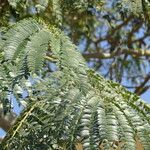
Albizia julibrissin
گل ابریشم · شب خسب · Mimosa · Persian Silk Tree · Silktree
Description
Source: leafsnapAlbizia julibrissin, commonly known as the Persian silk tree or mimosa tree, is a deciduous ornamental plant native to Asia. This fast-growing tree can reach a height of 20-40 feet and spread up to 30-40 feet wide. It features a broad, spreading canopy with delicate, fern-like leaves that are bipinnately compound. In the summer, the Persian silk tree produces showy pink or white flowers arranged in clusters that resemble pom-poms. These blooms attract bees, butterflies, and hummingbirds, making it a fantastic addition to any garden or landscape. Albizia julibrissin prefers full sun exposure but can also tolerate partial shade. It thrives best in well-drained soils but can adapt to various soil types, including clay soils. This plant is relatively low maintenance, requiring minimal pruning except for the removal of dead branches or shaping it into desired forms. However, it may be susceptible to pests such as spider mites and scale insects, which might require treatment with insecticides. Overall, Albizia julibrissin is an attractive ornamental plant that adds beauty and elegance wherever it's planted while providing shade during hot summer months. It's an excellent choice for any garden enthusiast looking for a low-maintenance yet beautiful addition to their landscape design.
💡 According to legend, an ancient Chinese emperor passed away during a tour of the southern regions. Despite a long and exhaustive search, his queen could not find him. Grieving deeply, she cried day and night, shedding both tears and blood. Eventually, she too passed away and was transformed into a deity. Later, it was discovered that the emperor and his queen had merged into one entity and became what is known today as the Persian silk tree. The leaves of the Persian silk tree open during the day and close at night. As a result, these trees have come to symbolize loyalty in love.
🌳 Surprisingly, the influence of silk trees reaches well beyond their decorative appeal. Parts of the tree have been used to produce honey with a unique flavor, as the flowers are a rich nectar source for bees. The wood, being both strong and flexible, is employed in making durable, lightweight furniture. Its bark has been considered for erosion control because the silk tree’s pioneering, resilient nature helps stabilize disturbed soil and restore degraded landscapes.
🎭 Balance, family, happiness, female strength
Care Guide
💧 Water Every 7 days
The Persian silk tree, which comes from temperate regions, shows moderate drought tolerance and prefers drier conditions. It should be watered every 1–2 weeks, allowing the soil to partially dry out between waterings. This tree thrives in full sunlight and benefits from deep watering during its active growing season to mimic natural rainfall.
When Should I Water My Persian Silk Tree?
Proper and timely watering is crucial for the health and development of the Persian Silk Tree (Albizia julibrissin), affecting its growth, flower production, and disease resistance. The soil dryness, indicated by the top 1 to 2 inches feeling dry to the touch, signals the need for watering. Observing the tree's leaves for signs of wilting or color loss can also guide watering times. The Persian Silk Tree requires more water during pre-flowering and in conditions of high temperatures and sunlight exposure. However, watering too early or too late, when the soil is still moist or excessively dry, can lead to root diseases or stunt growth. Proper water management is essential for encouraging the tree's growth and maintaining its health.
How Should I Water My Persian Silk Tree?
Watering the Persian Silk Tree involves specific techniques and considerations to ensure the plant receives optimal moisture without being over-saturated. Bottom-watering, where the plant pot is placed in a tray of water allowing the roots to absorb moisture upwards, is effective for maintaining adequate moisture levels. Using a watering can with a narrow spout helps direct water to the base and avoid wetting the foliage, which can prevent fungal diseases. Employing a moisture meter to check soil moisture levels, avoiding foliage wetting, allowing the soil to partially dry between waterings, and using distilled or filtered water helps in achieving the right watering balance. These methods minimize risks while promoting healthy root and plant growth.
How Much Water Does Persian Silk Tree Really Need?
The Persian Silk Tree has moderate hydration needs, reflecting its native Mediterranean climate adaptation to tolerate drought and heavy rainfall. The plant's relatively shallow root system suggests that moisture should reach the upper soil layers where the roots are concentrated. A mature tree in a medium-sized pot typically needs 1 to 2 liters of water every 7 to 10 days, though this can vary based on factors like pot size and plant size. Signs of proper hydration include green, turgid leaves and firm branches. Overwatering can lead to yellowing leaves and fungal diseases, while underwatering may cause wilting and reduced flowering. Using well-draining soil and pots with drainage holes, and allowing the soil to dry out slightly between waterings, are recommended practices.
What Kind of Water is Best for Persian Silk Tree?
The Persian Silk Tree is moderately sensitive to water quality, exhibiting high sensitivity to chlorine and fluoride which can cause leaf damage and growth issues. Therefore, distilled water is best, being free from contaminants and minerals. Rainwater is a good natural alternative, provided it's clean and pollutant-free. If necessary, tap water can be used but be cautious of possible contaminants. Filtered water that removes chlorine, chloramines, or heavy metals is also suitable. To protect the tree, it's recommended to dechlorinate tap water by letting it sit for 24 hours before use and ensuring the water temperature is moderate, around 68-72°F (20-22°C), to avoid shocking the plant.
How Do Persian Silk Tree's Watering Needs Change with the Seasons?
The Persian Silk Tree's watering needs vary with the seasons, requiring regular, even moisture during its spring growth phase, and more frequent watering in summer due to increased heat and sunlight. In autumn, as the tree prepares for dormancy, watering frequency should be reduced to avoid over-saturation. During winter, the tree's dormant period, water sparingly, allowing the top few inches of soil to dry out between waterings. Seasonal adjustments are crucial for maintaining the tree's health and promoting robust growth throughout the year.
☀️ Light Full sun
The silk tree does best when it gets a substantial amount of daily sunlight, which optimizes its growth and health. However, it can tolerate situations where sunlight is partly blocked. Light intensity is important for its different stages of development. Its native habitat had abundant sun exposure, and the tree adapted to that. Too much or too little exposure can negatively affect its well-being.
What are the sunlight requirements for a Persian silk tree?
The Persian silk tree thrives best when exposed to full sunlight, benefiting from more than 6 hours of sunlight daily to ensure optimal growth and health. It can, however, adapt to partial sun conditions, where sunlight is partially obscured, receiving about 3 to 6 hours of sunlight. The right balance of light and shade is crucial for different growth stages of the tree, mimicking its native habitat which is accustomed to ample sunlight. It's important to observe the movement of sunlight through your garden to select the ideal location for your Persian silk tree, taking care to avoid locations where too much or too little sunlight might negatively impact the plant's well-being.
How does artificial lighting affect the Persian silk tree indoors?
Indoor Persian silk trees require adequate lighting to support their growth, especially in conditions where natural sunlight is inadequate, such as during winter or in less sunny spaces. Artificial lighting provides a vital alternative, promoting healthier and faster growth. LED lights are recommended for their ability to be customized to specific wavelengths needed by plants. Full sun plants should receive 30-50W per square foot, partial sun plants need 20-30W per square foot, and full shade plants require 10-20W per square foot of artificial light. The artificial light source should be placed 12-36 inches above the plant to mimic natural sunlight and should be on for 8-12 hours per day to replicate the length of natural daylight hours for optimal plant health.
What are the symptoms of improper lighting for a Persian silk tree?
Persian silk trees exposed to inadequate sunlight may exhibit symptoms such as small leaves, leggy or sparse growth, faster leaf drop, slower or no new growth, lighter-colored new leaves, chlorosis (yellowing of leaves due to chlorophyll breakdown from excessive sunlight), sunscald (damage from intense sunlight exposure), leaf curling (as a defense mechanism to minimize water loss), wilting (due to loss of turgor pressure), and leaf scorching (characterized by brown, dry edges on leaves due to excessive sunlight). These symptoms indicate either a lack of sufficient sunlight or too much direct exposure, both of which can impact the plant's ability to photosynthesize and maintain overall health.
How can I manage sunlight exposure for a Persian silk tree?
To ensure your Persian silk tree receives optimal sunlight, gradually introduce it to sunnier spots, aiming for at least 6 hours of direct sunlight daily. For indoor plants, use south-facing windows for natural sunlight and consider supplementing with artificial lighting if necessary, using grow lights for large or immobile trees and ensuring at least 8 hours of light daily. For outdoor plants, avoid sudden changes in light exposure to prevent sunburn. If your plant suffers from insufficient sunlight, while parts of the plant that are already damaged may not recover, new growth should be healthy with increased light exposure. Minimize obstructions to sunlight by trimming trees or branches blocking the light and consider transplanting smaller plants during their dormant period to sunnier locations with good drainage for ground plants.
🌡️ Temperature 10–35°C
The native growing habitat of the silk tree is warm, temperate regions with temperatures from 10 to 35 ℃ (50 to 95 ℉). It prefers warm, humid conditions but can tolerate a broad range of temperatures. In summer it can endure heat up to 35 ℃ (95 ℉), though it should be protected from hot winds. In winter, if temperatures fall below 10 ℃ (50 ℉), using a protective covering is recommended.
What is the ideal growth environment for the Persian silk tree?
The Persian silk tree thrives in warm and temperate regions, optimized by temperatures ranging from 10 to 35°C (50 to 95°F). It flourishes in a warm and humid climate, although it exhibits a strong resistance to varying temperatures. During the summer, it can tolerate heat up to 35°C (95°F) with sufficient protection from hot winds. However, in winter, when temperatures fall below 10°C (50°F), it's advised to provide the plant with a protective covering. Despite its strong cold resistance, in extreme cold below the specified limit, adopting cold protection measures, such as wrapping the trunk and branches with non-woven fabric or cloth, is essential. It's also recommended to water the plant plentifully before the first frost of autumn to ensure the soil remains moist, aiding the plant through winter and early spring.
How does the Persian silk tree react to low temperatures?
The Persian silk tree is known for its cold tolerance, ideally thriving when temperatures remain above a certain minimum. In winters, it's crucial to ensure the temperature doesn't fall below a lower limit to prevent damage. While the tree may not show immediate signs of distress when temperatures dip below this limit, the aftermath during spring is evident as the branches may become brittle, dry, and fail to sprout new shoots. The solution to this issue is to prune away any dead branches in the spring that have not produced new leaves, aiding in the recovery and health of the tree.
What should be done if the Persian silk tree experiences high temperatures?
During the summer, it's important to ensure the Persian silk tree remains below the maximum suitable growth temperature to prevent heat stress. When temperatures soar above the tolerable maximum, the plant may show signs of distress such as lighter leaf color, dry and withered leaf tips, and increased susceptibility to sunburn. To mitigate these issues, one should trim away the sunburned and dried up parts of the plant, relocate it to a shaded area away from the harsh midday and afternoon sun, or install a shade cloth for protection. Additionally, watering the plant in the morning and evening will help keep the soil adequately moist, supporting the tree's wellbeing during high temperatures.
💨 Humidity high (>60%)
This plant needs special care because it loves high humidity levels of 60-80% or more. The best way to achieve this is by placing a humidifier near the plant. Daily misting is also essential! Make sure the room has good ventilation.
🪴 Soil 6-7
🌱 Fertilizer
Timing matters when feeding a Silk tree. Apply fertilizer in early spring and continue once a month until early summer. Fertilizer encourages beautiful blooms and gives energy during both dormant and active growth periods.
Why should I use fertilizer on my Persian silk tree?
There are a few important reasons why you should fertilize a Persian silk tree. One of the most obvious reasons is that it helps the tree produce beautiful blooms. Fertilizing in early spring is a great way to ensure excellent flowers during that season. Additionally, fertilizer provides the tree with energy that it can store in the ground during its dormant growth phases. By giving the tree extra nutrients during fall planting or late spring, it will have more energy to use when it starts growing again.
When should I fertilize my Persian silk tree for the best results?
To ensure effective fertilization of your Persian silk tree, timing is key. Applying fertilizer too early, while the tree is still dormant, is not advisable as it will be washed away by rainwater, resulting in waste and pollution. It is recommended to make the first fertilizer application in early spring and continue to fertilize once a month until early summer.
When is the best time not to fertilize my Persian silk tree?
To ensure optimal growth and blooming of Persian silk tree, it is important to consider a few factors when fertilizing. First, avoid using fertilizers with high levels of nitrogen, as this can lead to excessive leaf growth and few blooms. Instead, opt for fertilizers that have a lower nitrogen content compared to other nutrients. Secondly, refrain from fertilizing the tree in late autumn, as this may result in excessive growth before the winter season. Additionally, avoid fertilizing during hot and dry periods, as dry soil does not effectively deliver fertilizer and it may promote growth that requires more water than is available. The best time to fertilize is earlier in the season when temperatures are cooler. Finally, be cautious of inadvertently giving the tree a double-dose of fertilizer, as Persian silk tree can absorb fertilizer from nearby plants or lawns.
What kind of fertilizer does my Persian silk tree need?
For the Persian silk tree, an ideal fertilizer should have a balanced mix of the three main plant nutrients, with slightly more phosphorus. Another option is to improve the tree's soil by adding organic materials like compost, worm castings, and manure. Experienced gardeners may choose to supplement the tree's nutrition with water-soluble fertilizers containing phosphorus when flower buds begin to appear. This will enhance flower development, allowing them to grow larger and bloom for a longer period. Fertilizers for the Persian silk tree can come in various forms, with liquid or powdered fertilizers being some of the best options. Regardless of the type used, remember to dilute the fertilizer and apply while watering your Persian silk tree.
How can I add fertilizer to my Persian silk tree?
To ensure proper growth of your Persian silk tree, it is essential to follow the specific fertilizer instructions and conduct research on its application. Over-fertilizing can be detrimental, so determining the correct amount is crucial. As a general guideline, you can use the age of the tree or trunk diameter to estimate the appropriate fertilizer quantity. A recommended approach is to use approximately one-tenth of a pound of fertilizer per year or per inch of trunk, with a maximum of one pound. Granular and organic fertilizers like blood meal can be spread from the tree's base to the drip line (the area under the farthest-reaching branches), avoiding contact with the trunk. Over time, the granules will break down and filter into the soil for root absorption. After applying the fertilizer, it is beneficial to spread a one-inch layer of compost around the base and thoroughly water the tree.
🪴 Pot & Repot Every 12 months
✂️ Pruning
The Persian silk tree is known for its vibrant flowers and delicate foliage. To enhance airflow and maintain its shape, prune it in early spring. Be careful not to over-prune, as the Persian silk tree is sensitive. Regular pruning helps promote stronger growth and results in a visually appealing plant, making it an ideal centerpiece for your garden.
🌿 Propagating
🐛 Diseases & pets
☠️ Toxicity
There are conflicting reports on the plant’s toxicity from numerous sources. The pods of the Silk Tree may contain a neurotoxin. For your safety, always check with a physician before using any botanical products.
Characteristics
- Plant Type
- Tree
- Life Cycle
- Perennial
- Genus
- Albizia
- Family
- Fabaceae
- Hardiness Zone
- 6-9
- Mature Height
- 3.05 m to 15.85 m
- Mature Spread
- 6.1 m to 14.94 m
- Leaf Color
- Green
- Leaf Type
- Deciduous
- Flower Color
- Pink
- Flower Size
- 2.54 cm to 5.08 cm
- Bloom Time
- Early summer, Mid summer
- Planting Time
- Spring, Autumn
- Harvest Time
- Mid summer, Late summer, Early fall
- Native Area
- Sri Lanka, Somalia, India, Turkey, Eritrea, Pakistan, Iraq, Koppen, Ethiopia, South Korea, Nepal, Bangladesh, Armenia, China, Vietnam, Myanmar, Japan, Bhutan, Iran, Azerbaijan