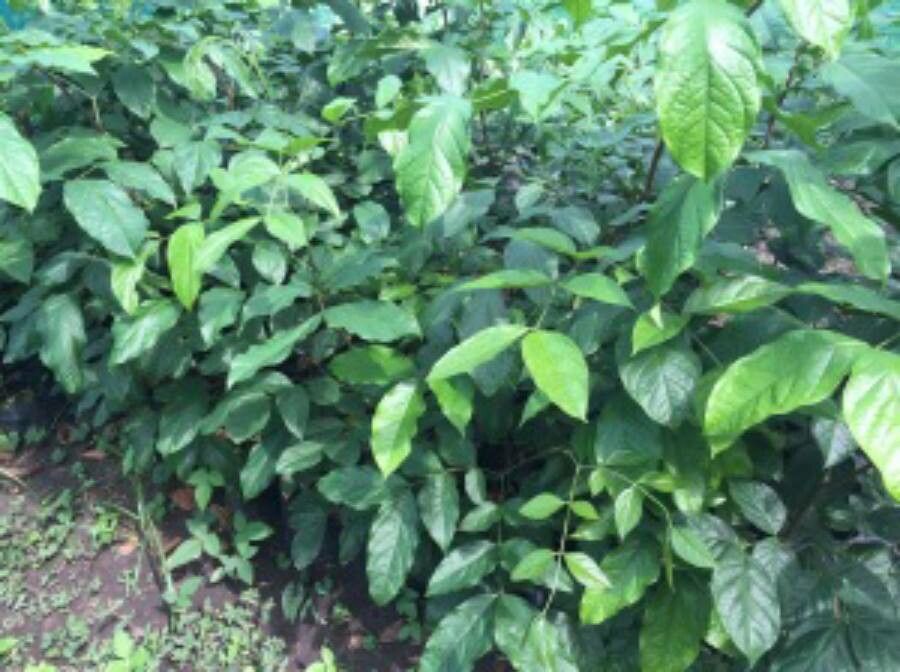
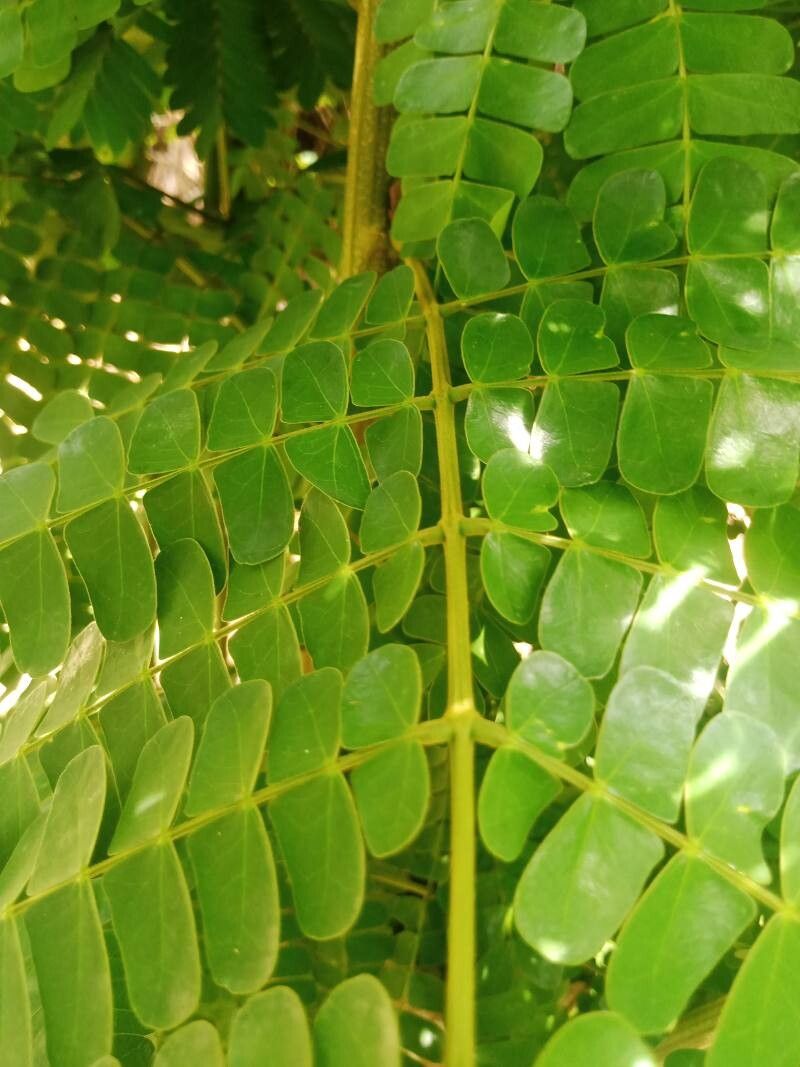
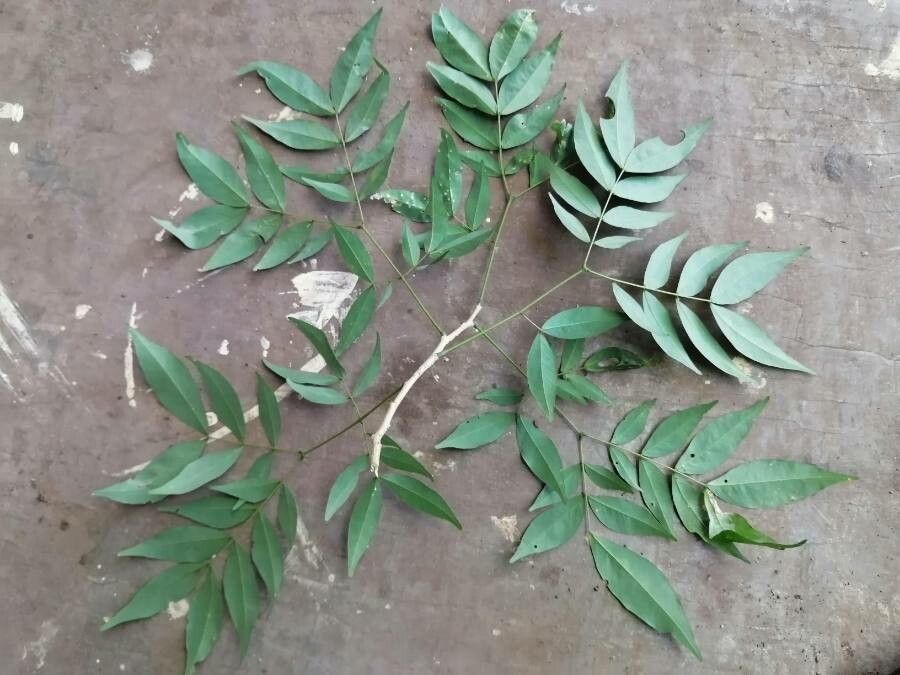
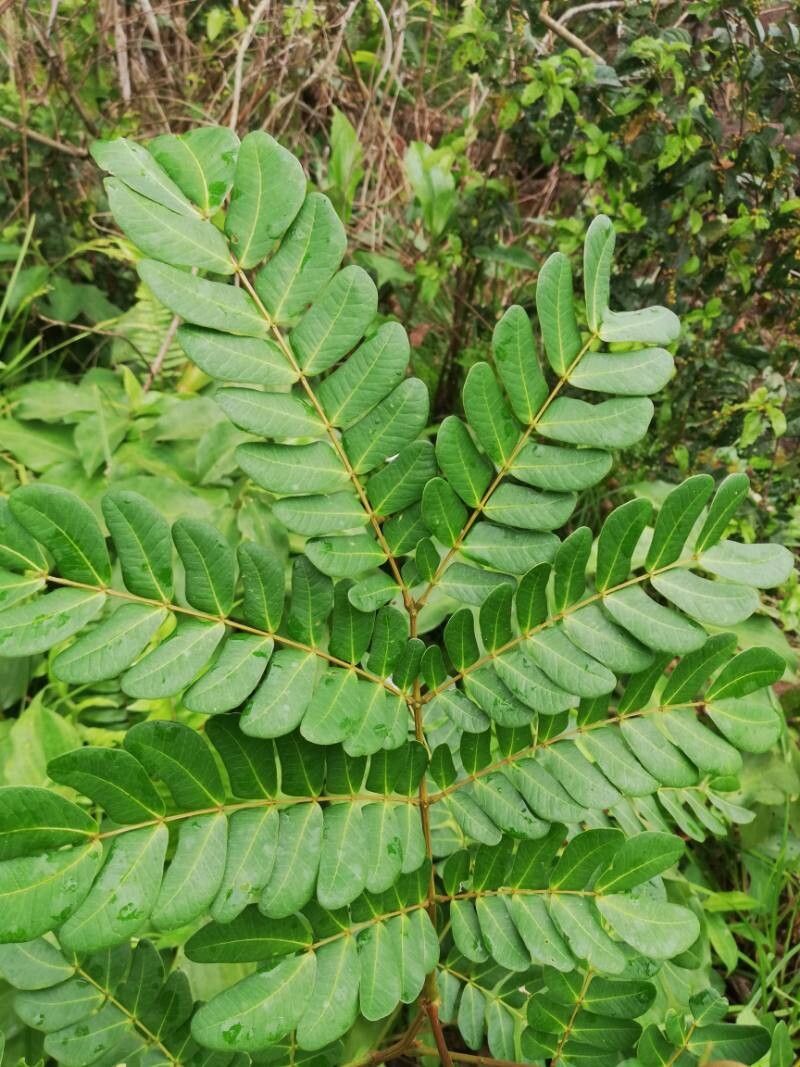
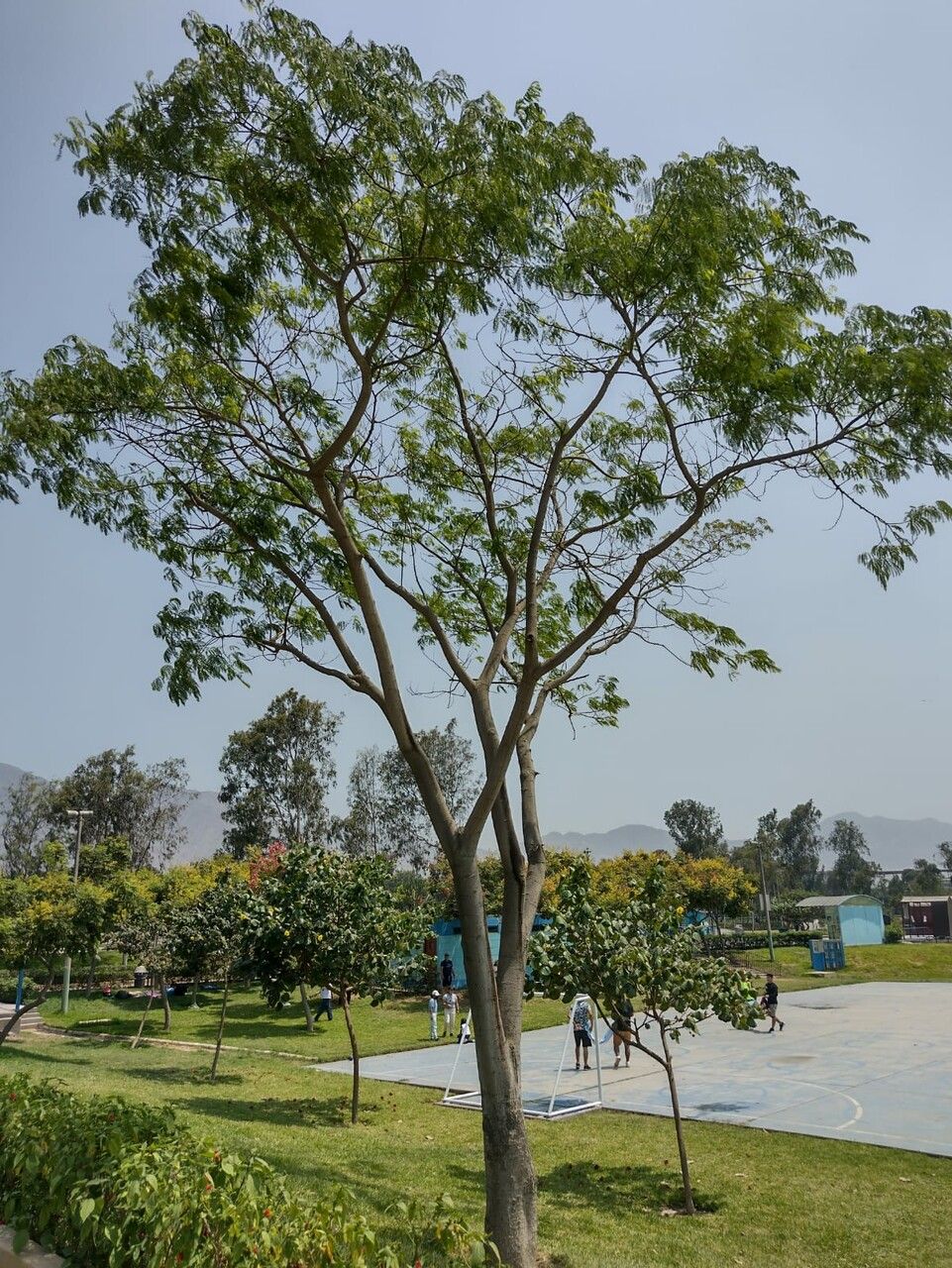
Albizia procera, commonly known as white siris or tall albizia, is a deciduous tree from the Fabaceae family. Native to the Indian subcontinent and Southeast Asia, it can reach heights of up to 30 meters. The tree features a straight trunk covered with grayish-brown bark, which is smooth in its youth but becomes rough as it ages. The leaves are bipinnate, meaning they consist of multiple leaflets arranged along either side of the stem. The small, white flowers of Albizia procera are organized in clusters at the ends of branches. These flowers bloom during the summer, attracting bees for pollination. The fruit of the tree is a flat pod containing several seeds. Albizia procera is valued in traditional medicine for its anti-inflammatory properties, which can help treat various ailments such as fever, coughs, and skin diseases. Additionally, its durable and termite-resistant wood is often used to make furniture. Despite its usefulness, Albizia procera faces threats from deforestation due to its valuable timber, leading to its classification as vulnerable on the IUCN Red List of Threatened Species since 1998. Conservation efforts are underway by various organizations in Southeast Asia to preserve this species for future generations. These efforts also promote sustainable use practices among local communities that depend on Albizia procera for their livelihoods, traditional medicine, and religious ceremonies, including rituals and offerings in temples dedicated to the worship of such trees found throughout India's forests today.
SPECIMEN · FROM THE LIBRARY
Albizia procera
Albizia Procera
Updated · 20 observations
ON THIS PLANT
CHARACTERISTICS
ALSO KNOWN AS
en Forest siris en Rain siris en Safe siris en White siris en White siristree en Womens-tongues en Tall albizia en Tee-coma en Black siris en False lebbeck en Tall albizzia en Albizia en Bastard lebbeck en Silver Bark Rain Tree en Vaivai Ni Vavalagi en White siris tree en Women's tongues
ALSO IN THE LIBRARY