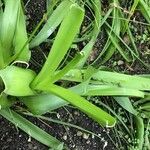
Albuca bracteata
False seaonion · False Sea-onion · Pregnant Onion · Sea-onion · German onion
Description
Source: leafsnapAlbuca bracteata, commonly known as the Slime Lily or Pregnant Onion, is a perennial plant in the Asparagaceae family. Native to South Africa, it is widely cultivated as an ornamental plant in many regions around the world. The Slime Lily features a bulbous root system that gives rise to long, narrow leaves that can reach up to 30 cm in length. These green leaves have a waxy texture and small white spots. During spring and summer, the plant produces tall spikes adorned with small white flowers featuring green stripes. One distinctive characteristic of Albuca bracteata is its ability to generate bulbils, or miniature bulbs, at its base. These bulbils can be separated from the parent plant and grown into new plants. The Slime Lily thrives in well-drained soil with moderate watering during its growing season but requires dry soil during its dormancy periods. While it prefers full sun, it can also tolerate partial shade. In summary, Albuca bracteata is an easy-to-grow ornamental plant that brings unique texture and interest to any garden or indoor space, thanks to its unusual appearance and reproductive habits.
🌳 Although the pregnant onion is not commonly noted for practical uses, it draws considerable attention for its decorative appeal and its distinctive mode of reproduction. Gardeners are captivated by its bulbil production, where tiny bulbs form at the base and create the appearance of a 'pregnant' plant. Those bulbils can be collected and used to produce new plants, making the pregnant onion an interesting example of vegetative reproduction and a favorite among horticultural enthusiasts because it is easy to propagate and has an unusual growth habit.
Care Guide
💧 Water Every 7 days
The Pregnant Onion is a drought-tolerant plant native to arid regions and thrives with minimal water. It grows best when watered every two weeks and benefits from well-draining soil, as it is sensitive to overwatering and susceptible to root rot.
How should I water my Pregnant onion plant?
To properly water the Pregnant onion, use filtered water at room temperature or slightly warmer. Tap water may have harmful particles, so filtered water is preferable. The plant is accustomed to warm temperatures, so cold water can be a shock to its system. Avoid overhead watering to prevent foliage complications. Instead, pour the filtered room temperature water directly onto the soil until it is completely soaked. This helps moisten the roots and allows them to spread through the soil to gather necessary nutrients.
What do I need to do if I give my Pregnant onion too much or too little water?
Overwatering is a more common issue than underwatering for the health of your Pregnant onion. When the plant receives too much water, its stems and leaves may wilt and turn yellow. Overwatering for a long time can lead to diseases like root rot, mold, and mildew, which can kill the plant. Underwatering is less common, but the leaves may become brittle and brown if it occurs. It's important to recognize the signs of overwatering early so you can take action. Some diseases caused by overwatering, like root rot, may not be fixable if you wait too long. Reduce your watering schedule and check the soil drainage. If it drains poorly, replace it with a loose, well-draining potting mix. If your Pregnant onion is not getting enough water, increase your watering until the signs improve.
How often should I give water to my Pregnant onion?
If your pregnant onion is in a pot, you can check if it needs water by putting your finger in the soil. If the top two to three inches of soil are dry, it's time to water. If your pregnant onion is planted outside, you can use the same method. Once the top few inches of soil are dry, it's time to water. During the spring and early fall, you'll likely need to water about once a week. In really hot weather, you may have to water twice a week or more. However, mature and well-established pregnant onions can withstand drought well.
How much water does my Pregnant onion require?
When watering your Pregnant onion, make sure to give it plenty of water. Wait until the first two to three inches of soil are dry, and then water the plant thoroughly. Water it enough so that the soil is completely soaked and excess water flows out of the drainage holes at the bottom of the pot. If you don't see any excess water draining, you may have not given enough water. However, be careful not to let the water accumulate in the soil, as this can be harmful to the plant. If the water isn't draining properly, it could mean that the soil doesn't drain well, which is not good for the plant's health. If the plant is outside, it only needs about 1 inch of rain per week.
How do I water my Pregnant onion at different stages of growth?
The water needs of the Pregnant onion can vary depending on its growth stages. When the plant is young or recently transplanted, it requires more water to support the development of new roots. During this phase, the plant focuses its energy on growing these roots, which perform better with slightly more moisture. As the Pregnant onion matures, it will require less water overall. Additionally, during the bloom period, when the plant is producing flowers, it may need extra water since flower development uses a significant amount of moisture.
☀️ Light Full sun
The pregnant onion prefers areas with a significant amount of sunlight, although it can also tolerate moderately lit regions. It originates from environments that are exposed to plenty of day-length duration, hence it prospers under these conditions. Nonetheless, if exposed to constantly aggressive sunlight or very little light exposure, it could negatively affect its growth, leading to compromised plant health.
What are the sunlight requirements for a Pregnant Onion plant?
The Pregnant Onion (Albuca bracteata) requires full sun, meaning it thrives in conditions where it receives more than 6 hours of sunlight daily. It can also tolerate partial sun, with about 3-6 hours of sunlight. However, it's important to monitor the movement of sunlight through your garden to ensure your plant receives the right balance of light and shade, crucial for its health and happiness.
How do I care for a Pregnant Onion plant in terms of light exposure?
Caring for a Pregnant Onion plant involves ensuring it receives substantial daylight exposure, as it originates from regions with significant day-length duration. While it can tolerate moderately lit areas, excessive intensity or limited light exposure could hinder its growth. In cases of insufficient natural sunlight, especially during winter or in less sunny spaces, artificial lighting serves as an effective alternative. LED lights are recommended for their ability to provide specific wavelengths needed for optimal growth. For full sun plants, 30-50 watts per square foot is ideal, partial sun plants require 20-30 watts per square foot, and full shade plants need 10-20 watts per square foot. Positioning the light source 12-36 inches above the plant and ensuring 8-12 hours of light per day can mimic natural daylight hours and promote healthier growth.
What are the symptoms of light deficiency in Pregnant Onion plants?
Symptoms of light deficiency in Pregnant Onion plants include leggy or sparse growth, where the distance between leaves or stems increases, causing a stretched-out appearance; chlorosis, which leads to a loss of leaf greenness and yellowing due to chlorophyll breakdown; sunscald, identified by pale, bleached areas on the plant from intense sunlight exposure; leaf curling as a defense against water loss and damage; wilting, indicating a loss of turgor pressure from excessive sunlight; and leaf scorching, seen as brown, dry edges on leaves from too much sunlight. These symptoms highlight the plant's struggle in inadequate lighting conditions.
How can I address and prevent light deficiency symptoms in Pregnant Onion plants?
To address light deficiency in Pregnant Onion plants, gradually acclimate them to brighter conditions by moving them to sunnier locations each week until they receive at least 6 hours of direct sunlight daily. For indoor plants, use a south-facing window or artificial lights for at least 8 hours a day. Outdoor plants should be moved to optimal sunlight spots gradually to prevent sunburn. Reducing obstructions, like pruning trees, or transplanting smaller plants during their dormant period to a location with ample sunlight and good drainage helps in prevention. It's crucial to remember that parts of the plant affected by inadequate light may not recover, but new growth will be healthy with improved lighting.
🌡️ Temperature 20–37.8°C
The pregnant onion originates from semi-arid areas and requires warmer temperatures to flourish. It thrives best in the temperature scope of 68 to 100 ℉ (20 to 38 ℃). In the hot summer months, it should be positioned in a shaded, cool place to prevent overheating. During the winter season, it needs a dormant phase at a temperature range of 50 to 60 ℉ (10 to 16 ℃), after which it requires warmer temperatures in the springtime.
What are the essential care tips for a pregnant onion plant?
Pregnant onion, scientifically known as Albuca bracteata, thrives in semi-arid regions and prefers temperatures between 68 to 100°F (20 to 38°C). It's essential to protect the plant from excessive heat by placing it in a cool, shaded area during the summer. In contrast, winter demands a dormant period with temperatures ranging from 50 to 60°F (10 to 16°C), gradually transitioning to warmer temperatures in spring. As cold temperatures can damage the plant, it's advisable to move outdoor-grown pregnant onions indoors near a bright window in autumn, away from direct heat sources, ensuring the environment stays above a certain minimum temperature conducive to its growth.
What should I do if my pregnant onion plant experiences low temperatures?
Pregnant onion plants are heat lovers and struggle with low temperatures. If exposed to cold, the leaves may lighten in color, progressing to brown or black after frost damage, accompanied by wilting and drooping. To manage this, trim off the frost-damaged parts and move the plant to a warm, indoor environment, preferably near a south-facing window for adequate sunlight. It's crucial to avoid placing the plant near heaters or air conditioning vents to prevent the air from getting too dry.
How do I care for my pregnant onion plant during high temperatures?
In high temperatures, especially during summer, it's important to keep the pregnant onion plant's environment below a certain maximum temperature to avoid lightening of the leaves and increased susceptibility to sunburn. If the plant experiences temperatures above the tolerable maximum, trim the sunburned and dried-up parts. Relocate the plant to a shaded area to protect it from the midday and afternoon sun. Additionally, watering the plant in the morning and evening can help maintain soil moisture and keep the plant healthy.
💨 Humidity normal (40-60%)
This plant will thrive in moderate humidity, which is probably the level in your home. However, misting it a few times a week can be very beneficial. Make sure the room has good ventilation.
🪴 Soil 6-7
🌱 Fertilizer
During its main growth stage, which typically unfolds in the spring, summer, and the early part of autumn, a pregnant onion needs the most nutrients. It is vital to fertilize it during this time to compensate for any possible deficiencies in the soil. This ensures the nourishment of critical plant parts like roots and stems, and encourages the growth of its appealing foliage, a notable characteristic of this specific plant.
Why should I add fertilizer to my Pregnant onion?
All plants need soil nutrients for growth, including the Pregnant onion. However, there's no guarantee that the soil they grow in will have all the necessary nutrients. That's where fertilization and soil amendments come in. These methods ensure that your garden plants not only get the essential nutrients they need, but also the specific ones that are necessary for their growth. For the Pregnant onion in particular, fertilizer is crucial for healthy root and stem development throughout the growing season. Additionally, fertilization will help the Pregnant onion have beautiful leaves, which is important since its foliage is its main attractive feature.
When should I fertilize my Pregnant onion?
During the active growth phase of a Pregnant onion, which usually occurs in spring, summer, and early fall, it will require the highest amount of fertilizer. As winter approaches, you should feed it once every two to four weeks. When fall arrives, you can gradually decrease the amount of fertilizer, eventually stopping altogether in preparation for winter, when the Pregnant onion's growth slows down significantly.
When is it better to not use fertilizer on my Pregnant onion plant?
You should feed your Pregnant onion regularly throughout most of the year, such as in spring, summer, and fall. However, if you accidentally over-fertilize or fertilize it incorrectly, you'll need to fix the issue before resuming regular feedings. The only exception is during winter. If the plant is grown indoors in a cold winter area, it will go into a dormant phase. Feeding it during this phase is unnecessary and may cause fertilizer burn.
What kind of fertilizer does my Pregnant onion plant need?
To provide the best nutrition for a Pregnant onion, a specific blend of nutrients is needed. This blend includes nitrogen, phosphorus, and potassium, with an ideal ratio of 3 parts nitrogen, 1 part phosphorus, and 2 parts potassium (N-P-K 3-1-2). However, in some cases, a general-purpose fertilizer with an even blend of nutrients can also work well. Regardless of the fertilizer type, it is important to keep the volume of each nutrient at 10 or lower for optimal results. The fertilizer can be either granular or liquid. If using a liquid fertilizer, it is recommended to dilute the strength by half. While granular fertilizer has some advantages, it is often more practical to use liquid fertilizer, especially when watering the Pregnant onion at the same time.
How can I give nutrients to my Pregnant onion?
When purchasing fertilizer for your Pregnant onion, there will usually be application instructions included that you should follow. However, it is important to specifically fertilize your Pregnant onion just before or while watering the soil to avoid damaging the roots. If you are using a slow-release granular fertilizer, first sprinkle it on the soil and then immediately water it. On the other hand, if you are using a liquid-based fertilizer, dilute it with water, apply it to the soil, and then provide a bit more water. It is particularly important to dilute your fertilizer by at least half in the spring and fall when the plant's growth is increasing or slowing down, respectively.
🪴 Pot & Repot 2-3 years
While replanting Pregnant onion, opt for a container that's 1-2 inches (2.5-5 cm) larger and has sufficient drainage. Utilize a potting mix that drains well. Do the repotting during spring or autumn, taking care to position the root ball a bit below the edge of the plant pot. After repotting, water it adequately and situate it in a warm location with indirect sun rays.
✂️ Pruning
To help a pregnant onion plant thrive, it's best to prune it from early to late spring. This involves removing dead foliage and trimming offshoots to encourage growth and improve its appearance. Make sure not to cut into the bulb to avoid causing damage. Pruning at the right time promotes the plant's health, prevents disease, and ensures its longevity.
🌿 Propagating
🐛 Diseases & pets
☠️ Toxicity
Characteristics
- Plant Type
- Herb
- Life Cycle
- Perennial
- Genus
- Albuca
- Family
- Asparagaceae
- Hardiness Zone
- 9-11
- Mature Height
- 91 cm
- Mature Spread
- 61 cm
- Leaf Color
- Green
- Leaf Type
- Evergreen
- Flower Color
- White
- Flower Size
- 0.51 cm
- Bloom Time
- Mid spring, Late spring, Early summer
- Planting Time
- Spring
- Harvest Time
- Mid summer
- Native Area
- South Africa