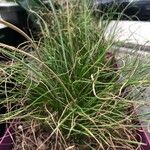
Albuca humilis
Description
Source: leafsnapAlbuca humilis is a bulbous flowering plant, placed in the genus Albuca in the subfamily Scilloideae of the family Asparagaceae. It is native to southern Africa – to South Africa from the Free State to KwaZulu-Natal according to some sources, or to the Drakensberg Mountains of Lesotho according to others.Albuca humilis was first described by John Gilbert Baker in 1895. The specific epithet humilis means "low-growing". It grows from small white bulbs, each producing only one or two narrow leaves in the summer, dying down in the winter. The flower stem is up to 10 cm (4 in) tall, with one to three upward-facing flowers with six tepals up to 2 cm (0.8 in) long. All the tepals are white with a green stripe on the outside; the inner three also have yellow tips. The flowers are strongly scented and have been described as smelling of marzipan.The species is sufficiently hardy to be cultivated in the UK when given some protection by an alpine house or bulb frame.
Care Guide
💧 Water
Albuca humilis, originally from arid regions, is a resilient plant that thrives with minimal water and has a high tolerance for drought. It should be watered sparingly, approximately once every three weeks. This plant is ideal for outdoor rock gardens, as its bulbous structure efficiently stores water, making it well-suited for environments with infrequent rainfall.
☀️ Light Full sun
Albuca humilis generally prefers a large amount of sunlight for optimal growth. The plant does well when it receives abundant sun throughout its development. Native to areas with generous sun exposure, albuca humilis can experience health issues if it lacks sufficient light.
What are the sunlight requirements for Albuca humilis?
Albuca humilis thrives with ample sunlight exposure, critical for its growth. It favors environments with a significant amount of sunlight throughout its various development stages. For optimal growth, it's important to ensure the plant receives more than 6 hours of sunlight daily, categorized as full sun. However, it can also adapt to partial sun conditions, which is about 3-6 hours of sunlight. Monitoring the movement of sunlight through your garden and choosing locations that offer a good balance of light and shade is crucial for keeping your plants healthy.
How can artificial lighting be used for Albuca humilis indoors?
When natural sunlight is insufficient, especially during winter or in less sunny spaces, artificial lighting becomes essential for the growth of Albuca humilis indoors. LED lights are recommended because they can provide specific wavelengths needed by the plant. For full sun plants, 30-50W per square foot is ideal, partial sun plants require 20-30W per square foot, and full shade plants need 10-20W per square foot. The light source should be placed 12-36 inches above the plant to mimic natural sunlight conditions, ensuring the plant receives 8-12 hours of light per day to promote healthy growth.
What are the symptoms of insufficient sunlight in Albuca humilis?
Insufficient sunlight can lead to several growth issues in Albuca humilis, including smaller new leaves, leggy or sparse growth, faster leaf drop, slower or halted new growth, and lighter-colored or pale new leaves. Chlorosis may occur, leading to leaves losing their green color and turning yellow. Symptoms of excessive sunlight exposure include sunscald, leaf curling, wilting, leaf scorching, and damage characterized by brown, dry, or crispy leaf edges. Monitoring and adjusting the plant's light exposure is key to preventing these issues.
What are some solutions for correcting light exposure problems in Albuca humilis?
To optimize light exposure for Albuca humilis, gradually move the plant to a sunnier spot each week, aiming for at least 6 hours of direct sunlight daily when indoors, utilizing a south-facing window. Artificial lighting, such as desk or ceiling lamps on for 8 hours a day or professional grow lights, can supplement natural light. Outdoors, avoid sudden changes in light intensity by gradually moving plants to sunnier locations. Obstructions blocking sunlight may require pruning or transplanting the plant to a brighter spot. Note that parts of the plant damaged by poor light conditions may not recover, but new growth will be healthy with improved light.
🌡️ Temperature 20–37.8°C
Albuca humilis originates from regions with temperatures between 68 and 100.4 °F (20 and 38 °C). It favors warmer conditions and may need temperature adjustments during colder months to replicate its native habitat.
What is the native climate for Albuca humilis?
Albuca humilis is native to climates with temperatures ranging from 68 to 100.4 °F (20 to 38 °C). It thrives in warmer conditions and may need adjustments in colder seasons to mimic its natural habitat. During winter, it enters a dormant state and should be moved indoors if temperatures drop below 0°C. For optimal growth, ensure the plant has access to ample sunlight, either naturally near a south-facing window or through supplemental lighting, and reduce watering when temperatures fall below 20°C to prevent root rot.
How does low temperature affect Albuca humilis, and what are the solutions?
Albuca humilis thrives in temperatures above 20°C and has low tolerance for cold. Exposure to temperatures below 0°C, especially falling below -5°C, may cause the plant to become weak, wilt, and suffer from root rot. If frost damage occurs, it's advised to trim off the damaged areas and inspect the roots for rot. Rotted roots should be removed, and the plant can be propagated through cuttings. To aid recovery, move the plant to a warm environment indoors near a south-facing window and use supplemental lighting if natural sunlight is insufficient.
How does high temperature affect Albuca humilis, and what are the remedies?
During the summer, it's crucial to keep Albuca humilis's temperature below 38°C. Temperatures exceeding 43°C halt the plant's growth, leading to water loss, wilting, and increased risk of sunburn. The best remedy includes removing sunburned and rotten parts and providing shade from the afternoon sun until the plant recovers. In cases of root rot due to overwatering, withhold water until new roots develop to help the plant recover.
💨 Humidity
🪴 Soil 6-7
🌱 Fertilizer
For Albuca humilis, give light doses of fertilizer once or twice a year during the growing season. Do not fertilize in winter or summer while it is dormant. Cut back on fertilizer for plants that have been repotted, and wait a couple of months after repotting before applying fertilizer. Fertilizing helps maintain healthy growth and promotes blooming.
🪴 Pot & Repot Every 2 years
When repotting Albuca humilis, choose a pot slightly larger than the current one that provides good drainage. Use a gritty, well-draining succulent or cactus mix. Gently remove the plant from its previous container, brush off excess soil, and plant it at the same depth. Wait several days before watering to allow any root injuries to heal. Repot in spring or autumn and place it in a brightly lit location.
✂️ Pruning
🌿 Propagating
🐛 Diseases & pets
☠️ Toxicity
Characteristics
- Plant Type
- Herb
- Life Cycle
- Perennial
- Genus
- Albuca
- Family
- Asparagaceae
- Hardiness Zone
- 9-11
- Mature Height
- 8 cm to 25 cm
- Mature Spread
- 5 cm
- Leaf Color
- Green
- Leaf Type
- Deciduous
- Flower Color
- White
- Flower Size
- 2.03 cm to 3.05 cm
- Bloom Time
- Mid spring, Late spring
- Planting Time
- Spring, Summer, Autumn
- Harvest Time
- Early summer, Mid summer
- Native Area
- South Africa