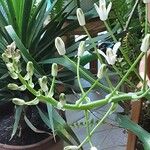
Albuca nelsonii
Albuca bulb · Nelson's Slime Lily
Care Guide
💧 Water
☀️ Light Partial sun
Nelson's slime lily comes from habitats with filtered light, such as the forest understory or rocky sites that provide natural shade. It prefers partial sun but can also tolerate full sun.
What are the sunlight requirements for Albuca nelsonii?
Albuca nelsonii thrives in conditions that meet its sunlight requirements precisely. For optimal growth, it requires full sun, which means the plant should receive above 6 hours of sunlight daily. However, it can also adapt to partial sun conditions, requiring about 3 to 6 hours of sunlight daily. It's important to observe how sunlight moves through your garden throughout the day to select spots that provide a perfect balance of light and shade, ensuring the plant's happiness and health.
🌡️ Temperature 20–37.8°C
Nelson's slime lily does best in warm conditions and requires higher temperatures during the growing season to stimulate growth and metabolic activity. It prefers abundant sunlight, proper moisture levels, and good air circulation. However, it is vulnerable to damage from very low temperatures and from overwatering. It’s important to maintain balance and to avoid both excessively high heat and overly dry conditions.
💨 Humidity
🪴 Soil 6-7
🌱 Fertilizer
For Nelson's slime lily, use light amounts of fertilizer once or twice a year during the growing season. Avoid fertilizing in winter and in summer, when it is dormant. Cut back on feeding for plants that have been repotted, and wait a couple of months after repotting before you start fertilizing. Fertilizing helps maintain healthy growth and promotes blooms.
🪴 Pot & Repot Every 2 years
When repotting Nelson's slime lily, choose a container a bit bigger than the current one that drains well. Fill it with a gritty, fast-draining cactus or succulent potting mix. Gently lift the plant from its old pot, brush away excess soil, and set it in the new pot at the same planting depth. Hold off watering for several days so any root injuries can heal. Repot during spring or autumn and place the plant where it receives strong light.
✂️ Pruning
Albuca nelsonii benefits from pruning in early spring. By removing dead leaves and trimming flowers after they have bloomed, you can stimulate growth, enhance air circulation, and minimize disease risk. Pruning at this time aligns with the plant's natural growth cycle, promoting optimal health. For best results, use proper tools and make precise cuts.
🌿 Propagating
🐛 Diseases & pets
☠️ Toxicity
Characteristics
- Plant Type
- Succulent, Herb
- Life Cycle
- Perennial
- Genus
- Albuca
- Family
- Asparagaceae
- Hardiness Zone
- 9-11
- Mature Height
- 1.22 m
- Mature Spread
- 61 cm
- Leaf Color
- Light Green
- Leaf Type
- Deciduous
- Flower Color
- White
- Flower Size
- 2.03 cm to 3.05 cm
- Bloom Time
- Late spring, Early summer, Mid summer
- Planting Time
- Autumn
- Harvest Time
- Mid summer, Late summer, Early fall
- Native Area
- South Africa