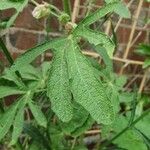
Alcea ficifolia
Antwerp hollyhock
Description
Source: wikipedia (CC BY-SA)Alcea ficifolia, commonly known as the fig leaf hollyhock, fig hollyhock and Antwerp hollyhock, is a perennial herbaceous plant in the mallow family (Malvaceae). This species is native to Iran and introduced into Europe, and it is well-known for its beautiful, tall flower spikes.
🌳 Hollyhock can serve as a useful bioindicator. Changes in the plant’s health and growth can reveal the concentration of heavy metals in the soil, acting as a natural alert to pollution levels. Its roots take up particular contaminants, making hollyhock a possible option for phytoremediation in polluted environments. This unexpected role of hollyhock expands our understanding of soil health and environmental cleanliness.
🎭 Productiveness, Prolificness, Drive, Dedication to love, Ability to reproduce
Care Guide
💧 Water
☀️ Light Full sun
Hollyhock, a native plant of bright natural habitats, generally does best in locations that receive plenty of sun but can also tolerate areas with moderate sunlight. This adaptable plant may show stunted growth if the light it receives is either too little or too much.
🌡️ Temperature 0–35°C
Hollyhock originates from regions with temperatures between 68 and 95 °F (20 to 35 °C). It prefers warm summers and mild winters. However, to ensure healthy growth, temperature adjustments—such as providing shade during very hot summers—may be required.
💨 Humidity
🪴 Soil 6-7
🌱 Fertilizer
The best time to fertilize a Hollyhock is in early spring, as it comes out of dormancy and begins active growth. Fertilizing supplies essential nutrients for healthy development. Although Hollyhock has relatively low fertilizer requirements, an annual application can improve its survival and encourage better, longer-lasting blooms.
🪴 Pot & Repot 2-3 years
When repotting Hollyhock, select a pot 1–2 inches (2.5–5.1 cm) larger that has ample drainage. Use a well-draining potting mix. Repot in spring or fall, making sure the root ball is slightly lower than the rim of the flower pot. Water thoroughly after repotting and place the plant in a warm spot with indirect sunlight.
✂️ Pruning
🌿 Propagating
🐛 Diseases & pets
☠️ Toxicity
Characteristics
- Plant Type
- Herb
- Life Cycle
- Perennial, Biennial, Annual
- Genus
- Alcea
- Family
- Malvaceae
- Hardiness Zone
- 2-10
- Mature Height
- 1.52 m to 2.44 m
- Mature Spread
- 49 cm to 91 cm
- Leaf Color
- Green
- Leaf Type
- Deciduous
- Flower Color
- Pink, White, Red, Yellow, Purple
- Flower Size
- 5.08 cm to 10.16 cm
- Bloom Time
- Early summer, Mid summer
- Planting Time
- Spring
- Harvest Time
- Mid summer
- Native Area
- China