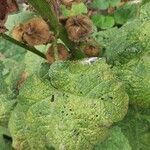
Alcea rosea
ختمی · Hollyhock · Common Hollyhock · Hibiscus · Garden Hollyhock
Description
Source: leafsnapAlcea rosea, commonly known as Hollyhock, is a tall and showy biennial or short-lived perennial plant that belongs to the mallow family. Native to Asia and Europe, it has been widely cultivated in gardens around the world for its beautiful flowers. The plant can grow up to 6 feet tall and features a single stem with large, slightly hairy, heart-shaped leaves. The flowers of Alcea rosea are large and showy, coming in a range of colors including pink, red, yellow, white, or purple. They bloom from mid-summer to early fall on long spikes that can reach up to 8 feet tall. These flowers attract bees and butterflies, making Hollyhocks an excellent choice for pollinator gardens. Hollyhocks prefer full sun exposure and well-drained soil but can tolerate partial shade. They require regular watering during dry spells, though they do not favor wet soil, which can lead to root rot. Medicinally, the plant has been used for centuries due to its anti-inflammatory properties, which make it useful in treating sore throats and respiratory infections when brewed into tea. Overall, Alcea rosea is a garden favorite that is easy to grow, thanks to its stunning blooms that add both height and color to any garden setting. Additionally, its ability to attract pollinators makes it an excellent choice for gardeners seeking a low-maintenance yet beautiful addition to their garden space.
🌳 Hollyhock can serve as a useful bioindicator. Changes in the plant’s health and growth can reveal the concentration of heavy metals in the soil, acting as a natural alert to pollution levels. Its roots take up particular contaminants, making hollyhock a possible option for phytoremediation in polluted environments. This unexpected role of hollyhock expands our understanding of soil health and environmental cleanliness.
🎭 Productiveness, Prolificness, Drive, Dedication to love, Ability to reproduce
Care Guide
💧 Water Every 7 days
Common hollyhock thrives in temperate regions and requires moderate moisture. To support its growth and flowering, it needs consistent weekly watering. Mulching is beneficial because it helps retain soil moisture, which can reduce the frequency of watering while aligning with the plant's natural water needs.
When Should I Water My Common Hollyhock?
Watering common hollyhock properly is crucial for its health, affecting everything from growth to disease resistance. The best time to water common hollyhock is when the top 1 to 2 inches of soil feels dry to the touch. If the soil is dry, it indicates the plant needs water. Pay attention to the plant's leaves for signs of over or underwatering; yellow leaves might suggest overwatering, while brown or crispy leaves indicate underwatering. Wilting leaves often signal the need for water, but could also mean the plant has been overwatered. Inconsistent watering can lead to various problems such as stunted growth, susceptibility to pests, and diseases, or in extreme cases, plant death. Slow growth might also indicate inadequate water. Regular monitoring and adjusting your watering practices according to these signs can help maintain a healthy common hollyhock.
How Should I Water My Common Hollyhock?
Common hollyhock thrives with specific watering practices due to its susceptibility to root rot and fungal diseases. The best method for watering common hollyhock is bottom-watering, which allows water to be absorbed from the bottom up, keeping the soil moist without saturating the top unnecessarily. This technique minimizes the risk of fungal diseases. If using a watering can, opt for one with a narrow spout to direct water straight to the base of the plant, minimizing wetting the foliage and thus reducing disease risk. Water at the base promotes root health and contributes to the overall vigor of the plant.
How Much Water Does Common Hollyhock Really Need?
The amount of water needed for common hollyhock depends on various factors such as the plant size, pot size, and root depth. With its deep taproot, common hollyhock should be watered deeply, ensuring water reaches 2-3 feet below the surface to match the root depth. Typically, watering when the top inch of soil dries out is recommended, with an average session involving 1 to 2 liters of water per plant. Proper hydration results in healthy leaves and abundant flowering. Overwatering and underwatering present risks like root rot or stunted growth, so adjusting the amount based on the plant's condition and environmental factors is key. Ensuring good drainage and observing the plant's response to watering will guide in providing the right amount of water.
What Kind of Water is Best for Common Hollyhock?
For common hollyhock, rainwater or untreated tap water is ideal, offering beneficial nutrients. However, it's important to note that this plant has moderate sensitivity to chlorine and minimal sensitivity to fluoride. In case of high chlorine or fluoride levels in tap water, letting the water sit to allow for evaporation of chlorine or alternating with rainwater is advisable. Hard water with high mineral content could cause issues like leaf chlorosis. Room temperature water is preferred to avoid shocking the plant's system. If using tap water, letting it sit overnight can help evaporate chlorine, potentially benefiting the plant's health.
How Do Common Hollyhock's Watering Needs Change with the Seasons?
The watering needs of common hollyhock vary through the seasons. During spring's growth phase, maintain moist soil, watering early in the day to prevent fungal growth. In the summer, consistent watering becomes more critical due to higher evaporation rates, with possible need for morning and evening watering during heatwaves. In autumn, reduce the watering frequency gradually as the plant approaches dormancy. By winter, common hollyhock, especially if potted indoors, may need minimal watering, focusing on preventing the soil from drying out completely without causing waterlogging to avoid root rot.
☀️ Light Full sun
Hollyhock, a native plant of bright natural habitats, generally does best in locations that receive plenty of sun but can also tolerate areas with moderate sunlight. This adaptable plant may show stunted growth if the light it receives is either too little or too much.
What are the sunlight requirements for Common Hollyhock (Alcea rosea)?
Common Hollyhock (Alcea rosea) thrives in areas that receive ample sunlight. It requires full sun, which means it needs more than 6 hours of sunlight daily, but it can also grow in partial sun, with about 3-6 hours of sunlight. When selecting a spot for your Common Hollyhock, observe how sunlight moves through your garden to ensure that you provide an ideal balance of light and shade, ensuring the plant's happiness and health.
How does Common Hollyhock respond to different sunlight exposures?
Common Hollyhock generally performs best in locations with a lot of sun exposure but can also adapt to moderate sun. If the plant receives too little or too much sunlight, its growth might be affected negatively. In cases where natural sunlight is insufficient, especially during winter or in less sunny spaces, artificial lighting can be a viable option to ensure optimal growth. LED lights are recommended for their ability to provide specific wavelengths needed by plants. Full sun plants require 30-50W/sq ft of artificial light, partial sun plants need 20-30W/sq ft, and full shade plants need 10-20W/sq ft. The artificial light source should be placed 12-36 inches above the plant for 8-12 hours per day to mimic natural sunlight conditions.
What are the symptoms of insufficient or excessive sunlight in Common Hollyhock?
Common Hollyhock shows different symptoms depending on the light conditions. Insufficient sunlight can lead to small new leaves, leggy or sparse growth, faster leaf drop, slower or no growth, lighter-colored new leaves, and risks of chlorosis. Excessive sunlight, on the other hand, may cause sunscald, leaf curling, wilting, leaf scorching, indicating damage from overexposure. These symptoms highlight the plant's need for the right amount of sunlight to maintain health and vigor.
How can I address sunlight-related issues in Common Hollyhock?
To tackle sunlight-related issues in Common Hollyhock, it's crucial to ensure the plant receives the right amount of sunlight. For indoor plants, gradually moving them to sunnier spots or using artificial lights for at least 8 hours daily is beneficial. Outdoor plants should be moved to spots receiving ideal sunlight gradually to prevent shock. Additionally, reducing obstructions like branches or moving smaller plants to a location with better sunlight and drainage can improve the situation. Note that parts of the plant affected by prior bad light exposure may not recover, but new growth should be healthy once corrected.
🌡️ Temperature 0–35°C
Hollyhock originates from regions with temperatures between 68 and 95 °F (20 to 35 °C). It prefers warm summers and mild winters. However, to ensure healthy growth, temperature adjustments—such as providing shade during very hot summers—may be required.
What is the indigenous temperature range for common hollyhock?
Common hollyhock, or Alcea rosea, is indigenous to areas that experience temperatures ranging between 68 to 95 °F (20 to 35 °C). This plant thrives in conditions of warm summers and mild winters, indicating its preference for warmer climates. Even though it has a strong resistance to cold, adaptations such as providing shade during extremely hot summers are beneficial for its growth.
How should common hollyhock be protected during winter?
Common hollyhock is notable for its cold resistance and doesn't typically require special frost protection measures during winter. However, in regions where winter temperatures are expected to plummet below -40°C, taking steps to protect the plant is crucial. This involves covering the plant with insulating materials like soil or straw. Additionally, it is recommended to water the plant abundantly before the first freeze of autumn to ensure the soil remains moist and enters winter in a frozen state, thus helping to prevent drought and water scarcity during the colder months.
What are the symptoms and solutions for common hollyhock exposed to low temperatures?
When exposed to low temperatures, common hollyhock demonstrates remarkable cold tolerance, thriving best when temperatures are above 20°C and should ideally be kept above 0°C during winter. If temperatures fall below -40°C, the plant may not show immediate changes during the cold season, but a decrease in sprouting or a complete lack of sprouting can occur in spring. The solution for this issue involves removing any parts of the plant that have failed to sprout in spring, which helps encourage new growth.
How does high temperature affect common hollyhock and what can be done?
High temperatures can adversely affect common hollyhock, with optimal conditions being below 35°C during summer. Should temperatures soar above 41°C, the plant's leaves may lighten in color, become prone to curling, suffer from sunburn, and in severe cases, the plant may wilt and dry up entirely. To alleviate these issues, it is advisable to trim away sunburned and dried-up parts of the plant. Moving the plant to a shaded area or employing a shade cloth to protect it from the midday and afternoon sun can also be beneficial. Ensuring the soil remains moist by watering in the morning and evening will help the plant cope with high temperatures.
💨 Humidity normal (40-60%)
This plant will thrive in moderate humidity, which is probably the level in your home. However, misting it a few times a week can be very beneficial. Make sure the room has good ventilation.
🪴 Soil 6-7
🌱 Fertilizer
The best time to fertilize a Hollyhock is in early spring, as it comes out of dormancy and begins active growth. Fertilizing supplies essential nutrients for healthy development. Although Hollyhock has relatively low fertilizer requirements, an annual application can improve its survival and encourage better, longer-lasting blooms.
When should I not put fertilizer on my Common hollyhock?
To properly care for your Common hollyhock, it is best to fertilize it only in late winter or early spring. This plant doesn't require frequent fertilization, so a single annual feeding is enough. Overfertilizing during spring, summer, and fall can lead to complications, unless you skipped fertilizing in spring, in which case it's okay to feed it in the fall. Additionally, there is no need to fertilize the Common hollyhock during winter, as it goes into a dormant growth phase and does not grow. Therefore, fertilizing during most of the winter is not recommended.
Why should I add fertilizer to my Common hollyhock?
Fertilization is important for the Common hollyhock because it provides essential nutrients for growth. Despite having relatively low fertilization needs, annual fertilization can greatly benefit the plant, keeping it alive and improving flower quality and longevity. Therefore, those wanting their Common hollyhock to thrive should prioritize regular fertilization.
When should I fertilize my Common hollyhock?
The best time to fertilize a Common hollyhock is in late winter to early spring when it is transitioning from dormancy to active growth. Fertilizing at this time promotes healthy growth for the upcoming season. Although early spring is generally the most beneficial, fertilizing in the fall is also acceptable. Avoid fertilizing in summer and winter as it is not recommended for the plant's well-being.
Which fertilizer is best for my Common hollyhock?
When choosing a fertilizer for your Common hollyhock, any general-purpose option with a balanced amount of the three main plant nutrients will work well. However, there are specific nutrient blends that can be even more beneficial. Many gardeners believe that higher amounts of phosphorus lead to stronger roots and better flowers, making a phosphorus-rich fertilizer a good choice for a flowering plant like the Common hollyhock. It doesn't matter if the fertilizer is in granular or liquid form as long as it contains plenty of nutrients. In addition to manufactured fertilizers, you can also improve the soil for your Common hollyhock by using organic materials like compost and manure. These organic means can greatly enhance the quality of the growing medium for your Common hollyhock.
How can I give nutrients to my Common hollyhock?
To fertilize a Common hollyhock, the most common method is applying granular or pellet fertilizer around the plant's soil. It's important to remember the best time to fertilize is when the plant is transitioning from its winter dormant phase to active growth. In early spring, wait for the plant to start sending shoots through the soil, then apply the fertilizer. If you prefer using liquid fertilizer instead of granular, dilute it with water before applying. Regardless of the type of fertilizer you choose, it's important to moisten the soil before, during, and after fertilization.
🪴 Pot & Repot 2-3 years
When repotting Hollyhock, select a pot 1–2 inches (2.5–5.1 cm) larger that has ample drainage. Use a well-draining potting mix. Repot in spring or fall, making sure the root ball is slightly lower than the rim of the flower pot. Water thoroughly after repotting and place the plant in a warm spot with indirect sunlight.
✂️ Pruning
Common hollyhocks are known for their tall spikes and vibrant blooms. To keep them healthy and promote growth, it's important to prune them from early to late spring. Start by removing any damaged stems and trimming off spent flowers. At the end of the season, cutting back the plants can help prevent diseases. Regular pruning also improves airflow, reduces fungal problems, and enhances the plant's overall vigor and flowering capacity.
🌿 Propagating
🐛 Diseases & pets
☠️ Toxicity
The University of California classified hollyhocks as a plant that does cause skin irritation or dermatitis in some people. Hollyhocks are typically not thought to be poisonous to dogs, cats, or people, according to the ASPCA. The University of California classified hollyhocks as a plant that does cause skin irritation or dermatitis in some people.
Characteristics
- Plant Type
- Herb
- Life Cycle
- Perennial, Biennial, Annual
- Genus
- Alcea
- Family
- Malvaceae
- Hardiness Zone
- 2-10
- Mature Height
- 1.52 m to 2.44 m
- Mature Spread
- 49 cm to 91 cm
- Leaf Color
- Green
- Leaf Type
- Deciduous
- Flower Color
- Pink, White, Red, Yellow, Purple
- Flower Size
- 5.08 cm to 10.16 cm
- Bloom Time
- Early summer, Mid summer
- Planting Time
- Spring
- Harvest Time
- Mid summer
- Native Area
- China