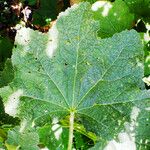
Alcea setosa
گل ختمی · Hollyhock · Bristly Hollyhock · Bristly Alcea · Hairy Alcea
Description
Source: leafsnapAlcea setosa, the bristly hollyhock, is an ornamental plant in the family Malvaceae. The bristly hollyhock is native to the Levant: ranging from Crete, Turkey, Lebanon and Syria to the botanical region of Palestine (including Israel and Jordan). The part above ground of the plant withers and dies in the summer. In the winter, a rosette of flowers develops and a vertical flowering stem grows out of it. The pink flowers are numerous and large, while in the Galilee and the Carmel the flowers are darker and in the Gilboa and Samaria the flowers are lighter. In the Mount Lebanon, flowers ranging from dark pink to white can be found. The whole plant is bristly, hence its common name. The plant flowers from April until June. In folk medicine, the liquid of the plant is used to treat injuries, burns, coughs and inflammation. The flower buds are edible, cooked and raw, and are considered as medicine for sicknesses in the airways. In Lebanese villages, Bristly hollyhock flowers are dried in the sun, then mixed with other herbs and wild flowers, prepared as concoctions, and served as tea drinks.
Care Guide
💧 Water
☀️ Light Full sun
Bristly Hollyhock is a sun-loving herbaceous perennial native to open habitats, often thriving in meadows and grasslands. It prefers full sun but can also tolerate partial sun.
🌡️ Temperature 5–35°C
Bristly Hollyhock can tolerate a wide range of temperatures, but its distribution may still be constrained by different combinations of moisture and heat. It grows best in warm summer conditions with sufficient rainfall or watering. Extended stretches of cloudy, rainy weather or prolonged high temperatures can raise the chance of Bristly Hollyhock dying. In winter, adequate protection from cold can enhance the plant’s survival rate.
💨 Humidity
🪴 Soil 6-8
🌱 Fertilizer
The best time to fertilize a Bristly Hollyhock is in early spring, as it comes out of dormancy and starts active growth. Fertilizing supplies essential nutrients for healthy development. Although Bristly Hollyhock has fairly low fertilizer requirements, giving it fertilizer annually can improve its survival and encourage better, longer-lasting blooms.
🪴 Pot & Repot
✂️ Pruning
🌿 Propagating
🐛 Diseases & pets
☠️ Toxicity
Characteristics
- Plant Type
- Herb
- Life Cycle
- Perennial
- Genus
- Alcea
- Family
- Malvaceae
- Hardiness Zone
- 4-9
- Mature Height
- 0.91 m to 2.13 m
- Mature Spread
- 61 cm to 91 cm
- Leaf Color
- Green, Dark Green
- Leaf Type
- Deciduous
- Flower Color
- Pink, White
- Flower Size
- 7.62 cm to 11.43 cm
- Bloom Time
- Summer
- Planting Time
- Spring, Summer
- Harvest Time
- Late summer, Early fall, Mid fall
- Native Area
- Cyprus, Turkey, Lebanon, Greece