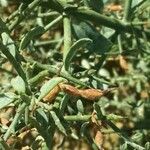
Alhagi graecorum
خار شتر جنوبی، · Persian mannaplant · Mannatree · Camelthorn · Caspian manna
Description
Source: leafsnapAlhagi graecorum is a species of legume commonly known as mannatree or manna tree. Previously it was considered a subspecies of Alhagi maurorum. Drought-tolerant, it is found in the eastern Mediterranean and the Middle East.
Care Guide
💧 Water
☀️ Light Full sun
The Persian manna plant is native to open habitats, such as sunny meadows and forest margins, which provide abundant light. It does best in Full Sun but can also tolerate Partial Sun, adapting well to different sunlight conditions.
🌡️ Temperature 15–37.8°C
The Persian manna plant adapts well to temperature, tolerating higher heat and greater temperature fluctuations. In hot conditions, attention should be paid to watering and providing adequate shade to avoid sunburn. Conversely, the Persian manna plant has fairly poor resistance to cold; it can handle some chill, but overly cold conditions may cause frost damage.
💨 Humidity
🪴 Soil 6-8
🌱 Fertilizer
To encourage healthy growth, fertilize your Persian manna plant in early spring. Regular feeding boosts its overall health, producing vigorous growth, increased resilience to tough conditions, and improved resistance to disease and pests. Maintain a consistent fertilization schedule for your Persian manna plant to ensure foliage that is vibrant, has deep color, and looks lush.
🪴 Pot & Repot
✂️ Pruning
🌿 Propagating
🐛 Diseases & pets
☠️ Toxicity
Characteristics
- Plant Type
- Shrub
- Life Cycle
- Perennial
- Genus
- Alhagi
- Family
- Fabaceae
- Hardiness Zone
- 7-11
- Mature Height
- 0.46 m to 1.22 m
- Mature Spread
- 0.49 m to 1.52 m
- Leaf Color
- Green
- Leaf Type
- Deciduous
- Flower Color
- Pink, Red
- Flower Size
- 0.51 cm to 1.02 cm
- Bloom Time
- Summer
- Planting Time
- Spring, Summer, Autumn
- Harvest Time
- Late summer, Early fall, Mid fall