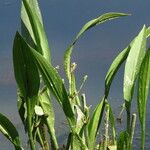
Alisma plantago-aquatica
قاشق واش · Water-plantain · American Water-plantain · Common water-plantain · European Water-Plantain
Description
Source: leafsnapAlisma plantago-aquatica, also known as European water-plantain, common water-plantain or mad-dog weed, is a perennial flowering aquatic plant widespread across most of Europe and Asia, and apparently spread elsewhere in both the Old and New World.
🌳 Besides occurring in wetlands, common water-plantain also plays a role in phytoremediation. It has been observed to absorb pollutants from water, indicating it could be useful in engineered wetland systems for cleaning water contaminated with heavy metals or organic compounds.
🎭 Recovery, Defense, Power
Care Guide
💧 Water Once per day
The common water-plantain flourishes in water-rich environments and requires daily watering to meet its high moisture demands. As an aquatic perennial herb, it tolerates wet conditions and goes dormant during colder months. However, it needs consistent moisture throughout its active growing season.
☀️ Light Full sun
Common water-plantain grows best in places with plenty of light, although it can tolerate lower-light conditions. Fluctuations in light exposure can influence the plant's health, causing leaf discoloration or weak growth. Its tendency to prefer abundant sunlight mirrors the conditions of its native habitat, where light is readily available. Both excessive and insufficient light can impede common water-plantain's vigorous development.
What are the sunlight requirements for Common water-plantain?
Common water-plantain requires full sun, which means it needs more than 6 hours of sunlight daily, but it can also tolerate partial sun, about 3-6 hours of sunlight. The amount of sunlight it receives affects its health, with potential symptoms of too little light including leaf discoloration and poor growth. Observing how sunlight moves through your garden and choosing the right balance of light and shade is crucial for the plant's happiness.
How does artificial lighting affect indoor cultivation of Common water-plantain?
When natural sunlight is insufficient, artificial lighting provides a vital solution for the indoor cultivation of Common water-plantain, ensuring optimal growth. LED lights are recommended because they can be customized to provide specific wavelengths of light. The requirements are 30-50W/sq ft for full sun plants, 20-30W/sq ft for partial sun plants, and 10-20W/sq ft for full shade plants. The light source should be placed 12-36 inches above the plant and should mimic natural daylight hours, typically 8-12 hours per day.
What are the symptoms of inadequate light for Common water-plantain?
When Common water-plantain is grown in conditions with inadequate light, it may show symptoms such as smaller new leaves, leggy or sparse growth, faster leaf drop, slower or no new growth, lighter-colored new leaves, and chlorosis. Additionally, excessive sunlight can cause symptoms like sunscald, leaf curling, wilting, and leaf scorching. These symptoms indicate the plant's struggle with its light environment.
How can I resolve light-related issues for Common water-plantain grown indoors or outdoors?
To optimize growth for Common water-plantain struggling with light issues, gradually increase its sunlight exposure to at least 6 hours daily if indoors. Use a south-facing window or consider supplemental artificial light. For outdoor plants, avoid sudden changes in light intensity to prevent sunburn, and for plants in the ground, reduce obstructions like overhanging branches. Remember, areas of the plant damaged by insufficient light may not recover, but new growth will be healthy with improved light conditions.
🌡️ Temperature 5–35°C
Common water-plantain occurs in habitats with temperatures from 41 to 95 °F (5 to 35 ℃). It favors this moderate temperature band and adapts well to seasonal variations within it. Care should be taken in extreme temperatures.
What is the native environment temperature range for common water-plantain?
Common water-plantain, scientifically known as Alisma plantago-aquatica, is native to environments that experience temperatures ranging from 41 to 95 °F (5 to 35 °C). It thrives in this moderate temperature range, successfully adapting to the seasonal variations within these limits. Special care is necessary during extreme temperature conditions to ensure the plant's well-being. In colder climates, particularly during winter, it is crucial to maintain temperatures above 5°C to encourage healthy growth. The plant should be protected from freezing by keeping the minimum temperature above the freezing point. When temperatures drop close to -5°C (25°F), it's recommended to bring common water-plantain indoors or to safeguard it by setting up a temporary greenhouse or using protective materials such as plastic film or fabric.
How does common water-plantain respond to low temperatures, and what precautions should be taken?
Common water-plantain has a moderate tolerance to low temperatures, flourishing best when the temperature is maintained between 5°C and 35°C. During winter, it is vital to prevent the temperature around the plant from dropping below -20°C. Exposure to temperatures below -25°C can cause the leaves to darken, and in severe frost conditions, symptoms such as water-soaked necrosis, wilting, and drooping may occur, eventually leading to the leaves turning brown. To mitigate frost damage, affected parts should be trimmed away. It's advisable to quickly move the plant to a warmer indoor setting or construct a makeshift greenhouse for cold protection. Ensuring the plant receives ample sunlight is important when placed indoors, and a south-facing window is ideal. If natural light is insufficient, supplemental lighting may be used.
What measures should be taken when common water-plantain is exposed to high temperatures?
During the hot summer months, it is essential to keep common water-plantain below 35°C to prevent stress and maintain healthy growth. Should temperatures surpass 38°C, the plant's growth is likely to decelerate, its leaves may lighten in color, and it becomes more prone to sunburn. In such instances, it's necessary to trim away the parts that are sunburned and dried up. Moving the plant to a shaded area, particularly away from the harsh afternoon sun, can help mitigate further damage. Additionally, watering the plant in the early mornings and evenings to maintain soil moisture can be beneficial in providing relief from high temperatures.
💨 Humidity high (>60%)
This plant needs special care because it loves high humidity levels of 60-80% or more. The best way to achieve this is by placing a humidifier near the plant. Daily misting is also essential! Make sure the room has good ventilation.
🪴 Soil
🌱 Fertilizer
🪴 Pot & Repot
✂️ Pruning
The common water-plantain is characterized by its broad, lance-shaped leaves and small flowers. To maintain its health and appearance, it is best to prune this plant from early to late spring. During pruning, remove dead foliage and thin out crowded areas to improve air circulation. Regularly removing spent flowers encourages more blooming, enhances the plant's visual appeal, and lowers the risk of fungal diseases, all of which contribute to a robust and attractive form.
🌿 Propagating
🐛 Diseases & pets
☠️ Toxicity
Characteristics
- Plant Type
- Herb
- Life Cycle
- Perennial
- Genus
- Alisma
- Family
- Alismataceae
- Hardiness Zone
- 5-9
- Mature Height
- 30 cm to 61 cm
- Mature Spread
- 30 cm to 61 cm
- Leaf Color
- Green, Gray
- Leaf Type
- Deciduous
- Flower Color
- White, Pink
- Flower Size
- 2.54 cm
- Bloom Time
- Early summer, Mid summer
- Planting Time
- Spring, Summer, Autumn
- Harvest Time
- Mid summer
- Native Area
- Egypt, Turkey, Sweden, India, Austria, Rwanda, Pakistan, Eritrea, Morocco, Kenya, Uganda, Tanzania, Belarus, Uzbekistan, Russia, Iraq, Germany, Burundi, Ethiopia, Romania, Belgium, Netherlands, Nepal, Portugal, France, Sudan, Bulgaria, Bangladesh, Poland, Greece, Ukraine, China, Norway, Afghanistan, Italy, Kazakhstan, Spain, Switzerland, Vietnam, Myanmar, Mongolia, Israel, Japan, Finland, Denmark, Iran, Albania, Ireland, United Kingdom, Hungary, Algeria, Thailand