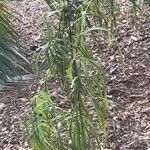
Allagoptera arenaria
Beach Coconut · Dwarf Palm · Restinga Palm · Seashore Palm · Sea palm
Description
Source: leafsnapAllagoptera arenaria, popularly known as seashore palm, is a fruit tree native to the Atlantic Coast of Brazil. It grows in coastal strand, just above the high tide mark, and is widely cultivated as an ornamental throughout South America. Allagoptera arenaria is relatively short, reaching about 6 feet (1.8 m) tall. The plant is monoecious, with male and female plants in distinct spirals in the same spike. The leaves emerge right out of the ground from a subterranean trunk that is rarely visible, and grow in a swirling pattern, spreading out on different and seemingly random planes. There are 6–15 bright green to silvery green pinnately compound (feather-like) leaves 2–6 ft (0.61–1.83 m) long, with each leaflet about 2 ft (0.61 m) long. Its fruits are yellowish green and shaped like small coconuts, about 1 inch (25 mm) long and 0.5 in (13 mm) in diameter.
Care Guide
💧 Water
Sea palm is a plant that flourishes in coastal sand dunes. It requires occasional moisture and good drainage to grow well. While it can tolerate moderate drought, it still needs to be watered weekly. Ideal for seaside landscaping, sea palm helps stabilize ecosystems and enhance aesthetic appeal, all while withstanding salt spray.
☀️ Light Full sun
Sea palm comes from open habitats, like bright meadows and the edges of forests, which provide abundant light. It thrives in Full Sun but will also tolerate Partial Sun, adapting well to different sunlight conditions.
🌡️ Temperature 15–35°C
Sea palm comes from tropical areas, where the weather is generally warm and humid. Consequently, it is suited to high temperatures and moisture. It dislikes sudden shifts in temperature and prefers a consistent thermal environment, so indoor temperature fluctuations should be avoided. It typically cannot endure cold and needs warmer conditions to develop. If the surrounding temperature falls too low, the plant may stop growing or even die.
What is the botanical name of Sea palm?
The botanical name of Sea palm is Allagoptera arenaria.
💨 Humidity
🪴 Soil 6-7
🌱 Fertilizer
The best time to fertilize a Sea palm is in early spring, when it comes out of dormancy. This supports overall growth and the development of flowers. Fertilizing improves the foliage, stems, and branches, and encourages large, vibrant, long-lasting blooms. It assists in moving nutrients from the roots to the flowers and enhances the plant’s health and its resistance to disease.
🪴 Pot & Repot
✂️ Pruning
Sea palm prospers in sandy coastal regions and benefits from pruning in early spring. To encourage healthy growth and improve air circulation, remove any dead or damaged fronds. Regular pruning not only maintains a tidy appearance but also helps prevent disease. Make sure to use clean, sharp tools to reduce the risk of infection.
🌿 Propagating
🐛 Diseases & pets
☠️ Toxicity
Characteristics
- Plant Type
- Tree
- Life Cycle
- Perennial
- Genus
- Allagoptera
- Family
- Arecaceae
- Hardiness Zone
- 8-10
- Mature Height
- 1.83 m
- Mature Spread
- 2.13 m to 3.05 m
- Leaf Color
- Green, Silver
- Leaf Type
- Evergreen
- Flower Color
- Yellow
- Flower Size
- 5.08 cm to 10.16 cm
- Bloom Time
- Late spring, Summer, Early fall
- Planting Time
- Spring, Summer
- Harvest Time
- Late summer, Fall, Early winter
- Native Area
- Brazil