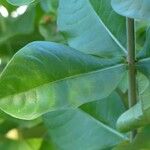
Allamanda blanchetii
Purple allamanda · Hanchinal
Description
Source: leafsnapAllamanda blanchetii is a tropical plant species belonging to the Apocynaceae family. Commonly known as the Purple Allamanda or Violet Allamanda, it features striking purple flowers. Native to South America, particularly Brazil, this plant can reach heights of up to 10 feet. The leaves of Allamanda blanchetii are glossy and dark green, with a leathery texture. Its trumpet-shaped flowers can grow up to 4 inches wide and consist of five petals that create a star shape. The petals are deep purple with yellow throats. For optimal growth, Allamanda blanchetii requires full sun exposure. It blooms from late spring through early fall and thrives in well-draining soil rich in organic matter. While it can tolerate some drought conditions once established, it generally prefers consistent moisture. The plant has been used for medicinal purposes by indigenous people in South America for its anti-inflammatory properties. However, it is important to note that all parts of the plant are toxic if ingested. Overall, Allamanda blanchetii makes an excellent addition to ornamental gardens or as an indoor houseplant, thanks to its stunning blooms and easy care requirements.
🌳 Purple allamanda exhibits significant potential for phytoremediation and is employed to combat pollution. Its capacity to thrive in a range of soil conditions and its strong tolerance of air pollution make it a suitable choice for urban greening projects intended to create healthier, more sustainable environments. These applications are drawing attention as cities worldwide seek natural strategies to lessen environmental contaminants.
🎭 Delight of Victory
Care Guide
💧 Water Every 7 days
The purple allamanda thrives in tropical rainforests, where it benefits from high humidity and consistent moisture. To keep it healthy, water the plant weekly, being careful not to overwater. It's usually grown outdoors to receive plenty of sunlight. During the growing season, adjust your watering schedule to promote vibrant blooms.
What should I do if I give too much or too little water to the Purple allamanda plant?
An overwatered Purple allamanda can have yellow leaves that drop off and wilt, making the plant look dull and unhealthy. Mushy stems are also a sign of overwatering. If you notice these signs, try to adjust your watering schedule. Wilting can also indicate under watering, characterized by crispy and dry leaves. If the soil is dry and watering alone is not enough, give the plant a thorough watering. While this will help the Purple allamanda recover, it may still have dry and yellow leaves for a few days due to damage to the root system. Once it returns to normal, the yellowing of leaves will stop. When caring for a Purple allamanda indoors, always check the moisture levels in the pot and avoid overwatering. Look for signs of black spots, and if present, allow the soil to dry out for a few days before watering again. Overwatering can lead to root rot, so if you notice discolored and slimy roots, consider transferring the plant to a different pot and be mindful not to let the soil become too soggy. When planting a Purple allamanda outdoors, ensure that the soil is adequately moist. If it feels too dry when checking with your fingers, it may require more watering to aid in the plant's recovery.
How frequently should I wet my Purple allamanda?
The Purple allamanda prefers deep and infrequent watering. If you have them in pots, be sure to soak them in a gallon of water each time, as the soil in pots dries out faster. In cold regions, you'll need to water every 3 to 5 days. Water in the morning when the soil is dry, indoors or outdoors. To determine if watering is needed, check the soil - if the top 2-3 inches are dry, it's time for a full watering. On hot days, check the moisture daily to avoid the soil in the pot drying out quickly. If you have them in a garden, you'll also need to irrigate the soil. In a hot climate, watering once a week is usually sufficient. If you notice that about 2 to 3 inches of soil are too dry, it's time to water indoors or outdoors. Take into account the amount of rainfall and avoid overwatering to prevent root rot. Purple allamanda typically grows during spring and fall. Outdoors, add mulch 3 to 4 inches deep to conserve water. Sandy soil drains faster, so water more frequently. However, with clay soil, water less often and allow the plant to dry for 2-3 days to avoid root rot. Keep track of watering dates, and if you notice drooping leaves, water promptly to avoid being late.
How much water should I give my Purple allamanda plant?
The Purple allamanda plant generally needs about a gallon of water on a regular schedule. For potted plants, it's best to water them deeply until you see water dripping from the bottom of the pot. Wait for the soil to dry before watering again. You can use a water calculator or moisture meter to determine how much water you've given your plant in a week. During the flowering period, provide plenty of water, but allow the moisture to evaporate after to prevent root rot. If the Purple allamanda is planted outdoors and receives sufficient rainfall, it may not need additional watering. However, when the plant is young or newly planted, ensure it gets 1-2 inches of rain per week. As the Purple allamanda grows, it can survive solely on rainfall. Only when the weather is very hot or there is no rainfall for 2-3 weeks should you consider giving the plant a thorough watering during the cooler part of the day to prevent heat damage. Additional watering will be necessary during prolonged dry periods.
Do I need to change how often I water my Purple allamanda based on the time of year or the weather?
The Purple allamanda thrives in outdoor conditions with rain, but if it's dry for a long time, you'll need to water it. During the spring and fall, the soil should be moist but not soggy, and alternating between dry and moist conditions helps it grow. In the summer, hot weather can cause water to evaporate quickly, so you may need to water more often to keep it moist. During winter, the plant needs less water, and you can use well-draining soil like terracotta to help the water evaporate faster. Once it goes dormant, you can stop watering, relying on fall and winter rain. In the spring, you can encourage growth by watering more and ensuring good drainage. When potted, the plant has limited root growth, so water it well, especially in the summer. Deep soaking once or twice a week is better than shallow sprinkles that reach the leaves. Avoid letting it completely dry out in the fall or winter. Good drainage is important to prevent drowning and avoid root rot. Applying mulch can help reduce stress, conserve water, and promote healthy blooms.
What do I need to watch out for when watering my Purple allamanda in different seasons, climates, or during different growing periods?
Purple allamanda primarily relies on rain when planted in the ground. However, if there is no rainfall for 2-3 weeks, it is important to give the plants a deep watering. During summers, watering in the morning is recommended to avoid stressing the roots with large temperature differences. It is crucial to avoid watering the bushes in hot weather. Mulching should be started in the spring when the ground is not too cold. For newly planted plants, lack of water is a common reason for failure to grow. Once they are established, the watering schedule should be reduced. Fall and winter watering should be decreased, especially if there is water-retaining material in the soil. Windy seasons require more watering, as dry winds can cause drought, especially for newly planted plants. Plants in pots require more frequent watering as they dry out faster. If they bloom less and the leaves start to dry up, it indicates that watering is needed. It is important to avoid overwatering potted plants and not let them sit in water. Containers with saucers, bowls, and trays should be avoided. Excessive watering in the fall can cause mottled or yellowish foliage. Regardless of the climate or season, it is always best to prevent overwatering. During the flowering months, watering frequency can be increased but should be reduced once the plants are fully grown. Watering once every 3 to 5 days is sufficient, but it's important not to stick to a strict schedule. Checking the dryness of the soil by sticking a finger in the pot or using a moisture meter is recommended. Overwatering or underwatering can lead to root rot and plant death, so it is crucial to find the right balance regardless of the regional climate or season.
☀️ Light Full sun
The purple allamanda prospers in areas drenched in sunlight, which supports its bright purple flowers. Native to regions with plentiful sunshine, it has adapted over generations to those conditions. Insufficient light can hinder its development and lead to drooping leaves. Still, it withstands strong sun exposure without damage.
What are the sunlight requirements for the Purple allamanda?
The Purple allamanda requires full sun, which means it thrives in areas that receive above 6 hours of sunlight daily. It can also grow in partial sun, with about 3-6 hours of sunlight. It's important to observe how sunlight moves through your garden to place your plants in spots that ensure a good balance of light and shade, contributing to the well-being of your plants.
How does the purple allamanda react to different lighting conditions?
The purple allamanda is conditioned for high sunlight environments, meaning it flourishes in areas with abundant sunlight which fosters its vibrant purple blooms. Insufficient sunlight may hinder its growth leading to wilted leaves. However, it can withstand intense solar exposure without adverse effects. For indoor plants lacking natural light, artificial lighting is a crucial alternative, especially during winter or in less sunny spaces, with LED lights being a popular choice due to their ability to provide specific wavelengths needed for growth. Full sun plants need 30-50W/sq ft of artificial light, partial sun plants need 20-30W/sq ft, and full shade plants need 10-20W/sq ft.
What are the signs of inadequate sunlight for a Purple allamanda?
Signs of insufficient sunlight in a Purple allamanda include smaller new leaves, leggy or sparse growth, faster leaf drop, slower or halted growth, leaves developing irregular color patterns or appearing pale, chlorosis where leaves lose their green color, sunscald resulting in pale or necrotic areas on the plant, leaves curling or twisting to minimize sun exposure, wilting from excessive water loss, and leaf scorching characterized by brown, dry edges on leaves. These symptoms indicate a need for more light or possibly less intense exposure if signs of overexposure like sunscald or scorching are present.
How can I adapt my Purple allamanda to the right sunlight conditions?
To help your Purple allamanda adapt to the right sunlight conditions, gradually move the plant to sunnier locations each week to receive at least 6 hours of direct sunlight daily. For indoor plants, use a south-facing window, keep curtains open during the day, or use artificial lights such as desk lamps or professional grow lights for at least 8 hours daily. For outdoor plants, ensure a gradual adaptation to sunlight to prevent sunburn. If sunlight is blocked by obstructions, consider pruning or relocating smaller plants to sunnier spots. Note that parts of the plant affected by insufficient sunlight may not recover, but new growth will be healthy with improved light conditions.
🌡️ Temperature 5–32.2°C
The purple allamanda originates from habitats with temperatures between 41 and 89.6 °F (5 to 32 ℃). It performs best within that temperature range. Care may need seasonal modification to preserve these temperatures, particularly during colder periods.
What is the native temperature range for Purple Allamanda?
Purple allamanda, or Allamanda blanchetii, is native to environments where temperatures range from 41 to 89.6 °F (5 to 32 °C). It thrives best within these temperature parameters. When cultivating this plant, it may be necessary to make seasonal adjustments in care to maintain these temperatures, particularly during the colder seasons.
How should Purple Allamanda be protected in winter?
Purple allamanda has strong cold resistance and typically does not require special frost protection measures during winter. However, if winter temperatures are expected to drop below -25°C, protection against the cold becomes important. Wrapping the trunk and branches with non-woven fabric or cloth can provide effective cold protection. Additionally, watering the plant abundantly before the first freeze in autumn to ensure the soil remains moist and enters a frozen state can help prevent drought and water scarcity for the plant during winter and early spring.
What symptoms indicate Purple Allamanda is affected by low temperatures, and what are the solutions?
If Purple allamanda experiences temperatures below -25°C, while there may not be noticeable changes during winter, branches may become brittle and dry by spring. This can lead to the plant not producing new shoots. The solution for this issue is to prune away any dead branches that have failed to produce new leaves in the spring.
What symptoms indicate Purple Allamanda is affected by high temperatures, and what are the solutions?
During the summer, when temperatures exceed its preferred maximum of 32°C, Purple allamanda's leaves may lighten in color, and the tips can become dry and withered, making the plant more susceptible to sunburn. To mitigate these issues, trim away the sunburned and dried up parts of the plant, move it to a location that provides shade from the midday and afternoon sun, or use a shade cloth. Watering in the morning and evening to keep the soil moist can also help.
💨 Humidity high (>60%)
This plant needs special care because it loves high humidity levels of 60-80% or more. The best way to achieve this is by placing a humidifier near the plant. Daily misting is also essential! Make sure the room has good ventilation.
🪴 Soil 6-7
🌱 Fertilizer Every 30 days
Timing is essential when fertilizing Purple allamanda. Fertilize in early spring and continue monthly until early summer. Fertilizer promotes attractive blooms and supplies energy during both dormant periods and active growth.
Why should I put fertilizer on my Purple allamanda plant?
To ensure beautiful blooms on your Purple allamanda, it's important to fertilize it. Early spring is the best time to fertilize, as it will help your plant produce excellent flowers during that season. Fertilizer also provides energy that the Purple allamanda can store in the ground during dormant phases. Applying extra nutrients in the fall or late spring will allow the plant to store more energy and use it once active growth resumes.
When should I fertilize my Purple allamanda?
When fertilizing Purple allamanda, it is important to time it correctly. If fertilizer is applied too early when the plant is still dormant, it will not be effective and will be washed away by rainwater, causing waste and pollution. The first application of fertilizer should be in early spring, with continued monthly fertilization until early summer.
When is it best to not use fertilizer on my Purple allamanda?
To help Purple allamanda thrive, be mindful of the nitrogen content in the fertilizer you use. Excess nitrogen can result in a surplus of leaves and few blooms. Instead, opt for a fertilizer with a lower level of nitrogen compared to other nutrients. Timing is also essential. Avoid fertilizing Purple allamanda after early autumn, as this can cause excessive growth right before winter, which is not ideal. Additionally, refrain from fertilizing during hot and dry periods, as dry soil does not effectively deliver fertilizer like moist soil does. Fertilizing during this time can also stimulate growth that requires more water, which may not be readily available. For best results, apply fertilizer earlier in the season when temperatures are cooler. Lastly, keep in mind that Purple allamanda can absorb fertilizer from nearby plants or lawns. Be cautious to avoid inadvertently giving the tree or shrub a double-dose of fertilizer.
What kind of fertilizer does my Purple allamanda plant require?
To meet the nutrient needs of a Purple allamanda, it is recommended to use a balanced fertilizer with slightly higher levels of phosphorus. Another option is to enrich the soil by adding organic materials like compost, worm castings, and manure. Some experienced gardeners choose to supplement with water-soluble fertilizers containing phosphorus when the flower buds start appearing. This promotes better flower development, larger blooms, and longer blooming periods. While there are various forms of fertilizers available, liquid or powdered formulations are considered the best for Purple allamanda. Regardless of the type, it is important to dilute the fertilizer and apply it while watering the plant.
How can I make my Purple allamanda grow better?
When using fertilizer for your Purple allamanda, always follow the specific directions and do some research. It's crucial not to over-fertilize, so determining the correct amount is important. You can estimate the amount based on the age of the tree or the diameter of the trunk. A general rule is to use about one-tenth of a pound of fertilizer per year or per inch of trunk, with a maximum of one pound. For granular or organic fertilizers like blood meal, sprinkle them around the base of the tree, extending to the drip line (where the branches reach). Avoid getting fertilizer on the trunk. Over time, the granules break down and seep into the soil, where the roots absorb them. After fertilizing, apply a one-inch layer of compost around the base of the tree and water thoroughly.
🪴 Pot & Repot 2-3 years
To ensure a healthy and flourishing purple allamanda, repot it every 2-3 years during the spring. Use a larger pot with good drainage. After repotting, keep the soil moist and provide plenty of sunlight for optimal recovery. You might also want to use a trellis to support better growth.
✂️ Pruning
Purple allamanda is a robust evergreen climber, known for its vibrant tubular purple flowers and glossy leaves. To promote healthy growth and blooming, prune in early spring. Use sharp, sterile tools to make clean cuts, and be careful not to trim excessively to maintain the plant's natural form.
🌿 Propagating
🐛 Diseases & pets
☠️ Toxicity
Characteristics
- Plant Type
- Vine, Shrub
- Life Cycle
- Perennial
- Genus
- Allamanda
- Family
- Apocynaceae
- Hardiness Zone
- 5-8
- Mature Height
- 3.96 m
- Mature Spread
- 2.44 m
- Leaf Color
- Green
- Leaf Type
- Evergreen
- Flower Color
- Purple, Pink
- Flower Size
- 7.62 cm to 10.16 cm
- Bloom Time
- Mid summer, Late summer
- Planting Time
- Spring, Autumn
- Harvest Time
- Mid summer, Late summer, Early fall
- Native Area
- Brazil