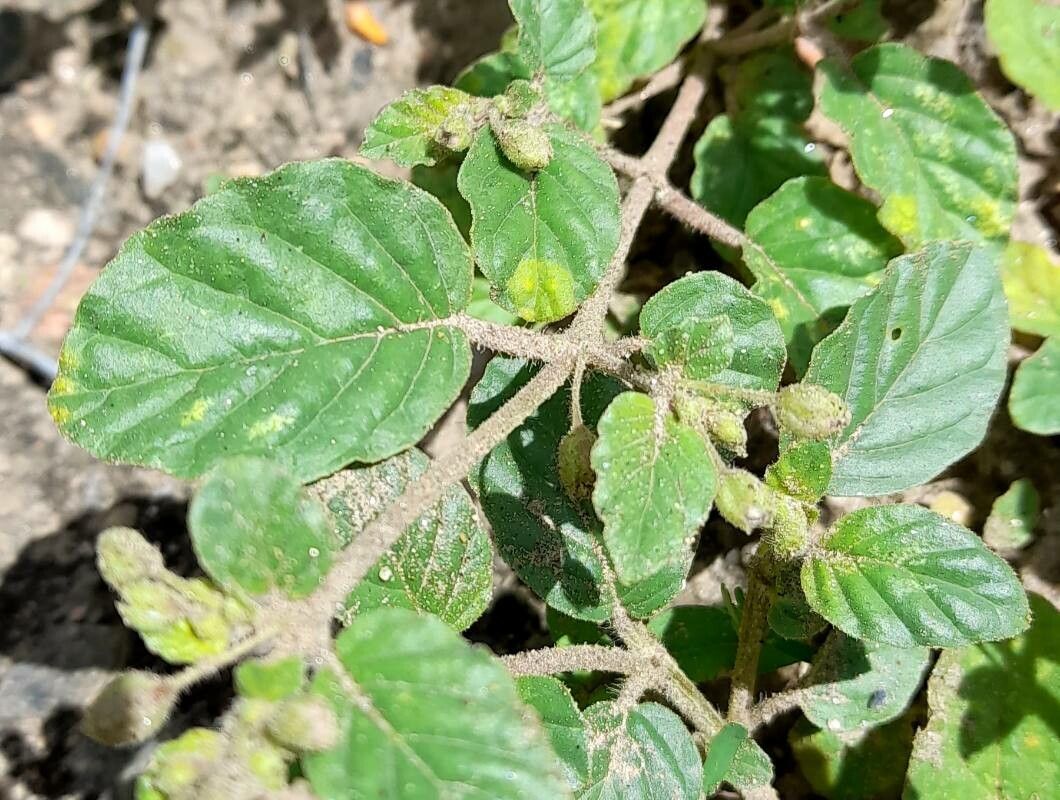
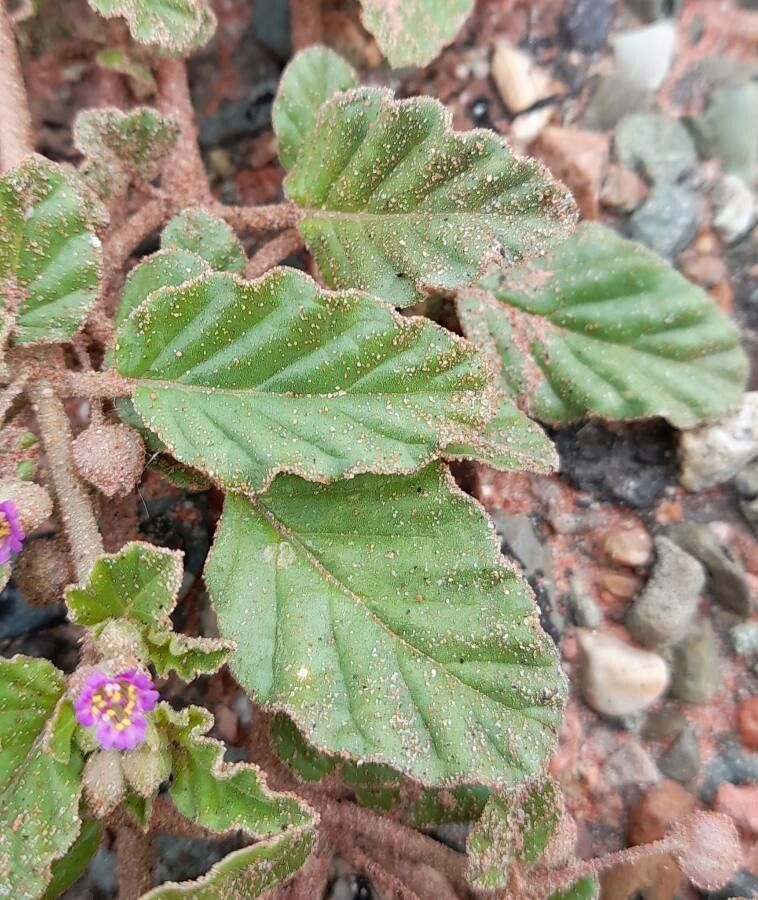
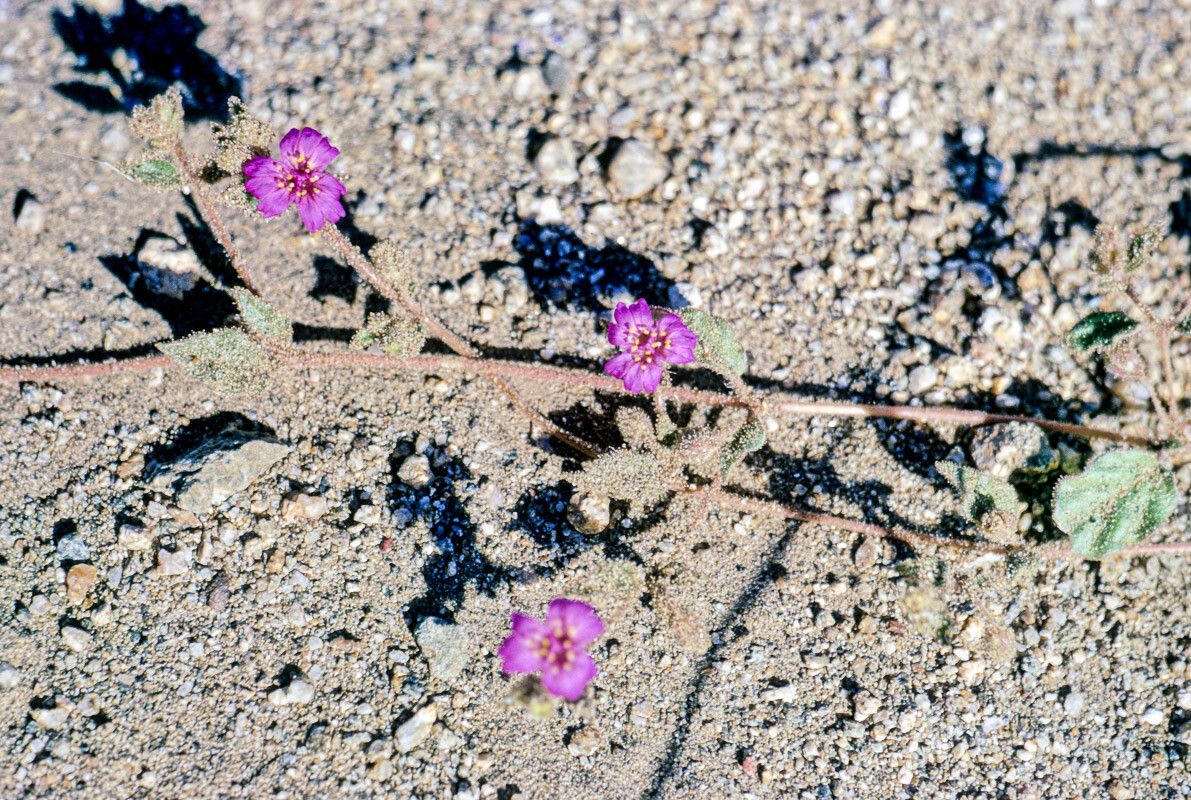
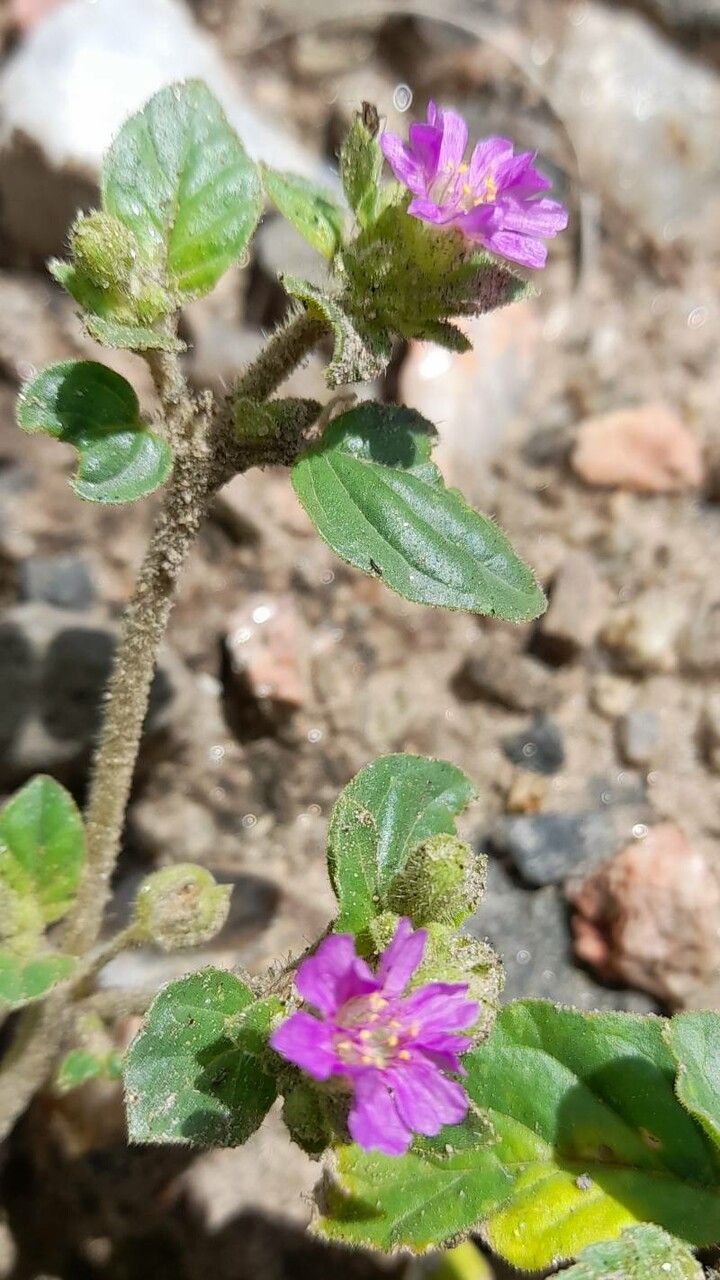
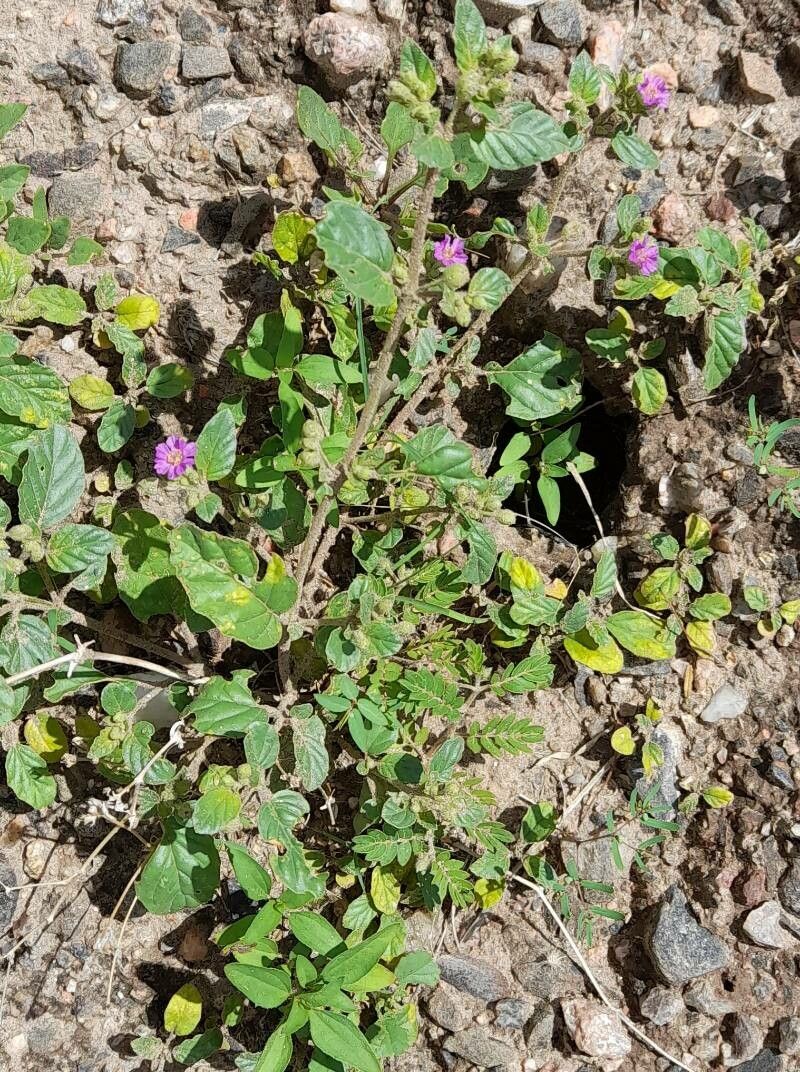
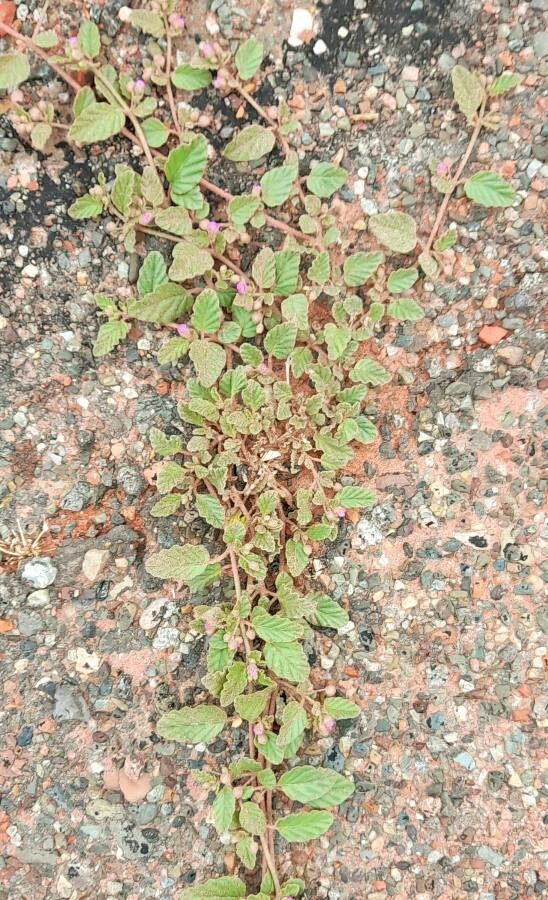
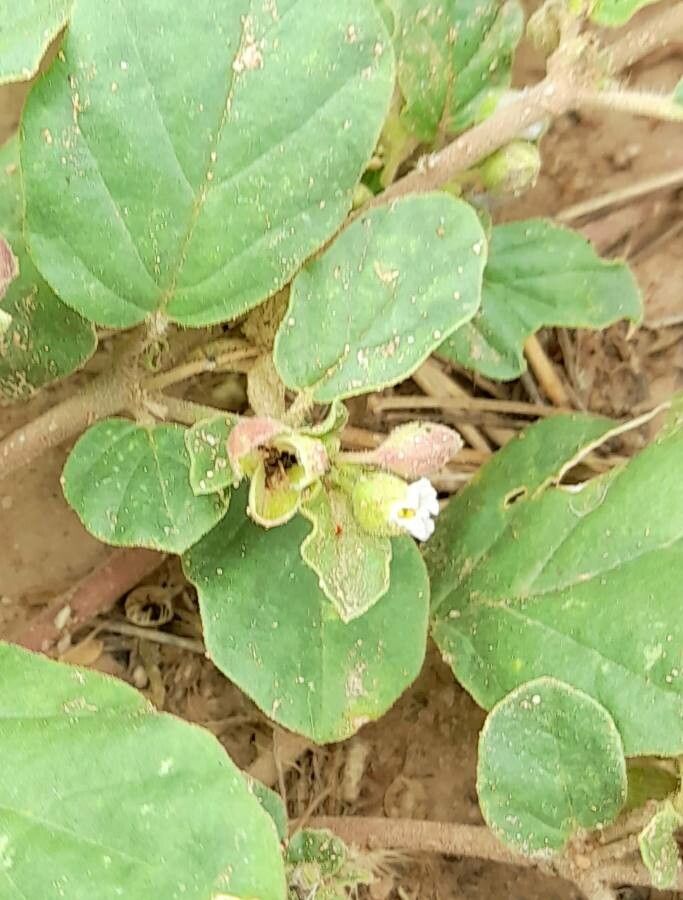
Allionia incarnata is a flowering plant in the four o'clock family (Nyctaginaceae) native to the Caribbean, the southern United States, and south through Central America and most of western South America. It is a perennial (sometimes annual) herbaceous plant with dark pink flowers. Allionia incarnata is known as pink three-flower, pink windmills, trailing allionia, trailing four-o'clock, and trailing windmills.Three varieties are accepted: Allionia incarnata var. incarnata L. Allionia incarnata var. nudata (Standl.) Munz Allionia incarnata var. villosa (Standl.) B.L.Turner
Trailing four o'clock is fairly disease-resistant and usually not prone to illnesses. However, it can be vulnerable to pests and diseases found in its environment. These infections are typically not severe. For care, this plant requires moderate maintenance. It should be pruned regularly to keep a neat appearance and support healthy growth. Fertilizing can also help encourage flowering. Trailing four o'clock is well suited for anyone with outdoor space, such as a garden or patio, and does not demand extensive gardening experience. It may need more care when grown indoors.
How to keep Allionia Incarnata.
Light
Trailing four o'clock is native to bright, tropical habitats where it thrives in direct sunlight. It prefers full sun but can tolerate partial sun and adapts well to lightly shaded areas.
Water
Originating from arid regions, the trailing four o'clock is highly drought-tolerant and conserves water, allowing it to thrive with minimal moisture. Weekly watering is sufficient for this plant, as it prefers dry soil to prevent root rot. Ideal for outdoor xeriscaping, the trailing four o'clock needs even less irrigation during its dormant period in the cooler months.
Temperature
Trailing four o'clock originates from climates where temperatures range from 68 to 95 °F (20 to 35 ℃). It thrives particularly in warm conditions. During cooler seasons, adjustments may be needed to replicate those conditions.
Fertilizer
The best time to fertilize a Trailing four o'clock is in early spring, as it emerges from dormancy and starts active growth. Fertilizing supplies essential nutrients for healthy development. Although Trailing four o'clock has relatively low fertilizer requirements, an annual application can improve its survival and encourage stronger, longer-lasting blooms.
Pruning
Trailing four o'clock is a perennial plant known for its sprawling nature and vibrant flowers. For optimal health and appearance, prune the plant from early to late spring. This involves removing dead stems and managing its growth to keep it tidy. Use clean, sharp tools to ensure the best results. Proper pruning will enhance air circulation, helping to prevent disease and encouraging vigorous blooming.
Botanical profile.
- Plant Type
- Herb
- Life Cycle
- Perennial, Annual
- Genus
- Allionia
- Family
- Nyctaginaceae
- Hardiness Zone
- 9-10
- Mature Height
- 30 cm
- Mature Spread
- 91 cm
- Leaf Color
- Green, Gray
- Leaf Type
- Semi-evergreen
- Flower Color
- Lavender
- Flower Size
- 0.76 cm to 1.52 cm
- Bloom Time
- Late spring, Summer, Fall
- Planting Time
- Spring, Summer
- Harvest Time
- Mid summer, Late summer, Fall, Early winter
- Native Area
- Colombia, Cuba, Mexico, Bolivia, Venezuela, Peru
Other names.
Reader questions.
How should I water my Trailing four o'clock plant in the best way?
When you water the Trailing four o'clock, it's best to use filtered water at room temperature. Tap water may have harmful particles for this plant, so filtered water is recommended. The reason for using room temperature or slightly warmer water is that the Trailing four o'clock is accustomed to a warm environment and cold water can be a shock. It's also important to avoid overhead watering because it can cause problems with the foliage. Instead, simply pour filtered room temperature water onto the soil until it is completely soaked. This helps the roots absorb moisture and spread through the soil to collect the necessary nutrients.
How much sunlight does Trailing four o'clock need to grow?
Trailing four o'clock plants require six to eight hours of direct sunlight each day. If you are growing them outdoors, find a spot that gets full sunlight all day. If growing indoors, place the plant near a south-facing window or another sunny location. However, be cautious not to expose the plants to direct sunlight during excessively high temperatures, such as over 35°C (95℉) or hot summer afternoons. Intense sunlight can scorch or wilt the leaves. To prevent this, use sheer curtains or blinds to filter the sunlight or relocate the plant to a shadier area.
What is the ideal temperature range for the Trailing four o'clock plant?
The Trailing four o'clock flourishes in climates with a temperature range between 68 to 95 °F (20 to 35 °C), particularly thriving in warm temperatures. Although the plant has some cold tolerance and generally does not require extra measures when temperatures are above 0°C, it is vital to mimic these preferred conditions, especially during cooler seasons to ensure the plant's wellbeing.
What should I do if I give my Trailing four o'clock plant too much or too little water?
Overwatering is the main concern for the health of your Trailing four o'clock plant. It can cause wilting, yellowing of leaves, and even diseases like root rot, mold, and mildew that may kill the plant. Underwatering is less common but can still happen, resulting in brittle and brown leaves. It's important to recognize the signs of overwatering early and reduce watering immediately. If the soil drains poorly, replace it with a loose, well-draining potting mix. If your plant is not receiving enough water, simply water more regularly until the signs subside.
What will happen if Trailing four o'clock doesn't get enough sunlight?
Insufficient sunlight can hinder the growth of your Trailing four o'clock, leading to weakness and a straggly appearance. Yellowing leaves suggest a lack of sunlight necessary for chlorophyll production. In the worst-case scenario, the plant may even succumb to death.
What should I do to protect my Trailing four o'clock plant from cold temperatures?
To protect the Trailing four o'clock plant from cold temperatures, especially when the mercury is expected to drop below 0°C, it's necessary to undertake temporary measures. This can include wrapping the plant with plastic film, fabric, or other suitable materials for cold protection. Once the temperature rises again, these protective coverings should be removed to avoid any potential damage to the plant.
How often should I water my Trailing four o'clock?
If your Trailing four o'clock is potted, the most accurate way to determine if it needs water is by checking the soil with your finger. If the top two to three inches of soil feels dry, it's time to water. If you have your Trailing four o'clock planted outdoors, you can use the same method. When the first few inches of soil have dried out, it's time to water. Typically, you'll need to water this plant about once a week during spring and early fall. In extremely hot weather, you may need to water twice or more per week. However, mature and well-established Trailing four o'clock plants have a remarkable ability to tolerate drought.
What will happen if Trailing four o'clock gets too much sunlight? What happens if Trailing four o'clock gets too much sunlight?
Trailing four o'clock plants require full sunlight, but it's important to prevent excessive direct sunlight. Exposing the plant to intense sunlight for too long can result in sunburn, indicated by brown or scorched leaves. To prevent this, regularly monitor the plant and relocate it to a shadier area if needed.
How does the Trailing four o'clock plant react to low temperatures?
Trailing four o'clock has a moderate tolerance to low temperatures, flourishing best when temperatures are above 20°C. During winter, it's crucial to keep it above 0°C to avoid frost damage. When temperatures fall below -5°C, the leaves might droop; they can recover in mild cases but will wilt and eventually fall off in severe cases. Trimming frost-damaged parts and protecting the plant from cold wind with non-woven fabric, cloth, and a wind barrier can help it survive these conditions.
How much water does my trailing four o'clock plant need?
When watering your Trailing four o'clock plant, don't be hesitant to give it a generous amount of water. Make sure to water thoroughly by soaking the soil completely when the top two to three inches are dry. The water should be enough to cause excessive water to drain out from the bottom of the pot. If there is no excess water draining, it means the plant has not received enough water. However, avoid leaving water to accumulate in the soil as it can harm the plant. Additionally, if water doesn't drain through the pot, it suggests that the soil doesn't drain well, which is not good for the plant's health. For outdoor plants, 1 inch of rain per week should be sufficient.
How should I care for my Trailing four o'clock plant in high temperatures?
In summer, it's important to keep the Trailing four o'clock below 35°C to prevent heat stress. Temperatures exceeding 41°C can cause the leaves to lighten in color, dry out at the tips, curl, and make the plant more prone to sunburn. To mitigate these issues, trim away sunburned and dried-up parts, move the plant to a shaded area, or use a shade cloth, especially during the midday and afternoon sun. Additionally, watering the plant in the morning and evening helps keep the soil moist and supports the plant's health in high temperatures.
How do I water my Trailing four o'clock plant as it grows?
The water needs of the Trailing four o'clock plant can vary depending on its growth stages. In the early years or after transplanting, you should provide more water than usual. During these stages, the plant focuses on developing new roots to support future growth, and these roots perform best with slightly higher moisture levels. As the plant matures, it will require less water. Additionally, during the blooming period, the plant needs more water to support flower development.