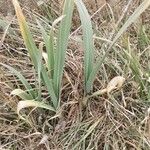
Allium ampeloprasum
تره کوهی · Broadleaf wild leek · Wild Leek · Great-headed Garlic · Leek
Description
Source: leafsnapAllium ampeloprasum, commonly known as wild leek or elephant garlic, is a perennial plant belonging to the Allium genus. Native to the Mediterranean region, it has been cultivated for centuries for its culinary and medicinal properties. The plant can grow up to 1.5 meters tall and features a bulbous stem that produces large cloves, similar in appearance to garlic. The leaves of Allium ampeloprasum are long, narrow, and flat, with a bluish-green color. The flowers, on the other hand, are small and can be either white or pink. They have six petals arranged in an umbrella-like shape at the top of the stem. All parts of this plant are edible, including its leaves, bulbs, flowers, stems, and seeds. These can be used to season food dishes such as soups or stews. Allium ampeloprasum is renowned for its medicinal properties. It is an antioxidant-rich food source that can help reduce inflammation throughout the body. Additionally, it contains high levels of sulfur compounds, which have been shown to possess anti-cancer properties. Overall, this versatile plant has numerous culinary and medicinal uses, making it a valuable addition to any garden or kitchen pantry.
🎭 Forbearance, good luck, affluence, togetherness, fortitude
Care Guide
💧 Water Every 7 days
Broadleaf wild leek thrives in Mediterranean climates. It prefers consistent moisture but can tolerate moderate drought once established. For optimal growth, it should be watered twice a week. Indoors, broadleaf wild leek adapts well to life in containers, as long as proper water management mimics its natural conditions.
When Should I Water My Broadleaf Wild Leek?
Determining when to water broadleaf wild leek involves several indicators: the soil moisture level, leaf condition, time of day, root health, and the presence of thirsty flowers. Check the soil's moisture by pressing your finger into the top 1 to 2 inches; dryness indicates a need for water. Leaf drooping or yellowing suggests the plant is thirsty. Early morning or late afternoon watering reduces evaporation and stress. Examining the roots for dryness or over-wet conditions can guide watering frequency. Additionally, wilting flowers signal a need for water. Avoid watering when the soil is moist to prevent root diseases, and over-drying can cause stress or stunting. Observing these signs helps maintain the plant's health and growth.
How Should I Water My Broadleaf Wild Leek?
Water your broadleaf wild leek with careful attention to method and type of watering can. Bottom-watering is effective, allowing moisture to reach the roots without oversaturating the soil surface, minimizing disease risks. Use a watering can with a narrow spout to direct water to the base, avoiding foliage. This nuanced approach helps keep the plant properly hydrated without over-wetting and promoting healthy growth.
How Much Water Does Broadleaf Wild Leek Really Need?
The optimal water amount for broadleaf wild leek depends on the plant's size and the pot's dimensions, generally ranging from 0.5 to 2 liters per session. Aiming for moist, well-drained soil without waterlogging is crucial. Properly hydrated plants will display upright, deep green leaves. Signs of over or under-watering include yellowing/wilting leaves and stunted growth. Balance is key, using well-draining soil and possibly adjusting with rain or distilled water to avoid salt build-up from hard water.
What Kind of Water is Best for Broadleaf Wild Leek?
For broadleaf wild leek, rainwater is ideal due to its natural, chemical-free properties and balanced pH. Filtered water is a good alternative, removing harmful contaminants. Tap water, less preferred, can be used if dechlorinated (let sit for 24 hours) or filtered through activated carbon to remove chlorine and other contaminants. The plant shows high sensitivity to chlorine and moderate to fluoride, affecting its health. Room-temperature water is best to avoid shocking the plant.
How Do Broadleaf Wild Leek's Watering Needs Change with the Seasons?
Broadleaf wild leek's watering needs vary throughout the year. In spring, aim for moist soil to support new growth without over-watering. Summer, the growth phase, requires consistent moisture, especially for bulb development, but avoid waterlogging. Autumn's cooler weather reduces the plant's water needs; focus on preventing soil dryness. During winter dormancy, significantly reduce watering to match the plant's minimal absorption capacity, adjusting for indoor environments as needed. Seasonal adjustments ensure the plant remains healthy year-round.
☀️ Light Full sun
Wild leek develops vigorously when exposed to sunlight for most of the day. It can still thrive in locations with somewhat reduced light. In its native habitats it is often found in open fields that have abundant sun. Conditions with either too little or too much light are detrimental and can weaken its growth and vitality.
What are the sun requirements for broadleaf wild leek?
Broadleaf wild leek thrives best with exposure to full sun for most of the day, which promotes robust growth. However, it can still flourish in areas with slightly less light. It's adapted to environments where it receives ample sunlight for most of the day, typically found in open fields in its native ranges. For optimal growth, ensuring it gets more than 6 hours of sunlight is ideal (full sun), but it can also manage with about 3-6 hours of sunlight (partial sun). It's crucial to observe how sunlight moves through your garden, selecting spots that provide a harmonious balance of light and shade to ensure the well-being of your plants.
How does inadequate or excessive light affect broadleaf wild leek?
Broadleaf wild leek's growth and vitality can be impaired by either insufficient or excessive light. Unfavorable conditions can trigger a range of symptoms, including smaller new leaves, leggy or sparse growth, early leaf drop to conserve resources, delayed or halted growth, and development of lighter-colored or yellow leaves (chlorosis). Excessive sunlight can cause sunscald, leaf curling as a protective measure, wilting due to increased water loss, and leaf scorching characterized by brown, dry edges. These conditions indicate that the plant is not receiving the optimal light conditions for its health.
What artificial lighting requirements do indoor broadleaf wild leek plants have?
Indoor broadleaf wild leek plants require adequate lighting to compensate for insufficient natural sunlight, especially in winter or less sunny spaces. Artificial lights, such as LED lights tailored to provide specific wavelengths, are vital for promoting healthy growth. The requirements vary based on the plant's sunlight needs: full sun plants need 30-50W/sq ft, partial sun plants 20-30W/sq ft, and full shade plants 10-20W/sq ft of artificial light. The artificial light source should be placed 12-36 inches above the plant, mimicking natural sunlight as closely as possible, and provided for 8-12 hours per day.
What solutions can address light deficiency symptoms in broadleaf wild leek?
To combat light deficiency in broadleaf wild leek, a gradual transition to a sunnier location is recommended, aiming for at least 6 hours of direct sunlight daily. For indoor plants that are large or difficult to move, additional light can be provided through artificial sources, such as keeping a desk or ceiling lamp on for a minimum of 8 hours daily or investing in professional grow lights. Outdoors, it's crucial to adjust plant placement carefully to avoid sunburn, ensuring a gradual adaptation to increased light exposure. Minimizing obstructions such as pruning trees or transplanting smaller plants to sunnier spots can also help improve sunlight access. However, it's important to note that parts of the plant already affected by insufficient sunlight may not recover, but ensuring new growth receives adequate light will result in healthier development.
🌡️ Temperature 15–35°C
Wild leek is adapted to native growth environments in regions with average annual temperatures of 68 to 95 °F (20 to 35 ℃). For healthy growth, the ambient temperature around this plant must remain within that range.
What are the essential growing conditions for Broadleaf wild leek?
Broadleaf wild leek thrives in environments with average annual temperatures ranging between 68 to 95 °F (20 to 35 °C). For healthy growth, it's crucial to maintain the surrounding temperature within this range. The plant prefers relatively warm temperatures, especially during winter, where the minimum temperature should be kept above freezing to prevent damage. Protection measures like moving the plant indoors or using insulating materials are recommended when outdoor temperatures approach -5°C (25°F) to avoid freezing.
How does low temperature affect Broadleaf wild leek and what are the solutions?
Broadleaf wild leek has a moderate tolerance to low temperatures and performs best within its suitable temperature range. It should remain above a certain minimum during winter to avoid damage. Should temperatures fall too low, the plant's leaves may darken, and, in severe cases, experience water-soaked necrosis, wilting, and eventually turn brown. The solution involves trimming frost-damaged parts and moving the plant to a warm environment or setting up a greenhouse for cold protection. A south-facing window is ideal for indoor warmth and sunlight, and if necessary, supplemental lighting can be utilized.
What should I do if Broadleaf wild leek is exposed to high temperatures?
During summer, it's critical to keep Broadleaf wild leek below its maximum tolerable temperature to avoid slowing growth, leaf color lightening, and susceptibility to sunburn. If the plant suffers from excessive heat, trim the sunburned and dried-up parts. Relocating the plant to provide afternoon shade and watering it during cooler parts of the day helps maintain moisture and protect it from heat stress.
💨 Humidity normal (40-60%)
This plant will thrive in moderate humidity, which is probably the level in your home. However, misting it a few times a week can be very beneficial. Make sure the room has good ventilation.
🪴 Soil 6-7
🌱 Fertilizer
To maximize the yield and flavor of Wild leek, provide ample nitrogen throughout the growth cycle, including the pre-planting phase and up to harvest. Plants that are well-watered and properly fertilized develop abundant, healthy leaves and exhibit less bitterness. Before planting, amend the soil with organic matter such as compost or manure, ideally 2 to 8 weeks in advance.
Why is it important to put fertilizer on my Broadleaf wild leek?
Broadleaf wild leek, a plant grown for its edible leaves, has specific nutritional requirements. Nitrogen, phosphorus, and potassium are essential nutrients for plants, with nitrogen being the most important for foliage development. However, it can be challenging for Broadleaf wild leek to obtain enough nitrogen from the soil for a successful harvest. As a result, many gardeners choose to heavily supplement the plant's nitrogen intake through feeding.
When should I fertilize my Broadleaf wild leek?
To benefit your Broadleaf wild leek, there are several points during the growing season when you should apply fertilizer. First, when you prepare the ground for planting, amend the soil with nutrient-rich organic material like compost or manure at least 2 to 8 weeks before planting. Then, at planting time, amend the soil again using the same method. Once your seedlings emerge and reach about 2 inches tall, apply the next dose of fertilizer. After that, you can continue to regularly feed your Broadleaf wild leek with rich organic matter or a commercial fertilizer until harvest. A typical schedule would be fertilizing every two to three weeks. Additionally, it's a good idea to add a layer of compost or manure around the plant for a continuous supply of nutrients.
When is the wrong time to fertilize my Broadleaf wild leek?
When using nitrogen-rich fertilizers, take care not to apply them near other vegetable plants that need to focus on fruiting. Otherwise, these plants may produce lots of leaves but very few vegetables. Avoid letting any type of fertilizer touch or splash onto the leaves of your Broadleaf wild leek, as this can cause them to burn. Apply the fertilizer a couple of inches away from the plant's base. If your Broadleaf wild leek is unhealthy due to disease, pests, drought, or other reasons, do not fertilize it until these issues are resolved. Fertilizer can benefit healthy plants but can be harmful if applied to plants in poor condition.
Which type of fertilizer should I use for my Broadleaf wild leek?
Choosing the best fertilizer for Broadleaf wild leek depends on various factors such as the type of plant, environmental conditions, and soil composition. In general, Broadleaf wild leek requires high nitrogen levels, so using fertilizers with a high nitrogen content is a good idea. At the beginning of the growing season, amending the soil with manure or compost is recommended. Throughout the season, you can continue to feed the plant with either dry or liquid fertilizer. Start with a light feeding during the seedling stage and gradually increase the amount as the plant matures. Organic fertilizers are often preferred for their superior taste, but both organic and chemical fertilizers can be used. Organic options with high nitrogen levels include fish emulsion, soil meal, compost tea, alfalfa meal, blood meal, and chicken manure. If using chemical fertilizers, check the NPK number to determine the proportion of nitrogen, phosphorus, and potassium. For a high-nitrogen option, choose a fertilizer with the highest first number (such as 13-2-5) or one that consists solely of nitrogen (such as 16-0-0).
How do I give nutrients to my Broadleaf wild leek plant?
To fertilize your Broadleaf wild leek, you have a few options depending on the type of fertilizer you're using. For amending soil, start by digging at least 6 inches (preferably deeper) and mix in the amendment material at a 2:1 ratio with the soil. Make sure to mix it thoroughly. If you're using granular or powder fertilizers, spread them around the base of the plant according to the retailer's recommendation. Mixing it into the top layer of soil is a good idea to prevent it from washing or blowing away. Keep the fertilizer about 2 to 3 inches away from the plant to avoid fertilizer burn. After adding dry fertilizer, remember to water the soil thoroughly. For water-soluble chemical fertilizers, dissolve them in water and use the diluted mixture to water your Broadleaf wild leek. This method works best if you're watering the plant from a container and not using irrigation or other methods.
🪴 Pot & Repot
Repot Wild leek in early spring. Choose a pot that is wider than it is deep and provides good drainage. Use a loamy, well-draining potting mix enriched with compost. Carefully remove old soil from the bulb and plant it so the depth matches the bulb’s height. Water thoroughly after repotting and place the pot in a sunny spot. Avoid overwatering to prevent the bulb from rotting.
✂️ Pruning
The broadleaf wild leek features broad, flat leaves and thrives in well-drained soil. To maintain its health, prune in the spring by removing any damaged or dead leaves to improve air circulation. After the plant blooms, cut back the flower stalks to encourage growth in the leaves. Regular pruning promotes the plant's overall health. Always use sterilized tools when pruning to prevent infections.
🌿 Propagating
🐛 Diseases & pets
☠️ Toxicity
Characteristics
- Plant Type
- Herb
- Life Cycle
- Perennial, Annual
- Genus
- Allium
- Family
- Amaryllidaceae
- Hardiness Zone
- 7-10
- Mature Height
- 1.83 m
- Mature Spread
- 30 cm
- Leaf Color
- Green
- Leaf Type
- Deciduous
- Flower Color
- Lavender, White
- Flower Size
- 4.06 cm to 11.43 cm
- Bloom Time
- Late spring, Early summer
- Planting Time
- Spring, Winter, Summer, Autumn
- Harvest Time
- Mid summer
- Native Area
- Libya, Egypt, Turkey, Tunisia, Cyprus, Bulgaria, Greece, Morocco, Uzbekistan, Iraq, Portugal, Italy, Spain, Israel, Iran, Ethiopia, Albania, Algeria, Romania, Turkmenistan, France