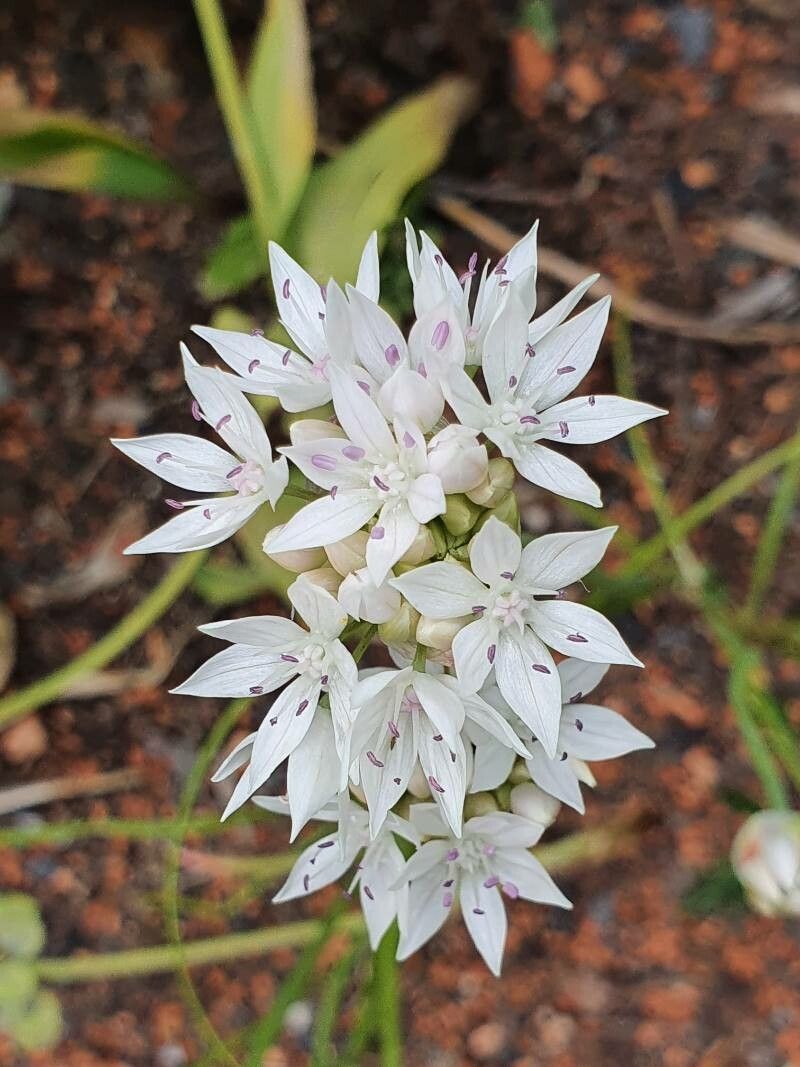
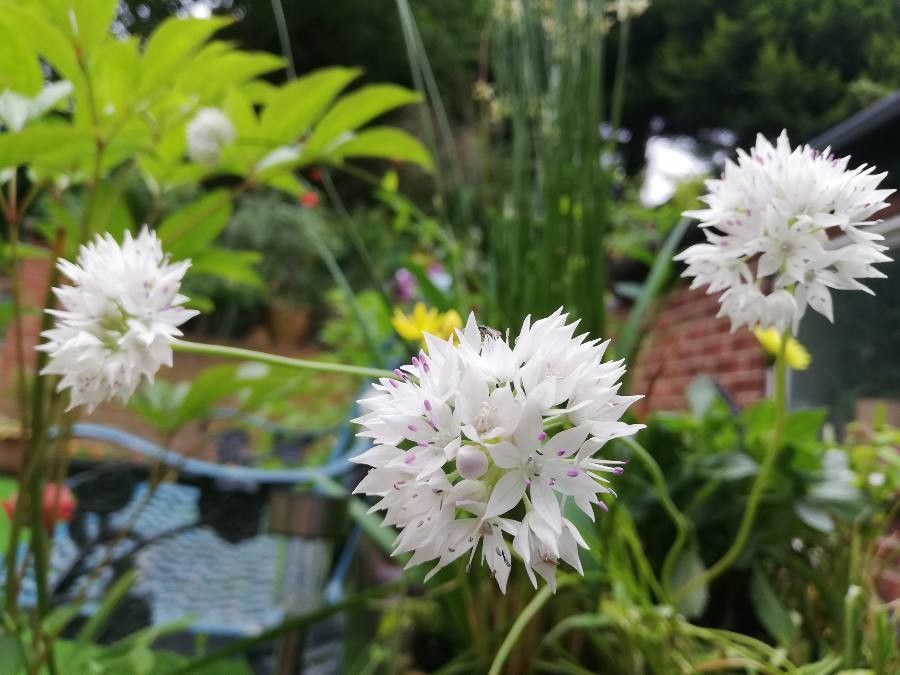
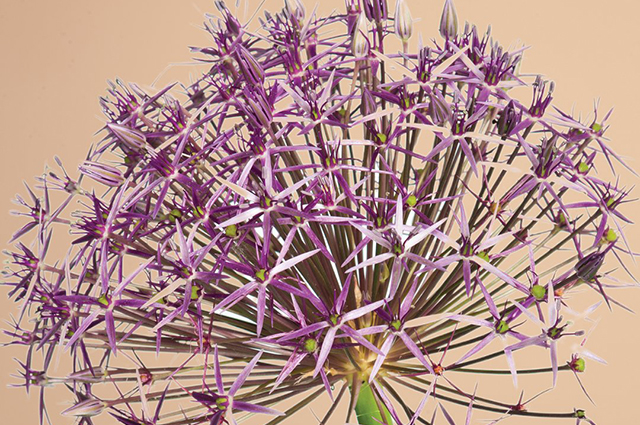
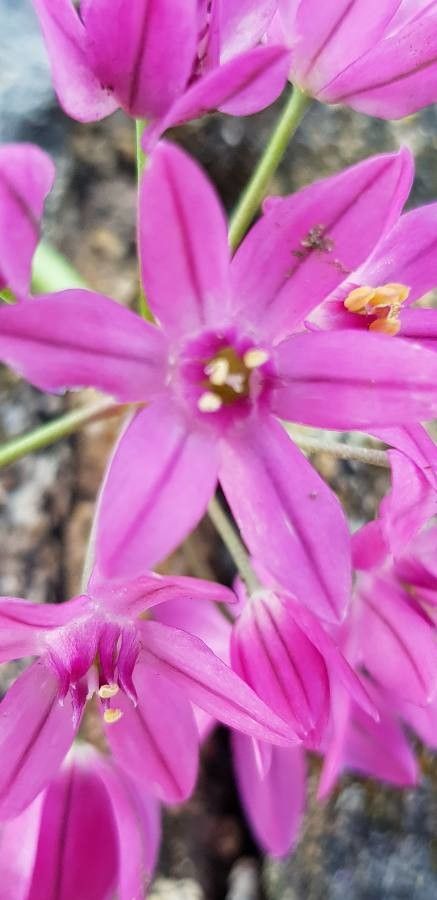
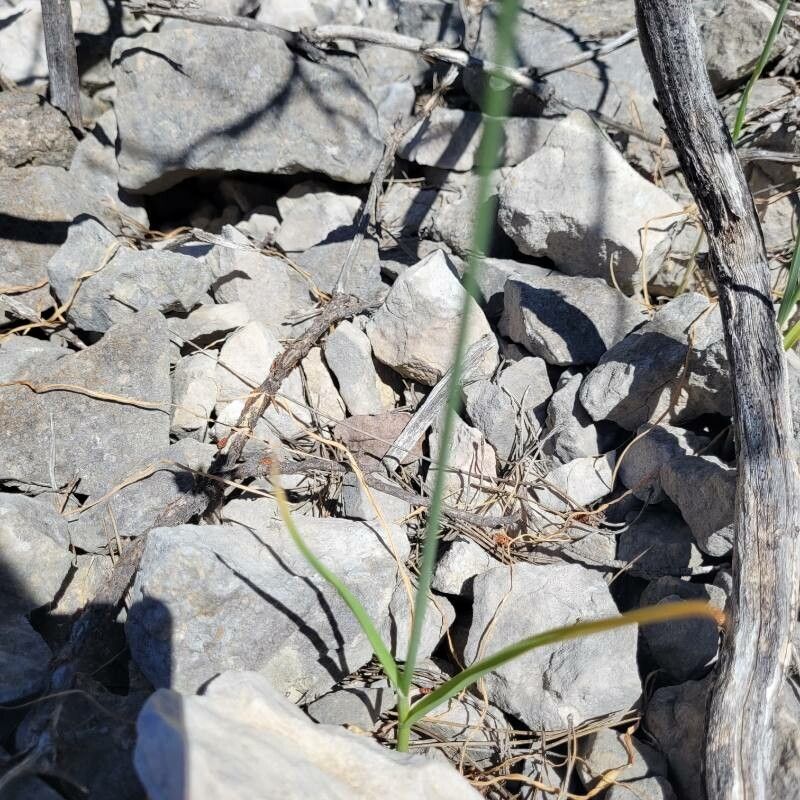
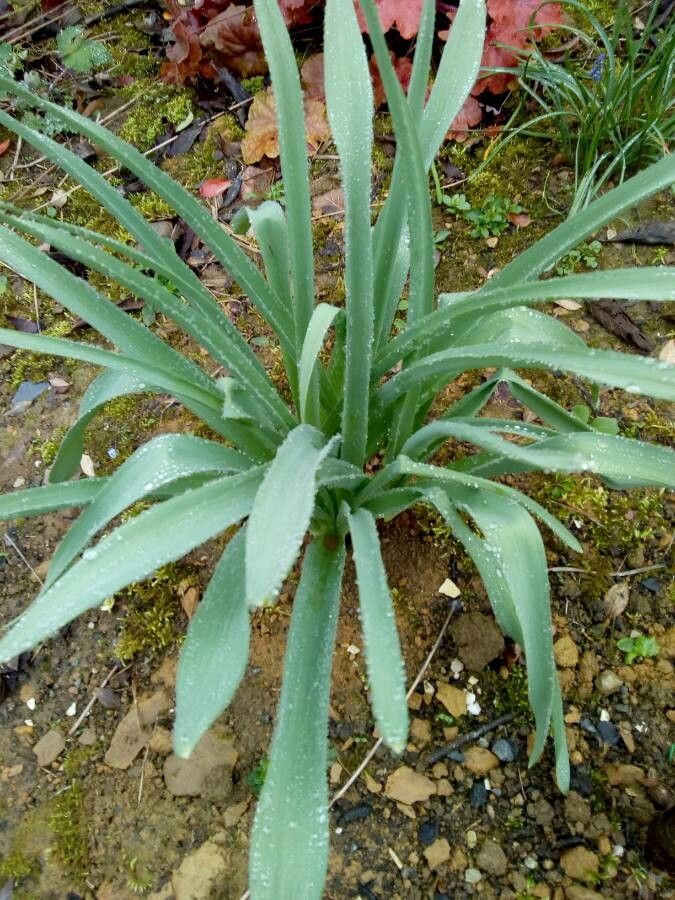
Allium amplectens, commonly known as the narrowleaf onion, is a perennial herbaceous plant belonging to the Allium genus. Native to western North America, it thrives in various habitats, including meadows, grasslands, and open forests. This plant can grow up to 60 cm tall and features narrow leaves reaching up to 30 cm in length. The flowers of Allium amplectens are clustered densely at the top of a long stem. These small, star-shaped flowers, each with six petals, vary in color from pinkish-purple to white. They typically bloom from late spring through early summer. Historically, the bulbs of this plant have been used medicinally by indigenous peoples for centuries. They contain compounds with antibacterial properties, making them effective in treating infections. Additionally, Allium amplectens is a significant food source for pollinators such as bees and butterflies, thanks to its nectar-rich flowers. It can be cultivated in gardens or naturalized into meadows and prairies, where it attracts pollinators and enhances the landscape with its delicate blooms. In summary, Allium amplectens is an attractive perennial herbaceous plant offering both medicinal benefits and ecological value. Its role as a food source for pollinators makes it an excellent addition to any garden or natural landscape setting.
Narrowleaf onion is fairly resistant to disease and usually does not tend to get sick. However, it can be vulnerable to pests and diseases present in its environment. Such infections are typically mild. For care, this plant needs a moderate amount of attention. It should be pruned regularly to preserve a neat appearance and support healthy growth. Fertilizing can also help encourage flowering. Narrowleaf onion is well suited for anyone who has an outdoor area, like a garden or patio, and does not demand extensive gardening experience. It may need more attentive care when grown indoors.
How to keep Allium Amplectens.
Light
Narrowleaf onion does best in locations that get sunlight for most of the day. Its native growing habitat typically provides that much sun. Too little light can stunt its growth, while too much can scorch the leaves.
Water
The Narrowleaf onion thrives in well-drained soil and benefits from a weekly watering schedule that mimics its natural moisture cycles. Although it can withstand short droughts thanks to its ability to store water, it’s important to increase watering during its active growth seasons. This will support flowering, which depends on adequate hydration.
Temperature
Narrowleaf onion originates from temperate regions and requires temperatures between 50 and 95 °F (10 to 35 °C). To achieve optimal growth, make seasonal adjustments while keeping this thermal range in mind.
Fertilizer
The primary time to fertilize Narrowleaf onion is in early spring, when its flowers are forming. The proper fertilizer promotes improved blooms and helps Narrowleaf onion produce attractive flowers. Fertilizing in early spring ensures excellent flowers throughout the season and supplies energy for dormant growth phases.
Pruning
The narrowleaf onion has slender leaves and appealing clusters of flowers. To promote vibrant blooms and maintain overall plant health, it is essential to prune from early to late spring. Focus on removing damaged leaves to improve air circulation and prevent disease. Always use clean, sharp tools for this task.
Pot & Repot
To thrive, narrowleaf onions need pots with excellent drainage, which prevents excess water from accumulating and damaging the plant's roots.
Botanical profile.
- Plant Type
- Herb
- Life Cycle
- Perennial
- Genus
- Allium
- Family
- Amaryllidaceae
- Hardiness Zone
- 6-9
- Mature Height
- 15 cm to 30 cm
- Mature Spread
- 5 cm
- Leaf Color
- Green, Gray
- Leaf Type
- Deciduous
- Flower Color
- White
- Flower Size
- 2.54 cm to 5.08 cm
- Bloom Time
- Late spring, Early summer
- Planting Time
- Spring, Summer
- Harvest Time
- Mid summer, Late summer
Other names.
Reader questions.
What are the sunlight requirements for narrowleaf onion?
Narrowleaf onion requires a significant amount of sunlight to thrive. It needs full sun, which is above 6 hours of sunlight per day, or partial sun, about 3-6 hours of sunlight per day. It's important to observe the movement of sunlight through your garden to select locations that offer the right balance of light and shade. These conditions mimic the narrowleaf onion's native growing environment, ensuring it receives the essential solar exposure for healthy growth. Too little sunlight can stunt its growth, while too much can lead to leaf burn.
What temperature range is suitable for growing Narrowleaf Onion?
Narrowleaf onion, botanically known as Allium amplectens, thrives in temperate regions with temperatures ranging from 50 to 95 °F (10 to 35 °C). To ensure the plant grows optimally, it's important to adjust care seasonally within this temperature range. Although Narrowleaf onion has a strong resistance to cold and usually doesn't require special frost protection, it's recommended to take precautionary measures if temperatures are expected to drop below -25°C by covering the plant with soil or straw.
How can artificial lighting support the growth of indoor narrowleaf onion plants?
Indoor narrowleaf onion plants require adequate lighting, especially when natural sunlight is insufficient. Artificial lights, such as LEDs, are beneficial as they can be tailored to provide specific wavelengths necessary for plant growth. For plants that usually require full sun, 30-50W/sq ft of artificial light is recommended. If the plant prefers partial sun, 20-30W/sq ft should suffice, and for full shade plants, 10-20W/sq ft is adequate. The light source should be positioned 12-36 inches above the plant to simulate natural sunlight effectively. Moreover, it's important to replicate the natural daylight hours by ensuring most plants receive 8-12 hours of artificial light per day.
How do you care for Narrowleaf Onion during winter?
For Narrowleaf onion, winter care includes preparing the plant before the first freeze in autumn by watering it abundantly. This ensures the soil remains moist and enters into a frozen state properly, which helps in preventing drought and water scarcity for the plant during the winter and early spring months. If temperatures are expected to fall below -25°C, it's important to protect the plant from extreme cold by covering it with insulating materials.
What are the symptoms of inadequate sunlight for narrowleaf onion?
Symptoms of inadequate sunlight in narrowleaf onion include smaller new leaves, leggy or sparse growth, faster leaf drop, slower or no new growth, and lighter-colored new leaves. These signs indicate the plant's struggle with insufficient light. Conversely, symptoms of too much sunlight include chlorosis, sunscald, leaf curling, wilting, and leaf scorching. Chlorosis leads to the breakdown of chlorophyll, affecting photosynthesis, while sunscald, leaf curling, wilting, and leaf scorching damage the plant's tissues, reducing overall health and photosynthetic capacity.
What should you do if a Narrowleaf Onion experiences low temperatures?
Narrowleaf onion is cold tolerant and does well in temperatures above 10°C, but should ideally be kept above -15°C during winter. If temperatures drop below -25°C, while the plant may not show immediate damage, there could be a decrease in sprouting, or in worse cases, no sprouting in the spring. If this occurs, in spring, it's advised to remove any parts of the plant that have failed to sprout to help with recovery and new growth.
What are the solutions for narrowleaf onion experiencing light-related issues?
For narrowleaf onion plants facing light-related issues, gradual adaptation to the correct light conditions is key. Indoors, incrementally move the plant to sunnier spots until it receives at least 6 hours of direct sunlight daily or consider artificial lighting if the plant is large or immovable. Outdoors, also gradually increase sun exposure to prevent sunburn. If the plant is grounded and obstructed by elements like trees, pruning or transplanting during the dormant period can enhance sunlight access. Although parts of the plant harmed by improper light may not recover, new growth should be healthy with adjusted light exposure.
What measures should be taken if a Narrowleaf Onion is exposed to high temperatures?
During summer, it's crucial to ensure that the Narrowleaf onion is kept below 35°C as exposure to temperatures above 38°C can lead to discoloration of the leaves, curling and susceptibility to sunburn, and in severe cases, wilting and drying of the entire plant. To mitigate such damage, trim away the sunburned and dried parts of the plant, relocate it to a shaded area or use a shade cloth to protect it from the midday and afternoon sun. Additionally, watering the plant in the morning and evening will help keep the soil moist and prevent overheating.