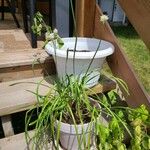
Allium canadense
Canada onion · Meadow garlic · Meadow leek · Wild garlic · Canadian garlic
Description
Source: leafsnapAllium canadense, commonly known as wild onion or Canada onion, is a perennial plant belonging to the Allium genus. Native to North America, it thrives in various habitats such as meadows, prairies, and woodlands. The plant can grow up to 60 cm tall and features long, cylindrical green leaves. The flowers of Allium canadense are small and either white or pinkish. They bloom between May and July atop a tall stem that rises above the foliage. After flowering, small bulbils develop at the base of each flower cluster. All parts of this plant emit a strong onion-like odor when crushed or cut, due to a high content of sulfur compounds. This attribute makes it a valuable food source for wildlife, including deer, rabbits, squirrels, and birds. Native Americans have utilized the bulbs of Allium canadense for medicinal purposes for centuries due to their antibacterial properties, which are effective against infections caused by bacteria such as E. coli. Overall, Allium canadense is an intriguing plant with both culinary and medicinal applications. It adds beauty and diversity to natural habitats across North America.
🌳 Besides its culinary uses, wild garlic offers a new possibility for producing renewable energy. Researchers have been examining the bulbs' high cellulose content with the goal of converting them into biofuel. This promising approach points to an environmentally friendly method of managing wild garlic populations by using their biomass as a sustainable resource, thus addressing both energy needs and invasive species control.
🎭 Safeguarding, Recovery
Care Guide
💧 Water Every 7 days
Wild garlic flourishes in moist environments, preferring soil that is consistently hydrated. For optimal growth, it's best to water it weekly. While wild garlic can endure short periods of dryness, it requires sufficient watering during the growing season when cultivated outdoors. This helps maintain its clump-forming habit and enhances its strong aroma.
What should I do if I give too much or too little water to my Wild garlic?
Wild garlic is prone to overwatering, which can cause bulb rot. Symptoms of overwatering include a mushy bulb, flopping stems with spots, droopy flowers, and a yellowed stalk. While it's normal for the leaves to turn yellow at the end of the blooming period, if this happens before the flowers bloom, it indicates overwatering. Unfortunately, bulb rot cannot be reversed, but if caught early, the affected bulb should be dug up and the rotten parts carefully removed. Soil that the plant grew in should also be removed. For potted plants, thorough disinfection is necessary to prevent the spread of fungus. Outdoor plants should be relocated to a different spot. Underwatering is less problematic for this plant. Signs of underwatering include no blooms, wilting stalks, and browning around the edges of the flower petals. If you have given your Wild garlic too little water, don't panic. It can tolerate some drought, so give it a good drink without saturating the soil. Just ensure that the soil remains moist. Avoid overwatering, as extended periods in water can lead to root rot and fungal growth on the bulb. This can cause spots on leaves and buds, as well as discoloration and death of leaf tips.
How frequently should I water my Wild garlic?
Growing wild garlic is fairly easy and doesn't require much attention. It is best to grow it directly in the ground, preferably in the hottest and brightest part of your garden, although it can also be grown in a pot. Since wild garlic is a bulb plant, you need to be careful not to overwater it, as this can cause the bulb to rot. After planting, water the wild garlic well once and then leave it. This initial watering will stimulate growth, and you can leave the plant alone until shoots start to appear. To ensure the best results, check the soil moisture after new leaves have grown. Stick your finger about 2-3 inches below the soil surface and if it feels wet, there's no need to water the plant. If you're using a pot, check the water collection tray for any standing water, as this also indicates that you shouldn't water the plant. For a more accurate measurement, use a moisture sensor inserted about 2-3 inches into the soil. The reading should be in the middle of the "moist" category. It is recommended to water your wild garlic once per week.
How should I change how often I water my Wild garlic in different conditions?
Wild garlic is a resilient plant that can thrive in various harsh conditions. When planting outdoors, you can rely on natural conditions for its growth, as it does not need much water and can withstand droughts. Just ensure that the soil has proper drainage. However, when growing Wild garlic in pots, you should be more cautious with watering. Since it is a bulb plant, overwatering can lead to bulb rot. Watering it less frequently indoors is usually sufficient, and make sure the pots have drainage holes. Use high-quality, well-drained soil, and consider adding sand or rocks to improve drainage. During the growing phase, you should water the Wild garlic around one inch per week to encourage blooming. Start watering regularly when the stalk appears. The amount of water required during this phase depends on the humidity and temperature. In hot, dry climates, water evaporates faster, so you may need to water more often. In humid climates, watering less frequently may suffice. Always check the soil moisture level to avoid excessive wetness, as Wild garlic prefers moist, well-drained soil.
☀️ Light Full sun
Wild garlic grows best when it gets plenty of daylight each day, though it can tolerate spots where sunlight is partly filtered. However, too much shade can impede its healthy development. Since it originates from brightly lit habitats, heavy shading or prolonged overcast conditions can cause stunted growth.
What are the sunlight requirements for wild garlic (Allium canadense)?
Wild garlic thrives best when it receives full sun exposure, which means it should be exposed to the sun's rays for most of the day, although it can tolerate some shade. Full sun is defined as more than 6 hours of direct sunlight per day, and partial sun refers to about 3-6 hours of sunlight. It's essential for the growth, health, and flowering process of wild garlic. Insufficient sunlight may impede its development, while excessive exposure can risk leaf scorching.
How can artificial lighting support the growth of indoor wild garlic plants?
For indoor wild garlic plants or when natural sunlight is insufficient, artificial lighting offers a crucial solution to ensure optimal growth. Use LED lights, which can provide the specific wavelengths needed by your plants. Full sun plants require 30-50W/sq ft of artificial light, partial sun plants need 20-30W/sq ft, and full shade plants require 10-20W/sq ft. The light source should be placed 12-36 inches above the plant, and most plants benefit from 8-12 hours of light per day to mimic natural daylight hours.
What are the symptoms of insufficient or excessive sunlight exposure in wild garlic?
Wild garlic may show various symptoms due to insufficient or excessive light. Insufficient sunlight can lead to small leaves, leggy or sparse growth, faster leaf drop, slower or no new growth, and lighter-colored new leaves. Excessive sunlight can cause chlorosis, sunscald, leaf curling, wilting, and leaf scorching. These symptoms affect the plant's health, indicating either a need for more light or protection from too much direct sunlight.
What solutions can improve sunlight exposure for indoor and outdoor wild garlic plants?
To optimize sunlight exposure for wild garlic, gradually move outdoor plants to sunnier locations each week, avoiding sudden changes to prevent sunburn. For indoor plants, gradually increase sunlight exposure to at least 6 hours daily using a south-facing window or provide additional light with artificial sources, keeping them on for at least 8 hours a day. If outdoor plants are blocked by trees or structures, consider pruning or transplanting them during their dormant period to locations with better sunlight and drainage.
🌡️ Temperature 5–32.2°C
Wild garlic prefers temperatures between 41 and 90 °F (5 and 32 °C). It comes from regions with moderate climates and needs a mild environment to thrive. In the warmer summer months it may require occasional watering to cope with higher temperatures.
What is the preferred temperature range for wild garlic?
Wild garlic thrives in a temperature range of 32 to 95 °F (0 to 35 °C), making it well-suited for temperate regions that experience cold winters and warm summers. It adapts to a considerable range of temperatures throughout the year, requiring warmth during its growth period. To aid its growth during the winter, it's beneficial to keep the environment warmer than the freezing point to prevent the plant from being damaged by frost. When temperatures drop close to -5°C (25°F), it's advisable to protect wild garlic by moving it indoors or using a makeshift greenhouse, plastic film, or fabric wraps for protection.
How does wild garlic respond to low temperatures?
Wild garlic has a moderate tolerance to low temperatures, thriving best when kept within its suitable temperature range. During winter, it's important to maintain the temperature above the plant's minimum tolerable limit to prevent damage. Exposure to temperatures below the growth limit can lead to darkening of leaves, water-soaked necrosis, wilting, drooping, and eventually, the leaves may turn brown. To mitigate frost damage, affected parts should be trimmed away, and the plant should be moved to a warm environment indoors or protected with a makeshift greenhouse. Placing the plant near a south-facing window ensures ample sunlight during indoor cultivation, supplementing with artificial lighting if necessary.
What should you do if wild garlic is exposed to high temperatures?
During the hot summer months, it's important to keep wild garlic below its maximum tolerable temperature to prevent stress, which could slow its growth, lighten the color of its leaves, and increase susceptibility to sunburn. To manage heat stress, prune away sunburned or dried parts of the plant and relocate it to a shaded area, especially away from the harsh afternoon sun. Ensuring that the plant is watered in the morning and evening will help maintain the soil's moisture and support the plant's health during periods of high heat.
💨 Humidity
🪴 Soil 6-7
🌱 Fertilizer
One fertilizer application in spring is generally enough for Wild garlic, though repeated feedings can increase growth. Feed every one to one and a half months. Fertilizing improves the leaves' appearance and function, encouraging even color and a healthy texture. It also promotes root development and nutrient uptake, supporting the plant's long-term health.
🪴 Pot & Repot
For wild garlic to thrive in pots, it needs excellent drainage to prevent waterlogging, which can harm the roots.
✂️ Pruning
To successfully cultivate wild garlic, it's best to prune it regularly, ideally from early to late spring. Focus on removing dead leaves and thinning out dense clumps to improve air circulation and overall plant health. This practice not only enhances bulb production but also reduces the risk of disease, which is essential for growing healthy wild garlic.
🌿 Propagating
🐛 Diseases & pets
☠️ Toxicity
Characteristics
- Plant Type
- Herb
- Life Cycle
- Perennial
- Genus
- Allium
- Family
- Amaryllidaceae
- Hardiness Zone
- 4-8
- Mature Height
- 30 cm to 61 cm
- Mature Spread
- 10 cm
- Leaf Color
- Green, Gray, Silver
- Leaf Type
- Deciduous
- Flower Color
- Pink, Lavender
- Flower Size
- 2.03 cm to 5.08 cm
- Bloom Time
- Late spring, Early summer
- Planting Time
- Autumn
- Harvest Time
- Mid summer
- Native Area
- Turkey, Austria, Sweden, Slovakia, Montenegro, Croatia, Slovenia, Morocco, Belarus, Russia, Germany, Estonia, Romania, Latvia, Belgium, Netherlands, France, Portugal, Czech Republic, Bulgaria, Armenia, Poland, Greece, Ukraine, Lebanon, Serbia, Lithuania, Norway, Italy, Spain, Switzerland, Denmark, Finland, Iran, Albania, Ireland, United Kingdom, Hungary, Algeria, Azerbaijan