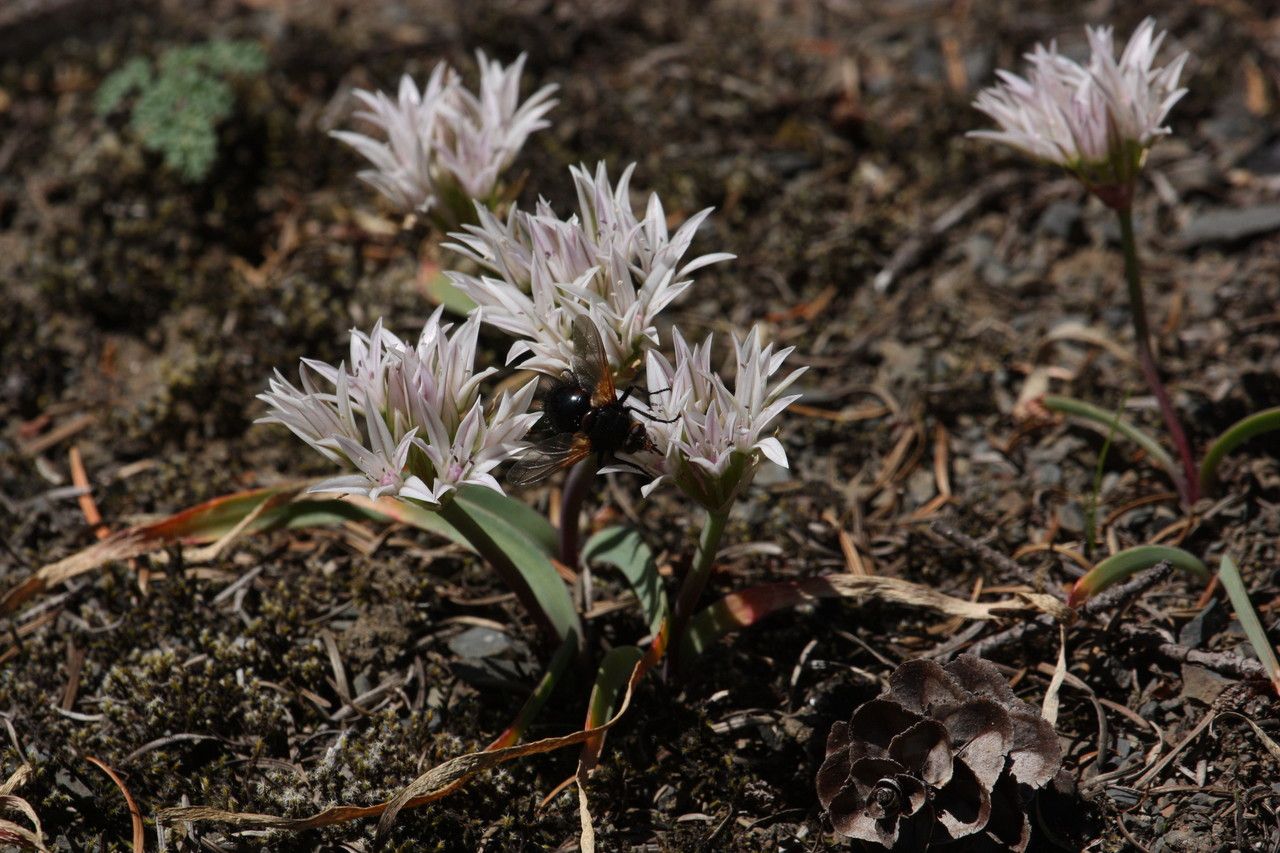
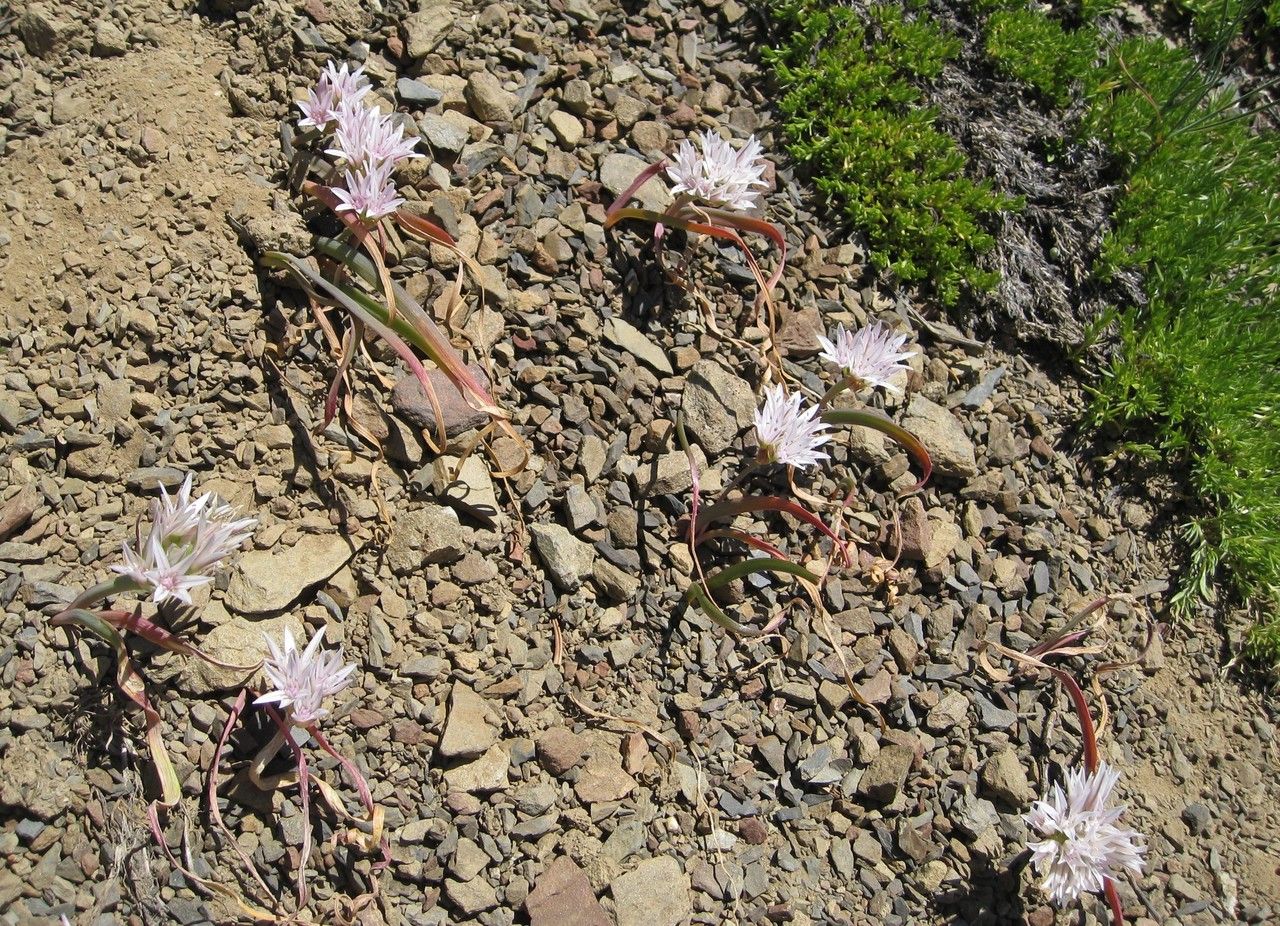
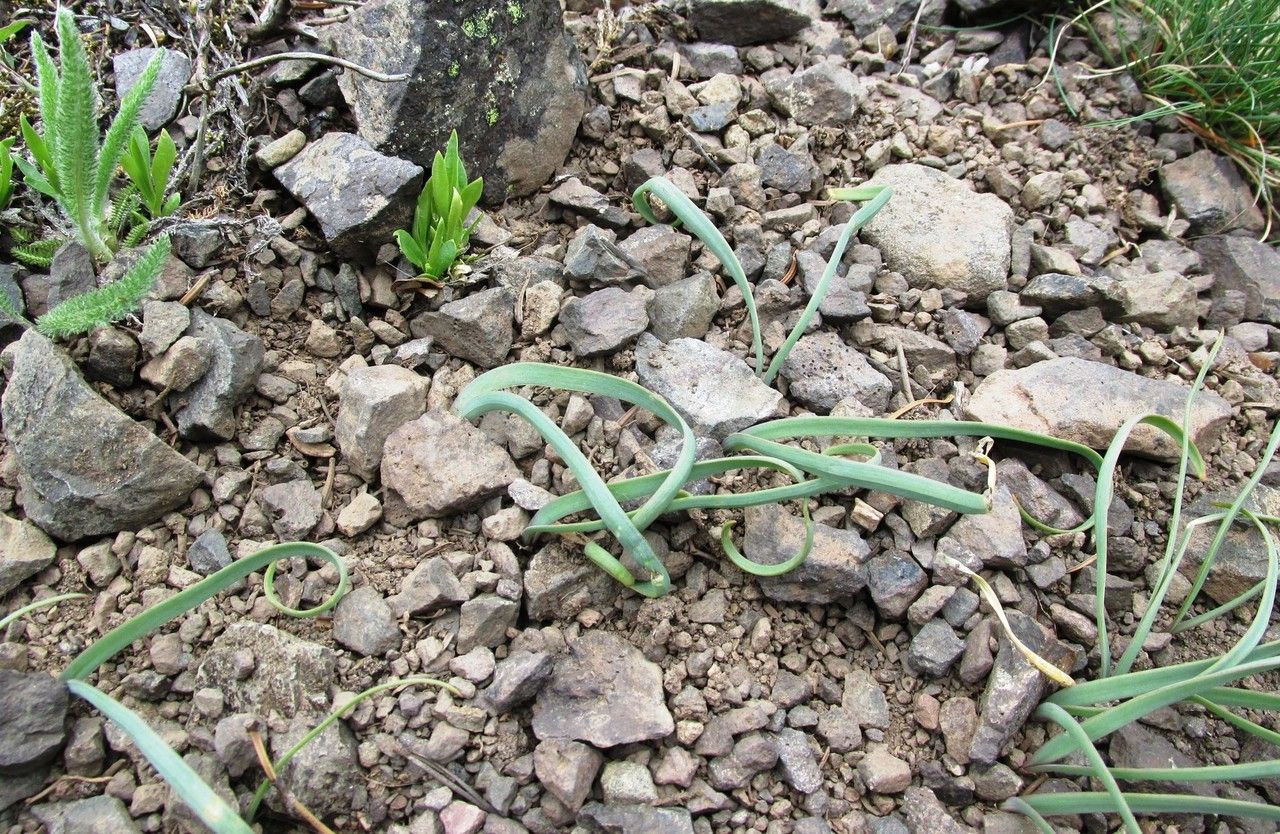
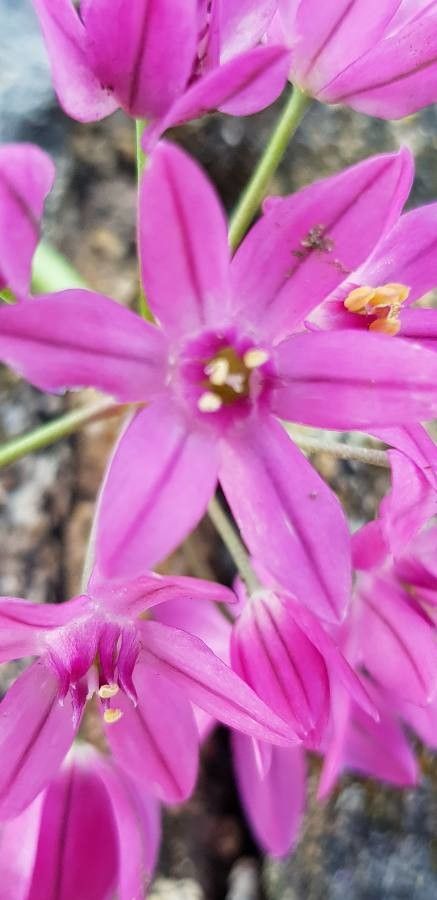
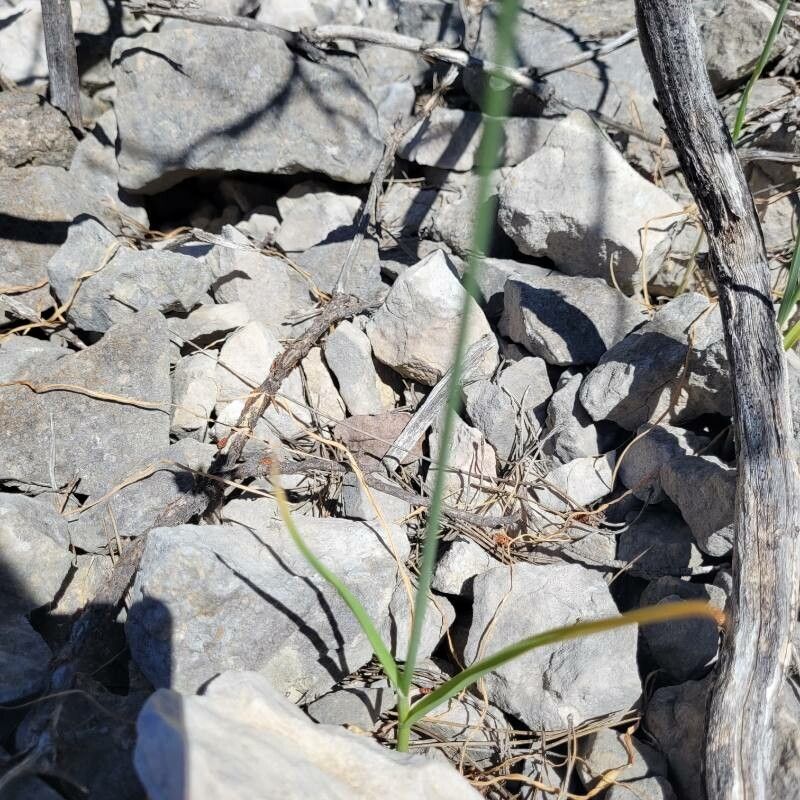
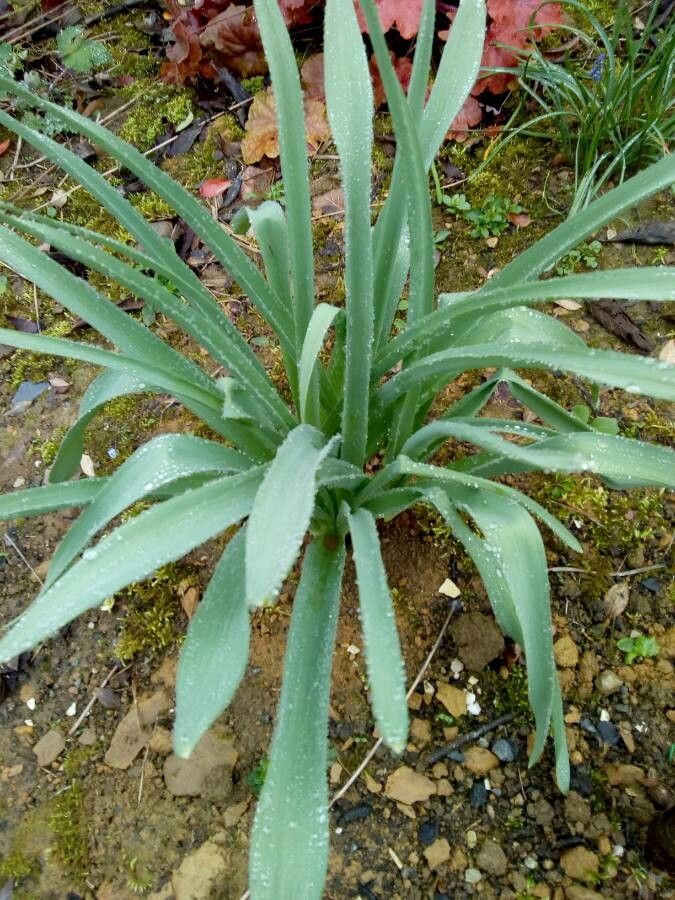
Allium crenulatum, common name Olympic onion, is a plant species native to Oregon, Washington, and British Columbia. It grows in the Cascades, the Coast Ranges, the Olympic Mountains, the Wenatchee Mountains, and the mountains on Vancouver Island. There is one report from Alabama, but this needs verification. The species grows on talus slopes and in alpine tundra at elevations of 600–2500 m.Allium crenulatum produces ovoid bulbs up to 2 cm long, formed on rhizomes some distance from the parent bulb. Its leaves are flat, up to 35 cm long, sometimes with minute teeth along the margins. Scape is flattened and winged, up to 15 cm tall. Umbel is compact, with up to 25 flowers. Flowers bell-shaped, up to 13 mm across; tepals pink with darker pink midveins; anthers yellow or purple; pollen yellow.
The Olympic onion is well resistant to disease and, in general, not prone to illness. Nevertheless, it can be affected by pests and diseases present in its environment, though such infections are typically mild. Regarding care, the plant requires moderate maintenance. It should be pruned regularly to preserve its appearance and support healthy growth. Fertilizing can also encourage flowering. This onion is appropriate for anyone with outdoor space, such as a garden or patio, and does not need extensive care experience. It may demand more attention when grown indoors.
How to keep Allium Crenulatum.
Light
The Olympic onion is a sun-loving, perennial herbaceous plant native to open habitats and commonly found in meadows and grasslands. It prefers full sun but can also tolerate partial sun.
Temperature
The Olympic onion can tolerate a wide range of temperatures, but its distribution may still be restricted by different combinations of moisture and heat. It grows best in warm summer climates with sufficient rainfall or watering. Extended periods of cloudy, rainy weather, as well as prolonged high temperatures, can increase the chances of the Olympic onion dying. In winter, adequate protection from cold can boost the plant's survival rate.
Fertilizer
For Olympic onion, the primary time to apply fertilizer is in early spring as the flowers are forming. Using the appropriate fertilizer promotes better blooms and helps the Olympic onion produce attractive flowers. Fertilizing at this early-spring stage ensures strong flowering during the season and supplies energy for its dormant growth phases.
Pruning
The Olympic onion features pinkish-lavender flowers and grass-like leaves. To ensure its health and beauty, it’s important to prune early in the spring. Remove any dead foliage and trim away spent flower stalks to promote blooming and reduce the chances of unwanted seeding. This practice not only supports robust growth but also improves airflow and reduces the risk of disease, making maintenance easier for gardeners.
Pot & Repot
To thrive, Olympic onions need excellent drainage in pots. This helps maintain the right moisture levels and prevents root rot.
Botanical profile.
- Plant Type
- Herb
- Life Cycle
- Perennial
- Genus
- Allium
- Family
- Amaryllidaceae
- Hardiness Zone
- 4-8
- Mature Height
- 8 cm to 20 cm
- Mature Spread
- 5 cm to 15 cm
- Leaf Color
- Green
- Leaf Type
- Deciduous
- Flower Color
- Pink
- Flower Size
- 1.02 cm to 1.52 cm
- Bloom Time
- Late spring, Early summer
- Planting Time
- Spring
- Harvest Time
- Mid summer, Late summer
Other names.
Reader questions.
What are the sunlight requirements for Olympic onion (Allium crenulatum)?
The Olympic onion, also known as Allium crenulatum, thrives in conditions that provide the right balance of sunlight and shade. It requires full sun, which means it needs more than 6 hours of sunlight daily, to flourish. Alternatively, it can also grow in partial sun, where it would receive about 3-6 hours of sunlight. It's important to observe how sunlight moves through your garden to find the best spots that meet these requirements, ensuring the plants are happy and healthy.
What is the Olympic onion?
The Olympic onion, known botanically as Allium crenulatum, is a plant species with no additional details provided on its essentials or symptoms.