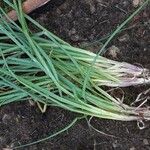
Allium fistulosum
Spring Onion · Welsh onion · Bunching onion · Japanese bunching onion · Kenaw
Description
Source: leafsnapAllium fistulosum, commonly known as Welsh onion or green onion, is a perennial plant belonging to the Allium genus. Native to Asia, it has been cultivated for centuries for both its culinary and medicinal properties. The plant features long, slender green leaves that are hollow and cylindrical, and it blooms with small white or pink flowers during the summer months. Welsh onions are frequently used to enhance the flavor of various dishes, including soups, stews, salads, and stir-fries. They offer a mild onion taste that is less pungent than regular onions but still provides depth to culinary creations. Beyond their culinary applications, Welsh onions have been employed for medicinal purposes, such as treating colds and coughs, thanks to their antibacterial properties. They are also an excellent source of vitamins A and C. The plant can be easily propagated from seeds or by dividing clumps of bulbs in the spring or fall. It thrives in well-drained soil with full sun exposure but can also tolerate partial shade. Overall, Allium fistulosum is an easy-to-grow herb with versatile uses, making it an excellent addition to any garden or herb collection, both for its culinary potential and health benefits.
🎭 Safeguarding, Removal of Evil Spirits, Restoration
Care Guide
💧 Water Every 7 days
Welsh onions, native to temperate regions, thrive in consistently moist soil and benefit from being watered weekly. Although they can withstand short periods of dryness, it's important to synchronize their watering schedule with local rainfall patterns to support healthy growth.
How should I water my Welsh onion plant?
The Welsh onion has specific preferences for water and how it is applied. If you don't water it properly, you could harm your tomatoes. The best way to water Welsh onions is to slowly and gently apply water directly to the soil. Avoid pouring all the water at once or using overhead watering. While watering slowly, make sure to also water deeply to ensure all the soil is sufficiently moist for the Welsh onion.
What should I do if I give my Welsh onion too much or too little water?
If you have overwatered your Welsh onion and are worried about disease, take action right away. The best solution for an overwatered Welsh onion is to remove it from its current location. Let its roots dry out a little before planting it in a new area with well-draining soil. If you grow it in pots, consider transferring it to a pot with more or bigger drainage holes. In the case of underwatering, simply water your plant more frequently.
How many times should I water my Welsh onion?
Welsh onion needs a lot of water during the growing season. To meet this high water requirement, it is recommended to water it regularly from early spring to late summer. In the beginning of the season, watering it once or twice a week is sufficient. However, as the season progresses, you should increase the frequency of watering. During the hot summer months, you may need to water it twice a day or even more, depending on the weather conditions. Once your Welsh onion has completed its main growth phases, you can decrease the frequency of watering to about once a week until the end of the growing season.
How much water does my Welsh onion require?
Welsh onions are very popular among gardeners, both professional and amateur. Thankfully, we have a good understanding of how to take care of these plants, including knowing the right amount of water they need. On average, it's recommended to give Welsh onions about 1 - 1.5 inches of water per week, evenly spread out during your watering sessions. As the weather gets hotter, you may need to increase the amount of water, but generally, two inches per week is a good guideline to follow.
How can I know if I am giving enough water to my Welsh onion?
Both underwatering and overwatering can cause problems for your Welsh onion, and both can lead to similar symptoms. For instance, both overwatering and underwatering can result in foliage discoloration and wilting. Initially, when your Welsh onion is underwatered, its leaves will start to curl and droop. Additionally, you may notice that a bunch of leaves become less vigorous. Underwatering can also hinder growth and overall development because this plant requires a high level of water, including for its flowers. On the other hand, overwatering is more likely to introduce disease, such as rot, and may emit unpleasant smells from the soil. The symptoms of underwatering appear faster than those of overwatering. Soil conditions can also provide clues about overwatering, specifically if you observe standing water or waterlogged soils.
☀️ Light Full sun
Welsh onion does best with many hours of direct sunlight each day but can tolerate some shade. Sunlight helps the Welsh onion reach optimal health and growth. In its native habitats, it thrives in open sites with plentiful sunshine. Both too much and too little sun can harm its condition, leading to wilting or stunted growth.
What are the sunlight requirements for Welsh onions?
Welsh onions require full sun, meaning they need above 6 hours of sunlight, or partial sun, which is about 3-6 hours of sunlight daily. It's essential to observe how sunlight moves through your garden to find spots that offer the perfect balance of light and shade, ensuring the plants' health and happiness. In their native habitats, Welsh onions thrive in open areas where they can receive numerous hours of unobstructed solar exposure, which aids in their growth and wellness. However, both too much and too little sun can adversely affect their health, potentially causing wilting or stunted growth.
How can artificial lighting be used for Welsh onions?
When natural sunlight is insufficient, especially during winter or in less sunny spaces, artificial lighting becomes crucial for the growth of Welsh onions indoors. LED lights are recommended because they can be adjusted to provide specific wavelengths needed by plants. For plants that require full sun, 30-50W/sq ft of artificial light is needed; partial sun plants require 20-30W/sq ft, and full shade plants need 10-20W/sq ft. The artificial light source should be placed 12-36 inches above the plant to mimic natural sunlight, and most plants will require 8-12 hours of light each day. This approach promotes faster, healthier growth.
What are the symptoms of inadequate light in Welsh onions?
Welsh onions show various symptoms when they receive inadequate light, including smaller new leaves, leggy or sparse growth, faster leaf drop, slower or no new growth, and lighter-colored new leaves. Additionally, chlorosis or the yellowing of leaves, sunscald, leaf curling, wilting, and leaf scorching can occur, the latter two being defense mechanisms or damages caused by too much sunlight. These symptoms indicate a lack of chlorophyll and essential nutrients or excessive light exposure, which affects the plant's photosynthesis and overall health.
How can light exposure be improved for Welsh onions?
Improving light exposure for Welsh onions involves several strategies. Indoors, gradually move plants to sunnier locations, aiming for at least 6 hours of direct sunlight daily, and consider using artificial light sources such as desk lamps or professional grow lights for at least 8 hours a day. Outdoors, relocate your plants gradually to prevent shock and sunburn, and ensure they adapt to increased light intensity smoothly. Additionally, if sunlight is obstructed by physical barriers like trees, prune them or transplant smaller plants to sunnier locations during their dormant period to enhance light exposure. Affected plant parts might not recover, but new growth should be healthy with adequate light exposure.
🌡️ Temperature 5–35°C
Welsh onion comes from temperate areas and favors cooler conditions. It grows best at temperatures between 41 and 95 °F (5 to 35 ℃). Seasonal temperature variations should be watched to maintain optimal growth conditions.
What is the native environment of Welsh onion, and what temperatures does it prefer?
Welsh onion, or Allium fistulosum, is native to temperate regions and thrives in cooler environments. It grows best when the temperature ranges between 41 to 95 °F (5 to 35 °C). Although Welsh onion prefers relatively warm temperatures, it's crucial to keep the plant above 5°C during the winter months to encourage growth. The minimum temperature should remain above the freezing point to prevent damage. During winter, when outdoor temperatures approach -5°C (25°F), it's advisable to bring the Welsh onion indoors or provide protection by setting up a temporary greenhouse or wrapping the plant in materials like plastic film or fabric.
How does Welsh onion react to low temperatures, and what are the solutions for frost damage?
Welsh onion has a moderate tolerance to low temperatures and thrives best between 5°C and 35°C. It's important to keep it above -25°C during winter to prevent frost damage. When temperatures fall below -30°C, the leaves of the Welsh onion may darken, leading to water-soaked necrosis, wilting, drooping, and eventually, a brownish discoloration of the leaves. To address frost damage, trim away the frost-damaged parts and immediately move the plant to a warm environment indoors or set up a makeshift greenhouse for cold protection. If placed indoors, positioning the plant near a south-facing window ensures ample sunlight, and supplemental lighting can be used if natural light is insufficient.
What should be done if Welsh onion is exposed to high temperatures?
During the summer, it's important to ensure that the temperature surrounding the Welsh onion does not exceed 35°C. Exposure to temperatures above 38°C can result in slowed growth, lighter leaf color, and increased susceptibility to sunburn. To mitigate damage from high temperatures, trim away the sunburned and dried-up parts of the plant. Move the Welsh onion to a shadier location, preferably where it can avoid the afternoon sun. Additionally, watering the plant in the morning and evening helps keep the soil adequately moist, preventing further stress.
💨 Humidity normal (40-60%)
This plant will thrive in moderate humidity, which is probably the level in your home. However, misting it a few times a week can be very beneficial. Make sure the room has good ventilation.
🪴 Soil 6-7
🌱 Fertilizer
To maximize yield and flavor of Welsh onion, provide sufficient nitrogen throughout the entire growing period, from before planting up to harvest. Keep plants well-watered and properly fertilized to produce plentiful, healthy leaves and to reduce bitterness. Enrich the soil with organic matter such as compost or manure before planting, ideally 2 to 8 weeks ahead.
Why should I put fertilizer on my Welsh onion?
Welsh onion, a plant grown for its edible leaves, has unique nutritional requirements compared to other plants. While all plants need essential nutrients to grow properly, in the case of Welsh onion, nitrogen plays a crucial role in supporting foliage development. However, it can be challenging for Welsh onion to obtain sufficient nitrogen from the soil alone. That's why many gardeners choose to provide additional nitrogen through feeding to ensure a satisfactory harvest.
When should I fertilize my Welsh onion for the best results?
To ensure the optimal growth of your Welsh onion, there are several key points to consider for applying fertilizer throughout the growing season. Firstly, when preparing the ground for planting, it is recommended to amend the soil with nutrient-rich organic material like compost or manure. This initial application should be done 2 to 8 weeks before planting. At planting time, you should amend the soil again using the same method. Once your seedlings emerge and reach a height of around 2 inches, it is time for the next dose of fertilizer. From then on, you can continue to regularly feed your Welsh onion with either rich organic matter or a commercial fertilizer until it is time for harvesting. A good schedule to follow is fertilizing every two to three weeks. Additionally, consider adding a layer of compost or manure around the plant to provide a continuous supply of nutrients.
When is the best time to not use fertilizer on my Welsh onion?
To promote healthy foliage, use nitrogen-rich fertilizers. However, be cautious when applying them near other vegetable plants. Some vegetables need to prioritize energy towards fruiting rather than growing leaves. Improper application may result in a plant producing plenty of leaves but few vegetables. Avoid getting any fertilizer on the leaves of your Welsh onion, as it can cause them to burn. It's recommended to apply the fertilizer a few inches away from the base of the plant. If your Welsh onion is experiencing health issues such as disease, pests, or drought, do not fertilize it until those problems have been addressed. Fertilizers should only be used on healthy plants, as they may cause damage if applied when the plant is in poor condition.
What kind of fertilizer does my Welsh onion need?
The best type of fertilizer for Welsh onion depends on various factors such as the specific plant type, environmental conditions, and soil composition. However, since Welsh onion requires a lot of nitrogen, it is generally recommended to use high-nitrogen fertilizers. At the beginning of the growing season, amending the soil with manure or compost is ideal. Throughout the rest of the season, dry or liquid fertilizers can be used for feeding. During the seedling stage, it is advisable to feed lightly and gradually increase the amount as the plant matures. Many individuals prefer organic fertilizers for growing vegetables due to the superior taste they impart. However, both organic and chemical fertilizers work effectively. Some popular high-nitrogen organic options include fish emulsion, soil meal, compost tea, alfalfa meal, blood meal, and chicken manure. When using chemical fertilizers, it is important to check the NPK number, which indicates the relative proportion of nitrogen, phosphorus, and potassium in the mixture. For a high-nitrogen option, choose a fertilizer with the highest first number, such as 13-2-5 or even one that only contains nitrogen like a 16-0-0.
How can I make my Welsh onion grow better?
To fertilize your Welsh onion, there are various approaches depending on the type of fertilizer. If you're amending the soil, start by digging at least 6 inches (preferably deeper) into the soil and incorporate the amendment at a 2:1 ratio of soil to amendment material. Mix them together thoroughly. For granular or powder fertilizers, scatter them around the base of the plant following the retailer's recommended amount. To prevent the fertilizer from washing or blowing away, it's a good idea to mix it into the top layer of soil, about 2 to 3 inches away from the plant to avoid fertilizer burn. Always remember to water the soil thoroughly after adding a dry fertilizer. If using water soluble chemical fertilizers, dilute them in water and use the diluted mixture to water your Welsh onion plants. However, keep in mind that this method is only suitable if you water your plants from a container and not through irrigation or other techniques.
🪴 Pot & Repot Every 12 months
To thrive and avoid root rot, Welsh onions need excellent drainage in pots, which promotes healthier growth.
✂️ Pruning
The Welsh onion features hollow, tubular leaves and benefits from regular pruning to ensure optimal growth. To promote better air circulation and prevent overcrowding, prune the plants from early to late spring by trimming the leaves to about 2 inches above the soil. This practice not only increases yield but also helps maintain the plant's vigor.
🌿 Propagating
🐛 Diseases & pets
☠️ Toxicity
Dogs, cats, and horses are not safe from scallions. They should not eat scallions or any types of onions because it can cause onion toxicosis wherein they could experience gastrointestinal pain and life-threatening hemolytic anemia. On the other hand, humans are completely fine with eating scallions. In fact, it is rich in vitamin K which can be a blood-thinning medication.
Characteristics
- Plant Type
- Herb
- Life Cycle
- Perennial
- Genus
- Allium
- Family
- Amaryllidaceae
- Hardiness Zone
- 4-9
- Mature Height
- 30 cm to 91 cm
- Mature Spread
- 10 cm
- Leaf Color
- Green
- Leaf Type
- Semi-evergreen
- Flower Color
- White, Yellow, Cream
- Flower Size
- 2.54 cm
- Bloom Time
- Late spring, Early summer, Mid summer
- Planting Time
- Spring, Winter, Summer, Autumn
- Harvest Time
- Mid summer
- Native Area
- China