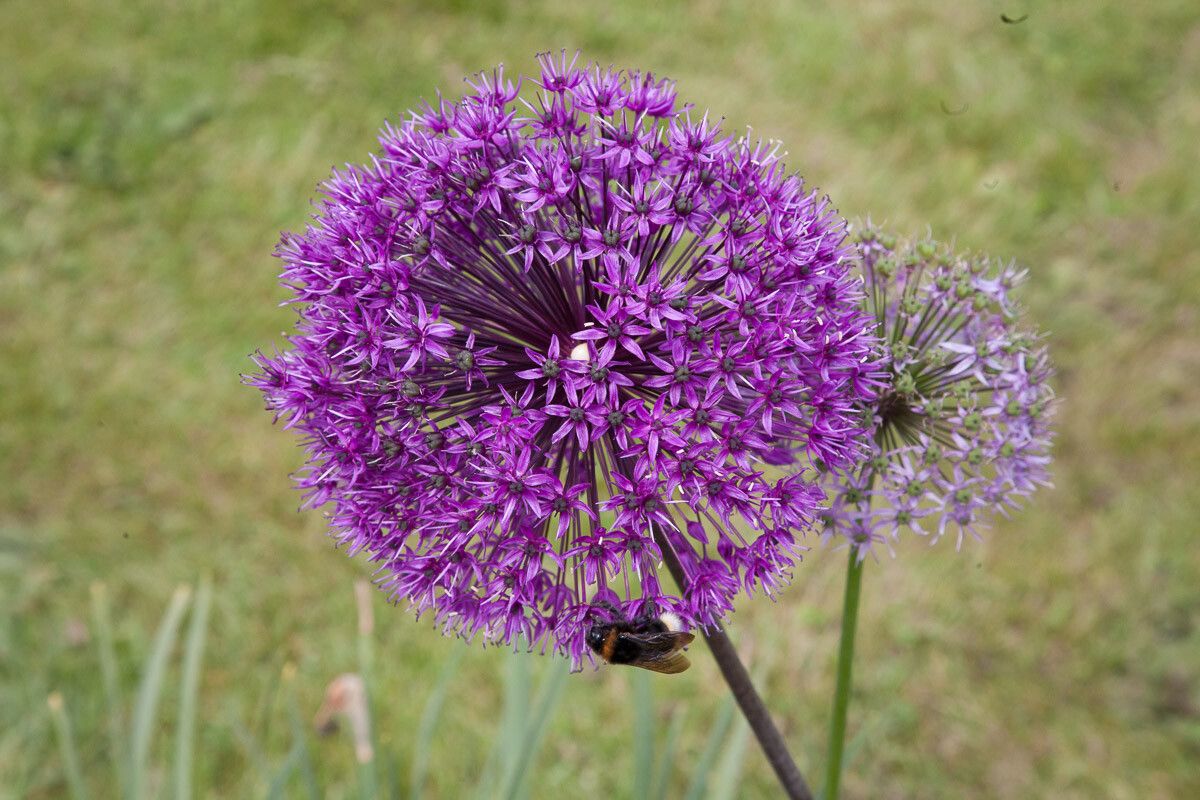
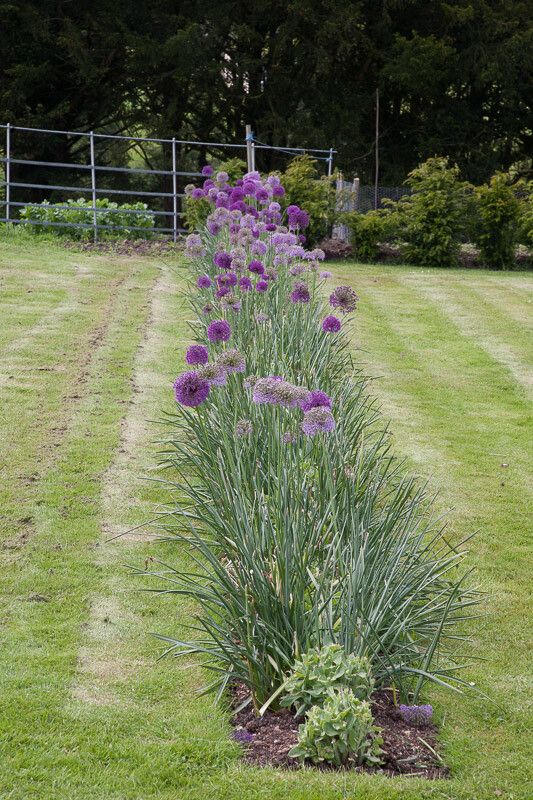
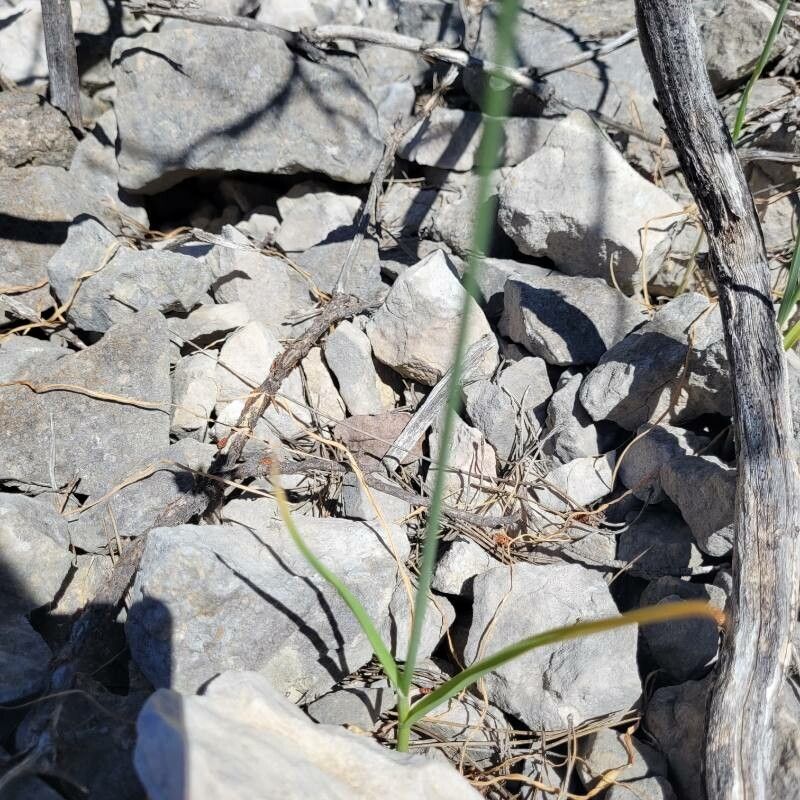
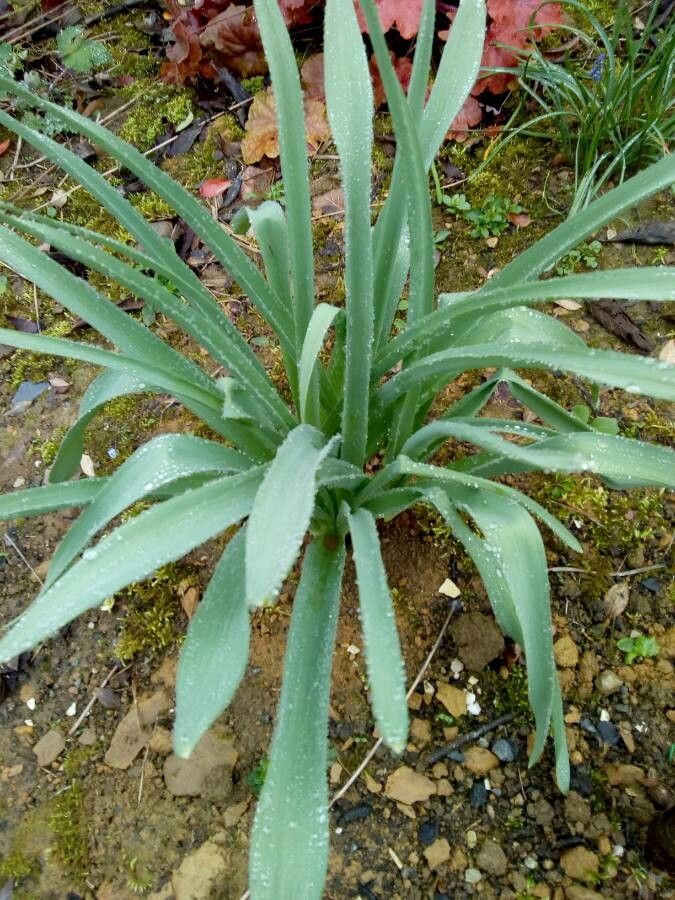
Allium hollandicum, the Persian onion or Dutch garlic, is a species of flowering plant native to Iran and Kyrgyzstan but widely cultivated as an ornamental because of its umbels of attractive purple flowers. It is reportedly naturalized in Saint Louis County, Minnesota.Allium hollandicum is a bulb-forming perennial with scapes up to 90 cm (35 in) tall. It has long, flat, strap-shaped leaves up to 60 cm (24 in) long. Umbels are relatively small and spherical, up to 10 cm (3.9 in) in diameter, composed of many purple to reddish-purple star-shaped flowers appearing in late spring and early summer.The popular cultivar ‘Purple Sensation’ has gained the Royal Horticultural Society’s Award of Garden Merit. It prefers moist, fertile soil in full sun.
Persian onion is fairly disease-resistant and typically not prone to illnesses. Still, it can be affected by pests and diseases present in its environment. These issues are generally mild. For care, this plant needs moderate maintenance. It should be pruned regularly to preserve a neat appearance and healthy growth. Fertilizing can also encourage flowering. Persian onion is suitable for anyone with outdoor space, such as a garden or patio, and does not demand extensive care experience. It may need more attention when grown indoors.
How to keep Allium Hollandicum.
Light
Persian onion is a sun-loving, herbaceous perennial that comes from open habitats and commonly grows in meadows and grasslands. It prefers full sun but is also able to tolerate partial sun.
Water
The Persian onion flourishes in dry, sunny areas and needs to be watered only once every 1-2 weeks. It prefers well-draining soil, reflecting its natural arid habitat, which makes it perfect for low-maintenance outdoor gardening.
Temperature
Persian onion can tolerate a wide range of temperatures, but its distribution may still be constrained by different combinations of moisture and heat. It grows best in warm summer climates with sufficient rainfall or irrigation. Extended stretches of cloudy, rainy weather or prolonged high temperatures can raise the risk of Persian onion dying. In winter, shielding the plant from cold can increase its chances of survival.
Fertilizer
The best time to fertilize a Persian onion is in early spring, as it comes out of dormancy and begins active growth. Fertilization supplies essential nutrients for healthy development. Although Persian onion has relatively low fertilizer requirements, applying fertilizer annually can improve its survival and encourage better, longer-lasting flowers.
Pruning
In early spring, prune Persian onions by removing any dead foliage to encourage growth and prevent disease. Trim spent flowers in late spring to promote reblooming. Be cautious with heavy pruning, as it can hinder blooming; proper pruning enhances air circulation and reduces the risk of fungal growth. Always use sharp, clean tools for the best results.
Pot & Repot
For optimal growth and to prevent root rot, ensure that Persian onions grown in pots have excellent drainage.
Botanical profile.
- Plant Type
- Herb
- Life Cycle
- Perennial
- Genus
- Allium
- Family
- Amaryllidaceae
- Hardiness Zone
- 5-8
- Mature Height
- 61 cm to 76 cm
- Mature Spread
- 15 cm to 23 cm
- Leaf Color
- Green
- Leaf Type
- Deciduous
- Flower Color
- Purple
- Flower Size
- 10.16 cm to 15.24 cm
- Bloom Time
- Mid spring, Late spring
- Planting Time
- Summer
- Harvest Time
- Early summer, Mid summer
- Native Area
- Iran
Other names.
Reader questions.
What are the sunlight requirements for Persian onion plants?
Persian onion plants require full sun, which means they thrive in conditions where they receive more than 6 hours of direct sunlight daily. However, they can also tolerate partial sun conditions, experiencing about 3-6 hours of sunlight. It's important to observe the movement of sunlight through your garden to find spots that offer the right balance of light and shade for these plants, ensuring their optimal growth and health.
How can artificial lighting support Persian onion growth indoors?
When natural sunlight is not sufficient, especially during winter or in less sunny spaces, artificial lighting becomes crucial for the growth of indoor Persian onion plants. LED lights are often recommended as they can be adapted to provide the specific wavelengths of light that plants require. For full sun plants, 30-50 watts per square foot of light is needed; partial sun plants require 20-30 watts per square foot, and full shade plants need 10-20 watts per square foot. The light source should be positioned 12-36 inches above the plant, mimicking the natural daylight duration, usually around 8-12 hours per day.
What are the symptoms of insufficient light in Persian onions?
Persian onions show several symptoms when they don't receive enough light, including smaller new leaves, leggy or sparse growth, faster leaf drop, slower or no new growth, and lighter-colored new leaves. Conditions like chlorosis (leaf yellowing), sunscald, leaf curling, wilting, and leaf scorching can indicate either too little or too much light. These symptoms demonstrate the plant's inability to photosynthesize effectively, affecting its overall health and development.
What solutions can improve light conditions for Persian onions?
To optimize growth, gradually move Persian onions to sunnier spots, aiming for at least 6 hours of direct sunlight daily. For indoor plants, consider using a south-facing window or artificial lights like desk lamps or professional grow lights for a minimum of 8 hours per day. Outdoors, ensure plants are gradually adapted to brighter conditions to prevent sunburn. For plants grounded in less ideal spots, reducing obstructions like pruning trees can help, or consider transplanting smaller plants to locations with better sunlight and drainage during their dormant period, usually late winter or early spring.