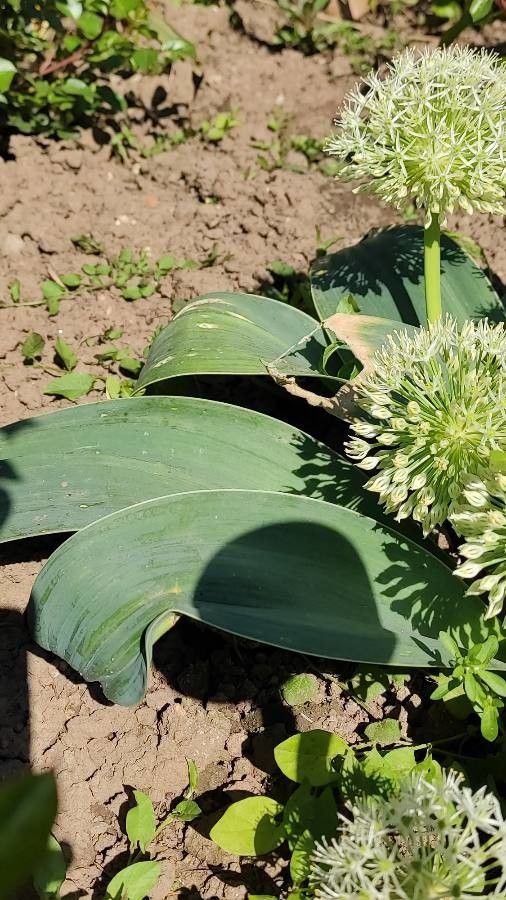
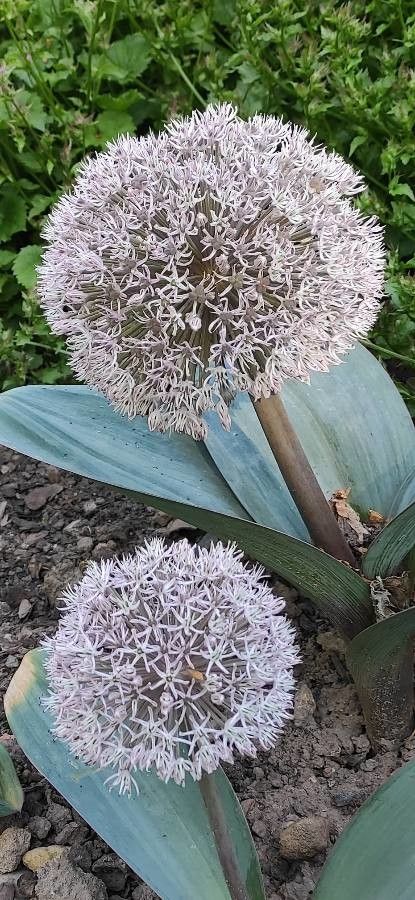
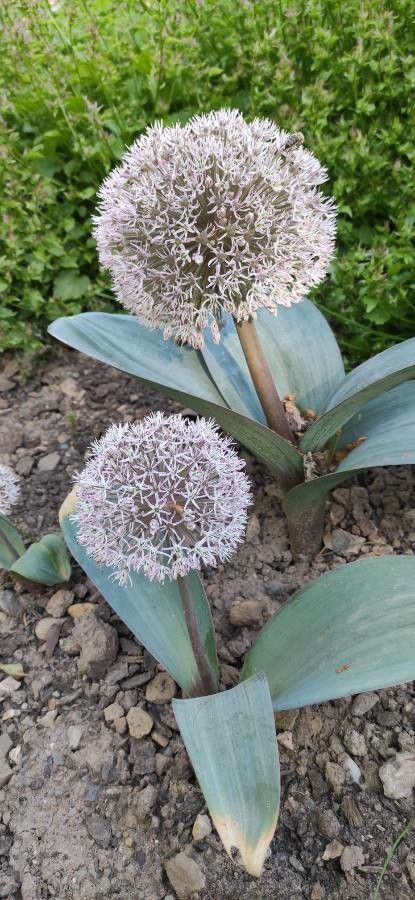
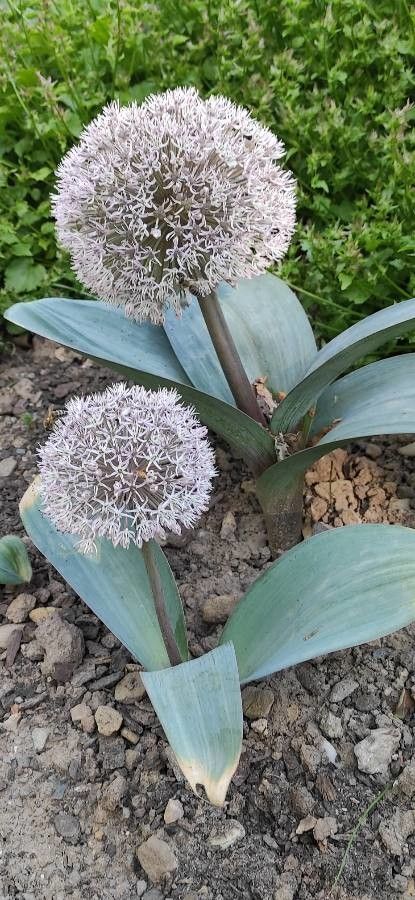
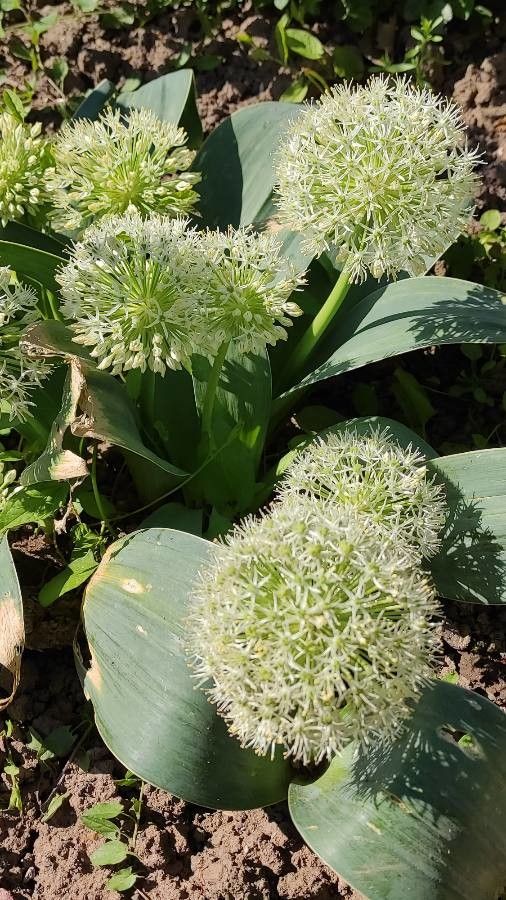
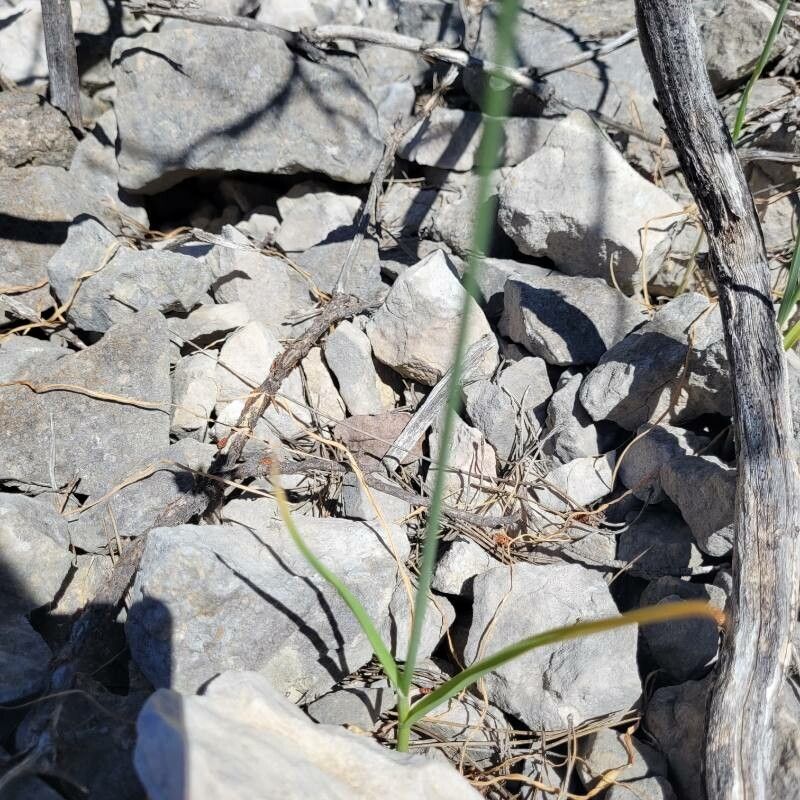
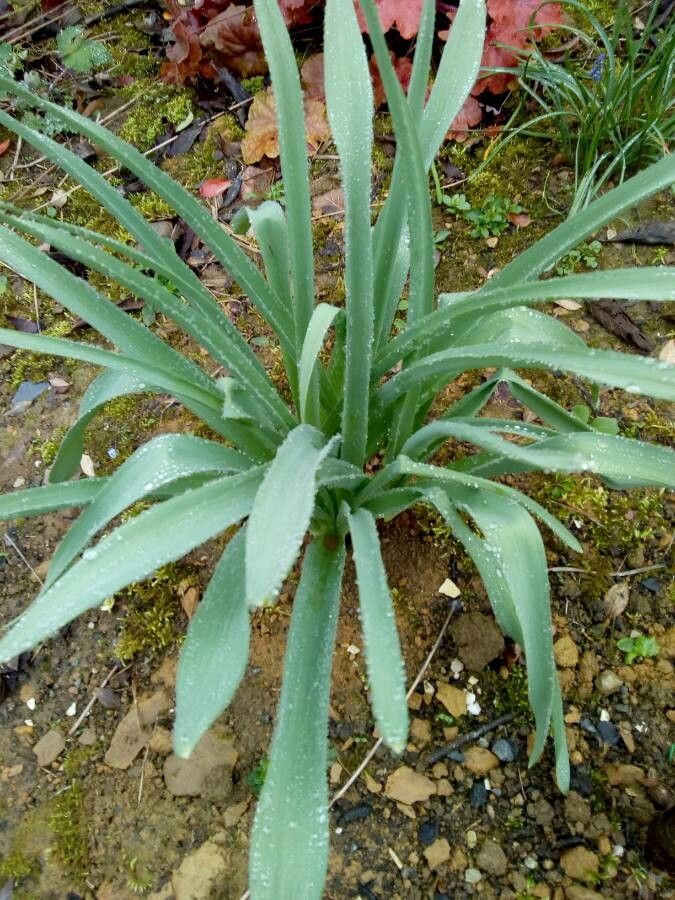
Allium karataviense, commonly known as Turkestan onion, is a bulbous perennial plant in the Allium genus. Native to the mountainous regions of Central Asia, particularly Kazakhstan and Kyrgyzstan, this plant grows up to 30 cm in height. It produces large, spherical flower heads composed of numerous small, star-shaped flowers with pink or white petals.
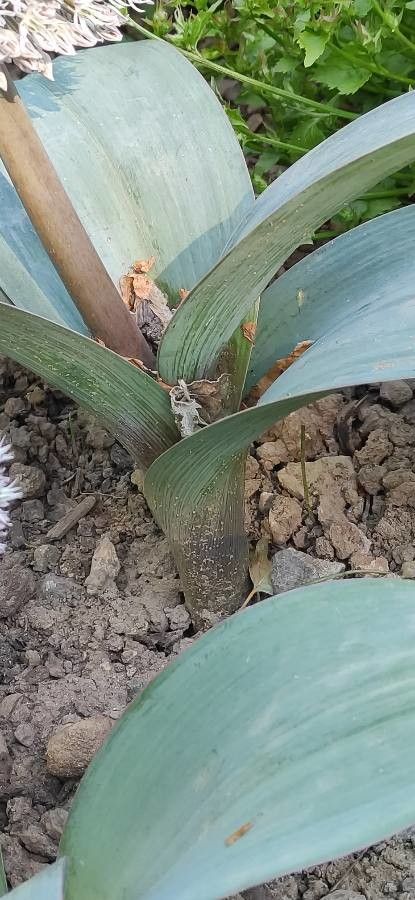
The leaves of Allium karataviense are broad, fleshy, and colored a bluish-green. The bulbs are large and round with a brownish outer layer that protects the inner white flesh. This plant thrives in well-drained soil and can be grown in full sun or partial shade.
Due to its attractive flowers and foliage, Allium karataviense is commonly cultivated as an ornamental plant. It can be used in rock gardens, borders, or containers to create an eye-catching display during springtime when it blooms.
In addition to its ornamental value, Allium karataviense has been used medicinally by traditional healers for centuries due to its antibacterial properties. Its bulbs are also used as a food flavoring agent thanks to their strong onion-like flavor.
Overall, Allium karataviense is an appealing perennial bulbous plant that adds beauty and interest to any setting. It also holds some medicinal value when used appropriately by traditional healers.
Turkistan Onion is fairly resistant to disease and typically does not develop problems. Still, it can be vulnerable to pests and diseases present nearby. When infections do occur, they are generally mild. Regarding care, this plant needs moderate maintenance. It should be pruned regularly to preserve a neat appearance and support healthy growth. Applying fertilizer can also encourage flowering. Turkistan Onion is appropriate for anyone who has an outdoor area, such as a garden or patio, and does not demand extensive gardening experience. When cultivated indoors, it may need extra attention.
How to keep Allium Karataviense.
Light
Turkistan Onion is a perennial herbaceous plant that prefers sunny conditions and comes from open habitats, commonly growing in meadows and grasslands. It favors full sun but can also tolerate partial sunlight.
Water
The Turkistan Onion thrives in dry soils and requires watering just once a week. Native to Central Asia, this plant prefers outdoor conditions that allow it to experience seasonal rainfall. As a perennial bulb, it benefits from cooler temperatures and reduced watering during its winter dormancy.
Temperature
Turkistan Onion can adjust to a wide variety of temperature conditions, but its distribution may still be restricted by different combinations of water and heat. It grows best in warm summer climates with sufficient rainfall or watering. Extended periods of cloudy, rainy weather, as well as prolonged high temperatures, can increase the chance of Turkistan Onion dying. In winter, adequate protection from cold can improve the plant's survival.
Fertilizer
The best time to fertilize a Turkistan Onion is in early spring, as it comes out of dormancy and begins active growth. Fertilizing supplies essential nutrients needed for healthy development. Although the Turkistan Onion has relatively low fertilizer requirements, annual feeding can improve its survival and encourage better, longer-lasting flowers.
Pruning
To ensure robust growth and high-quality blooms in Turkistan onions, prune them from early to late spring. Promptly remove spent blooms and any dead or damaged foliage. This timing aligns with their growth cycle, promoting health and enhancing their aesthetic appeal for future seasons.
Pot & Repot
Repot Turkistan onion every 2 to 3 years in the spring, after its dormancy period. Use a medium-sized pot that can comfortably hold its roots. Make sure the soil drains well and keep the moisture level consistent after repotting. While Turkistan onion benefits from having enough space, avoid using a pot that's too large to help maintain its health.
Botanical profile.
- Plant Type
- Herb
- Life Cycle
- Perennial
- Genus
- Allium
- Family
- Amaryllidaceae
- Hardiness Zone
- 4-8
- Mature Height
- 25 cm
- Mature Spread
- 10 cm
- Leaf Color
- Purple, Blue, Green, Gray, Silver
- Leaf Type
- Deciduous
- Flower Color
- White, Green, Pink
- Flower Size
- 7.62 cm to 10.16 cm
- Bloom Time
- Mid spring, Late spring
- Planting Time
- Spring, Summer, Autumn
- Harvest Time
- Early summer, Mid summer
- Native Area
- Uzbekistan, Afghanistan, Kazakhstan
Other names.
Reader questions.
What are the sunlight requirements for Turkistan Onion (Allium karataviense)?
Turkistan Onion, or Allium karataviense, thrives in conditions where it can receive varying degrees of sunlight throughout the day. Plants classified under 'Full sun' require above 6 hours of sunlight daily, ensuring they bask in ample light for substantial portions of the day. Conversely, those falling into the 'Partial sun' category need about 3-6 hours of sunlight. It's essential to observe the movement of sunlight in your garden to find the ideal spots that offer a perfect balance between light and shade. This careful placement guarantees the plants' health and happiness, aligning with their light requirements.