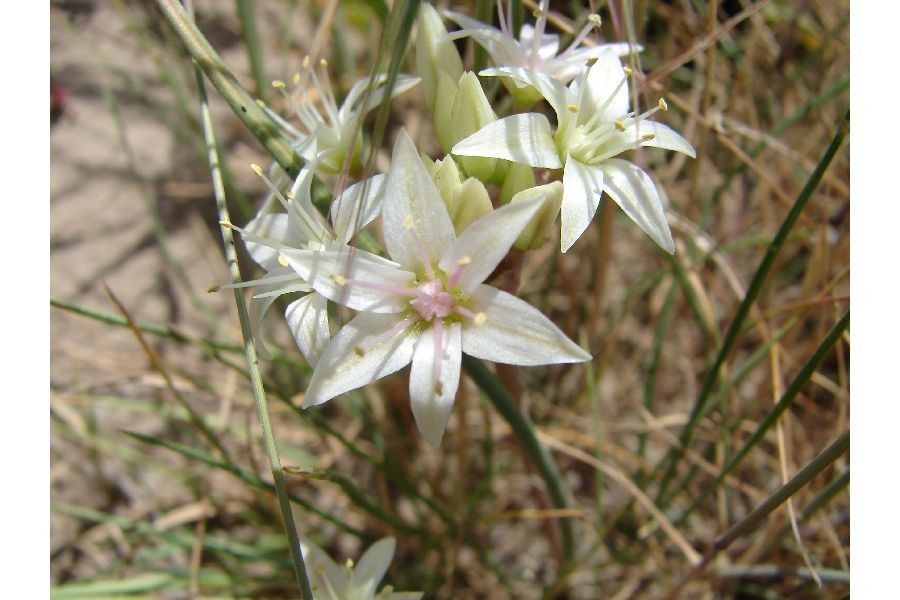
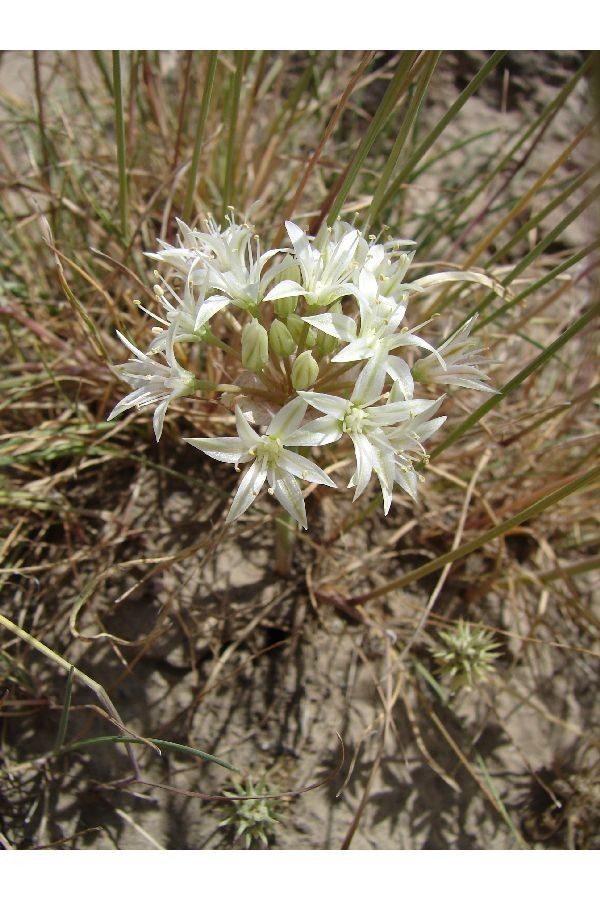
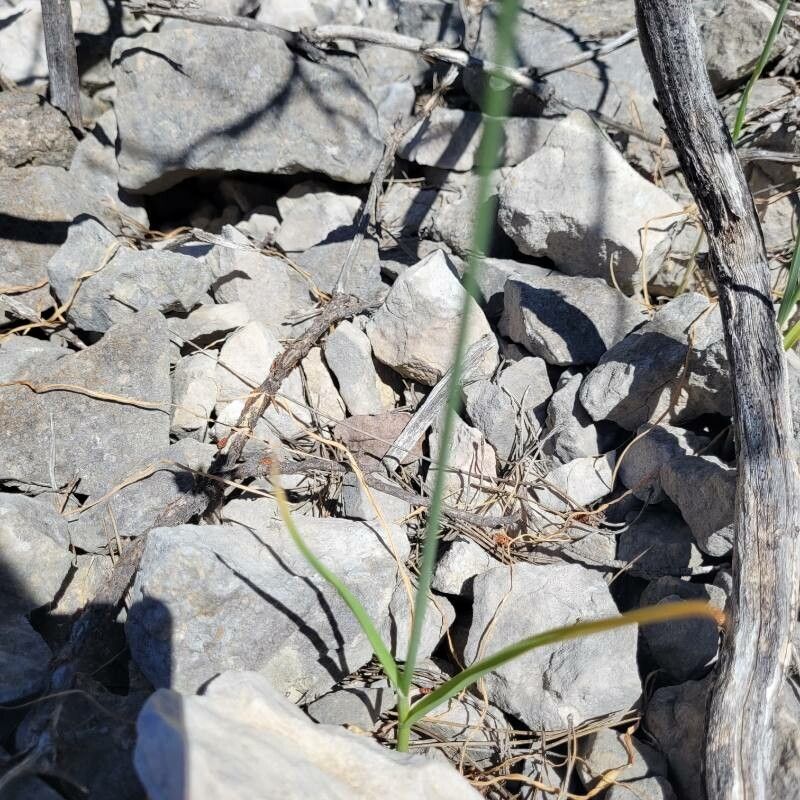
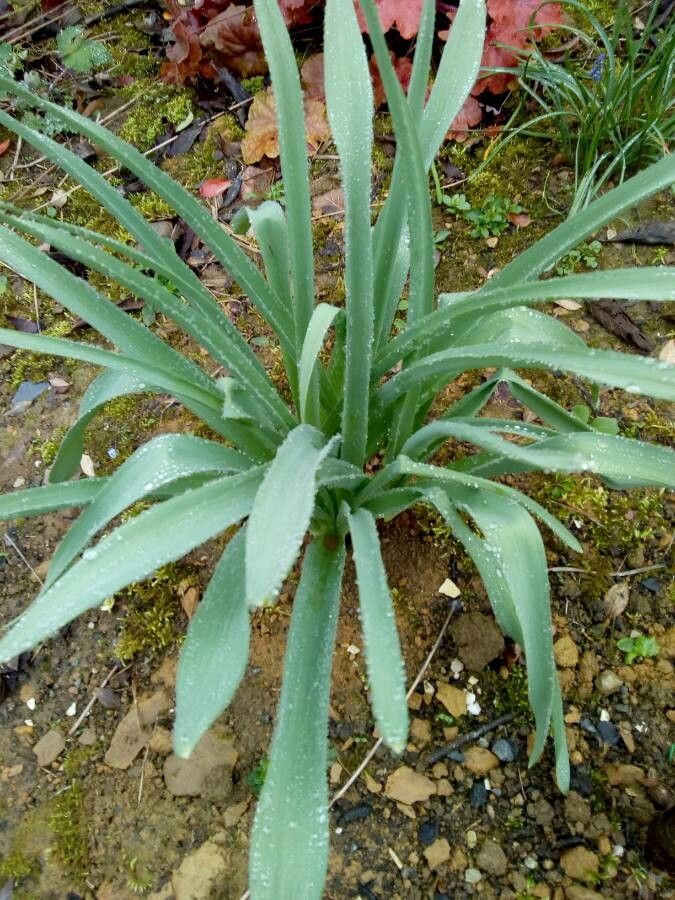
Allium nevadense is a species of wild onion known by the common name Nevada onion. It is native to the western United States where it grows in sand and rocky soil at elevations of 1400–1700 m. The species is widespread in Utah, Nevada and southern Idaho, and has been reported also from southeastern California (Inyo and San Bernardino Counties), northwestern Arizona (Mohave and Cochise Counties), western and central Colorado (Moffat, Garfield, Mesa and Boulder Counties) and eastern Oregon (Harney and Malheur Counties).The Nevada onion grows from a brown or gray bulb one to one and a half centimeters wide which may have one or two daughter bulblets associated with it. The stem may appear short if the bulb is more than a few inches below the surface of the ground. The stem is topped with an umbel of up to 25 flowers. The tepals may be white or pink-streaked with darker midveins; anthers purple; pollen yellow.
Nevada onion shows strong resistance to disease and is generally not susceptible to illnesses. In terms of care, this plant is fairly low-maintenance. When grown outdoors it needs only minimal watering, and larger specimens usually do not require pruning. Smaller plants, however, should be pruned after they have finished blooming. Nevada oniont is appropriate for anyone with an outdoor area, such as a garden or a deck, and does not demand extensive care experience.
How to keep Allium Nevadense.
Pruning
In early spring, prune Nevada onions to remove dead foliage and encourage healthy growth. Deadheading the plants will promote more blooms. Regularly trimming them after they bloom helps maintain their shape and vigor, preventing overcrowding and deterring pests and diseases. This practice ensures a robust garden display.
Pot & Repot
To thrive, Nevada onions need excellent drainage in pots, which allows excess water to escape and prevents root rot. Choosing the right substrate and designing the pot properly are crucial for maintaining optimal moisture levels.
Botanical profile.
- Plant Type
- Herb
- Life Cycle
- Perennial
- Genus
- Allium
- Family
- Amaryllidaceae
- Hardiness Zone
- 5-10
- Mature Height
- 0 cm to 30 cm
Other names.
Reader questions.
What are the sunlight requirements for Nevada onion (Allium nevadense)?
Nevada onion, known botanically as Allium nevadense, thrives in specific sunlight conditions to ensure optimal growth. It requires full sun, which means it needs more than 6 hours of direct sunlight every day to grow healthily. Alternatively, it can also tolerate partial sun, which refers to about 3-6 hours of sunlight daily. It's crucial to observe the way sunlight moves through your garden throughout the day to find the perfect spot that offers a balance of light and shade. This careful placement helps in ensuring the plants' happiness and well-being.
What is the Nevada onion?
The Nevada onion, known botanically as Allium nevadense, is a species classified within the Allium genus. This plant is specifically recognized for its unique characteristics and classification under the name 'Allium nevadense'. However, details about its essential features, symptoms of its presence, or additional information have not been provided.