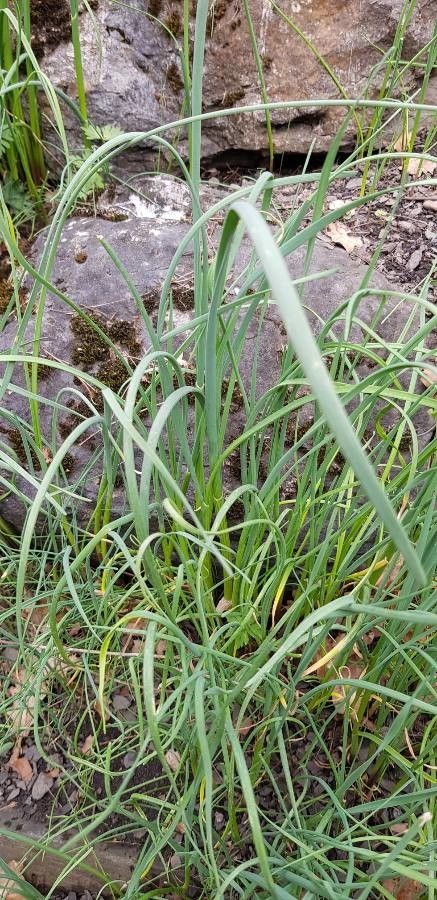
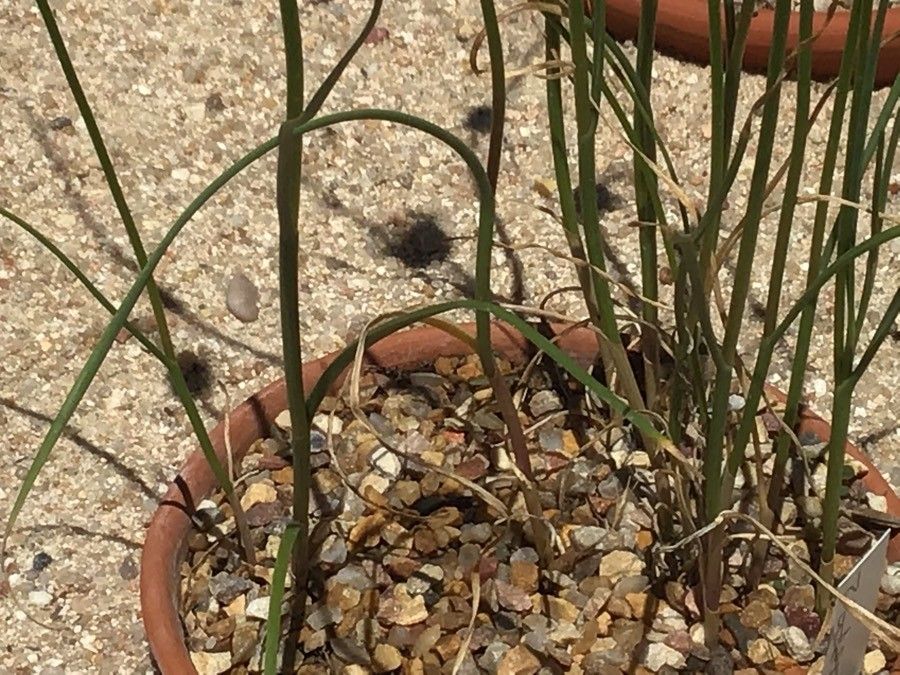
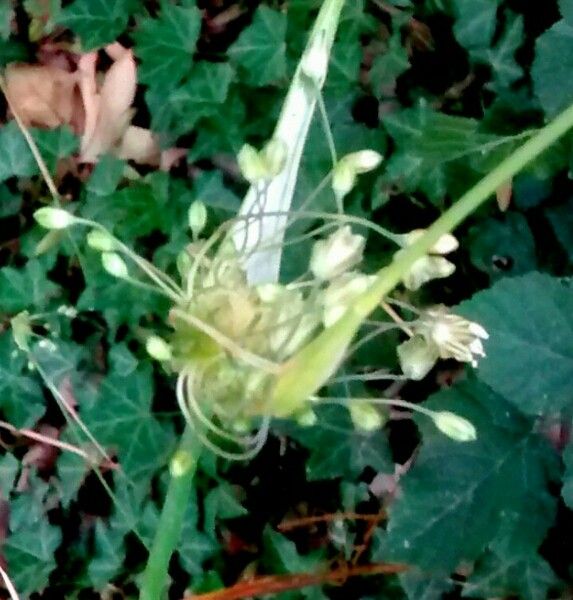
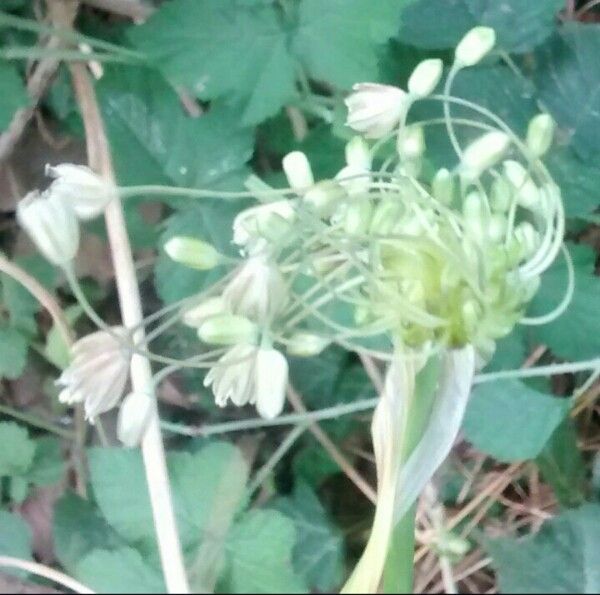
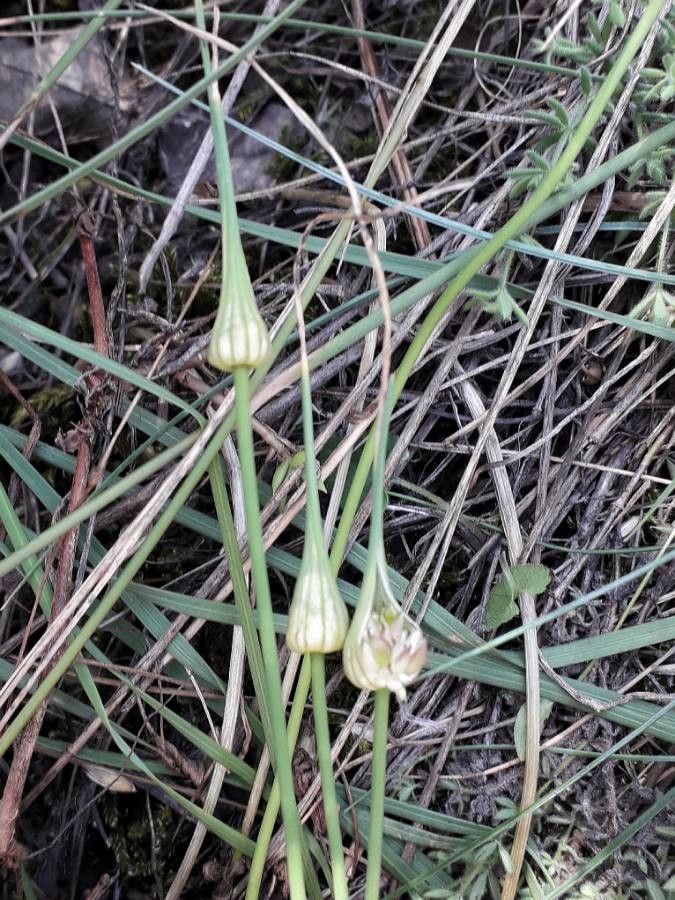
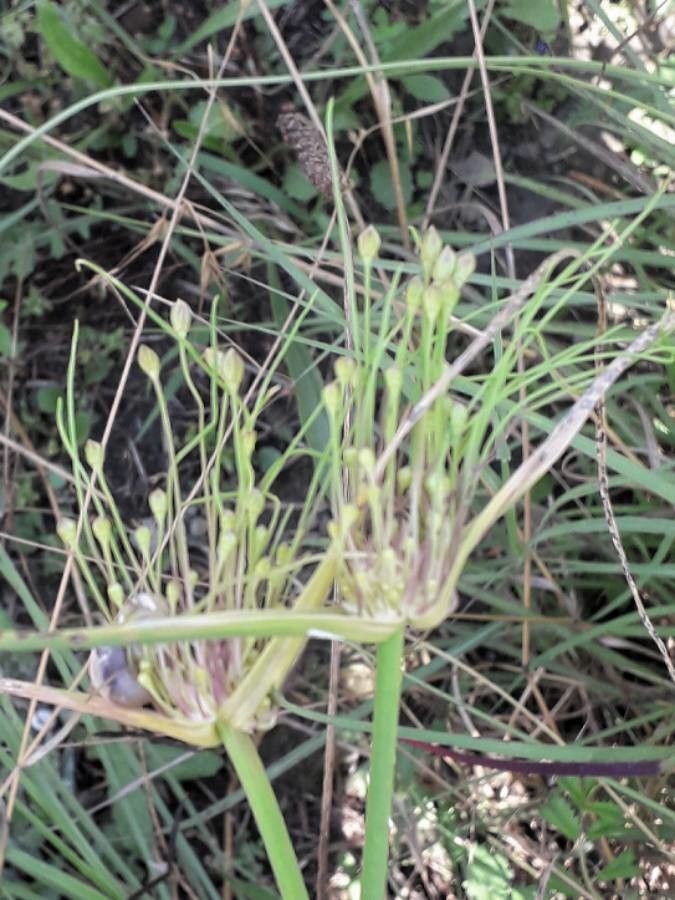
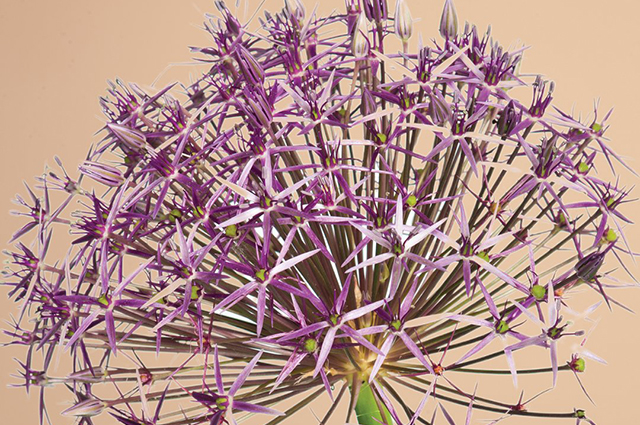
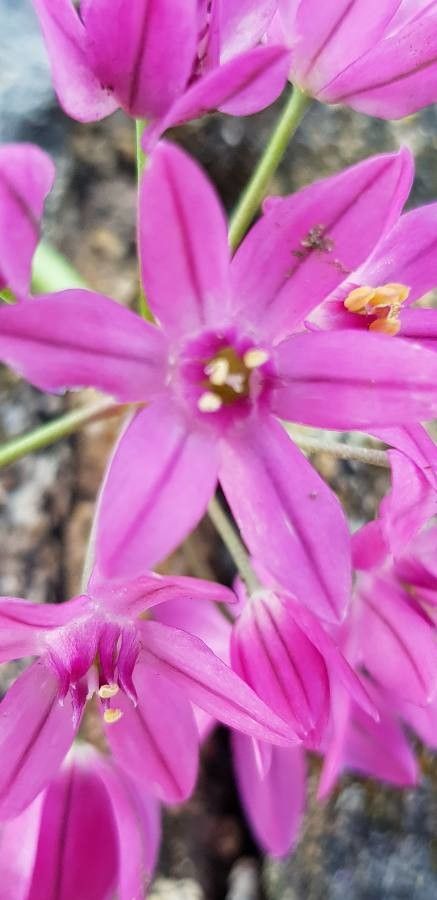
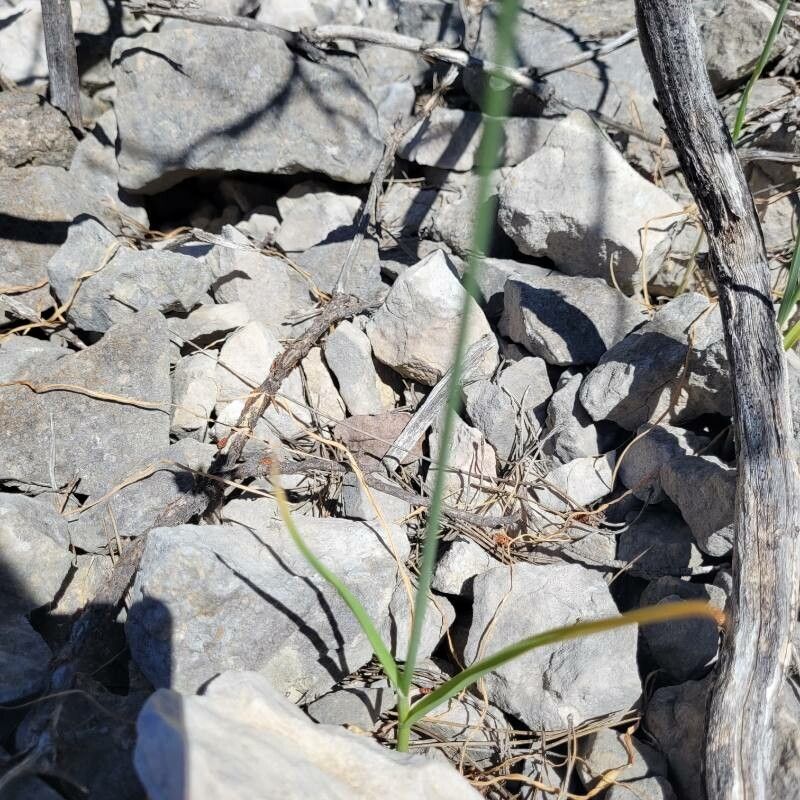
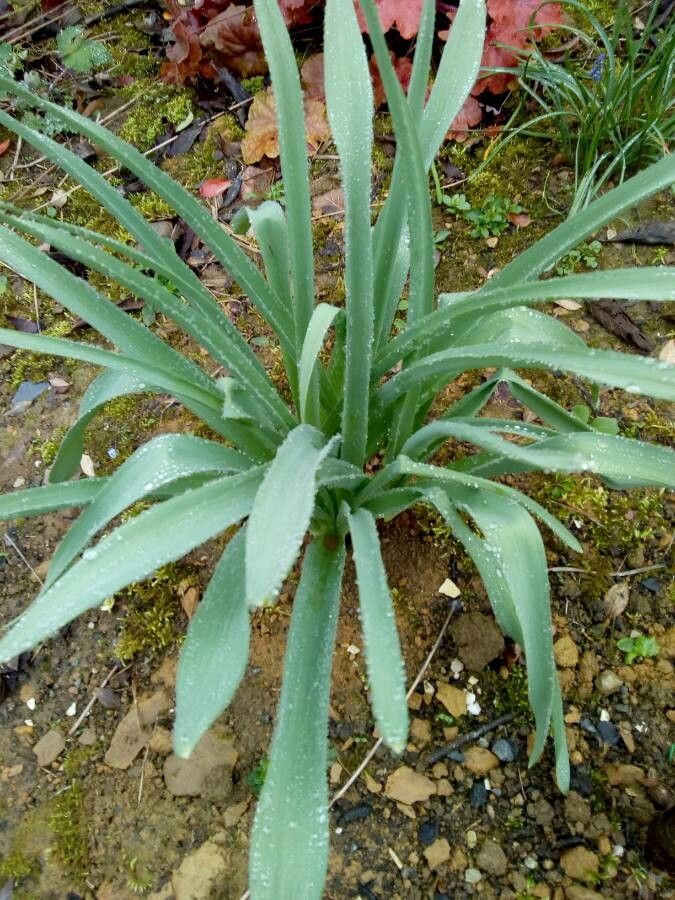
Allium oleraceum, the field garlic, is a Eurasian species of wild onion. It is a bulbous perennial that grows wild in dry places, reaching 30 centimetres (12 in) in height. It reproduces by seed, bulbs and by the production of small bulblets in the flower head (similarly to Allium vineale). Unlike A. vineale, it is very rare with A. oleraceum to find flower-heads containing bulbils only. In addition, the spathe in A. oleraceum is in two parts.Its specific epithet oleraceum means "vegetable/herbal" in Latin and is a form of holeraceus (oleraceus).
Field garlic has moderate resistance to disease but can be prone to problems like leaf spot. Its vulnerability to insect pests varies by variety, though most types are relatively less resistant to pests. For care, Field garlic requires regular watering and fertilizing, and frequent removal of yellow leaves. It is important to manage pests and diseases as they appear and to harvest the plant promptly. Field garlic is appropriate for people who can invest some time and energy in routine care.
How to keep Allium Oleraceum.
Light
Field garlic thrives in places that receive strong sunlight for most of the day, though it can survive in locations that only get sunlight part of the day. Excessive or insufficient sunlight can impact its growth. Its original habitat is commonly where sunlight is abundant.
Water
Field garlic thrives in moderate climates with consistent moisture and well-drained soil. Once established, it shows a moderate resistance to drought. For optimal health, it's recommended to water it weekly. As a perennial herb, field garlic does well outdoors, benefiting from natural rainfall that aligns with its growth cycles.
Temperature
Field garlic originates from regions with temperate climates and grows best at temperatures between 41 and 90 °F (5 and 32 °C). Its ambient temperature should be adjusted to suit it so it can develop in its preferred temperate conditions.
Fertilizer
To maximize the yield and flavor of Field garlic, provide sufficient nitrogen throughout the entire growth cycle, including the pre-planting and harvest stages. Plants that are well watered and properly fertilized develop plentiful, healthy leaves and have less bitterness. Before planting, amend the soil with organic matter such as compost or manure, preferably 2 to 8 weeks ahead.
Pruning
Field garlic is a hardy perennial that is appreciated for its edible cloves and slender leaves. To encourage healthy regrowth and prevent disease, prune any dead foliage and spent flower stalks from early to late spring. Make sure to use sharp, clean tools, which will help improve air circulation and enhance the plant's overall vigor.
Pot & Repot
Plant field garlic in pots with excellent drainage to encourage healthy growth.
Botanical profile.
- Plant Type
- Herb
- Life Cycle
- Perennial
- Genus
- Allium
- Family
- Amaryllidaceae
- Hardiness Zone
- 4-8
- Mature Height
- 1.22 m
- Mature Spread
- 40 cm
- Leaf Color
- Dark Green
- Leaf Type
- Deciduous
- Flower Color
- Pink, Yellow, Purple, Brown
- Flower Size
- 0.25 cm to 0.51 cm
- Bloom Time
- Early summer, Mid summer
- Planting Time
- Spring, Autumn
- Harvest Time
- Late summer, Early fall
- Native Area
- Sweden, Austria, Slovakia, Montenegro, Croatia, Slovenia, Belarus, Russia, Germany, Estonia, Romania, Latvia, Belgium, Portugal, Netherlands, France, Czech Republic, Bulgaria, Poland, Greece, Ukraine, Serbia, Lithuania, Norway, Italy, Kazakhstan, Spain, Switzerland, Denmark, Finland, Ireland, United Kingdom, Hungary
Other names.
Reader questions.
How should I water my Field garlic?
To properly water Field garlic, it is recommended to use filtered water at room temperature or slightly warmer. Tap water may contain harmful particles, making filtered water a safer option. This is particularly important because Field garlic originates from warm environments, so cold water can be a shock to its system. It's also best to avoid overhead watering, as this can cause issues with the foliage. Instead, it's advised to carefully apply filtered room temperature water to the soil until it is thoroughly soaked. Doing so benefits the plant by moisturizing the roots and assisting their growth and nutrient absorption in the soil.
What kind of sunlight does Field garlic need?
Field garlic requires full sun every day, with a minimum of six hours of sunlight to maintain the health of its leaves, roots, and blooms. While most perennials also need six hours of sunlight daily, plants such as the Orange Daylily or Giant Coreopsis can survive on as little as three hours of sun per day. However, these flowering perennials will not thrive as much as they would in sunnier conditions.
What is the ideal temperature range for growing Field Garlic (Allium oleraceum)?
Field Garlic, or Allium oleraceum, thrives in temperate conditions with ideal temperatures ranging between 41 to 90 °F (5 to 32 °C). To ensure healthy growth, it is important to maintain the surrounding temperature within this range. Field Garlic is known for its strong cold resistance; however, in exceptionally cold winters where temperatures are expected to drop below -30°C, protective measures should be taken. Covering the plant with soil or straw can offer necessary cold protection. Additionally, it's beneficial to water the plant abundantly before the first freeze of autumn, keeping the soil moist to support the plant through winter and early spring.
What do I do if I give too much or too little water to my Field garlic?
Both overwatering and underwatering can harm the health of your Field garlic, but overwatering is more common. When Field garlic receives too much water, its stems and leaves may wilt and turn yellow. Prolonged overwatering can also lead to root rot, mold, and mildew, which can kill the plant. Underwatering is less common, but it can cause the leaves to become brittle and brown. It's important to recognize signs of overwatering early since some diseases like root rot may be irreparable if not addressed promptly. If you notice these signs, reduce your watering schedule and consider using a well-draining potting mix. If you see signs of underwatering, simply water more regularly until the signs improve.
Does sunlight harm Field garlic? How can we shield Field garlic from harmful sun rays and heat?
In warm climates, some Perennial Flowering Plants may struggle with excessive heat and suffer from sun damage. They can wilt, dry out, or even experience growth problems if they are consistently exposed to the intense afternoon sun. However, not all plants require protection from the light afternoon sun. For those that are harmed by intense afternoon exposure, it is recommended to provide them with some shade in warmer climates. Gardeners can achieve this by planting these plants in areas that do not receive direct heat during the afternoon, such as under trees or behind bushes.
How does Field Garlic react to low temperatures, and what measures should be taken?
Field Garlic is cold-tolerant and usually thrives best in temperatures above 5°C. During winter, it's crucial to ensure the temperature does not fall below -25°C. If temperatures drop below -30°C, the plant might not show immediate damage through winter, but you may notice a reduced number or absence of sprouts come springtime. To address this issue, it's recommended to remove any parts of the plant that fail to sprout in spring as a remedial measure.
How many times do I need to water my Field garlic?
If your Field garlic is in a pot, the easiest way to tell if it needs water is to stick your finger in the soil. If the top two to three inches of soil are dry, then it's time to water it. If you're growing Field garlic outdoors in the ground, you can use the same method to test the soil. Once the top few inches of soil have dried out, it's time to water. In spring and early fall, you'll typically need to water once a week using this method. In really hot weather, you may need to water twice a week or more. However, mature and well-established Field garlic plants can handle drought well.
Should I shield Field garlic from direct sunlight?
Certain perennial plants require ample sunlight to reach their maximum bloom. However, in warmer climates, some of these plants actually benefit from less sun. For instance, individuals residing in hotter regions might find it beneficial to shade their flowering perennials during the intense afternoon sun, especially during summer months. Although many perennial flowering plants prefer partial shade in the hottest climates, there are exceptions. Take the Giant Coreopsis, for example, as it is not bothered by excessive sun exposure. These plants can flourish even when placed in the full sun during scorching weather.
How does Field Garlic handle high temperatures, and what are the solutions for heat stress?
During the summer months, it's essential to keep Field Garlic below 32°C. Exposure to temperatures over 35°C can result in the plant's leaves becoming lighter, prone to curling, susceptibility to sunburn, and, in severe cases, the entire plant may wilt and dry. To mitigate these effects, sunburned or drying parts of the plant should be trimmed away. Relocating the plant to a shaded area or using a shade cloth can protect it from harsh midday and afternoon sun. Additionally, watering the plant during the cooler morning and evening hours can help maintain soil moisture, which is crucial for the plant's survival in high temperatures.
How much water does my Field garlic require?
To properly water your Field garlic, you need to be generous with the amount of water you provide. Make sure that the top two to three inches of soil are dry before watering, and then give the plant a thorough watering, making sure to completely saturate the soil. It's important to add enough water so that it flows through the drainage holes at the bottom of the pot. If you don't see excess water draining, you may have underwatered the plant, which is not good. However, you also don't want water to accumulate in the soil, as this can be harmful. On the other hand, if water is not draining well, it could mean that the soil is not draining properly, which is not good for the plant's health. Lastly, if the plant is outdoors, about 1 inch of rain per week should be enough.
What happens if Field garlic doesn't get enough sunlight?
If your Field garlic plants are not getting enough sunlight, you will see signs of inadequate conditions. These signs include fewer blooms compared to plants receiving full sun exposure. Some plants may develop dry spots on their leaves, but they will still manage to bloom despite the lack of sun. However, the flowers will be smaller and less full in this case.
How do I properly give water to my Field garlic during different stages of growth?
The water needs of Field garlic vary based on its growth stages. In the early years and after transplanting, more water is required as the plant focuses on growing new roots for future growth. These roots perform best with increased moisture. As the plant matures, less water is needed. Additionally, during the bloom period, more water may be necessary as flower development utilizes a significant amount of moisture.