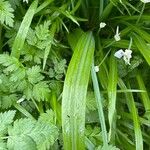
Allium paradoxum
Few-flowered Garlic · Few-flower garlic · Few-flower leek · Few-flowered leek · Wild Garlic
Description
Source: leafsnapAllium paradoxum, commonly known as few-flowered garlic or wild garlic, is a perennial herbaceous plant that belongs to the Allium genus. Native to Europe and Asia, it has also been introduced to North America as an ornamental plant. The plant can grow up to 30 cm tall and produces small white flowers in clusters of 2-6 on a leafless stem. Its leaves are narrow, linear, and can grow up to 20 cm long. Allium paradoxum prefers moist soils in shaded areas such as woodlands or along stream banks. While it can tolerate dry soils, it thrives best in well-drained soil types. The plant is notable for its strong garlic-like odor, which emanates from its bulb. The bulbs of Allium paradoxum are edible, though they have a milder flavor compared to other members of the Allium genus, such as onions or garlic. They can be used raw in salads or cooked in various dishes for flavoring. Traditionally, few-flowered garlic has been used for medicinal purposes, including treating respiratory infections, digestive problems, and high blood pressure, due to its antibacterial properties. However, it is important to note that Allium paradoxum can become invasive if not properly controlled, as its ability to self-seed may pose a threat to native plants. In summary, Allium paradoxum is an interesting herbaceous perennial with culinary uses and medicinal properties. It should be used responsibly and under the guidance of healthcare professionals knowledgeable in herbal medicine practices.
Care Guide
💧 Water Every 7 days
Originating from Central Asia, few-flowered garlic requires consistent moisture and regular weekly watering, although it can tolerate brief dry spells. It thrives outdoors where it can benefit from natural rainfall, and its growth depends on water availability. Therefore, effective irrigation is crucial during its active growth phases.
How should I water my Few-flowered garlic plant?
When watering the Few-flowered garlic, it is recommended to use filtered water at room temperature. Tap water may contain harmful particles. The water should be at room temperature or slightly warmer because the Few-flowered garlic is accustomed to a warm environment and cold water can be shocking. Avoid overhead watering to prevent foliage problems. Instead, apply filtered room temperature water directly to the soil until it is completely soaked. This helps moisten the roots and allows them to spread and absorb nutrients from the soil.
What should I do if I give my Few-flowered garlic too much or too little water?
Both overwatering and underwatering can harm the health of your Few-flowered garlic, but overwatering is more common. Too much water can cause wilting and yellowing of the stems and leaves, as well as diseases like root rot, mold, and mildew that can be fatal for the plant. Underwatering is less common as this plant can tolerate drought, but it is still possible. In such cases, the leaves may become brittle and brown. It is important to recognize the signs of overwatering early on because some diseases, like root rot, cannot be fixed if you delay. If you notice these signs, reduce your watering immediately and check the soil's drainage. If the soil drains poorly, replace it with a loose, well-draining potting mix. If your Few-flowered garlic lacks water, simply increase the watering frequency until the signs disappear.
How often should I give water to my Few-flowered garlic?
If your Few-flowered garlic is in a pot, you can determine if it needs water by checking the soil moisture. Stick your finger into the soil and if you feel that the top two to three inches are dry, it's time to water. If you have Few-flowered garlic planted in the ground, use the same method to check the soil. When the top few inches of soil are dry, it's time to water. In the spring and early fall, you will generally need to water once a week using this method. During very hot weather, you may need to water twice a week or more. However, mature and well-established Few-flowered garlic plants can tolerate drought and may not require frequent watering.
How much water does my Few-flowered garlic plant need?
To properly water your Few-flowered garlic, make sure to give it a generous amount of water. When the top two to three inches of soil are dry, thoroughly soak the soil until water flows through the drainage holes at the bottom of the pot. If you don't see excess water draining, you may have not given enough water. However, be careful not to let water accumulate in the soil, as this can harm the plant. If the water doesn't drain well, it's important to improve the soil drainage. For outdoor plants, one inch of rain per week should be enough.
How should I water my Few-flowered garlic as it grows at different stages?
The water needs of Few-flowered garlic vary during different growth stages. In the early years and after transplanting, more water is required because the plant focuses on developing new roots. These roots need extra moisture to support future growth efficiently. However, as the plant matures, it will require less water. Another stage that may require more water is the blooming period, as flower development uses a considerable amount of moisture. Therefore, during this time, it may be necessary to provide additional water for Few-flowered garlic.
☀️ Light Full sun
The few-flowered garlic mainly grows best when it receives steady sunlight throughout the day. It can also tolerate lower light or mostly shaded locations, showing some hardiness. In its native habitat it prefers abundant sun for vigorous, healthy growth. Both too much and too little light can harm the plant's health.
What are the sun requirements for Few-flowered garlic?
Few-flowered garlic requires full sun, meaning it needs above 6 hours of sunlight daily, but it can also tolerate partial sun or full shade, which translates to about 3-6 hours of sunlight. It's important to observe how sunlight moves through your garden to pick the best spots for your plants. The right balance of light and shade is crucial for ensuring plant happiness and health.
What are the essentials for growing Few-flowered garlic successfully?
Few-flowered garlic flourishes with a uniform spread of sunlight throughout the day but shows resilience by also adapting to lower light conditions or areas in shade. Originating from habitats with ample sunlight, it prefers similar conditions for optimal growth and vigor. Both overexposure and underexposure to light could negatively impact the plant's health. For indoor plants, adequate lighting is essential, especially when natural sunlight is insufficient. Artificial lighting, such as LED lights, can be crucial, providing 30-50W/sq ft for full sun plants, 20-30W/sq ft for partial sun plants, and 10-20W/sq ft for full shade plants. The light source should be placed 12-36 inches above the plant, mimicking the natural sunlight duration of 8-12 hours per day.
What are the symptoms of light deficiency in Few-flowered garlic?
Inadequate lighting can induce several symptoms in Few-flowered garlic, such as small leaves, leggy or sparse growth, faster leaf drop, slower or no new growth, lighter-colored new leaves, chlorosis (yellowing of leaves due to lack of chlorophyll), sunscald, leaf curling, wilting, and leaf scorching. These symptoms occur when the plant doesn't receive enough light, leading to poor health and growth.
What solutions can help Few-flowered garlic adapt to its environment?
To optimize Few-flowered garlic's growth, gradually moving the plant to sunnier locations, ensuring at least 6 hours of direct sunlight daily, is effective. Using south-facing windows and keeping curtains open during the day helps maximize sunlight exposure. Additionally, using artificial lighting such as desk or ceiling lamps for at least 8 hours daily or investing in professional grow lights can provide sufficient light. Outdoors, plants should be moved gradually to sunnier spots to prevent sunburn. Removing obstructions like branches that block sunlight and transplanting smaller plants during their dormant period to locations with ample sunlight and good drainage are also beneficial. Note that parts of the plant affected by insufficient sunlight might not recover, but new growth will be healthier with increased light exposure.
🌡️ Temperature 15–35°C
Few-flowered garlic is a plant capable of thriving in its native growth environment when temperatures range from 59 to 95°F (15 to 35°C). Seasonal adjustments may be required to keep conditions within this preferred range for optimal growth.
What is the optimal temperature range for growing Few-flowered garlic?
Few-flowered garlic thrives in temperatures ranging from 59 to 95°F (15 to 35°C). To ensure optimal growth, it's crucial to maintain this temperature range. Adjustments may be necessary depending on the season. The plant exhibits strong cold resistance, typically not requiring special frost protection measures. However, when winter temperatures are anticipated to fall below -15°C, taking steps to protect the plant from cold is important. This can include covering it with soil or straw. Additionally, watering the plant abundantly before the first autumn freeze to keep the soil moist can help prevent drought and water scarcity during the colder months.
How does Few-flowered garlic respond to low temperatures and how can you protect it?
Few-flowered garlic is notably cold-tolerant, ideally kept above 15°C. In winter, temperatures should remain above -10°C for the plant's well-being. If temperatures drop below -15°C, the plant might not show immediate distress, but you may observe a decrease in sprouting or a complete lack of sprouting in spring. To mitigate this, remove any parts of the plant that have failed to sprout in spring. This care ensures the plant remains healthy and continues to grow properly despite lower temperatures.
What should you do if Few-flowered garlic experiences high temperatures?
During the summer months, it's important to keep Few-flowered garlic below 35°C to prevent stress. If temperatures soar above 41°C, you may notice the leaves becoming lighter, curling, and even getting sunburned. In severe cases, the plant can wilt and become dry. To address this, trim away any sunburned or dried parts of the plant. Moving the plant to a shaded area or using a shade cloth can protect it from the harsh midday and afternoon sun. Additionally, watering the plant in the morning and evening can help keep the soil adequately moist, further protecting it from heat stress.
💨 Humidity
🪴 Soil 6-7
🌱 Fertilizer
To maximize Few-flowered garlic's yield and flavor, provide sufficient nitrogen during the entire growth cycle, including before planting and at harvest. Plants that receive adequate water and fertilizer develop plentiful, healthy leaves and are less bitter. Before planting, amend the soil with organic matter such as compost or manure, preferably 2 to 8 weeks beforehand.
Why should I use fertilizer on my Few-flowered garlic?
Fertilization is important for the Few-flowered garlic because it provides essential nutrients for the plant's growth. While the overall fertilization needs for Few-flowered garlic are low, it can still benefit from annual fertilization. This can help the plant survive and promote the production of better and longer-lasting flowers. Therefore, those who want their Few-flowered garlic to thrive should consider regular fertilization.
When should I fertilize my Few-flowered garlic for the best results?
The ideal time to fertilize a Few-flowered garlic is in late winter to early spring when it is transitioning from dormancy to active growth. Fertilizing at this time promotes healthy growth and sets the plant up for a successful season. While early spring is usually the best time, fall is also acceptable for fertilization. However, it is not recommended to fertilize during summer or winter.
When shouldn't I add fertilizer to my Few-flowered garlic?
To ensure optimal growth and prevent overfertilization, it is important to only fertilize your Few-flowered garlic in late winter and early spring. This plant has low fertilization needs, so a single annual feeding is all that is necessary. You should avoid fertilizing during spring, summer, and fall, as this can lead to complications. The only exception is if you missed fertilizing in spring, in which case it is acceptable to feed the plant in fall. Additionally, there is no need to fertilize during winter. During this time, the Few-flowered garlic is in a dormant phase and does not experience new growth, making fertilization inadvisable.
What kind of plant food does my Few-flowered garlic need?
When fertilizing Few-flowered garlic, any general-purpose fertilizer with balanced amounts of the main plant nutrients will work well. However, there are specific nutrient blends that can provide even more benefits. Many gardeners believe that higher levels of phosphorus help develop stronger roots and better flowers, making a phosphorus-rich fertilizer ideal for Few-flowered garlic. Whether in granular or liquid form, as long as there are plenty of nutrients, any type of fertilizer can be used. In addition to manufactured fertilizers, organic methods such as compost and manure can greatly improve the soil for optimal growth of Few-flowered garlic.
How should I add fertilizer to my Few-flowered garlic plant?
To fertilize a Few-flowered garlic, the most common method is to use granular or pellet fertilizer applied to the soil around the plant. Remember, the best time to fertilize is when the plant is transitioning from its dormant phase to active growth. In early spring, wait for shoots to emerge from the soil before applying fertilizer. If you prefer, you can use liquid fertilizer, but dilute it with water first. Regardless of the type of fertilizer used, it's important to moisten the soil before, during, and after application.
🪴 Pot & Repot
Few-flowered garlic needs excellent drainage when grown in pots to thrive. Proper drainage prevents waterlogging, which can lead to root rot and other problems detrimental to the plant's health.
✂️ Pruning
Few-flowered garlic thrives when pruned from early to late spring. To encourage growth and strengthen the bulbs, trim away dead leaves and spent flower stems. Keeping the area clean helps prevent disease, ensuring the plant remains healthy and vibrant throughout the growing season, resulting in an attractive display.
🌿 Propagating
🐛 Diseases & pets
☠️ Toxicity
Characteristics
- Plant Type
- Herb
- Life Cycle
- Perennial
- Genus
- Allium
- Family
- Amaryllidaceae
- Hardiness Zone
- 7-10
- Mature Height
- 30 cm
- Mature Spread
- 10 cm
- Leaf Color
- Light Green
- Leaf Type
- Deciduous
- Flower Color
- White
- Flower Size
- 1.02 cm to 2.03 cm
- Bloom Time
- Early spring, Mid spring
- Planting Time
- Spring, Summer
- Harvest Time
- Late spring, Early summer
- Native Area
- Iran, Armenia, Azerbaijan, Turkmenistan