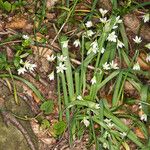
Allium pendulinum
Italian garlic · Wild garlic
Description
Source: leafsnapAllium pendulinum, commonly known as the slender onion, is a perennial herbaceous plant belonging to the Allium genus. Native to the Mediterranean region, this plant thrives in rocky areas and on hillsides. It features long, slender stems that can grow up to 60 cm in height, adorned with small clusters of pink or purple flowers. The leaves are narrow and grass-like, emerging from a bulbous base. Renowned for both its ornamental and culinary value, the slender onion has mild onion-flavored bulbs that can be used in cooking or enjoyed raw in salads. Additionally, it has been employed for centuries in traditional medicine due to its antibacterial properties. Allium pendulinum prefers well-drained soil and full sun exposure but can also tolerate partial shade. It requires moderate watering during growth periods and should be allowed to dry out between waterings during dormancy. In summary, Allium pendulinum is an attractive ornamental plant with practical uses in cooking and medicine, thanks to its mild onion flavor and antibacterial properties.
Care Guide
💧 Water Every 7 days
☀️ Light Partial sun
Italian garlic originates in habitats such as forest understories or rocky areas, where it is exposed to natural shade. It favors partial sun but can tolerate full sun or full shade, showing its adaptable and hardy nature.
🌡️ Temperature 5–35°C
Italian garlic can acclimate to a wide range of temperature conditions, though its distribution may still be restricted by different combinations of water and heat. It performs best in warm summer climates with sufficient rainfall or watering. Extended periods of cloudy, rainy weather, as well as sustained high temperatures, can raise the chance of Italian garlic dying. In winter, adequate protection from the cold can increase the plant's survival rate.
💨 Humidity
🪴 Soil 6-7
🌱 Fertilizer
The best time to fertilize Italian garlic is in early spring, as it comes out of dormancy and starts active growth. Fertilizing supplies essential nutrients for healthy development. While Italian garlic has fairly low fertilizer requirements, yearly feeding can improve its survival and encourage better, longer-lasting flowers.
🪴 Pot & Repot
For Italian garlic to thrive when planted in pots, it needs excellent drainage. This helps to maintain healthy roots and prevent waterlogging.
✂️ Pruning
To ensure healthy growth and larger bulbs, Italian garlic benefits from early spring pruning. By removing dead foliage, you can improve air circulation and reduce the risk of diseases. Regular thinning helps prevent overcrowding. Additionally, sanitizing your tools minimizes the chance of spreading diseases, making Italian garlic an excellent choice for gardeners who value both aesthetics and practicality.
🌿 Propagating
🐛 Diseases & pets
☠️ Toxicity
Characteristics
- Plant Type
- Herb
- Life Cycle
- Perennial
- Genus
- Allium
- Family
- Amaryllidaceae
- Hardiness Zone
- 5-9
- Mature Height
- 20 cm to 40 cm
- Mature Spread
- 10 cm to 20 cm
- Leaf Color
- Green
- Leaf Type
- Semi-evergreen
- Flower Color
- White
- Flower Size
- 1.02 cm to 1.52 cm
- Bloom Time
- Mid spring, Late spring
- Planting Time
- Spring, Summer, Autumn
- Harvest Time
- Early summer, Mid summer
- Native Area
- Italy, France