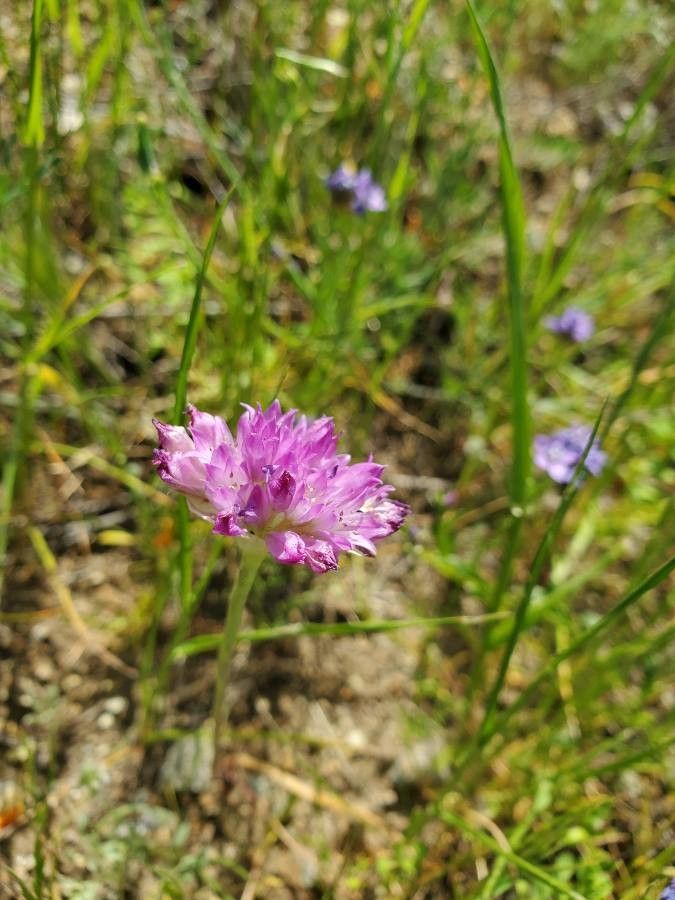
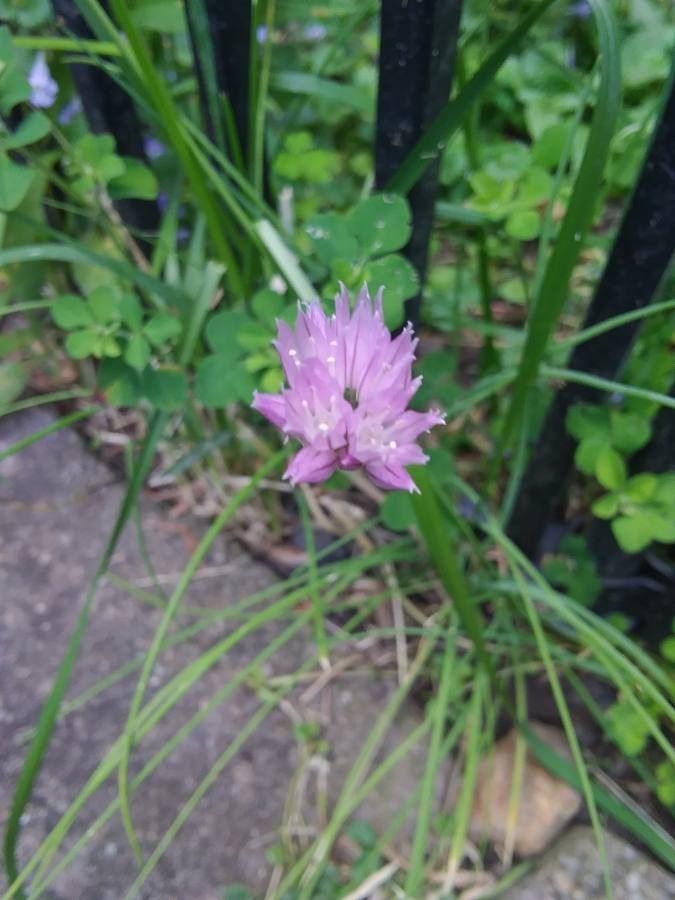
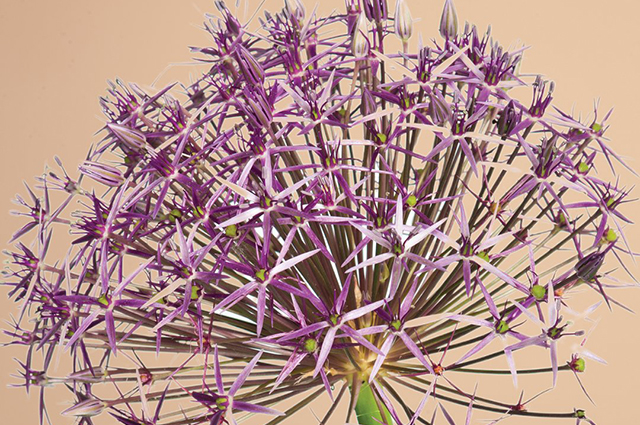
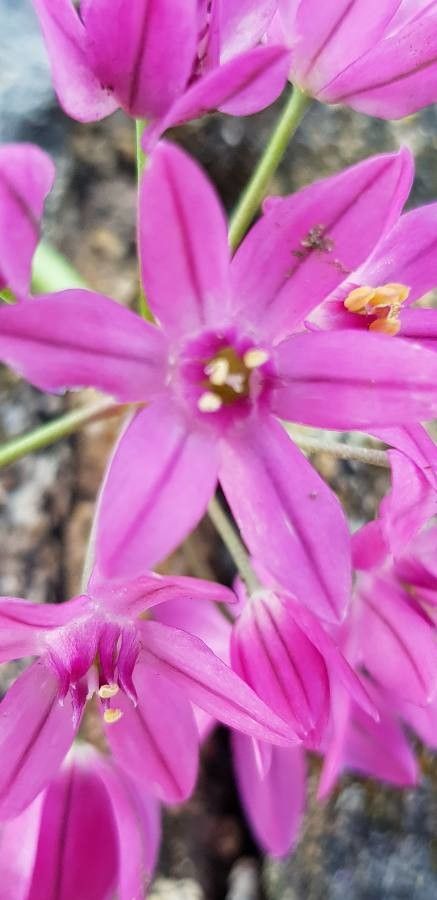
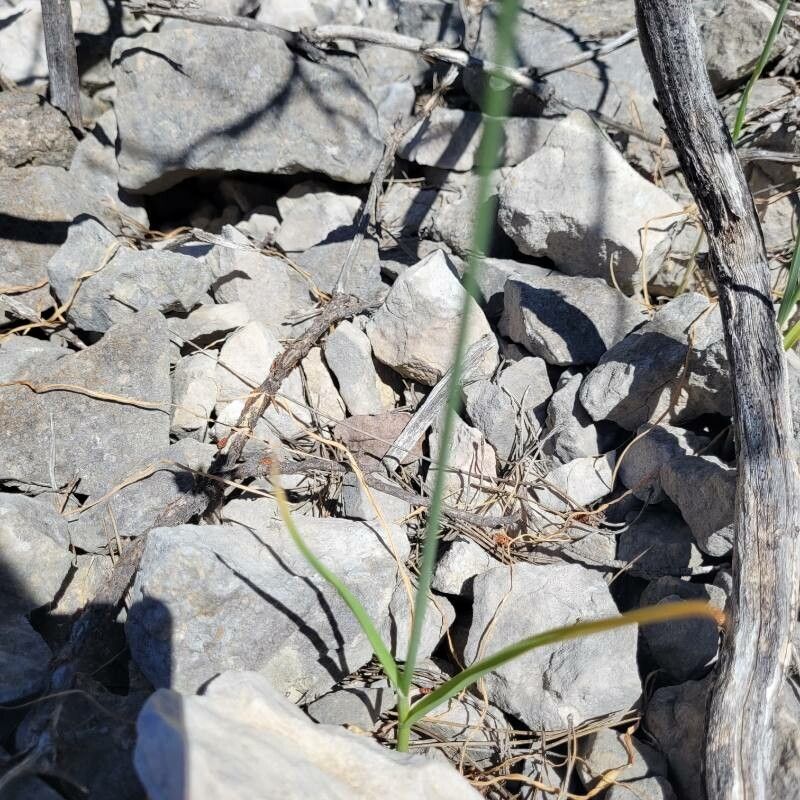
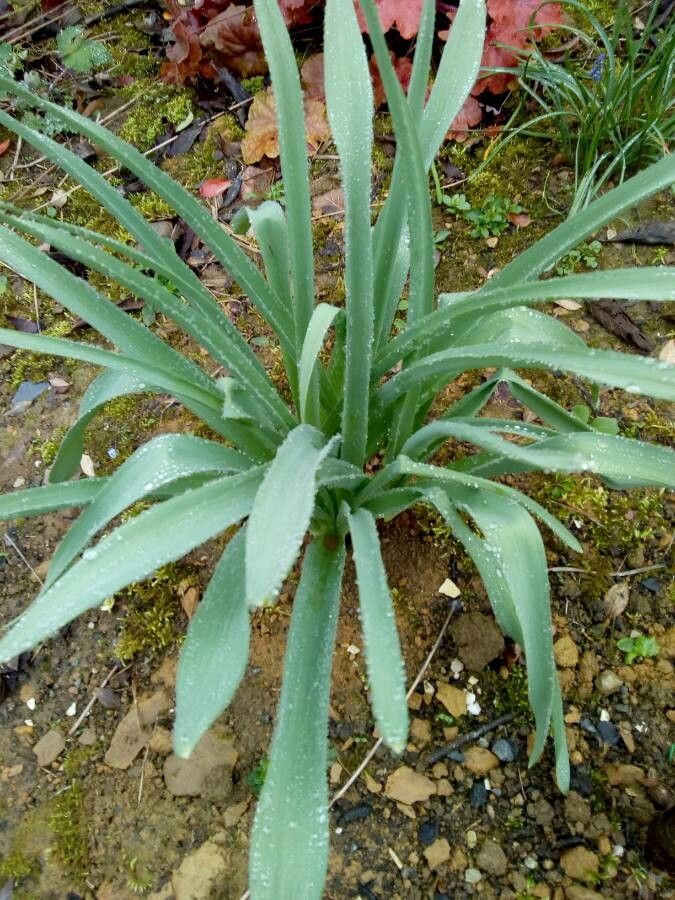
Allium serra is a California species of wild onion known by several common names, including jeweled onion, pom-pon onion, and serrated onion.It favors hard soils with rock and clay, including serpentine soil. It is found in the Coast Ranges of central and northern California, from Merced County to Humboldt County.Allium serra plant produces a small herringbone-patterned bulb an average of one centimeter in diameter. It has a long stem on which it bears a tightly bunched umbel of flowers. The attractive bright pink flowers are thimble or bell-shaped, often iridescent when new and becoming papery as they dry.
Jeweled onion shows good resistance to disease and is generally not prone to illnesses. However, it can be vulnerable to pests and diseases present in its surroundings. These infections are typically not severe. As for maintenance, this plant needs a moderate level of care. It should be pruned regularly to keep a neat appearance and support healthy growth. Fertilizing can also help encourage flowering. Jeweled onion is suitable for people who have outdoor spaces like a garden or patio and does not require extensive gardening experience. It may need more attention when grown indoors.
How to keep Allium Serra.
Light
Jeweled onion is a sun-loving perennial herbaceous plant native to open habitats, frequently thriving in meadows and grasslands. It prefers full sun but can also tolerate partial sun.
Temperature
The Jeweled onion can withstand a wide range of temperatures, though its distribution may still be restricted by specific combinations of water and heat. It does best in warm summer conditions with adequate rainfall or watering. Extended periods of cloudy, rainy weather, as well as prolonged high temperatures, can raise the probability that Jeweled onion will die. In winter, proper protection from cold can improve the plant's survival rate.
Fertilizer
The primary time to fertilize Jeweled onion is in early spring when the flowers are forming. Using the proper fertilizer promotes better blooms and helps Jeweled onion produce attractive flowers. Fertilizing in early spring ensures strong flowers during the season and supplies energy for dormant growth phases.
Pruning
The jeweled onion is a bulbous perennial plant featuring pink, bell-shaped flowers and slender, grass-like leaves. To encourage healthy blooms and reduce the risk of disease, prune the plant in early spring by removing any dead foliage and spent flower stalks. For the best results, use clean, sharp tools to improve air circulation and light penetration.
Pot & Repot
To ensure healthy growth and prevent root rot in your jeweled onion, provide it with excellent drainage by planting it in pots with good drainage.
Botanical profile.
- Plant Type
- Herb
- Life Cycle
- Perennial
- Genus
- Allium
- Family
- Amaryllidaceae
- Hardiness Zone
- 4-9
- Mature Height
- 40 cm
- Mature Spread
- 10 cm
- Leaf Color
- Green
- Leaf Type
- Deciduous
- Flower Color
- Lavender, Purple
- Flower Size
- 2.03 cm to 3.05 cm
- Bloom Time
- Early summer, Mid summer
- Planting Time
- Spring, Summer, Autumn
- Harvest Time
- Late summer, Early fall
Other names.
Reader questions.
What are the sunlight requirements for Jeweled Onion (Allium serra)?
Jeweled Onion, also known as Allium serra, thrives in both full and partial sun conditions. Full sun exposure means the plant should receive above 6 hours of sunlight daily, whereas partial sun refers to about 3-6 hours of sunlight each day. It's important to observe your garden to ensure spots chosen for your Jeweled Onion provide the right balance of light and shade, optimizing plant health and growth. This careful observation guarantees the plant's happiness by ensuring it receives the ideal amount of sunlight.