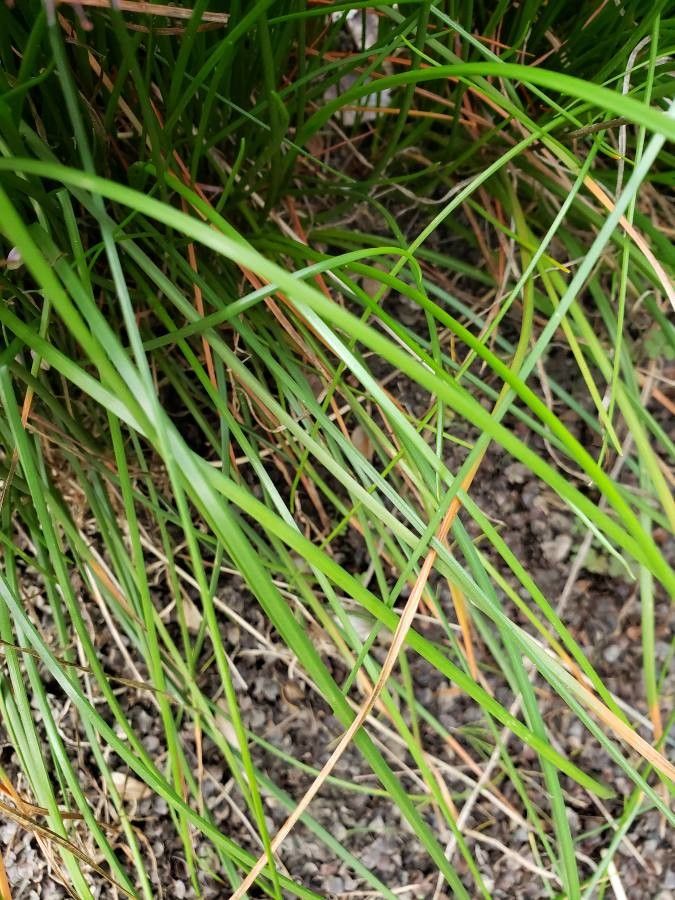
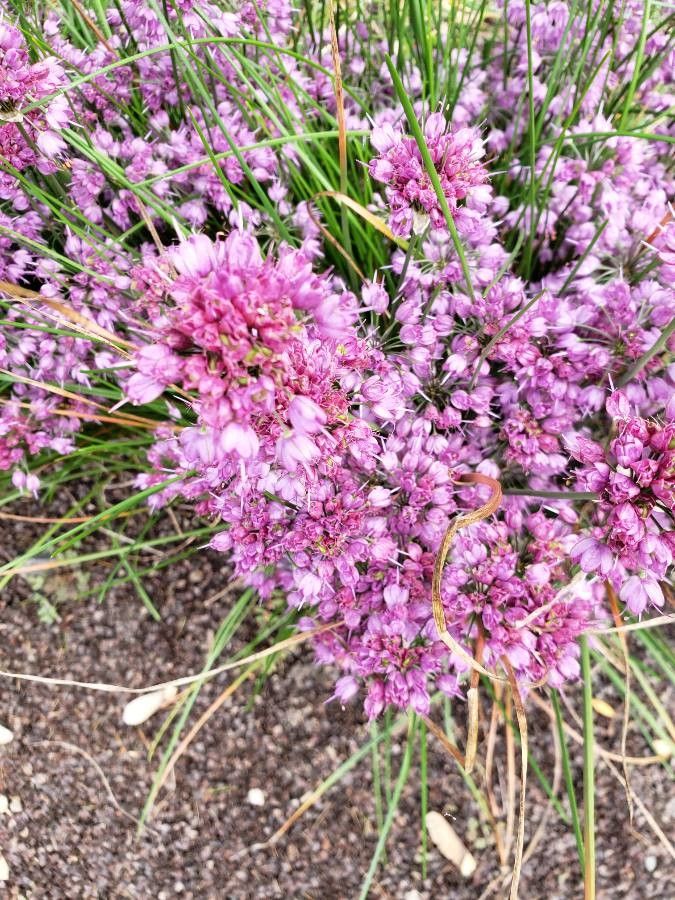
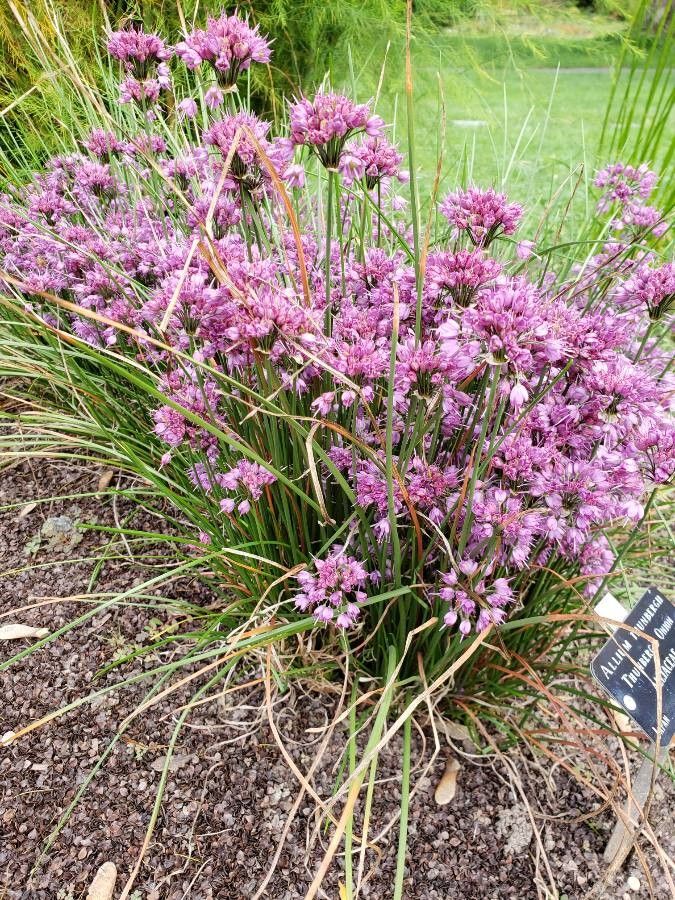
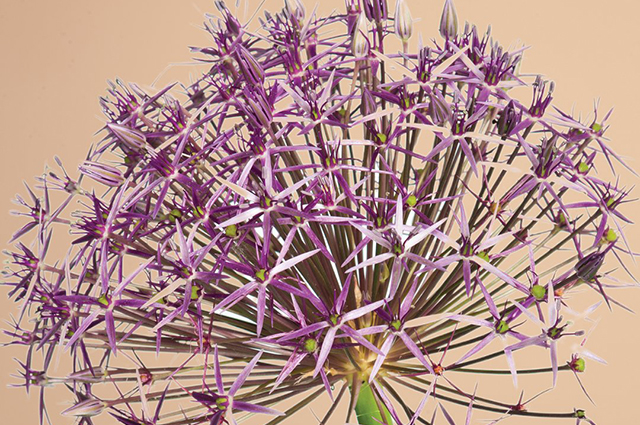
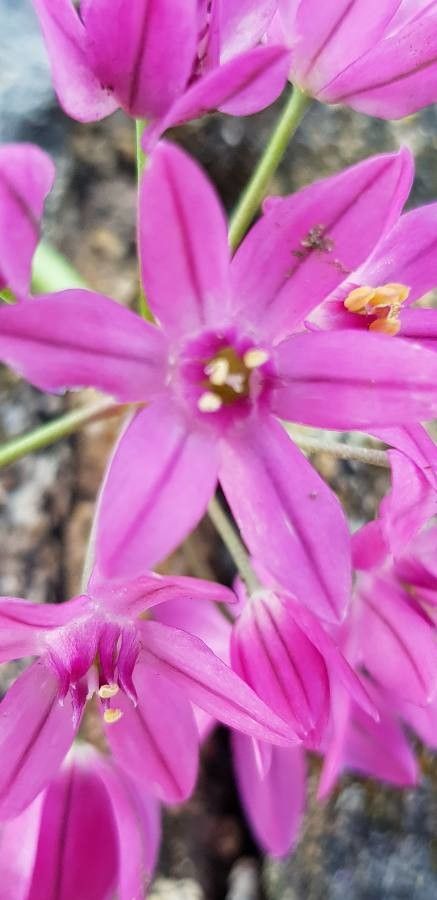
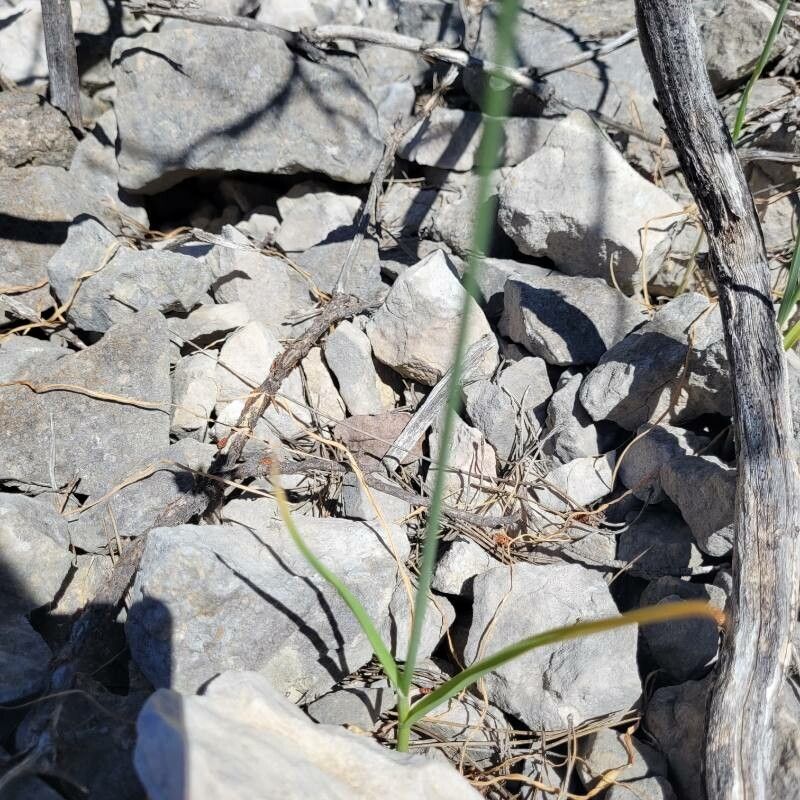
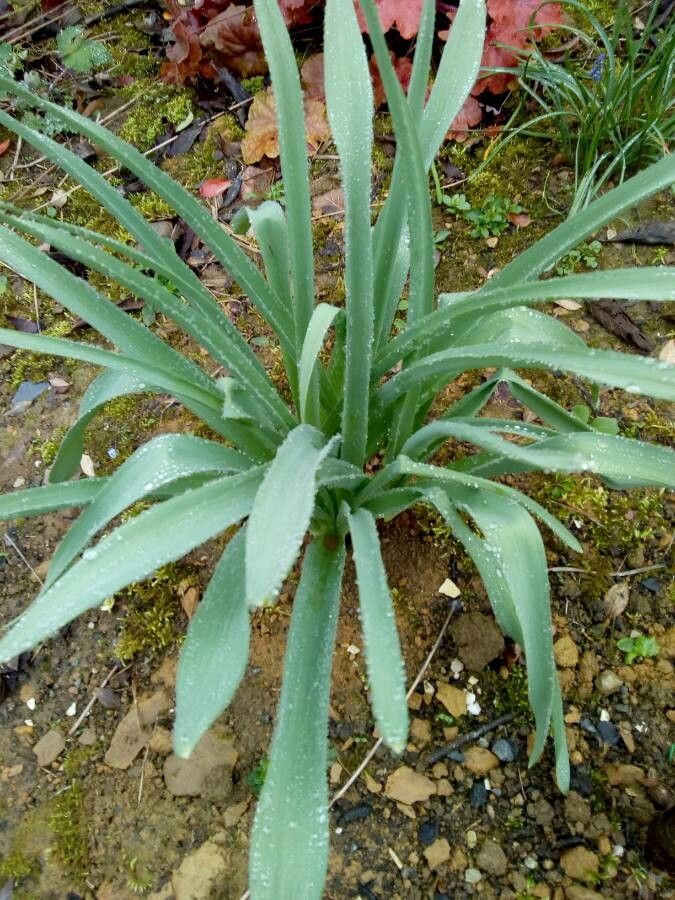
Allium thunbergii, Thunberg's chive or Thunberg garlic, is an East Asian species of wild onion native to Japan (incl Bonin + Ryukyu Islands), Korea, and China (incl. Taiwan). It grows at elevations up to 3000 m. The Flora of China recognizes A. tunbergii and A. stenodon as separate species, but more recent sources combine the two.Allium thunbergii produces one or two egg-shaped bulbs up to 20 mm in diameter. Scapes are up to 50 cm tall. Leaves are longer than the scape, hollow, triangular in cross-section. Umbels are crowded with many red or purple flowers.The specific epithet thunbergii references the Swedish botanist Carl Peter Thunberg.This plant has gained the Royal Horticultural Society’s Award of Garden Merit. VarietiesAllium thunbergii var. deltoides (S.O.Yu, S.Lee & W.T.Lee) H.J.Choi & B.U.Oh - Gayasan National Park in Korea Allium thunbergii var. teretifolium H.J.Choi & B.U.Oh - Korea Allium thunbergii var. thunbergii - China, Japan, Korea
Thunberg's chive has moderate resistance to disease and can be vulnerable to problems like leaf spot. Its susceptibility to insect pests varies by variety, though most varieties are less resistant to pests. Regarding care, Thunberg's chive requires regular watering and fertilization, and yellow leaves should be pruned frequently. It is important to manage pests and diseases as they appear and to harvest the plant promptly. Thunberg's chive is suited to people who can dedicate some time and effort to routine care.
How to keep Allium Thunbergii.
Light
Thunberg's chive requires abundant sunlight for vigorous growth. Native to open habitats, it withstands prolonged sun exposure without needing shade. However, excessive light can yellow its leaves, while too little light may result in stunted growth or fewer flowers. Its sunlight requirements remain consistent throughout its growth stages.
Water
Thunberg's chive thrives best in moist, well-drained soil with moderate moisture levels. It prefers consistent hydration, so it's important to water it every 1-2 weeks, allowing the soil to partially dry between waterings. When grown outdoors, thunberg's chive benefits from natural rainwater during its active growing season.
Temperature
For Thunberg's chive, moderate temperatures are ideal — about the same range people usually find comfortable. It flourishes in conditions that are neither too hot nor too cold. The main problem with high temperatures is the risk of sunburn, so in summer it's recommended to give some shade to prevent excessive heat. When temperatures fall, Thunberg's chive goes dormant. If continuous growth is wanted, you need to keep temperatures higher through the winter. Frost can damage the plant and should be avoided.
Fertilizer
To maximize the yield and flavor of Thunberg's chive, provide ample nitrogen throughout the growth cycle, from pre-planting through harvest. Plants that are well-watered and properly fertilized will produce abundant, healthy leaves and exhibit less bitterness. Before planting, amend the soil with organic matter such as compost or manure, ideally 2 to 8 weeks beforehand.
Pruning
Thunberg's chive is known for its ornamental purple flowers and clump-forming growth habit. To promote blooming and encourage new growth, prune them from early to late spring. Remove any dead foliage and thin out crowded stems to prevent disease. Regular grooming helps maintain the plant's vibrancy and health.
Pot & Repot
For Thunberg's chive to thrive in pots, it needs excellent drainage. Maintaining proper soil conditions prevents root rot and promotes healthier growth.
Botanical profile.
- Plant Type
- Herb
- Life Cycle
- Perennial
- Genus
- Allium
- Family
- Amaryllidaceae
- Hardiness Zone
- 4-9
- Mature Height
- 15 cm
- Mature Spread
- 10 cm
- Leaf Color
- Green
- Leaf Type
- Deciduous
- Flower Color
- Pink, Purple
- Flower Size
- 6.35 cm
- Bloom Time
- Early fall, Mid fall
- Planting Time
- Spring, Winter
- Harvest Time
- Mid fall, Late fall
- Native Area
- Russia, Japan, Mongolia, Koppen, South Korea, China
Other names.
Reader questions.
What are the sunlight requirements for Thunberg's chive?
Thunberg's chive, or Allium thunbergii, requires exhaustive exposure to sunlight for robust growth, thriving in full sun conditions of above 6 hours of sunlight daily. It originates from open environments, enduring extensive rays without the need for tanning shade. However, overexposure can cause its leaves to yellow, while insufficient light may result in stunted growth or fewer flowers. The plant's sunlight needs remain uniform throughout its growth stages. It's important to watch how sunlight moves through your garden, to find the perfect balance of light and shade for the plants, ensuring their happiness and health.
What is Thunberg's chive?
Thunberg's chive, known botanically as Allium thunbergii, is a plant species. There is no further detailed information provided regarding its characteristics, uses, or any specific details about its cultivation or natural habitat.
How can artificial lighting supplement sunlight for indoor Thunberg's chive?
For indoor Thunberg's chive requiring additional light, especially in scenarios where natural sunlight is insufficient, artificial lighting serves as an essential solution. It promotes faster, healthier growth during winter or in less sunny spaces. Opting for LED lights, which can be customized to provide specific wavelengths needed by your plants, is recommended. Full sun plants need 30-50W/sq ft of artificial light, partial sun plants 20-30W/sq ft, and full shade plants 10-20W/sq ft. The light should be placed 12-36 inches above the plant, mimicking natural sunlight's distance, and turned on for 8-12 hours per day to replicate the duration of natural daylight hours.
What are the symptoms of inadequate sunlight for Thunberg's chive?
Symptoms of inadequate sunlight in Thunberg's chive include smaller new leaves compared to mature ones, leggy or sparse growth with elongated spaces between leaves or stems, faster leaf drop as the plant conserves resources, slower or halted new growth indicating a survival mode, lighter-colored new leaves signifying a lack of chlorophyll, and conditions like chlorosis and sunscald where leaves lose their green color or show damage from excessive sunlight. Leaf curling, wilting, and leaf scorching are defense mechanisms or damage signs from overexposure to sunlight. These symptoms highlight the need for the right balance of sunlight for healthy plant growth.
How can I address sunlight-related issues for Thunberg's chive?
To address sunlight-related issues for Thunberg's chive, follow these strategies: For indoor plants, gradually move them to sunnier locations until they receive at least 6 hours of direct sunlight daily, using a south-facing window for maximum exposure. If the plant is large or not easily movable, consider supplementing with artificial lighting, keeping a lamp on for at least 8 hours daily or investing in plant grow lights. For outdoor plants, move them gradually to sunnier spots to avoid sunburn, and for plants in the ground, reduce sunlight obstructions by pruning and consider transplanting smaller plants to sunnier locations during their dormant period. It's crucial to accommodate the plant's need for sunlight while protecting them from abrupt changes in light intensity to ensure healthy growth and recovery from any symptoms of insufficient or excessive light exposure.