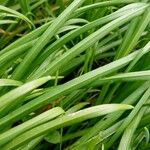
Allium triquetrum
Three-cornered Leek · Triquetrous garlic · Triquetrous leek · Angled onion · Three-corner garlic
Description
Source: leafsnapAllium triquetrum, commonly known as three-cornered leek, is a perennial bulbous plant in the Allium genus. Native to the Mediterranean region, it has been introduced and naturalized in various parts of the world, including North America and Australia. The plant can grow up to 50 cm tall and features narrow, triangular leaves in cross-section. Its flowers, which bloom from late winter to early spring, are white or pinkish-white with six petals arranged in a star shape. When crushed or cut, all parts of the plant emit a strong onion-like odor, making it a useful culinary herb. Three-cornered leek thrives in moist soil and partial shade but can also tolerate full sun if adequately watered. It spreads easily by seeds or bulb division and can become invasive if not properly controlled. Throughout history, different cultures have used this plant for medicinal purposes, including treating coughs, colds, digestive issues, and even snake bites. In summary, Allium triquetrum is an intriguing ornamental herb with culinary applications. However, it requires careful management due to its invasive potential outside its native range.
🎭 Affection, Defense, Casting out demons
Care Guide
💧 Water Every 7 days
The three-cornered leek thrives in damp, shady environments where consistent moisture and stable humidity are essential. For optimal growth, water it weekly to maintain the right water balance. In temperate regions, this plant benefits from rainwater, which serves as natural irrigation and supplies essential nutrients to support its growth cycle.
What should I do if I give my Three-cornered leek too much or too little water?
Overwatering can be a problem for the Three-cornered leek because it doesn't need much water and too much can cause bulb rot. Symptoms of overwatering include mushy bulbs, spotted and flopping stems, droopy flowers, and yellowed stalks. Normally, yellow leaves are normal at the end of the blooming period, but if they turn yellow before the flowers bloom, it's a sign of overwatering. Unfortunately, bulb rot cannot be reversed, so if caught early, the bulb needs to be dug up and rotten portions removed, along with all the soil it grew in. Pots should be thoroughly disinfected to avoid spreading the fungus. Outdoor plants should be moved to a different location. Underwatering is not as big of an issue, but signs include no blooms, sagging and wizened stalks, and browning around the edges of the flower petals. If the plant is underwatered, it has some drought tolerance, so watering it properly should help. Be careful not to saturate the soil. Overwatering can lead to root rot and fungus on the bulb, which causes spots on leaves and buds, as well as discoloration and death of leaf tips.
How often do I have to give water to my Three-cornered leek?
Three-cornered leek is a low-maintenance plant that is best grown directly in the ground. Avoid overwatering as it can cause bulb rot. Water the plant well once when initially planting, then wait for shoots to appear before watering again. After the leaves have grown, check the soil moisture by putting your finger a few inches below the surface. If it's wet, no need to water. For potted plants, check the water collection tray for standing water and avoid watering if present. Use a moisture sensor for a more accurate reading, aiming for the middle of the "moist" category. Water your Three-cornered leek once per week for optimal results.
How should I change my watering depending on the conditions for my Three-cornered leek?
The Three-cornered leek is a tough plant that can survive in tough conditions. If you plant it outdoors, you can rely on natural watering, as it doesn't need much water and can withstand periods of drought. Just make sure the soil has good drainage. For potted Three-cornered leeks, be cautious with watering. Since they are bulb plants, they can rot if overwatered. Water them less and ensure the pots have drainage holes. Use well-drained soil and add sand or rocks to improve drainage. During the growing phase, you can water the Three-cornered leek about one inch per week to encourage flower bloom. Start watering when the stalk appears. Adjust the watering based on the humidity and temperature of your climate. Hot, dry climates may require more frequent watering, while humid climates may need less. Always check soil moisture to prevent overwatering. These plants prefer moist, well-drained soil.
☀️ Light Partial sun
The three-cornered leek prefers conditions with sunlight present but not constant, prospering in locations where light is diffused or filtered. It can also adjust to environments with plentiful or very little sunlight. Too much or too little light can impede its healthy growth, as is true in its native habitat that has variable light conditions.
What are the sunlight requirements for three-cornered leek?
Three-cornered leek thrives in variable light conditions. It requires partial sun, around 3-6 hours of sunlight per day, to prosper. However, it can also adapt well to full sun or full shade conditions, which means more than 6 hours of sunlight. It’s important to observe the movement of sunlight through your garden to find the ideal spot that offers a balance of light and shade, mimicking the plant's natural habitat and ensuring its growth and health.
How do artificial lighting conditions affect the growth of indoor three-cornered leek plants?
When natural sunlight is insufficient, especially during winter or in less sunny areas, artificial lighting becomes essential for the growth of indoor three-cornered leek plants. LED lights are recommended because they can be tailored to provide specific light wavelengths needed by the plants. For optimal growth under artificial light, full sun plants need 30-50W per square foot, partial sun plants require 20-30W per square foot, and full shade plants need 10-20W per square foot. The distance between the plant and the light source should be 12-36 inches to mimic natural sunlight conditions. Most plants will benefit from 8-12 hours of artificial light per day to simulate natural daylight hours.
What are the symptoms of incorrect lighting for three-cornered leek?
Improper lighting conditions can lead to several symptoms in three-cornered leek, including small or lighter-colored new leaves, indicating insufficient sunlight. In contrast, leaf curling, wilting, or scorching could point to excessive sunlight. The plant might also exhibit leggy or sparse growth, faster leaf drop, and slower or no new growth due to poor lighting. Moreover, chlorosis and sunscald are other serious issues caused by inappropriate light exposure, affecting the plant's ability to photosynthesize and overall health.
How can I address lighting issues for my three-cornered leek?
To remedy lighting issues for three-cornered leek, consider gradually adjusting the plant's exposure to natural sunlight by moving it to sunnier spots each week, aiming for 3-6 hours of direct sunlight daily. For indoor plants or those that are not easily movable, using artificial light sources like desk lamps or professional plant grow lights for at least 8 hours a day can help. If the issue is due to excess shade, try reducing obstructions by pruning trees or relocating the plant during its dormant period to a site with more suitable light and drainage. Remember, parts of the plant negatively affected by previous insufficient light may not recover fully, but new growth should be healthy with correct light exposure adjustments.
🌡️ Temperature 0–35°C
The three-cornered leek grows best at temperatures from 32°F (0°C) to 95°F (35°C), which is characteristic of temperate climates. It is native to Mediterranean regions, where summers can be quite warm. To cope with seasonal temperature shifts, mulching in winter can protect it from frost and mulching in summer can help prevent heat stress.
What is the preferred temperature range for Three-cornered Leek?
The Three-cornered Leek, known botanically as Allium triquetrum, thrives in temperatures ranging from 32°F (0°C) to 95°F (35°C). This range is typical of its native Mediterranean environment, which experiences warm summers. To handle the varying weather across seasons, mulching in winter helps protect it from frost, and actions to mitigate heat stress are beneficial in summer. Despite its strong cold resistance, in extreme conditions where winter temperatures fall below -35°C, it's vital to protect the plant with coverings like soil or straw. Additionally, watering the plant abundantly before the first freeze of autumn to keep the soil moist is recommended, preventing drought and water scarcity during the colder months.
How does Three-cornered Leek respond to low temperatures?
Three-cornered Leek exhibits a high tolerance to cold, generally thriving best in temperatures above 0°C. Special frost protection measures are not typically needed, thanks to its resilience. However, it should be noted that if temperatures plummet below -35°C, the plant may not show immediate distress during winter, but there can be a notable decrease in sprouting or even a complete lack of sprouting once spring arrives. The solution for any parts of the plant that fail to sprout in spring is simply to remove them, allowing for new growth.
What should be done if the Three-cornered Leek experiences high temperatures?
During the summer, it's essential to ensure that the temperature stays below 35°C for Three-cornered Leek. Exposing the plant to temperatures above 41°C can lead to symptoms such as lighter leaf color, tendency for the leaves to curl, susceptibility to sunburn, and, in severe cases, wilting and drying of the entire plant. To address these issues, trim away the sunburned and dried-up parts and adjust the plant's location to provide some shade during the midday and afternoon sun. Employing a shade cloth can also be effective. Additionally, watering the plant in the morning and evening helps keep the soil adequately moist.
💨 Humidity
🪴 Soil 6-7
🌱 Fertilizer
One application of fertilizer in spring is typically enough for Three-cornered leek, but several feedings can help maximize growth. Apply fertilizer once every month to every month and a half. Fertilization improves leaf appearance and function, promoting uniform color and a healthy texture. It also stimulates root growth and nutrient uptake, supporting long-term plant health.
Why should I add fertilizer to my Three-cornered leek?
The leaves of the Three-cornered leek play a big role in the plant's structure. Fertilizing is an important way to ensure that these leaves look nice and do their job effectively. Good fertilization promotes consistent leaf color and a healthy texture. It also works beneath the surface to support the growth of new roots and maintain existing ones. This means that fertilizing doesn't just keep your plant healthy in the present, but also helps it absorb nutrients from the soil more effectively in the long run.
When should I put fertilizer on my Three-cornered leek?
If you grow your Three-cornered leek outdoors each year, it will start to grow new leaves in early spring. This is when you should start fertilizing it. Normally, one application of fertilizer is enough. But if you want your Three-cornered leek to grow as much as possible, you can fertilize it multiple times in the spring and early summer. If you choose to do this, you should fertilize it about once every month to a month and a half.
When is it not a good time to fertilize my Three-cornered leek?
During the late fall and winter, your Three-cornered leek goes into a dormant phase and stops growing. It's best not to fertilize it during this time. In the spring and summer, if you choose to fertilize, start decreasing the amount as summer approaches because the growth rate of your Three-cornered leek will slow down. Overall, it's not a good idea to fertilize your Three-cornered leek when the weather is unusually hot or the soil is extremely dry. Fertilizing in those conditions can stress the plant and cause it to die prematurely.
What kind of fertilizer should I use for my Three-cornered leek?
Choosing the right fertilizer for a Three-cornered leek is actually quite simple. These plants do well with a general-purpose garden fertilizer that has equal amounts of nitrogen, phosphorus, and potassium. A fertilizer with a 10-10-10 ratio or something similar will work best. Avoid fertilizers with high nitrogen levels if you're unsure. The best fertilizers for these leeks usually come in granular form and should be slow-release. Applying them to the soil is easy. Additionally, using organic soil amendments like compost can be beneficial.
How should I add fertilizer to my Three-cornered leek?
To properly fertilize your Three-cornered leek, wait until its first leaves emerge in early spring. Then, apply a granular slow-release fertilizer to the soil around the base of the leek. You can repeat this process later in the season if desired. Remember to apply the fertilizer to the soil, not the plant itself, which may require moving some leaves aside. It's also helpful to water the leek before and after feeding.
🪴 Pot & Repot Every 12 months
Repot Three-cornered leek in early spring. Choose a pot that is wider than it is deep and has good drainage. Use a loamy, well-draining potting mix enriched with compost. Gently remove old soil from the bulb and plant it at the same depth as the bulb's height. Water thoroughly after repotting and place the pot in a sunny spot. Avoid overwatering to prevent bulb rot.
✂️ Pruning
The three-cornered leek features triangular stems and white flowers. To maintain its health and prevent disease, prune in early spring by trimming away dead leaves. Removing the flower heads can help control its spread. This plant requires minimal pruning, making it a low-maintenance choice that improves air circulation and reduces fungal problems.
🌿 Propagating
🐛 Diseases & pets
☠️ Toxicity
Characteristics
- Plant Type
- Herb
- Life Cycle
- Perennial
- Genus
- Allium
- Family
- Amaryllidaceae
- Hardiness Zone
- 3-10
- Mature Height
- 18 cm to 61 cm
- Mature Spread
- 10 cm
- Leaf Color
- Green
- Leaf Type
- Deciduous
- Flower Color
- White
- Flower Size
- 1.02 cm to 1.78 cm
- Bloom Time
- Mid spring, Late spring
- Planting Time
- Spring
- Harvest Time
- Late spring, Early summer
- Native Area
- Tunisia, Italy, Spain, France, Algeria, Morocco, Portugal