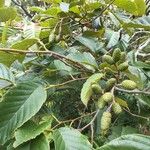
Alnus acuminata
Andean Alder · Alder
Description
Source: leafsnapAlnus acuminata is a species of deciduous tree in the Betulaceae family. It is found in montane forests from central Mexico to Argentina.
Care Guide
💧 Water
Alder trees flourish in moist environments and need watering every three weeks to promote growth without causing over-saturation. They are commonly found in riparian zones, where occasional flooding enhances soil moisture, which is essential for their development.
☀️ Light Full sun
The alder grows best in strong, direct sunlight. While such intense light supports proper growth, excessive exposure can stress the plant and damage its development. In its natural range it is located in very sunny areas.
What are the sunlight requirements for an Alder plant?
Alder plants thrive in full sun, requiring more than 6 hours of sunlight daily, but they can also tolerate partial sun of about 3-6 hours. It's important to observe the movement of sunlight through your garden to find spots that offer a balance of light and shade, ensuring optimal growth conditions for your Alder. Additionally, be mindful of how the Alder, with its preference for intense, unfiltered sun exposure, reacts to sunlight, as too much can cause stress and damage, despite its natural habitat being in sun-soaked areas.
How does artificial lighting support Alder plant growth indoors?
For indoor Alder plants, especially during winter or in less sunny spaces, artificial lighting is invaluable for promoting healthy growth. Opt for LED lights, which can be tailored to provide specific light wavelengths needed by the plant. Depending on the type (full sun, partial sun, full shade), artificial light intensity should range from 10-50W per square foot. The light source should be placed 12-36 inches above the plant, for 8-12 hours daily, to best mimic natural sunlight conditions.
What are the important symptoms of light deficiency or overexposure in Alder plants?
Alder plants manifest several symptoms if they receive too little or too much light. Deficiency symptoms include smaller new leaves, leggy or sparse growth, early leaf drop, slowed or halted growth, pale new leaves, and symptoms of overexposure include chlorosis, sunscald, leaf curling, wilting, and leaf scorching. These symptoms help diagnose the plant's health related to its light exposure, indicating whether adjustments are needed to ensure its well-being.
What are effective solutions for addressing Alder plant light exposure issues?
To address light exposure issues for Alder plants, consider the following: For indoor plants, gradually increase sunlight by moving them closer to a south-facing window or use artificial light sources for at least 8 hours daily. For outdoor plants, adjust their location gradually to acclimatize them to more sunlight while avoiding sudden changes that could cause sunburn. If sunlight is blocked by obstructions, prune or move the plants to sunnier locations. Remember, parts of the plant that have been negatively affected by previous poor light conditions may not recover, but new growth can be healthy with improved light exposure.
🌡️ Temperature 5–32.2°C
Alder is native to regions where temperatures range from 41 to 89.6 °F (5 to 32 ℃). It prefers temperatures that are fairly even throughout the year. When grown outside its native range, seasonal adjustments might be necessary to replicate these conditions.
What are the native conditions for growing Alder?
Alder (Alnus acuminata) is native to areas with temperatures ranging between 41 to 89.6 °F (5 to 32 °C). It prefers conditions where temperatures are evenly distributed throughout the year. When grown outside its native range, seasonal adjustments may be needed to mimic these conditions. Alder has a strong resistance to cold, so special frost protection measures are generally not required during winter. However, in areas where winter temperatures might drop below -30°C, it is still crucial to provide cold protection. This protection can be achieved by wrapping the trunk and branches with non-woven fabric or cloth. Also, it's recommended to water the plant abundantly before the first freeze in autumn to ensure the soil remains moist and enters a frozen state, helping to prevent drought and water scarcity for the plant during winter and early spring.
How does Alder react to low temperatures and what are the solutions?
Alder is cold-tolerant and best thrives when the temperature remains above 5°C. During winter, it should be maintained above -25°C. If temperatures drop below -30°C, there might not be immediate visible changes during winter; however, the branches could become brittle and dry by springtime, and no new shoots will emerge. To address this, it's advisable to prune away any dead branches that have failed to produce new leaves come spring.
How does Alder react to high temperatures and what are the solutions?
During the summer, it is crucial to keep the Alder below 32°C. Exceeding temperatures of 35°C can result in the leaves becoming lighter in color, tips becoming dry and withered, and the whole plant becoming more prone to sunburn. To mitigate these effects, trim away the sunburned and dried-up parts of the plant. You should also move the plant to a location that provides shade during the midday and afternoon sun, or use a shade cloth. Ensuring the soil is kept moist by watering the plant in the morning and evening is also beneficial.
💨 Humidity
🪴 Soil 5-7
🌱 Fertilizer
Fertilize your Alder in early spring to encourage healthy growth. Regular feeding improves overall health, leading to vigorous development, greater tolerance of harsh conditions, and better resistance to pests and disease. Adhere to a specific fertilization schedule for your Alder to preserve vibrant, deeply colored foliage and a lush appearance.
🪴 Pot & Repot
✂️ Pruning
Alder trees benefit from annual pruning in early spring to maintain their health and shape. Key techniques include removing dead branches, thinning out dense areas, and trimming back overextended limbs. This practice improves air circulation, reduces the risk of disease, and encourages new growth. To achieve the best results, use clean, sharp tools.
🌿 Propagating
🐛 Diseases & pets
☠️ Toxicity
Characteristics
- Plant Type
- Tree
- Life Cycle
- Perennial
- Genus
- Alnus
- Family
- Betulaceae
- Hardiness Zone
- 4-8
- Mature Height
- 24.99 m
- Mature Spread
- 7.92 m to 14.94 m
- Leaf Color
- Green
- Leaf Type
- Semi-evergreen, Deciduous
- Flower Color
- Green
- Flower Size
- 11.43 cm
- Bloom Time
- Late winter, Early spring
- Planting Time
- Spring, Autumn
- Harvest Time
- Late summer, Early fall, Mid fall