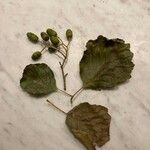
Alnus glutinosa
Alder · Common Alder · European alder · Black alder · European black alder
Description
Source: leafsnapAlnus glutinosa, the common alder, black alder, European alder, European black alder, or just alder, is a species of tree in the family Betulaceae, native to most of Europe, southwest Asia and northern Africa. It thrives in wet locations where its association with the bacterium Frankia alni enables it to grow in poor quality soils. It is a medium-sized, short-lived tree growing to a height of up to 30 metres (98 feet). It has short-stalked rounded leaves and separate male and female flowers in the form of catkins. The small, rounded fruits are cone-like and the seeds are dispersed by wind and water. The common alder provides food and shelter for wildlife, with a number of insects, lichens and fungi being completely dependent on the tree. It is a pioneer species, colonising vacant land and forming mixed forests as other trees appear in its wake. Eventually common alder dies out of woodlands because the seedlings need more light than is available on the forest floor. Its more usual habitat is forest edges, swamps and riverside corridors. The timber has been used in underwater foundations and for manufacture of paper and fibreboard, for smoking foods, for joinery, turnery and carving. Products of the tree have been used in ethnobotany, providing folk remedies for various ailments, and research has shown that extracts of the seeds are active against pathogenic bacteria.
💡 The black alder is a pioneer species of tree that plays a crucial role in helping new forests establish themselves. Initially, it thrives until other trees begin to overshadow it, depriving it of light and causing it to die out. While the black alder is valuable to wildlife and makes an attractive ornamental tree, it has the potential to become invasive. Remarkably, this tree can tolerate a wide range of soil conditions, from waterlogged to dry.
🌳 Besides offering shade and visual appeal, black alder has distinct qualities useful in crafts and industry. Woodworkers value its hardwood for making sturdy furniture, while dyers obtain a rich dye from its bark. Surprisingly, black alder also functions as an effective soil bioindicator, revealing hidden heavy metals like gold through its bioaccumulation properties. This finding could change ecological surveys and mining prospecting.
🎭 Protection, Emblem of Appearance and Glamour
Care Guide
💧 Water
Black alder thrives in wetlands, adapting well to high moisture levels and occasional flooding. It needs watering every 1-2 weeks to maintain moist, but not waterlogged, soil. This makes it ideal for rain gardens, as it benefits from soil conditions that resemble its natural, damp riverbank habitat.
How should I water my Black alder tree in the best way?
To ensure excellent root development, it's best to place a garden hose at the base of the plant rather than directly spraying the leaves. If the plant is outdoors and exposed to direct sunlight, the leaves will need more watering. Another option is to use bubblers or soaker hoses to moisten the roots. For optimal root growth, it's recommended to use soaker hoses that cover the entire garden or bed when adding or removing plants. After watering, make sure to drain any excess water and allow the soil to dry before watering again. To prevent diseases, water at ground level rather than spraying the leaves. On a sunny day, it can be beneficial to spray the entire bush with water. Whether the plant is potted or in-ground, it's important to remember that Black alder prefers deep watering rather than light sprinkling.
What do I need to do if I give Black alder too much or too little water?
An overwatered Black alder can show signs of yellow leaves, leaf drop, and wilting. The plant may also appear dull and unhealthy, with mushy stems. If you notice these signs, adjust your watering schedule as needed. Wilting can also indicate under watering, in which case the leaves may become crispy and dry. When the soil is dry, simply watering may not be enough; give the plant a thorough watering. While this will help the Black alder recover, the damaged root system may cause dryness and yellowing of leaves a few days later. Once the plant returns to normal, the yellowing will stop. Indoors, always check moisture levels and avoid overwatering. Look out for black spots, and if present, let the soil dry by withholding watering for a few days. Overwatering can lead to root rot, so transfer the plant to a different pot if you see discolored and slimy roots. Preventing root rot is crucial, so don't let the soil become too soggy. When planting the Black alder outdoors, ensure the soil isn't too dry by checking with your fingers. If it is, the plant may be underwatered, so provide adequate watering to help it recover.
How often do I need to water my Black alder?
The Black alder prefers deep and infrequent watering. To keep them well hydrated, it is recommended to soak them with a gallon of water, especially when they are potted. Potted plants have limited water storage, so the soil tends to dry out faster. If you live in a cold region, watering every 3 to 5 days is necessary. It is best to water in the morning when the soil is dry, whether you have the plant indoors or outdoors. Checking the soil is a good way to determine if watering is needed. When the top 2-3 inches of soil are dry, it's time for a thorough watering. On hot days, check the moisture level daily as the heat can quickly dry out the pot's soil. If you have a garden, soil irrigation is also necessary. In a hot climate, watering once a week is recommended. However, only water when you notice about 2 to 3 inches of soil becoming dry. Take into account the amount of rainfall and avoid over-watering to prevent root rot. During spring and fall, the Black alder typically grows. For outdoor plants, adding mulch about 3 to 4 inches deep helps with water conservation. Sandy soil tends to drain faster, so plants in this type of soil may require more frequent watering. On the other hand, clay soil retains water longer, so less frequent watering is needed to avoid root rot. It may be helpful to keep track of watering dates on a calendar and pay attention to any drooping leaves, which could indicate the need for watering.
How much water should I give my Black alder plant?
The Black alder generally needs about a gallon of water on a regular basis. For potted plants, water them deeply until water starts to drip at the bottom of the pot. Then wait for the soil to dry before watering again. You can use a water calculator or moisture meter to determine the amount of water you've given your plant in a week. During the flowering period, provide plenty of water but let the moisture evaporate to prevent root rot. If the Black alder is planted outdoors and receives sufficient rainfall, additional watering may not be needed. When the Black alder is young or newly planted, ensure it receives 1-2 inches of rain per week. As the Black alder grows, it can rely solely on rainfall. Only during extreme heat or prolonged periods without rainfall, consider giving the Black alder a full watering during the cooler part of the day to prevent heat damage. Additional watering will be necessary during extended dry spells.
Should I change how often I water my Black alder tree depending on the seasons or weather conditions?
To ensure the healthy growth of the Black alder, it is important to understand its watering needs according to different seasons. During spring and fall, the soil should be kept moist but not overly wet. Alternating between dry and moist soil conditions will promote the plant's development. In the summer, hot weather can cause water to evaporate rapidly, so more frequent watering may be necessary if there is a lack of rainfall. However, during winter, the Black alder requires less water as it goes dormant and drops its leaves. When growing outdoors, it is recommended to use a well-draining but moisture-retentive soil mixture like terracotta. This will help the water evaporate more efficiently. Once the Black alder begins to leaf out and go dormant, watering can be skipped, relying on fall and winter rains to provide sufficient moisture. When the Black alder is in a pot, its root growth is limited, so it should be kept well-watered, especially during summer. However, adequate drainage is essential to prevent the roots from becoming cold and wet, which the plant does not tolerate well. It is advisable to water the Black alder thoroughly, ensuring that the entire root system receives a deep soak at least once or twice a week, depending on weather conditions. Shallow sprinkling that reaches only the leaves should be avoided as it promotes fungal growth and does not reach the roots effectively. Even during fall and winter dormancy, the plant should not be allowed to dry out completely. Care should be taken not to overwater the Black alder, as it does not thrive in waterlogged soil. Poor drainage can lead to the plant's death during winter. Applying mulch whenever possible can help reduce stress, conserve water, and encourage healthy blooms.
☀️ Light Full sun
The black alder grows best with a full day's sunlight, though it can tolerate times of reduced light. At any stage of growth it adjusts well to varying light levels. Still, insufficient light can impede its growth, and too much exposure can harm its health. Its natural habitat is areas with abundant sunlight.
What are the sunlight requirements for plants?
Plants have different sunlight requirements to thrive. Full sun plants need more than 6 hours of direct sunlight daily, while partial sun plants require about 3-6 hours of sunlight. It's crucial to observe how sunlight moves through your garden to ensure plants are placed in spots that offer the right balance of light and shade, aligning with their specific needs.
How does the Black Alder adapt to different light intensities?
The Black Alder thrives best in environments with abundant sunlight, enduring a full day's light exposure. Although it can withstand periods of decreased light, its growth might be slowed in limited light conditions, and excessive exposure could negatively affect its health. It's adaptable to varying light intensities, making its growth resilience notable, but for optimal growth, the right amount of light is crucial.
What artificial lighting is needed for indoor plants?
When natural sunlight is insufficient, especially during winter or in less sunny spaces, artificial lighting becomes essential for indoor plants. LED lights are favorable for indoor plant lighting, as they can provide specific wavelengths needed for plant growth. Full sun plants require 30-50W/sq ft, partial sun plants need 20-30W/sq ft, and full shade plants need 10-20W/sq ft of artificial light. The light source should be placed 12-36 inches above the plant, mimicking natural sunlight as closely as possible, and plants most often need 8-12 hours of artificial light daily.
What are the signs of light deficiency or excess in Black Alder?
Black Alder shows specific symptoms when faced with suboptimal lighting conditions. Light deficiency symptoms include small leaves, leggy or sparse growth, faster leaf drop, slower or halted new growth, and lighter-colored or pale new leaves, indicating a lack of chlorophyll and essential nutrients. In contrast, too much sunlight can cause chlorosis (leaves turning yellow), sunscald (damage from intense sunlight exposure), leaf curling (a defense mechanism to reduce water loss), wilting (loss of turgor pressure), and leaf scorching (brown, crispy leaf edges), all affecting the plant's health and photosynthetic ability.
What can be done to address sunlight-related issues for Black Alder?
To optimize Black Alder's growth, gradually acclimate it to its ideal sunlight exposure. For indoor plants, move them closer to a south-facing window or use artificial lights for at least 8 hours a day. Outdoor plants should be slowly transitioned to better-lit areas to prevent sunburn. If trees or other obstacles block sunlight, consider pruning them or, for smaller plants, transplanting during their dormant period to a location with sufficient sunlight and good drainage. Remember, while parts of the plant that were previously affected might not recover, new growth will be healthy with improved light exposure.
🌡️ Temperature 0–32.2°C
Black alder is a temperate woody plant that prefers temperatures between 32 and 90 ℉ (0 to 32 ℃). It is native to wetland habitats where temperatures typically range from 40 to 70 ℉ (4 to 21 ℃). In winter, young Black alder should be protected from freezing by placing a layer of organic mulch around the base of the plant.
What is the ideal temperature range for Black Alder, and how does it tolerate extreme temperatures?
Black Alder (Alnus glutinosa) thrives in a temperate range between 32 to 90°F (0 to 32°C), ideally in wetland environments where the temperature typically ranges from 40 to 70°F (4 to 21°C). It is highly cold-tolerant, able to withstand winter temperatures without needing extra frost-protection measures, but requires protection during its early stages by mulching the base with organic matter. Black Alder can endure temperatures down to -35°C, yet temperatures beyond this can cause branches to become brittle and inhibit new growth come spring. Although it manages well in cold, the Black Alder struggles with high temperatures above 32°C, which can lead to significant leaf drop or even death of the plant.
How should Black Alder be cared for to mitigate temperature extremes?
To protect Black Alder in varying temperatures, several measures should be taken. In anticipation of the first freeze of autumn, water the plant generously to ensure the soil is moist when it freezes, supporting the plant's hydration through winter. If winter temperatures are expected to plummet below -35°C, though there's no need for additional frost measures, attention should come to the plant in spring by pruning any dead branches that fail to produce new leaves. Against high temperatures exceeding 32°C, it's advised to trim away sunburned parts, relocate the plant to a shaded area or employ shade cloth, and water it during the cooler times of morning and evening to maintain moist soil conditions.
💨 Humidity normal (40-60%)
This plant will thrive in moderate humidity, which is probably the level in your home. However, misting it a few times a week can be very beneficial. Make sure the room has good ventilation.
🪴 Soil 5-6
🌱 Fertilizer
To encourage healthy growth, fertilize your Black alder in early spring. Consistent feeding improves its overall health, leading to vigorous growth, greater tolerance of harsh conditions, and enhanced resistance to diseases and pests. Keep to a defined fertilization schedule for your Black alder to maintain foliage that is vibrant, richly colored, and lush in appearance.
What will happen if I use too much fertilizer on my Black alder?
Feeding a Black alder carries the risk of overfertilization, which can happen if you feed it at the wrong time, too frequently, or without watering the soil first. Overfertilization can cause brown leaves and stunted growth. Conversely, excessive fertilizer can lead to rapid but weak new growth, which can also negatively affect the Black alder's form and structure.
Why do I have to put fertilizer on my Black alder?
No matter which type of Black alder you have, regular fertilization is important for overall plant health. Providing the right nutrients supports stronger growth and helps the plant withstand challenging conditions, while also improving its ability to resist diseases and pests. Maintaining the foliage of your Black alder is crucial as it is one of its most appealing features. To achieve this, establish and stick to a regular fertilization schedule tailored to your specific Black alder. This will encourage the growth of vibrant leaves with a rich color and lush appearance.
When should I fertilize my Black alder tree?
To ensure healthy growth for your Black alder, it is recommended to fertilize during late winter or early spring. This provides the necessary nutrients for the tree to thrive when the weather warms up. If you live in a warm climate region, an additional fertilizer feeding in early fall can be beneficial. This not only adds nutrients for the following growing season but also helps the Black alder withstand winter cold without foliage damage. Fertilizing earlier in the year allows the new branches to grow and withstand the cold winter better.
When is it best to not fertilize my Black alder?
To ensure proper care for your Black alder, avoid fertilizing during certain times of the year. Firstly, during the dormant period in early and mid-winter, the plant does not require additional nutrients. Additionally, it is not recommended to fertilize in late spring and throughout the summer. These seasons typically have hotter and drier weather conditions, which can negatively impact the Black alder if fertilized. Instead, follow a fertilization schedule that focuses on feeding in early spring and early fall to prevent any issues.
What kind of fertilizer does my Black alder tree need?
The most important nutrient for a Black alder is usually nitrogen, but that doesn't mean phosphorus and potassium aren't important. In fact, your Black alder needs a good amount of all three nutrients. A balanced fertilizer like a 10-10-10 can work well, but a more specific nutrient ratio can lead to better growth. Fertilizers higher in nitrogen, like a 10-6-4 ratio, often work well. You can use either granular or liquid-based fertilizers when feeding your Black alder.
🪴 Pot & Repot Every 12 months
✂️ Pruning
Black alder benefits from regular pruning, especially in early spring. When pruning, concentrate on removing dead branches and thinning out crowded areas. This will improve airflow and promote healthy growth. By cutting back to a bud or lateral branch, you can help maintain the tree’s structure and prevent disease.
🌿 Propagating
🐛 Diseases & pets
☠️ Toxicity
Alnus glutinosa has no toxic effects reported.
Characteristics
- Plant Type
- Tree
- Life Cycle
- Perennial
- Genus
- Alnus
- Family
- Betulaceae
- Hardiness Zone
- 3-7
- Mature Height
- 20.12 m to 36.88 m
- Mature Spread
- 6.1 m to 11.89 m
- Leaf Color
- Green
- Leaf Type
- Deciduous
- Flower Color
- Brown, Yellow
- Flower Size
- 1.02 cm to 1.52 cm
- Bloom Time
- Early spring, Mid spring, Winter
- Planting Time
- Spring, Autumn
- Harvest Time
- Mid summer, Late summer, Fall
- Native Area
- Libya, Turkey, Austria, Sweden, Slovakia, Montenegro, Croatia, Slovenia, Morocco, Belarus, Russia, Germany, Estonia, Romania, Latvia, Belgium, Moldova, Netherlands, Portugal, France, Tajikistan, Tunisia, Czech Republic, Bulgaria, Armenia, Poland, Greece, North Macedonia, Ukraine, Serbia, Lithuania, Norway, Italy, Kazakhstan, Spain, Switzerland, Denmark, Finland, Bosnia and Herzegovina, Iran, Albania, Ireland, United Kingdom, Hungary, Algeria, Azerbaijan