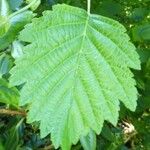
Alnus hirsuta
Manchurian alder · Siberian alder
Description
Source: leafsnapAlnus hirsuta, commonly known as the Hairy Alder, is a deciduous tree species in the Betulaceae family. Native to North America, it can be found in regions such as Alaska, British Columbia, and California. This tree can reach up to 20 meters in height and its trunk can have a diameter of up to 60 centimeters. The Hairy Alder features a distinctive bark that is smooth and grayish-brown when young but becomes rough with age. Its leaves are dark green, serrated at the edges, and pointed at the tips. The underside of the leaves is also hairy. The tree produces small flowers in early spring before its leaves emerge. These reddish-brown flowers grow on catkins that hang from branches of the previous year's growth. Alnus hirsuta prefers moist soils, such as those found near streams or wetlands, but it can also tolerate drier soils once established. It plays a crucial role in riparian ecosystems by stabilizing stream banks, providing shade for aquatic organisms, and improving water quality through nutrient uptake. In addition to its ecological importance, Alnus hirsuta has several uses for humans. Its strong wood properties make it suitable for firewood or timber, as it is resistant to decay fungi and insects like termites. Overall, Alnus hirsuta is an important species both ecologically and economically. Its unique characteristics make it an interesting plant species worth further study by botanists and ecologists alike.
Care Guide
💧 Water Every 7 days
The Manchurian alder thrives in moist environments, preferring consistent moisture and typically requiring watering every two weeks. It flourishes outdoors in areas with natural rainfall, making it an ideal choice for riparian plantings that help stabilize soil and manage water runoff.
☀️ Light Full sun
The manchurian alder needs plenty of sunlight to develop healthily, and its preferred environment is locations with abundant sun. It can tolerate sites with moderate light, but performs best where sunlight predominates. Insufficient light can limit its growth, while excessive sun may scorch its leaves.
🌡️ Temperature 0–32.2°C
Manchurian alder is a plant native to temperate areas and requires temperatures between 32 and 90°F (0 to 32℃). In regions with significant seasonal temperature variation, seasonal adjustments may be necessary.
What is Manchurian alder and where is it native to?
Manchurian alder, botanically known as Alnus hirsuta, is a plant native to regions with a temperate climate. It thrives in temperatures ranging from 32 to 90°F (0 to 32°C), adjusting well to the seasonal temperature changes typical of these areas.
What are the temperature tolerances and requirements for Manchurian alder?
Manchurian alder requires a temperature range of 32 to 90°F (0 to 32°C) and is exceptionally cold-tolerant, not requiring additional frost protection in winter. To prepare for winter, it's recommended to water the plant generously before the first freeze, ensuring the soil remains moist and enters a frozen state. This precaution helps prevent drought and water scarcity during the colder months.
How does low temperature affect Manchurian alder, and what are the solutions?
While Manchurian alder can withstand extremely cold temperatures, if the winter temperature drops below -35°C, the branches may become brittle and dry by spring, failing to produce new shoots. The solution to this problem is to prune away any dead branches in the spring, which haven't developed new leaves.
How does high temperature affect Manchurian alder, and what are the solutions?
Manchurian alder is not tolerant of high temperatures. Exceeding 32°C can result in significant leaf drop, and in severe cases, the plant may wither and die. To mitigate damage, trim sunburned and dried parts, move the plant to a shaded location or use shade cloth, and water the plant in the morning and evening to maintain soil moisture.
💨 Humidity
🪴 Soil 6-8
🌱 Fertilizer
Fertilize your Manchurian alder in early spring to encourage healthy growth. Regular fertilization improves overall health, leading to vigorous growth, increased resilience in harsh conditions, and stronger resistance to diseases and pests. Keep a specific fertilization schedule for your Manchurian alder to ensure vibrant foliage with deep color and a lush appearance.
🪴 Pot & Repot
✂️ Pruning
The Manchurian alder is a strong and fast-growing plant with slightly hairy bark. To encourage growth and shape the plant effectively, prune in early spring. Remove any dead or diseased wood and cut away crossing branches to improve airflow. Regular pruning helps build a better structure, lowers the risk of disease, and boosts the plant's overall health.
🌿 Propagating
🐛 Diseases & pets
☠️ Toxicity
Characteristics
- Plant Type
- Tree
- Life Cycle
- Perennial
- Genus
- Alnus
- Family
- Betulaceae
- Hardiness Zone
- 3-7
- Mature Height
- 14.94 m to 20.12 m
- Mature Spread
- 6.1 m to 9.14 m
- Leaf Color
- Green
- Leaf Type
- Deciduous
- Flower Color
- Purple, Brown, Lavender, Gold
- Flower Size
- 5.08 cm to 10.16 cm
- Bloom Time
- Late winter, Early spring
- Planting Time
- Spring, Summer
- Harvest Time
- Late summer, Early fall, Mid fall
- Native Area
- Russia, Japan, Koppen, South Korea, China