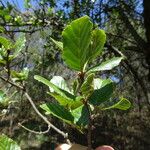
Alnus jorullensis
Evergreen alder · Mexican alder · Mount Jorullo alder
Description
Source: leafsnapAlnus jorullensis, commonly known as Mexican alder or evergreen alder, is a fast-growing tree species in the Betulaceae family. Native to Mexico and Central America, it can reach heights of up to 30 meters. The tree features a straight trunk with smooth gray bark and dark green, glossy leaves that are hairy on the underside. These oval-shaped leaves have serrated edges and can measure up to 15 cm in length. Mexican alder plays a vital role in reforestation projects due to its ability to fix nitrogen in the soil through its roots. This characteristic makes it an ideal plant for soil conservation efforts, as it enhances soil fertility and helps prevent erosion. In early spring, before new leaves emerge, the tree produces small flowers that are followed by small, cone-like fruits. These fruits contain seeds that can be dispersed by wind or water. The uses of Mexican alder are numerous. It serves as a shade tree for coffee plantations, provides timber for furniture making and construction due to its strong wood, and is also valued as an ornamental plant in gardens and parks because of its attractive foliage. Overall, Alnus jorullensis is a versatile species with many benefits, making it an important part of ecosystems across Mexico and Central America.
Care Guide
💧 Water Every 7 days
☀️ Light Full sun
Mount jorullo alder is native to open habitats, like sunny meadows and the edges of forests, which offer plenty of light. It does best in Full Sun but can tolerate Partial Sun, adjusting well to a range of light conditions.
🌡️ Temperature 15–35°C
The Mount Jorullo alder is highly adaptable to different climate conditions, tolerating both intense summer heat and cold winters. Still, it has an optimal temperature range for growth. If temperatures become too high, the plant is vulnerable to heat and humidity stress, which can cause it to die. In locations where temperatures near the lower limit of its cold tolerance, insulating the plant is important for protection.
💨 Humidity
🪴 Soil 6-7
🌱 Fertilizer
Fertilize your Mount jorullo alder in early spring to encourage healthy growth. Regular feeding improves its overall health, producing vigorous growth, greater toughness in adverse conditions, and increased resistance to pests and diseases. Keep a consistent fertilization schedule for your Mount jorullo alder to preserve vibrant, deeply colored, and lush foliage.
🪴 Pot & Repot
✂️ Pruning
🌿 Propagating
🐛 Diseases & pets
☠️ Toxicity
Characteristics
- Plant Type
- Tree
- Life Cycle
- Perennial
- Genus
- Alnus
- Family
- Betulaceae
- Hardiness Zone
- 7-10
- Mature Height
- 14.94 m to 29.87 m
- Mature Spread
- 7.92 m to 14.94 m
- Leaf Color
- Dark Green, Forest Green
- Leaf Type
- Evergreen
- Flower Size
- 0.51 cm to 1.02 cm
- Bloom Time
- Late winter, Early spring
- Planting Time
- Spring, Summer, Autumn
- Harvest Time
- Late summer, Early fall, Mid fall