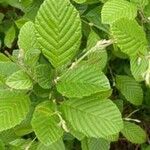
Alnus serrulata
Hazel alder · Common alder · Smooth alder · Tag alder · Brook-side Alder
Description
Source: leafsnapAlnus serrulata, commonly known as the smooth alder or hazel alder, is a deciduous shrub or small tree native to the eastern United States. It typically reaches a height of 20-30 feet with a spread of 15-25 feet. The bark is smooth and grayish-brown when young, becoming rougher with age. The leaves are dark green, serrated, and oval-shaped with pointed tips. The smooth alder blooms in early spring, producing small yellow-green flowers that appear in clusters on catkins before the leaves emerge. These flowers are an important pollen source for bees and other insects. The plant prefers moist soils, such as those found along streams or in wetlands, but it can also tolerate drier conditions once established. It is useful for erosion control due to its ability to fix nitrogen in the soil. Beyond its ecological benefits, Alnus serrulata has historical significance. Native Americans have used it for medicinal purposes, including treating wounds and respiratory ailments. Overall, Alnus serrulata is an attractive plant that offers both ecological and cultural benefits.
🌳 Hazel alder is vital in wetland environments not only because it grows well in soggy soils but also because it serves as a host plant for multiple butterfly and moth species. Especially noteworthy is its role as a nursery for tiger swallowtail caterpillars, supplying them with crucial nutrients. In addition to its ecological advantages, its wood—though not the preferred option—has historically been used to make crates, clogs and charcoal because it burns hot and clean.
Care Guide
💧 Water Every 7 days
Hazel alder thrives in wetland environments, preferring consistently moist soil while also showing a moderate tolerance for drought. Watering it every three weeks helps maintain optimal hydration. Commonly found along stream banks, hazel alder is an excellent choice for riparian plantings. It not only benefits from the ample water supply but also plays a significant role in controlling erosion.
☀️ Light Full sun
Hazel alder does best in locations that receive abundant sunlight throughout the day, though it can also tolerate sites without constant sun exposure. Both excessive and insufficient light can influence its health and growth, and its natural habitat usually consists of areas with ample sunlight.
What are the sun requirements for Hazel alder?
Hazel alder requires full sun, which is above 6 hours of sunlight daily, but can also thrive in partial sun, approximately 3-6 hours of sunlight. It's essential to observe how sunlight moves through your garden to ensure you place your plants in areas that offer the ideal balance of light and shade, ensuring their well-being and growth.
What are the essentials for growing Hazel alder?
Hazel alder thrives best in locations that receive abundant sunlight throughout the day but can also adapt to areas with less constant sunlight exposure. The plant's health and development can be negatively impacted by either excessive or insufficient light. In cases where natural sunlight is not adequate, especially during winter or in less sunny locales, artificial lighting can be a crucial alternative. LED lights are recommended for their ability to provide specific light wavelengths needed by plants, with full sun plants requiring 30-50W/sq ft, partial sun plants 20-30W/sq ft, and full shade plants 10-20W/sq ft of artificial light. The light source should be positioned 12-36 inches above the plant, and the duration should mimic natural daylight hours, typically 8-12 hours per day.
What are some important symptoms of light deficiency or excessive sunlight in Hazel alder?
In conditions of suboptimal lighting, Hazel alder may display symptoms such as smaller new leaves, leggy or sparse growth, faster leaf drop, slower or halted new growth, and lighter-colored new leaves. Excessive sunlight can cause chlorosis, sunscald, leaf curling, wilting, and leaf scorching. These symptoms respectively indicate issues like the breakdown of chlorophyll, direct damage from intense sunlight, defense mechanisms against water loss, and damage from excessive sunlight.
What solutions can help Hazel alder thrive in optimal light conditions?
For indoor plants, gradually increase exposure to sunlight by moving them to sunnier locations weekly until they get at least 6 hours of direct sunlight. Using a south-facing window or artificial lights like desk lamps or professional grow lights can also provide adequate light. For outdoor plants, a gradual transition to sunnier spots is crucial to prevent sunburn. This includes minimizing obstructions by pruning trees or branches and transplanting smaller plants during their dormant period to locations with ample sunlight and good drainage. It's important to note that parts of the plant affected by previous inadequate light may not recover, but new growth post increase in light exposure will be healthy.
🌡️ Temperature 5–32.2°C
Hazel alder is native to habitats where temperatures range from 41 to 89.6 °F (5 to 32 ℃). It prefers these moderate climates and can tolerate seasonal temperature changes within that range.
What is the native climate for Hazel alder?
Hazel alder, botanically known as Alnus serrulata, thrives in environments where temperatures range from 41°F to 89.6°F (5°C to 32°C). This tree prefers moderate climates and is capable of adjusting to seasonal temperature fluctuations within this range. Due to its strong cold resistance, special frost protection measures are not typically required during winter. However, in regions where winter temperatures are expected to drop below -25°C, it's important to provide cold protection to the tree. This can include wrapping the trunk and branches with non-woven fabric or cloth, and watering the plant abundantly before the first autumn freeze to ensure the soil remains moist and enters a frozen state, which helps prevent drought and water scarcity during winter and early spring.
How does Hazel alder react to low temperatures?
Hazel alder is quite cold-tolerant, ideally thriving in temperatures above 5°C. It can endure winters where temperatures stay above -20°C. If temperatures fall below -25°C, the tree might not show immediate visible changes during winter, but come spring, its branches may turn brittle and dry, and fail to produce new shoots. To help the tree recover from this damage, it is advised to prune away any dead branches in spring that have not produced new leaves.
What are the effects of high temperatures on Hazel alder and how can they be mitigated?
During the summer season, Hazel alder should ideally be kept in temperatures below 32°C. When exposed to temperatures exceeding 35°C, the leaves might start lightening in color, and their tips may become dry and withered, leaving the plant more vulnerable to sunburn. To mitigate these effects, you should trim away the sunburned and dried-up parts of the plant. If possible, move the plant to a location that's shaded during the midday and afternoon sun, or use a shade cloth to protect it. Adequate watering in the morning and evening will also help keep the soil's moisture levels balanced, supporting the plant's health during high temperatures.
💨 Humidity
🪴 Soil 5-7
🌱 Fertilizer
Fertilize your Hazel alder in early spring to encourage healthy growth. Regular fertilization improves its overall health, producing vigorous growth, greater resilience to tough conditions, and enhanced resistance to diseases and pests. Maintain a defined fertilization schedule for your Hazel alder to keep foliage vibrant, deeply colored, and lush in appearance.
🪴 Pot & Repot
✂️ Pruning
The hazel alder, known for its serrated leaves and dense growth, benefits greatly from early spring pruning. To maintain its health, trim away dead branches, cut back overgrown stems to improve air flow and light penetration, and thin out interior growth to promote new shoots. Avoid heavy pruning late in the season to minimize stress on the plant. Regular maintenance not only encourages vigorous growth but also improves the plant's overall structure.
🌿 Propagating
🐛 Diseases & pets
☠️ Toxicity
Characteristics
- Plant Type
- Tree, Shrub
- Life Cycle
- Perennial
- Genus
- Alnus
- Family
- Betulaceae
- Hardiness Zone
- 5-8
- Mature Height
- 3.05 m to 4.57 m
- Mature Spread
- 2.44 m to 4.57 m
- Leaf Color
- Green, Orange
- Leaf Type
- Deciduous
- Flower Color
- Brown, Tan
- Flower Size
- 5.08 cm to 10.16 cm
- Bloom Time
- Spring
- Planting Time
- Spring, Autumn
- Harvest Time
- Mid summer, Late summer, Early fall