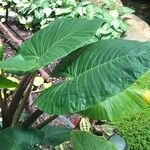
Alocasia brisbanensis
Cunjevoi
Description
Source: leafsnapAlocasia brisbanensis, commonly known as the Cunjevoi Lily or Elephant Ear, is a tropical plant native to Australia. It belongs to the Araceae family and is distinguished by its large, glossy leaves that resemble elephant ears. These leaves can grow up to 1 meter in length and are typically green with prominent veins. Alocasia brisbanensis thrives in warm, humid conditions with well-draining soil. It can be cultivated both indoors and outdoors in shaded or partially shaded areas. While the plant produces small flowers that are not particularly showy, they are followed by small berries. In traditional medicine, Alocasia brisbanensis has been used for its anti-inflammatory properties to treat skin irritations such as rashes and insect bites. However, it's important to note that all parts of the plant contain calcium oxalate crystals, which can cause skin irritation if handled improperly. Overall, Alocasia brisbanensis is a stunning tropical plant that adds an exotic touch to any garden or indoor space, while also offering some medicinal benefits when used correctly.
Care Guide
💧 Water Every 7 days
Elephant's ear, originally from humid environments, thrives in well-drained soil with consistent moisture. Although it is moderately drought-tolerant, it flourishes with weekly watering and higher humidity levels. These conditions are essential for maintaining its lush foliage, making it ideal as an evergreen plant often grown indoors.
☀️ Light Full shade
Elephant's ear prefers a shaded setting where strong light does not penetrate, reflecting its native, lush understory habitat. It can thrive in locations that receive occasional sun. Excessive sunlight may burn the leaves, while insufficient light restricts healthy growth.
What are the sunlight requirements for Elephant's ear?
Elephant's ear requires specific sunlight conditions to thrive, akin to its natural undergrowth habitat, protected from intense light. For optimal growth, these plants prefer environments that are not directly exposed to sunlight but receive partial sun, about 3-6 hours of sunlight, or full shade, which is less than 3 hours of sunlight daily. It's essential to observe the movement of sunlight through your garden to find spots that offer a balanced light and shade environment for your plants. Excessive sunlight can damage the leaves, while too little can hinder the plant's growth.
How should indoor Elephant's ear plants be lit?
Indoor Elephant's ear plants often require artificial lighting to ensure they receive adequate light, especially in less sunny spaces or during winter. It's recommended to use LED lights, as they can be tailored to the specific light wavelengths needed by the plants. Full sun plants need 30-50W/sq ft, partial sun plants 20-30W/sq ft, and full shade plants 10-20W/sq ft of artificial light. Placement should be 12-36 inches above the plant, mimicking natural sunlight as closely as possible, and the duration should replicate natural daylight hours, typically 8-12 hours per day.
What are signs of insufficient light in Elephant's ear when grown indoors?
When Elephant's ear is grown indoors with insufficient light, it may display symptoms that are subtle and hard to notice at first. These include smaller-than-usual new leaves, leggy or sparse growth, faster leaf drop, halted or no new growth, lighter-colored or irregularly patterned new leaves indicating a lack of chlorophyll, chlorosis characterized by yellowing leaves, sunscald, leaf curling as a defense against excessive sunlight, wilting due to loss of turgor pressure, and leaf scorching.
How can I address light deficiency problems in indoor and outdoor Elephant's ear plants?
To combat light deficiency in Elephant's ear plants, indoor solutions include moving your plants closer to a window to receive ample filtered light and considering the use of artificial lighting such as desk or ceiling lamps for at least 8 hours a day. For outdoor plants, a gradual adjustment to sunlight by moving them into sunnier spots weekly is crucial. For both indoor and outdoor plants, reducing blockages to sunlight can significantly help. Pruning nearby trees and bushes or transplanting the plants to sunnier locations are effective strategies. Keep in mind that damaged parts of the plant might not recover, but new growth should be healthy once proper light levels are restored.
🌡️ Temperature 20–37.8°C
Elephant's ear adapts well to temperature, tolerating higher heat and wide temperature fluctuations. In hot weather, care should be taken with watering and providing some shade to prevent sunburn. However, Elephant's ear is less tolerant of low temperatures; while it can endure a certain amount of cold, overly cold conditions may cause frost damage.
What is Elephant's ear?
Elephant's ear refers to a plant with the botanical name Alocasia brisbanensis. It's known for its large, ear-shaped foliage.
💨 Humidity
🪴 Soil 5-6
🌱 Fertilizer
The best time to fertilize an Elephant's ear is in early spring, when it is coming out of dormancy and beginning active growth. Fertilizing supplies essential nutrients for healthy growth. Although Elephant's ear has relatively low fertilizer requirements, applying fertilizer once a year can enhance its survival and encourage better, longer-lasting flowers.
🪴 Pot & Repot Every 12 months
✂️ Pruning
The Elephant's Ear plant is known for its large, heart-shaped leaves and thrives in well-drained soil with indirect light. Prune it in early spring using sterilized tools to promote growth and improve air circulation. Regular pruning helps manage the plant's size; however, be sure to wear gloves to protect against irritation from the plant's sap.
🌿 Propagating
🐛 Diseases & pets
☠️ Toxicity
Characteristics
- Plant Type
- Herb
- Life Cycle
- Perennial, Annual
- Genus
- Alocasia
- Family
- Araceae
- Hardiness Zone
- 9-11
- Mature Height
- 0.91 m to 2.13 m
- Mature Spread
- 0.91 m to 1.52 m
- Leaf Color
- Dark Green, Forest Green
- Leaf Type
- Evergreen
- Flower Color
- White
- Flower Size
- 10.16 cm to 15.24 cm
- Bloom Time
- Summer, Early fall
- Planting Time
- Summer
- Harvest Time
- Late summer, Fall
- Native Area
- Australia